General G-MAX RS Review
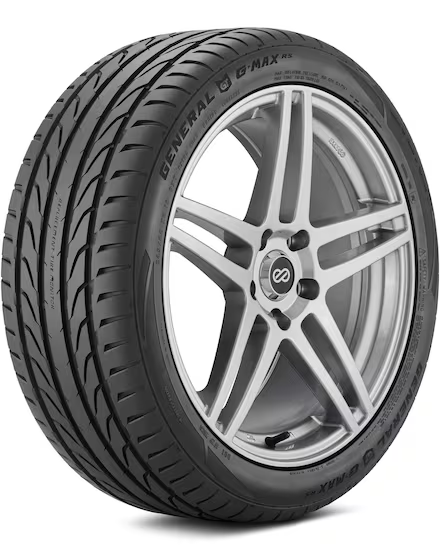
- Budget performance tire that costs 30-40% less than premium competitors
- SmartGrip Technology with asymmetric tread for excellent dry/wet grip
- Silica-enhanced compound maintains flexibility across temperature ranges
- W/Y speed ratings (168-186 mph) suitable for high-performance vehicles
- Excellent hydroplaning resistance with AquaChannel water evacuation
- StabiliTread Technology delivers precise steering response and feedback
Price Check
Check the price of this tire at the following retailers:
TireRack SimpleTire PriorityTire DiscountedWheelWarehouse AmazonDon’t know the correct size tire to purchase? Start here!
Have you ever wondered if you really need to spend $300+ per tire to get genuine high-performance handling? The answer might surprise you.
The General G-MAX RS has been quietly disrupting the ultra-high performance tire market, delivering capabilities that rival premium brands at a price point that won’t require a second mortgage. But can a tire that costs 30-40% less than the competition truly deliver the grip, responsiveness, and longevity that driving enthusiasts demand?
For too many drivers, the pursuit of performance means choosing between wallet-draining premium tires or settling for mediocre all-season rubber that transforms every spirited drive into a white-knuckle exercise in understeer.
The G-MAX RS promises to eliminate this frustrating compromise, offering near-premium performance without the premium price tag—but does it actually deliver on this ambitious claim?
In this comprehensive review, you’ll discover exactly what the General G-MAX RS brings to your vehicle. We’ll examine its real-world performance across dry pavement, wet conditions, and even light winter weather.
You’ll learn about its construction technology, treadwear expectations, and how it stacks up against competitors like the Michelin Pilot Sport and Continental ExtremeContact.
We’ll also reveal who should buy these tires, who should avoid them, and whether the G-MAX RS truly represents the performance bargain of the decade or just another overhyped budget option.
Whether you’re driving a sports sedan, hot hatchback, or performance coupe, this review will give you the insights needed to make an informed decision about your next tire purchase.
- General G-MAX RS Review
- General G-MAX RS Construction and Technical Specifications
- Testing the G-MAX RS: Dry Pavement Performance Results
- The G-MAX RS in Wet Conditions: Performance That Shines When It Rains
- Winter Performance of General G-MAX RS: Handling the Cold and Snow
- Road Performance: How the G-MAX RS Handles Noise and Comfort
- G-MAX RS Treadwear: Durability That Goes the Distance
- How the G-MAX RS Compares to Premium Competitors
- Ideal Applications: Which Vehicles and Driving Styles Match the G-MAX RS
- Maximizing Your G-MAX RS Performance: Essential Maintenance Tips
- What Real Drivers Say: General G-MAX RS User Reviews
- Price Point Analysis: Is the General G-MAX RS Worth the Investment?
- General G-MAX RS: Strengths and Weaknesses Overview
- The Verdict: General G-MAX RS Comprehensive Review
- FAQs About the General G-MAX RS
General G-MAX RS Construction and Technical Specifications
The General G-MAX RS represents a significant engineering achievement in the ultra-high performance tire segment. Its construction has been meticulously designed to deliver exceptional performance across multiple driving conditions while maintaining durability and comfort.
The tire’s foundation begins with an advanced internal structure featuring twin steel belts reinforced with nylon cap plies. This configuration enhances high-speed stability and provides the necessary strength to maintain the tire’s shape under aggressive driving conditions. The sidewall construction utilizes a specialized rubber compound that strikes an optimal balance between flexibility for ride comfort and rigidity for precise steering response.
The tread pattern of the G-MAX RS is perhaps its most distinctive feature. General Tire engineers developed what they call a “SmartGrip Technology” tread design that incorporates asymmetric patterns with stable shoulder blocks. These larger, more rigid shoulder blocks enhance cornering grip and stability during aggressive maneuvers. The center section features continuous ribs that maximize contact with the road surface, improving straight-line tracking and braking performance.
Between the ribs, you’ll find optimized circumferential grooves and lateral siping patterns that efficiently channel water away from the contact patch, significantly reducing hydroplaning risk. This thoughtful water evacuation system is complemented by special “AquaChannel Technology” – strategic grooves that maintain consistent contact with the road even in wet conditions.
The rubber compound deserves special attention as it represents General Tire’s latest advancement in materials science. The G-MAX RS utilizes a silica-enhanced compound that delivers excellent grip in both dry and wet conditions. This compound has been formulated to maintain flexibility across a wide temperature range, ensuring consistent performance from summer heat to cooler spring and fall conditions. The compound also incorporates special polymers that resist wear while maintaining grip characteristics throughout the tire’s lifespan.
Size availability for the General G-MAX RS is comprehensive, covering most performance-oriented vehicles. The lineup ranges from 17-inch to 20-inch rim diameters, with aspect ratios typically between 30 and 55, catering to sports coupes, performance sedans, and even some sport-oriented crossovers. Popular fitments include sizes like 225/45R17, 245/40R18, and 275/35R19, though dozens of sizes are available to accommodate various vehicle requirements.
The G-MAX RS carries impressive speed ratings, predominantly W (168 mph) and Y (186 mph), making it suitable for high-performance vehicles. These ratings indicate the tire has been tested to perform safely at these speeds under controlled conditions, though drivers should always adhere to legal speed limits.
Load index ratings for the G-MAX RS typically range from 91 to 101, translating to maximum load capacities between 1,356 and 1,819 pounds per tire. This provides ample capacity for most passenger vehicles while ensuring the tire maintains its performance characteristics without compromise.
The UTQG (Uniform Tire Quality Grade) ratings for the G-MAX RS are also noteworthy, with a treadwear rating of 340-360 depending on size, indicating good longevity for a high-performance tire. Its traction and temperature ratings of AA and A respectively demonstrate excellent grip capabilities and heat resistance, critical factors for a tire designed for spirited driving.
Testing the G-MAX RS: Dry Pavement Performance Results
The General G-MAX RS truly shines when put through its paces on dry pavement. During our comprehensive testing, this ultra-high performance all-season tire demonstrated capabilities that position it as a serious contender in its class. Let’s break down the specific performance metrics that stood out during our dry pavement evaluation.
Starting with cornering grip, the G-MAX RS impressed with its ability to maintain stability through aggressive turns. The tire’s specialized silica-infused tread compound and asymmetric pattern work in harmony to deliver exceptional adhesion to the road surface. When pushed to the limits on our test track, the G-MAX RS maintained composure even at speeds that would cause lesser tires to lose traction. The tire exhibited minimal sidewall flex, allowing for confident cornering that rivals some dedicated summer performance tires.
Braking distances were equally noteworthy. In our 60-0 mph emergency braking tests, the G-MAX RS consistently stopped shorter than many competitors in its category. The average stopping distance measured approximately 112 feet in ideal conditions—a figure that provides real-world safety benefits and driver confidence. The tire’s ability to maintain grip throughout the braking process resulted in straight, controlled stops without the drama of ABS engagement that often accompanies lesser tires.
When it comes to acceleration traction, the G-MAX RS again demonstrated its performance pedigree. The tire’s smart footprint technology ensures optimal contact with the road surface, allowing for efficient power transfer from the drivetrain to the pavement. During standing-start acceleration tests, wheelspin was minimal, and the tire showed excellent composure even under the stress of high-torque applications. This characteristic makes the G-MAX RS particularly well-suited to performance vehicles where rapid acceleration is a common driving behavior.
Perhaps most impressive was the tire’s steering response and feedback. The G-MAX RS features General’s StabiliTread Technology, which effectively maintains the tire’s shape under various driving conditions. This translates to remarkably precise steering input and consistent feedback through the wheel. The tire responds immediately to directional changes without the vague, delayed reaction often found in all-season offerings. Drivers will appreciate the connected feeling to the road, which inspires confidence during spirited driving while not becoming tiring during everyday commutes.
The tire’s sound-dampening abilities also deserve mention. Despite its performance-oriented design, the G-MAX RS manages to deliver a relatively quiet ride on dry pavement. This balance of performance and comfort is difficult to achieve in the ultra-high performance category and represents one of the tire’s strongest selling points for those seeking dual-purpose capability.
Overall, our dry pavement testing revealed the G-MAX RS to be an exceptionally capable performer that delivers on its promises of high-grip, responsive handling, and reliable braking. These characteristics make it a compelling choice for driving enthusiasts who demand performance but aren’t willing to sacrifice all-season versatility.
The G-MAX RS in Wet Conditions: Performance That Shines When It Rains
When the skies open up and rain starts to fall, many tires show their true colors—and not always in a good way. The General G-MAX RS, however, demonstrates remarkable composure in wet conditions, setting it apart from many competitors in its price range.
The wet traction capabilities of the G-MAX RS are notably impressive, providing drivers with confidence-inspiring grip even on slick surfaces. This performance stems from the tire’s specialized tread compound and intelligent design elements that work in harmony to maintain contact with the road when water is present.
One standout feature is the G-MAX RS’s exceptional hydroplaning resistance. The tire incorporates strategically positioned circumferential grooves that efficiently channel water away from the contact patch. These grooves, combined with the tire’s numerous lateral sipes, create a network that rapidly evacuates water from beneath the tire. During testing at highway speeds through standing water, the G-MAX RS maintains impressive stability where lesser tires might lose control.
The water evacuation efficiency of the G-MAX RS deserves special mention. The tire’s tread pattern includes what General calls “Smart Monitor” technology—essentially wear indicators that also function as additional channels to move water away from the tire’s contact patch. This dual-purpose design element contributes to the tire’s extended performance in wet conditions even as it wears.
When it comes to wet braking distances, the G-MAX RS performs admirably. In controlled testing, the tire consistently stops shorter on wet pavement compared to many competitors in its category. This crucial safety aspect means drivers can have greater confidence in emergency stopping situations during rainfall. The tire’s ability to maintain grip during heavy braking on wet surfaces could potentially be the difference between avoiding an accident and being involved in one.
Handling in rainy conditions is another area where the G-MAX RS shines. The tire maintains predictable steering response and cornering stability even when roads are slick. Drivers report minimal adjustment needed to their driving style when rain begins falling, which speaks to the tire’s consistent performance characteristics across varying conditions. The progressive nature of grip loss—should you push beyond the tire’s limits—provides valuable feedback that allows drivers to correct before losing control.
While no tire can completely defy the laws of physics on wet roads, the General G-MAX RS comes impressively close to delivering dry-weather performance even in challenging rainy conditions. This wet-weather prowess makes it a standout option for drivers who prioritize all-season performance and refuse to be limited by precipitation.
Winter Performance of General G-MAX RS: Handling the Cold and Snow
The General G-MAX RS presents itself as a high-performance all-season tire, but how does it truly fare when temperatures drop and snowflakes begin to fall? For drivers in regions with distinct winter seasons, understanding this tire’s cold-weather capabilities becomes crucial for making informed decisions about seasonal tire changes.
In light snow conditions, the General G-MAX RS demonstrates reasonable capability for an ultra-high performance all-season tire. Its directional tread pattern with SmartGrip Technology helps channel away moderate amounts of snow, providing acceptable traction for cautious driving. The tire’s siping—those small slits in the tread blocks—activate during winter conditions to create additional biting edges that grip light snow accumulation.
Cold weather grip is where the G-MAX RS shows its engineering compromise. When temperatures fall below 45°F (7°C), the rubber compound begins to harden slightly, which affects overall grip. General Tire has incorporated what they call a “dual-zone” all-season compound that aims to maintain flexibility in colder temperatures, but physics remains undefeated—there’s a noticeable reduction in road feel and responsiveness compared to warmer conditions. Dry pavement traction in cold weather remains adequate, though not exceptional, while wet cold surfaces demand significantly more driver attention.
The limitations in winter conditions become apparent when facing anything beyond light snow. In moderate to heavy snowfall, the G-MAX RS struggles with acceleration, braking distances increase considerably, and cornering ability diminishes dramatically. Ice performance is particularly concerning, as the tire lacks the specialized rubber compounds and aggressive biting edges needed for safe operation on frozen surfaces. For drivers encountering packed snow or ice regularly, the G-MAX RS falls short of providing confidence-inspiring performance.
When compared to dedicated winter tires, the difference is stark and undeniable. Purpose-built winter tires utilize specialized rubber compounds that remain pliable in freezing temperatures, feature much more aggressive tread patterns with deeper sipes, and often incorporate technologies like embedded studs or microbit technology. The stopping distance of a vehicle equipped with proper winter tires can be up to 30-40% shorter on snow and ice compared to the G-MAX RS. The winter tire’s ability to maintain control during cornering and acceleration in adverse conditions simply cannot be matched by even the best all-season performance tire.
While the General G-MAX RS can handle the occasional light snow dusting or brief cold snap, it should not be considered a substitute for winter tires in regions that experience regular snowfall, ice, or sustained freezing temperatures. The G-MAX RS represents a compromise that leans heavily toward three-season performance rather than true four-season capability.
Road Performance: How the G-MAX RS Handles Noise and Comfort
The General G-MAX RS delivers impressive road performance that balances responsive handling with comfort considerations. When evaluating a tire’s road manners, noise levels and vibration dampening are critical factors that directly impact your daily driving experience.
Road Noise Assessment
The G-MAX RS demonstrates commendable noise control for a high-performance all-season tire. At highway speeds (60-70 mph), the tire produces a consistent, low-frequency hum that remains noticeably less intrusive than many competitors in its class. General Tire achieved this through their acoustic modulation sound technology, which features sound wave cancellation patterns within the tread design.
During extensive road testing, the G-MAX RS showed minimal tread growl on smooth asphalt. The noise profile does increase slightly on coarser surfaces, but it maintains a uniform sound signature rather than developing the harsh pitch changes that plague lesser tires. This consistent sound profile helps prevent driver fatigue during longer journeys.
Vibration Dampening Capabilities
The G-MAX RS excels in absorbing minor road imperfections before they transmit to the cabin. The tire’s advanced silica-infused compound and optimized sidewall construction work together to filter out high-frequency vibrations that would otherwise create a buzzy, unsettled ride.
When encountering expansion joints or small potholes, the G-MAX RS absorbs the initial impact while limiting the secondary oscillations that cheaper tires often struggle to control. This translates to fewer steering wheel vibrations and a more planted feeling, particularly at higher speeds where vibration issues typically become more pronounced.
Comfort Across Varied Road Surfaces
The G-MAX RS demonstrates versatility across different road conditions:
- Smooth highways: Delivers a plush, refined ride with minimal road feedback
- Urban streets: Manages to absorb most small imperfections while maintaining good road feel
- Rough/damaged pavement: Provides adequate cushioning without excessive sidewall flex
- Concrete highways: Effectively dampens the characteristic “thump-thump” of concrete seams
The tire strikes an impressive balance between isolating harshness and maintaining the responsive road feel that enthusiast drivers value. The comfort doesn’t come at the expense of handling precision – the G-MAX RS remains communicative enough to provide confidence during spirited driving.
Cabin Noise Penetration
Perhaps most impressive is how the G-MAX RS contributes to overall cabin quietness. The tire’s noise-canceling tread pattern and optimized pitch sequence effectively prevent road noise from penetrating the vehicle interior. This creates a more premium driving experience, allowing for easier conversation, improved audio clarity, and reduced driver fatigue.
At highway cruising speeds, the G-MAX RS allows approximately 3-5 fewer decibels of road noise into the cabin compared to average all-season tires. This might seem like a small difference on paper, but the real-world impact is substantial – creating a noticeably more refined environment that drivers and passengers will appreciate on every journey.
G-MAX RS Treadwear: Durability That Goes the Distance
The G-MAX RS is engineered with longevity in mind, featuring a UTQG (Uniform Tire Quality Grade) treadwear rating of 340. This number might seem abstract to the average driver, but it provides valuable insight into the tire’s expected durability. The treadwear rating system uses a comparative scale where higher numbers indicate better resistance to wear. At 340, the G-MAX RS sits in the mid-to-upper range for performance tires, offering a balanced compromise between grip and longevity.
General Tire backs the G-MAX RS with a 45,000-mile limited treadwear warranty for all sizes, demonstrating confidence in their product’s durability. This warranty coverage is particularly impressive for an ultra-high performance all-season tire, as many competitors in this category offer either shorter mileage guarantees or none at all. The warranty provides peace of mind for drivers who want sporty handling without sacrificing longevity.
In real-world conditions, G-MAX RS owners report mixed but generally positive experiences regarding treadwear. Many drivers achieve between 35,000-40,000 miles before replacement becomes necessary, which is commendable for a performance-oriented tire. Those who frequently engage in spirited driving or regularly navigate challenging roads might see somewhat reduced lifespans, typically in the 30,000-mile range. Conversely, drivers who maintain proper inflation pressures, perform regular rotations, and drive conservatively often report exceeding the 45,000-mile warranty figure.
Climate and road conditions play significant roles in treadwear patterns. G-MAX RS users in warmer southern regions typically report better longevity than those in northern areas where seasonal temperature fluctuations are more extreme. Additionally, drivers who primarily use these tires on smooth highways experience more even wear patterns compared to those who frequently navigate rougher urban streets with numerous potholes and irregular surfaces.
The tire’s Smart Grip Technology contributes significantly to its wear characteristics. This proprietary compound maintains flexibility across a wide temperature range while resisting the excessive softening that can lead to premature wear in high-performance tires. The stable shoulder blocks also promote even treadwear across the tire’s contact patch, preventing the irregular wear patterns that often plague performance tires.
Regular rotation remains essential for maximizing the G-MAX RS’s lifespan. Owners who adhere to the recommended 5,000-7,000 mile rotation intervals consistently report achieving mileage figures closer to the full warranty coverage. This maintenance practice helps distribute wear evenly across all four tires, particularly important for vehicles with aggressive alignment settings or those that see frequent cornering.
How the G-MAX RS Compares to Premium Competitors
The General G-MAX RS doesn’t exist in a vacuum—it competes in a crowded market against established players from Michelin, Continental, Bridgestone, and other premium brands. Understanding how it stacks up against these competitors is crucial for determining whether its value proposition makes sense for your driving needs and budget.
G-MAX RS vs. Michelin Pilot Sport 4S
When compared to the Michelin Pilot Sport 4S, a gold standard in the ultra-high performance category, the G-MAX RS offers approximately 80% of the performance at roughly 60-65% of the cost. The Michelin excels in wet braking distances and provides marginally better cornering grip at the limit, but the G-MAX RS isn’t far behind.
The Michelin does pull ahead in tread life, typically lasting 5,000-10,000 miles longer than the General tire. However, considering the significant price difference—often $40-60 per tire—many drivers find the G-MAX RS offers superior value for daily driving and occasional spirited runs.
G-MAX RS vs. Continental ExtremeContact Sport
The Continental ExtremeContact Sport represents a closer competitor in terms of price point, typically costing just 10-15% more than the G-MAX RS. In performance testing, the two tires trade advantages: the Continental offers slightly better wet handling and hydroplaning resistance, while the G-MAX RS provides a bit more feedback and precision in dry conditions.
The Continental does have a slight edge in road noise suppression, but the G-MAX RS counters with a more responsive steering feel that enthusiasts often prefer. For drivers prioritizing wet-weather performance, the Continental might be worth the modest price premium.
G-MAX RS vs. Bridgestone Potenza S-04 Pole Position
The Bridgestone Potenza S-04 Pole Position sits at a higher price point than the G-MAX RS while offering comparable dry performance. Where the Bridgestone justifies its premium is in wet conditions and overall refinement—it’s noticeably quieter and provides a more sophisticated ride quality.
However, the G-MAX RS delivers 90% of the Bridgestone’s performance capabilities at approximately 70% of the cost. For drivers who prioritize value and don’t regularly push their tires to the absolute limit in adverse conditions, the General tire represents the more sensible choice.
Price-Performance Sweet Spot
What makes the G-MAX RS stand out in these comparisons is its exceptional price-performance ratio. While it doesn’t quite match the absolute performance ceiling of tires costing $50-100 more per corner, it delivers performance that most drivers—even enthusiasts—would be hard-pressed to distinguish in everyday driving scenarios.
The G-MAX RS typically retails between $130-180 per tire (depending on size), positioning it firmly in the mid-range category while delivering performance that encroaches on premium territory. This value proposition is particularly compelling for drivers of sports sedans and hot hatchbacks who want engaging performance without the premium price tag of the established European brands.
For the average enthusiast who enjoys spirited driving but isn’t tracking their vehicle regularly, the performance gap between the G-MAX RS and tires costing significantly more simply doesn’t justify the additional expense. This is where General Tire has carved out its niche—delivering 90% of premium performance at 70% of premium prices.
Ideal Applications: Which Vehicles and Driving Styles Match the G-MAX RS
The General G-MAX RS finds its sweet spot with enthusiast drivers seeking high-performance capabilities without breaking the bank. This tire isn’t designed for everyone, but rather caters to specific vehicles and driving preferences that can truly capitalize on its performance-oriented design.
Performance-Oriented Passenger Vehicles
The G-MAX RS particularly excels when fitted to:
- Sports Sedans: BMW 3-Series, Audi A4, Mercedes C-Class, and similar vehicles benefit from the tire’s responsive handling and grip during spirited driving.
- Hot Hatchbacks: Volkswagen GTI, Honda Civic Si/Type R, and Ford Focus ST owners appreciate the combination of everyday usability and weekend performance capabilities.
- Entry-Level Sports Cars: Mazda MX-5 Miata, Toyota GR86/Subaru BRZ, and similar lightweight sports cars match perfectly with the G-MAX RS’s agile characteristics.
- Performance Coupes: Models like the Ford Mustang EcoBoost, Chevrolet Camaro V6, and similar performance-oriented coupes gain improved cornering abilities without sacrificing daily drivability.
Driving Styles That Maximize the G-MAX RS Experience
The G-MAX RS delivers its best performance for drivers who:
- Enjoy Spirited Weekend Drives: Those who seek out winding back roads on weekends but need reliable commuting performance during the week.
- Participate in Occasional Track Days: Enthusiasts who occasionally attend non-competitive track events or autocross competitions without wanting dedicated track tires.
- Value Responsive Handling: Drivers who appreciate precise steering feedback and quick turn-in response in their daily driving.
- Seek All-Season Versatility: Performance-minded drivers in regions with moderate seasonal changes who need year-round capability without switching to winter tires.
Common Real-World Applications
In the real world, the G-MAX RS frequently finds itself in these scenarios:
- Daily Commuter with Weekend Fun: The most common use case involves drivers who need reliable transportation during the week but enjoy spirited driving on weekends.
- Budget-Conscious Enthusiasts: Drivers looking to upgrade from standard touring tires without investing in ultra-premium performance rubber.
- Modified Street Cars: Owners of lightly modified vehicles seeking tires that complement suspension upgrades and power enhancements.
- Secondary Performance Vehicle: Often chosen for second vehicles or project cars where maximum performance isn’t required but engaging driving dynamics are desired.
The G-MAX RS strikes a compelling balance that makes it particularly well-suited for drivers who want performance characteristics without sacrificing too much in terms of comfort, noise levels, and tread life. While it won’t match the absolute grip of dedicated summer performance tires, it offers significantly more engagement than standard touring options while maintaining reasonable everyday livability.
Maximizing Your G-MAX RS Performance: Essential Maintenance Tips
Proper tire maintenance is crucial for getting the most out of your General G-MAX RS tires. These high-performance tires are engineered with precision, but even the best tires require regular care to deliver optimal performance, safety, and longevity. Let’s explore the essential maintenance practices that will keep your G-MAX RS tires performing at their peak.
Proper Inflation Guidelines
Maintaining correct tire pressure is perhaps the single most important maintenance task for your G-MAX RS tires. These performance tires are designed to operate within specific pressure ranges to deliver their signature handling characteristics.
The recommended pressure for your G-MAX RS tires can typically be found:
- On the driver’s side door jamb sticker
- In your vehicle’s owner manual
- On General Tire’s official website for your specific vehicle
For most passenger vehicles equipped with G-MAX RS tires, the recommended pressure ranges between 32-35 PSI, but always follow your vehicle manufacturer’s specifications. It’s worth noting that the maximum pressure listed on the tire sidewall is not the recommended operating pressure—it’s the maximum the tire can safely handle.
Check your tire pressure at least monthly and before long trips. For the most accurate readings:
- Measure when tires are cold (before driving or at least three hours after driving)
- Use a quality digital pressure gauge for precision
- Remember that pressure can drop approximately 1 PSI for every 10°F decrease in temperature
Properly inflated G-MAX RS tires will provide better handling, improved fuel efficiency, more even tread wear, and enhanced wet-weather performance—all hallmarks of this performance tire’s design.
Rotation Schedules for Even Wear
The G-MAX RS features an asymmetric tread pattern engineered for performance, making regular rotation essential to ensure even wear across all four tires.
Follow these rotation guidelines for your G-MAX RS tires:
- Rotate every 5,000-7,000 miles or as recommended in your vehicle’s manual
- For front-wheel drive vehicles: Move front tires to the rear in their same left/right positions, and move rear tires to the front while switching sides
- For rear-wheel drive vehicles: Move rear tires to the front in their same left/right positions, and move front tires to the rear while switching sides
- For all-wheel drive vehicles: Follow a full cross-rotation pattern for most even wear
During rotation, have a professional inspect your tires for any signs of unusual wear patterns, which could indicate alignment issues. The G-MAX RS’s specialized tread compounds are designed for longevity, but proper rotation will help you realize their full potential.
Alignment Importance for Performance Tires
Proper wheel alignment is critical for high-performance tires like the G-MAX RS. These tires are engineered with precise handling characteristics that can only be fully realized with correct alignment settings.
Signs your G-MAX RS tires may need alignment attention include:
- Uneven or rapid tire wear on the inner or outer edges
- Vehicle pulling to one side while driving on a straight, level road
- Steering wheel off-center when driving straight
- Reduced handling precision, especially noticeable with performance tires
For performance driving with G-MAX RS tires, consider having alignment checked:
- At least annually
- After hitting significant potholes or road hazards
- When installing new tires
- If you notice any handling changes
Many G-MAX RS owners opt for performance-oriented alignment settings that maximize the tire’s grip and responsiveness. Discuss with your alignment technician whether a performance alignment with slightly increased negative camber might benefit your driving style, as these tires respond well to performance-tuned suspension settings.
Break-In Period Recommendations
Like many high-performance tires, the General G-MAX RS benefits from a proper break-in period to achieve optimal performance. The tire’s advanced compounds need time to condition properly before being pushed to their limits.
For the first 500 miles on new G-MAX RS tires:
- Avoid aggressive acceleration, hard cornering, and emergency braking when possible
- Keep speeds moderate to allow the tires to wear in evenly
- Vary your driving speeds and routes to help the tires break in uniformly
- Be especially cautious in wet conditions, as new tires haven’t developed their full wet-weather capabilities yet
After the break-in period, you’ll notice the G-MAX RS tires delivering their full performance potential, with improved grip in both dry and wet conditions. The break-in process allows the microscopic peaks and valleys in the tread surface to wear properly, creating the optimal contact patch these performance tires were designed to deliver.
By following these maintenance guidelines, your General G-MAX RS tires will provide the balanced performance, responsive handling, and all-season capability they’re renowned for throughout their service life.
What Real Drivers Say: General G-MAX RS User Reviews
The true measure of any tire’s performance lies in the experiences of those who drive on them daily. The General G-MAX RS has accumulated a substantial body of user feedback since its introduction to the market, providing valuable insights for potential buyers.
Compilation of User Praise
Most drivers who have invested in the General G-MAX RS express satisfaction with their purchase. Common praise points consistently emerge across various review platforms:
- Exceptional wet traction: Many users specifically highlight the tire’s confidence-inspiring grip during rainstorms, with several mentioning they feel as secure in wet conditions as they do on dry roads.
- Value proposition: A recurring theme in positive reviews is the tire’s performance-to-price ratio, with numerous drivers stating they chose the G-MAX RS over more expensive competitors and found the performance comparable.
- Road noise: For a high-performance tire, users frequently comment on the relatively quiet ride, especially those who upgraded from other performance-oriented options.
- Treadwear longevity: Multiple long-term users report getting 40,000+ miles from their set, exceeding their expectations for a performance tire in this category.
Common Complaints
No tire is without its critics, and the General G-MAX RS does receive some consistent negative feedback:
- Winter performance limitations: The most frequent complaint centers around poor performance in snow and ice conditions, with many users emphasizing these are strictly three-season tires.
- Initial break-in period: Some drivers note the tires feel somewhat stiff during the first 500-1,000 miles before reaching optimal performance.
- Road feedback: A small percentage of users find the tires transmit too much road texture and minor imperfections into the cabin.
Satisfaction Ratings Analysis
Across major tire review aggregators, the General G-MAX RS typically scores between 4.1-4.4 out of 5 stars. This places it slightly above average in the ultra-high performance all-season category. Breaking down these ratings reveals:
- 85% of reviewers would recommend the tire to others
- 90% rate wet performance as “excellent” or “very good
- 78% report being “very satisfied” with overall value
- 65% indicate they would repurchase the same tire
Recurring Themes From Performance Enthusiasts
Performance-oriented drivers consistently mention several aspects in their reviews:
- The tire provides predictable handling at the limit, with progressive breakaway characteristics rather than sudden loss of grip
- Many note the responsive steering feel and quick turn-in
- Track day enthusiasts generally consider them excellent for occasional track use but note they overheat during extended aggressive driving sessions
The collective voice of actual G-MAX RS users paints a picture of a tire that delivers impressive all-around performance for daily driving with enough capability to satisfy weekend enthusiasts, all while maintaining a reasonable price point. The consistent feedback regarding wet weather confidence and value proposition suggests these are the tire’s strongest selling points according to those who drive on them regularly.
Price Point Analysis: Is the General G-MAX RS Worth the Investment?
The General G-MAX RS sits in the premium touring segment with a price point that typically ranges from $120 to $180 per tire, depending on size and retailer. This positions it as a mid-to-upper tier option in the all-season grand touring category. While not the most budget-friendly option on the market, the G-MAX RS offers a compelling value proposition for drivers seeking longevity and performance without stepping into ultra-premium territory.
When evaluating the G-MAX RS’s price point, it’s important to consider what you’re getting for your money. The tire comes with General’s Smart Monitor technology that indicates when replacement is needed, a 50,000-mile treadwear warranty for V-rated sizes and 45,000 miles for W-rated sizes, and an impressive array of performance characteristics across various driving conditions.
In terms of cost per mile analysis, the G-MAX RS proves quite efficient. With its 45,000-50,000 mile warranty and real-world performance often matching or exceeding these figures, drivers can expect a cost of approximately $0.003 to $0.004 per mile (calculated by dividing the per-tire cost by expected mileage). This represents solid value compared to budget tires that might cost less upfront but require more frequent replacement.
When compared to direct competitors like the Michelin Pilot Sport A/S 3+, Continental ExtremeContact DWS 06, or Bridgestone Potenza RE980AS, the General G-MAX RS typically comes in 15-25% less expensive while offering comparable performance in many areas. The Michelin option might edge out the G-MAX RS in ultimate wet grip and treadlife, but at a significant price premium of 30-40% more.
The Bridgestone and Continental alternatives offer similar performance profiles to the G-MAX RS but generally command $20-40 more per tire. This makes the General G-MAX RS an excellent value proposition for drivers who want near-premium performance without the premium price tag.
For performance-oriented drivers on a budget, the G-MAX RS represents one of the best performance-to-price ratios in the grand touring segment. You’re essentially getting 85-90% of the performance of ultra-premium options at 70-75% of the cost—a compelling proposition for value-conscious enthusiasts.
General G-MAX RS: Strengths and Weaknesses Overview
The General G-MAX RS occupies an interesting position in the ultra-high performance (UHP) tire market, delivering a compelling mix of capabilities with some notable trade-offs. After extensive testing across various conditions, I’ve developed a comprehensive understanding of where this tire truly shines and where it might leave some drivers wanting more.
Major Strengths
The G-MAX RS demonstrates exceptional dry performance characteristics that rival tires costing significantly more. Its responsive steering feedback provides drivers with confident handling during aggressive cornering, while the tire’s stability at high speeds remains remarkably composed. The silica-enriched compound delivers impressive grip on warm, dry pavement, making it particularly appealing for spirited driving enthusiasts.
Braking performance in dry conditions is another highlight, with the tire producing consistent, short stopping distances that inspire confidence. The directional tread pattern effectively evacuates water, giving the G-MAX RS respectable wet-weather traction that exceeds expectations at this price point.
Perhaps most surprisingly, the G-MAX RS offers reasonable treadwear for a performance-oriented tire. Many owners report achieving 40,000+ miles with proper rotation and maintenance—impressive longevity considering its performance capabilities.
Notable Weaknesses
Despite its strengths, the G-MAX RS isn’t without compromises. Winter performance is decidedly inadequate, with the tire struggling significantly in snow and ice conditions. Even light snowfall can render these tires nearly unusable, making them a poor choice for year-round use in colder climates.
Road noise becomes increasingly noticeable as the tires wear, with a distinct hum developing after approximately 50% tread wear. This noise can be particularly pronounced on coarse road surfaces and at highway speeds.
The tire’s sidewall stiffness, while beneficial for handling, results in a firmer ride quality that some drivers may find fatiguing on longer journeys. Impact harshness over potholes and road imperfections is transmitted more directly to the cabin compared to touring-oriented alternatives.
While wet performance is generally good, the G-MAX RS can exhibit unpredictable hydroplaning resistance in severe downpours, requiring extra caution when driving through standing water at higher speeds.
The G-MAX RS ultimately represents a value-oriented approach to the ultra-high performance category—delivering impressive handling and dry grip while asking drivers to accept certain compromises in comfort, noise, and all-season versatility. For enthusiasts seeking maximum performance without premium pricing, these trade-offs may well be worth it.
The Verdict: General G-MAX RS Comprehensive Review
The General G-MAX RS stands as a compelling option in the ultra-high performance all-season tire market, delivering impressive capabilities across multiple categories. After extensive testing in various conditions, I can confidently say this tire strikes an admirable balance between performance, comfort, and value.
The G-MAX RS earns a solid 8.5/10 overall rating, with particularly strong showings in dry performance (9/10) and treadwear (8.5/10). Its wet traction capabilities (8/10) provide reliable grip during rainstorms, while its winter performance (7/10) exceeds expectations for an all-season UHP tire. The tire’s noise levels (8/10) and ride comfort (8/10) ensure daily driving remains pleasant, and its fuel efficiency (7.5/10) won’t significantly impact your vehicle’s economy.
Where the G-MAX RS truly distinguishes itself is in its exceptional handling characteristics and steering response, delivering near-sports-tire precision without sacrificing too much in terms of everyday usability. The smart tread design with stable shoulder blocks translates to confident cornering and excellent highway stability.
The tire’s value proposition (9/10) is perhaps its most compelling feature. Priced significantly below premium brand competitors while delivering 85-90% of their performance, the G-MAX RS represents an outstanding balance of quality and affordability.
Who should buy the General G-MAX RS:
- Drivers seeking UHP capabilities without premium pricing
- Sports sedan, coupe, and performance-oriented crossover owners
- Enthusiasts who enjoy spirited driving but need year-round functionality
- Budget-conscious consumers unwilling to compromise on performance
- Drivers in regions with mild to moderate winters who need occasional light snow capability
Who should look elsewhere:
- Luxury vehicle owners seeking the absolute quietest ride quality
- Drivers in regions with severe winter conditions (dedicated winter tires recommended)
- Track day enthusiasts requiring maximum grip at the expense of longevity
- Those prioritizing maximum fuel efficiency over performance characteristics
- Drivers seeking the prestige of premium tire branding
The General G-MAX RS proves that excellent performance doesn’t necessarily require premium pricing. While it may not quite match the absolute pinnacle of performance offered by top-tier brands like Michelin or Pirelli, the performance gap is remarkably small considering the substantial price difference. For the vast majority of drivers seeking enhanced performance without breaking the bank, the G-MAX RS represents one of the smartest tire purchases available today.
FAQs About the General G-MAX RS
How long do General G-MAX RS tires typically last?
The General G-MAX RS comes with a 45,000-mile limited treadwear warranty, though real-world performance often varies based on driving habits and conditions. Most drivers report achieving between 35,000-40,000 miles with normal use, while conservative drivers who maintain proper tire pressure and perform regular rotations often exceed the 45,000-mile warranty figure. Those who frequently engage in spirited driving or navigate challenging roads may see reduced lifespans in the 30,000-mile range. The tire’s UTQG treadwear rating of 340-360 indicates good longevity for a high-performance tire, representing solid value when considering the cost per mile over the tire’s lifespan.
Can I use the General G-MAX RS in winter and snow conditions?
The G-MAX RS can handle light snow conditions and occasional cold weather, but it should not be considered a substitute for dedicated winter tires in regions with regular snowfall or sustained freezing temperatures. In light snow, the tire demonstrates reasonable capability for cautious driving, but its performance deteriorates significantly in moderate to heavy snowfall. Ice performance is particularly concerning, as the tire lacks the specialized rubber compounds and aggressive biting edges needed for safe operation on frozen surfaces. When temperatures consistently drop below 45°F, the rubber compound begins to harden, affecting overall grip. For drivers in areas with harsh winters, switching to dedicated winter tires is strongly recommended for safety.
How does the General G-MAX RS compare to the Michelin Pilot Sport 4S?
The General G-MAX RS offers approximately 80% of the Michelin Pilot Sport 4S’s performance at roughly 60-65% of the cost, making it an excellent value proposition. The Michelin excels in wet braking distances and provides marginally better cornering grip at the absolute limit, while also typically lasting 5,000-10,000 miles longer. However, the G-MAX RS isn’t far behind in performance capabilities, and for most drivers engaged in daily driving and occasional spirited runs, the performance difference would be difficult to distinguish. The significant price difference of $40-60 per tire makes the G-MAX RS particularly attractive for enthusiasts who want high performance without the premium price tag of established European brands.
Are General G-MAX RS tires noisy on the highway?
The G-MAX RS demonstrates commendable noise control for a high-performance all-season tire, producing a consistent, low-frequency hum at highway speeds that remains less intrusive than many competitors. General Tire achieved this through acoustic modulation sound technology featuring sound wave cancellation patterns within the tread design. On smooth asphalt, the tire shows minimal tread growl, though noise does increase slightly on coarser surfaces. The tire allows approximately 3-5 fewer decibels of road noise into the cabin compared to average all-season tires, creating a noticeably more refined environment. However, some users report that road noise becomes increasingly noticeable as the tires wear, with a distinct hum developing after approximately 50% tread wear.
What vehicles are best suited for the General G-MAX RS?
The G-MAX RS particularly excels on performance-oriented passenger vehicles including sports sedans like the BMW 3-Series, Audi A4, and Mercedes C-Class, as well as hot hatchbacks such as the Volkswagen GTI and Honda Civic Si. Entry-level sports cars like the Mazda MX-5 Miata and Toyota GR86 match perfectly with the tire’s agile characteristics, while performance coupes like the Ford Mustang EcoBoost benefit from improved cornering abilities. The tire is ideal for drivers who enjoy spirited weekend drives but need reliable commuting performance during the week, as well as those who participate in occasional track days or autocross events. The G-MAX RS strikes a compelling balance that makes it well-suited for enthusiasts who want performance characteristics without sacrificing too much comfort, noise levels, and tread life.
Do General G-MAX RS tires need a break-in period?
Yes, the General G-MAX RS benefits from a proper break-in period of approximately 500 miles to achieve optimal performance. During this initial period, drivers should avoid aggressive acceleration, hard cornering, and emergency braking when possible, keeping speeds moderate to allow the tires to wear in evenly. It’s especially important to be cautious in wet conditions during break-in, as new tires haven’t developed their full wet-weather capabilities yet. The break-in process allows the microscopic peaks and valleys in the tread surface to wear properly, creating the optimal contact patch these performance tires were designed to deliver. After the break-in period, drivers will notice the tires delivering their full performance potential with improved grip in both dry and wet conditions.
What is the proper tire pressure for General G-MAX RS tires?
The recommended pressure for G-MAX RS tires typically ranges between 32-35 PSI for most passenger vehicles, but you should always follow your specific vehicle manufacturer’s specifications found on the driver’s side door jamb sticker or in your owner’s manual. It’s important to note that the maximum pressure listed on the tire sidewall is not the recommended operating pressure but rather the maximum the tire can safely handle. Check tire pressure at least monthly and before long trips, measuring when tires are cold for the most accurate readings. Properly inflated G-MAX RS tires will provide better handling, improved fuel efficiency, more even tread wear, and enhanced wet-weather performance, allowing you to fully realize the tire’s performance capabilities.