You walk out to your car in the morning, glance down, and something just looks off. One tire is sitting a little lower than the others. Your dashboard TPMS light has been flickering for three days now.
Or maybe you just noticed you’ve been filling the same tire every few weeks and you’re sick of it.
I’ve been there more times than I can count — and if you’re maintaining multiple vehicles, this happens more often than the tire industry wants you to think about.
Tires losing pressure is one of the most common — and most misunderstood — maintenance issues American drivers face. Most people assume there’s a puncture and either ignore it or throw on the spare.
But in my experience reviewing tires and talking to thousands of readers through this blog, the real cause is often something completely different.
Before you panic or make an unnecessary trip to the shop, it helps to understand exactly what’s happening inside that rubber casing.
Before we dive into the full list, if you’re also navigating tire replacement decisions more broadly, I’ve put together a comprehensive tire buying and maintenance guide that covers everything from reading tire specs to knowing when to replace — well worth bookmarking alongside this article.
Here’s the short version if you’re in a hurry:
TL;DR — Quick Answer
- Temperature drops: For every 10°F drop, tires lose roughly 1–2 PSI.
- Natural permeation: Rubber is slightly porous — all tires slowly leak air over time.
- Valve stem problems: A loose, cracked, or dirty valve stem is one of the most overlooked causes.
- Bead leaks: Corrosion or dirt between the tire and the rim can create slow leaks.
- Punctures and embedded objects: Nails, screws, and road debris cause slow leaks — often with no visible flat.
- Wheel/rim damage: Bent or corroded rims prevent an airtight seal.
- Overloading: Excessive weight compresses tires and accelerates air loss.
- Tire age and cracking: Old rubber permeates air faster as it dries and cracks.
- TPMS sensor faults: A faulty sensor can make a fine tire appear to have a leak.
- TL;DR — Quick Answer
- 1. Temperature Changes — The Invisible PSI Thief
- 2. Natural Air Permeation Through Rubber
- 3. Faulty or Damaged Valve Stems
- 4. Bead Leaks — Where the Tire Meets the Rim
- 5. Punctures and Embedded Road Debris
- 6. Bent or Damaged Rims
- 7. Overloading — Pressure From the Inside Out
- 8. Tire Age and Rubber Degradation
- 9. TPMS Sensor Malfunctions — When the Warning is the Problem
- How Fast Should a Tire Actually Lose Pressure?
- Quick Diagnostic: How to Find the Source of a Slow Leak
- Final Thoughts
- Frequently Asked Questions: Why Do Tires Lose Pressure?
1. Temperature Changes — The Invisible PSI Thief
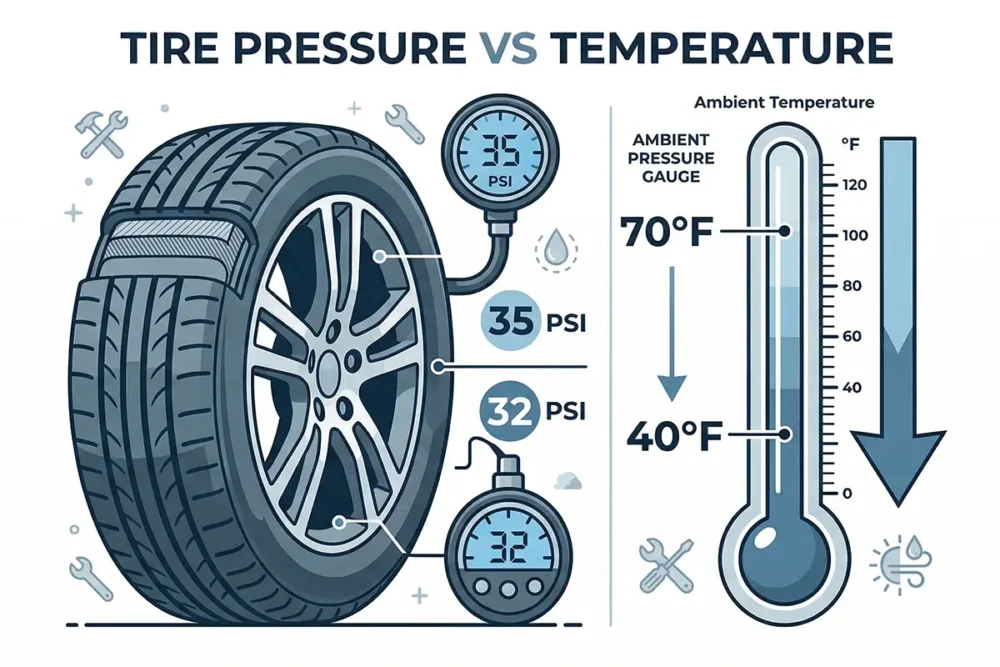
Infographic showing tire pressure vs temperature relationship
If you’ve ever wondered why your low-pressure light comes on every October but not in July, temperature is almost certainly your answer.
This is genuinely the number one reason tires lose pressure for most American drivers, and yet it’s the one that gets blamed on ‘just a slow leak’ the most often.
The physics here are straightforward: air is a gas, and gases contract when they get cold.
The general rule of thumb — and one I’ve verified personally by checking pressures before and after temperature shifts — is that for every 10°F drop in ambient temperature, your tires lose approximately 1–2 PSI.
That doesn’t sound like much, but a 30-degree overnight swing (common in the Midwest and Northeast from September onward) can drop your tires from a healthy 35 PSI to a concerning 29–31 PSI by morning.
Conversely, tires gain pressure on hot days as the air inside expands. This is why you should never bleed air from a hot tire to reach your target PSI — wait until the tire cools down first.
What to do:
Check your tire pressure every morning during fall and winter, or any time temperatures shift more than 20°F overnight. Use your vehicle’s recommended cold inflation pressure — found on the sticker inside the driver’s door jamb — not the max pressure printed on the tire sidewall.
2. Natural Air Permeation Through Rubber
Here’s something most drivers don’t realize: even a perfectly healthy, undamaged tire will slowly lose pressure over time. This isn’t a defect — it’s physics.
Rubber is a porous material. The air molecules inside your tire are small enough to slowly migrate through the rubber compound and escape into the atmosphere.
This process, called permeation, is slow — typically 1–3 PSI per month under normal conditions — but it adds up if you’re not keeping tabs on it.
The type of air matters too. Standard compressed air (which is about 78% nitrogen) permeates faster than pure nitrogen.
This is the main argument for nitrogen inflation: nitrogen molecules are slightly larger and migrate through rubber more slowly, meaning you lose pressure at a slower rate.
I’ve tested this on a few sets of tires over several months, and the difference is real — though modest enough that it won’t transform your maintenance habits entirely.
What to do:
Check your tire pressure at least once a month, regardless of how the tires look. If you’re consistently losing more than 3 PSI per month per tire, investigate further — natural permeation alone shouldn’t account for that much loss.
3. Faulty or Damaged Valve Stems
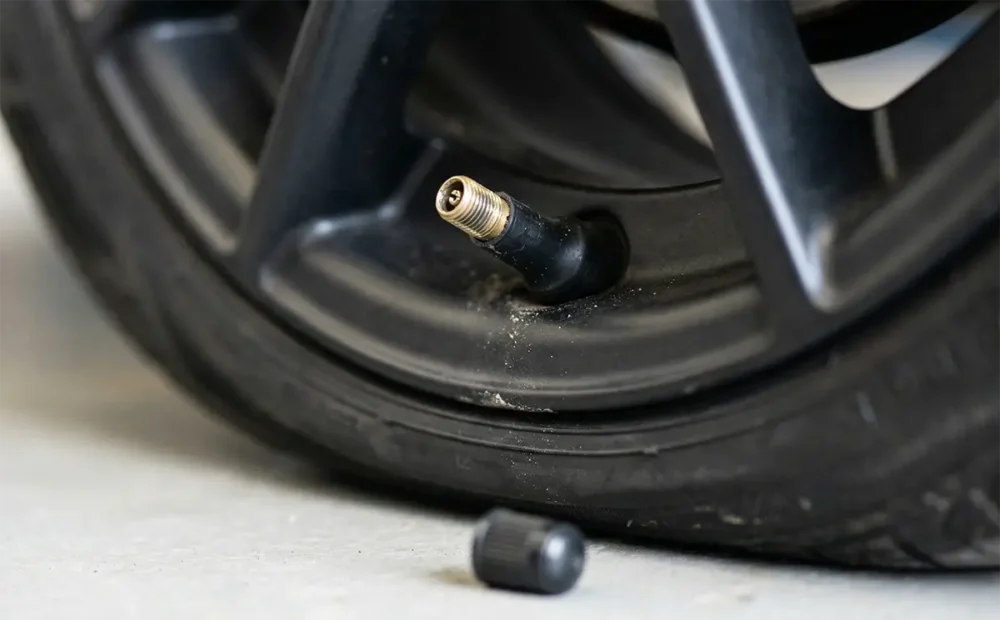
Close-up of a tire valve stem with a valve cap removed
I’d estimate that a significant portion of ‘mysterious’ slow leaks I’ve heard about from readers trace back to nothing more exotic than a damaged valve stem. It’s the most overlooked cause of tire pressure loss, and it’s almost always a cheap fix.
Your valve stem is the small rubber or metal protrusion sticking out of your rim — the thing you press to add or release air. It has a tiny spring-loaded valve core inside that seals the air in. Over time, several things can go wrong:
- Rubber valve stems crack and dry out — especially in climates with extreme temperature swings or UV exposure.
- The valve core loosens — just enough to allow a slow, steady leak. This is surprisingly common on tires that have had a lot of pressure checks or top-offs.
- Dirt and debris lodge in the valve — small particles can hold the valve core slightly open, causing air to seep out.
- Missing or cracked valve caps — while the cap itself isn’t the primary seal, it does protect the core from dirt and moisture that can eventually cause leaks.
What to do:
Apply a small amount of soapy water to the valve stem while the car is parked. If bubbles form, you have a valve leak. A valve core can be tightened or replaced for under $5 with a valve core tool. Full rubber valve stem replacement typically runs $5–$15 per stem at most shops.
4. Bead Leaks — Where the Tire Meets the Rim
The tire bead is the inner edge of the tire that seats firmly against the rim to create an airtight seal. When this seal is compromised, you get what’s called a bead leak — and they can be incredibly frustrating to diagnose because there’s no visible puncture and the leak is often very slow.
Corrosion on alloy or steel wheels is the most common culprit. As moisture gets between the tire bead and the rim, it causes oxidation on the rim surface. That rough, pitted surface breaks the smooth contact the tire needs to seal properly. This is particularly prevalent in northern states where roads are salted in winter.
Another cause is improper tire mounting. If a tire is mounted by a shop that doesn’t clean the bead area or uses inadequate bead lubricant during installation, micro-gaps can form at the seat that allow slow air loss.
What to do:
A bead leak usually requires the tire to be dismounted, the rim bead area cleaned (often wire-brushed or treated for corrosion), and the tire remounted with fresh bead sealer. If you’re replacing tires on older wheels, always ask the shop to inspect and clean the bead area during mounting.
5. Punctures and Embedded Road Debris
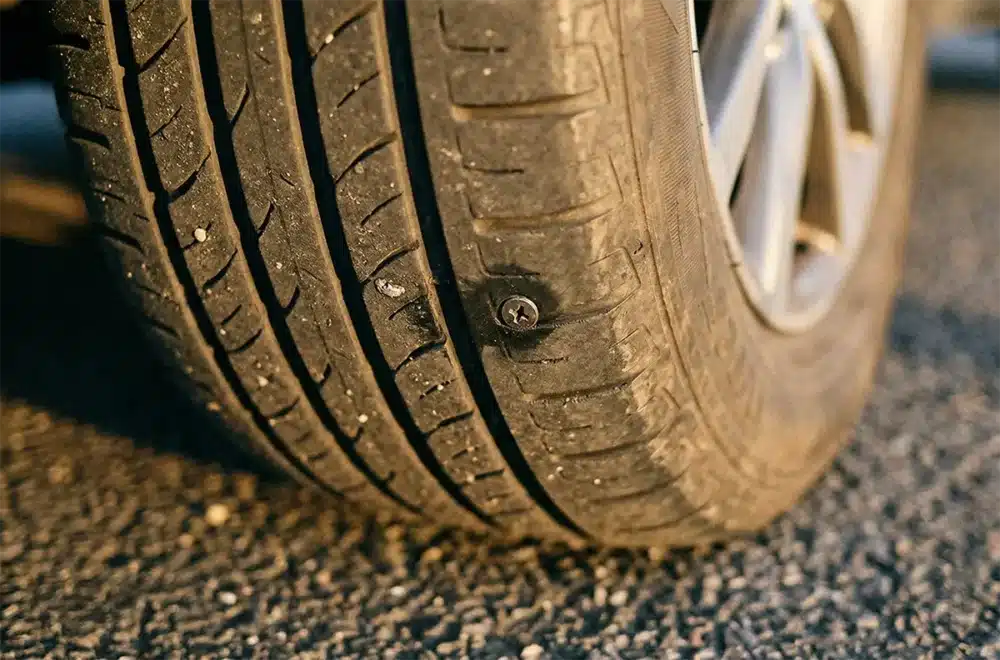
Screw or nail embedded in tire tread causing slow leak
Not every puncture announces itself dramatically. In fact, the majority of punctures I’ve seen — and experienced personally — are slow leaks caused by nails, screws, glass, or other road debris that embeds itself in the tread without immediately deflating the tire.
The object essentially plugs its own hole, which is why you can drive on it for days or even weeks before noticing the pressure loss.
Fast highway driving can dislodge embedded debris and turn a slow leak into a rapid deflation, which is one of the reasons I always recommend checking tire pressure before any long road trip — not just to meet the PSI target, but to catch this kind of situation early.
Tread area punctures can usually be repaired with a professional plug-and-patch if the object is in the central three-quarters of the tread and the hole is less than 1/4 inch in diameter.
Sidewall punctures, however, are not safely repairable — replacement is necessary.
What to do:
Visually inspect your tires once a week by walking around the vehicle. Look for anything embedded in the tread. If your tire is losing 3+ PSI per week, do the soapy water test over the entire tread surface and sidewall to find the leak point before driving further.
6. Bent or Damaged Rims
Hitting a pothole or curb hard enough can bend a rim. Even a slight bend — sometimes not visible to the naked eye — can create a gap between the tire bead and the rim that allows air to escape.
This is especially common with low-profile tires on larger diameter wheels, which have less tire sidewall to absorb impact.
Wheel damage is also common with cracked alloy wheels. A crack in the wheel itself, even a hairline crack, can allow air to seep directly through the metal. These can be genuinely dangerous and should not be driven on.
Heavy steel wheels are more impact-resistant, but they’re not immune — particularly on the lip of the wheel where rim curb rash often occurs.
Cosmetic damage on the outer face of the rim usually doesn’t cause leaks, but damage to the inner bead seat or the back of the rim flange can.
What to do:
If you’ve recently hit a significant pothole or curb and a specific tire keeps losing pressure, have the wheel inspected. Many shops can straighten bent alloy wheels, though cracked wheels should always be replaced. Don’t attempt to weld or DIY repair a cracked wheel.
7. Overloading — Pressure From the Inside Out
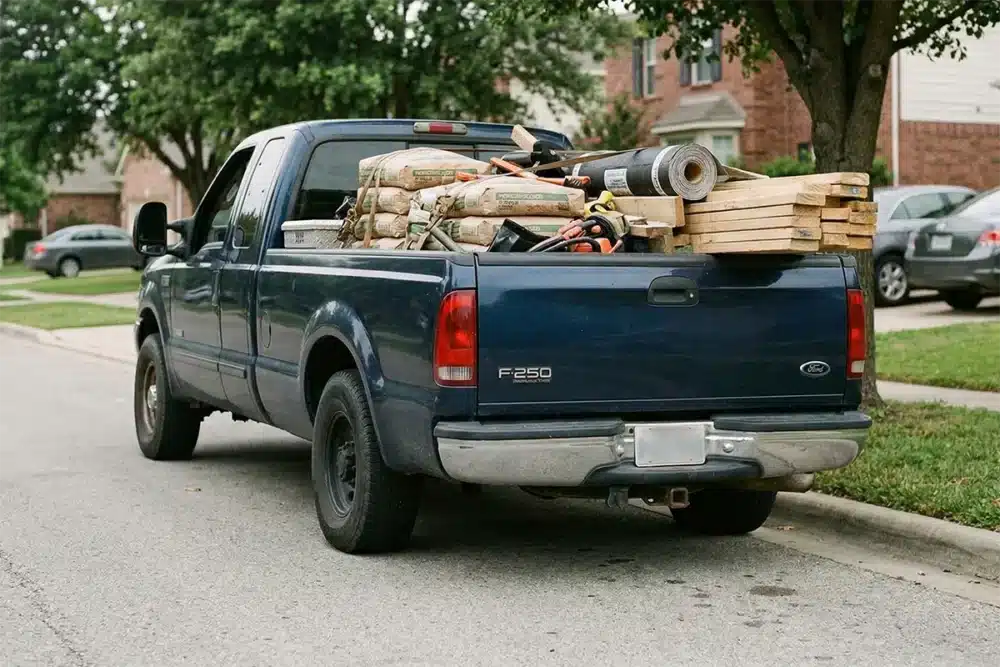
Overloaded truck or SUV with visibly compressed tires
This one surprises people: overloading your vehicle can actually cause your tires to lose pressure faster over time. When a tire carries more weight than it was designed for, the internal structure flexes excessively with each rotation.
This generates heat — and sustained heat buildup accelerates rubber permeation and can stress the internal structure in ways that create micro-leaks.
Every tire has a load index rating stamped on the sidewall — a number that corresponds to the maximum weight that tire can safely support. Running consistently over this rating isn’t just a pressure problem; it’s a safety hazard.
For truck and SUV owners who regularly haul or tow: check your vehicle’s payload rating and make sure your tires’ combined load capacity meets it. It’s an easy thing to overlook when you’re loading up for a camping trip or a home improvement run.
What to do:
Know your tire’s load index and your vehicle’s GVWR (Gross Vehicle Weight Rating). When hauling heavy loads, inflate tires to the higher end of the recommended range specified in your owner’s manual — but never beyond the tire’s max PSI. After a heavy-load trip, inspect your tires carefully for signs of stress.
8. Tire Age and Rubber Degradation
Rubber doesn’t last forever. Over time — typically beyond six to ten years from the manufacture date — the rubber compounds in a tire begin to break down.
The oil and chemical plasticizers that keep rubber flexible and airtight slowly evaporate, leaving the rubber dry, brittle, and prone to micro-cracking.
These tiny cracks aren’t just a cosmetic issue. They increase the permeation rate of air through the tire significantly.
An older tire might lose pressure at two to three times the rate of a new tire, even if it still has adequate tread depth. This is why tread depth alone isn’t a complete measure of whether a tire needs to be replaced.
You can find the manufacture date of your tire by looking at the DOT code on the sidewall. The last four digits represent the week and year of manufacture — ‘2419’ means the 24th week of 2019.
What to do:
If your tires are more than six years old, have them inspected annually by a professional, even if they look fine. Most manufacturers and safety organizations recommend replacing tires at ten years regardless of condition. If the sidewalls show visible cracking or checking, replace immediately.
9. TPMS Sensor Malfunctions — When the Warning is the Problem
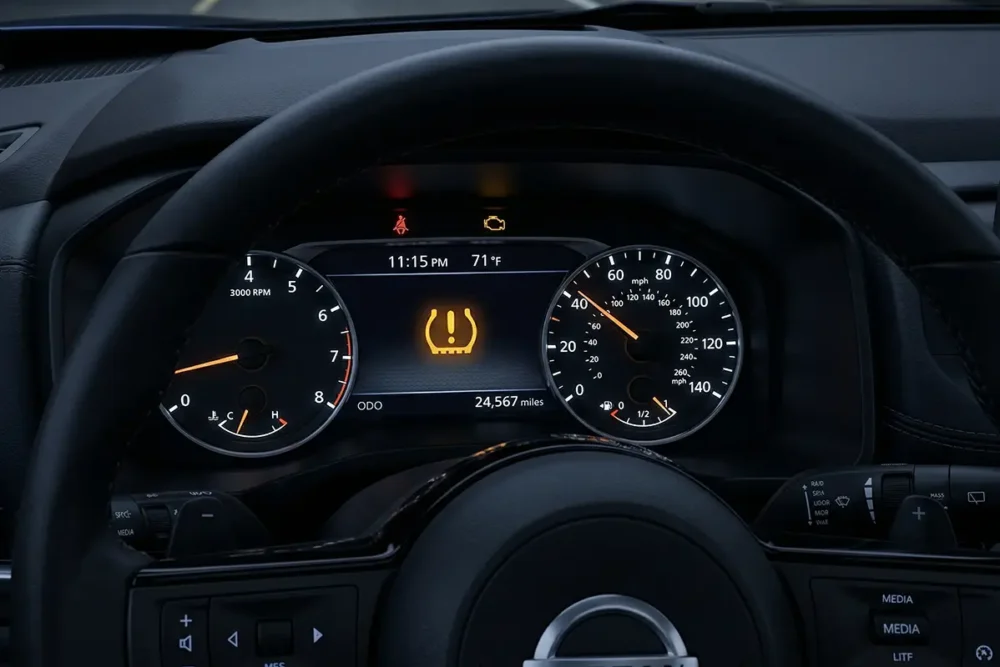
TPMS warning light on car dashboard
This last one is technically not a cause of air loss — but it’s important enough to include because it gets misdiagnosed as a leak constantly.
The TPMS (Tire Pressure Monitoring System) in your car monitors each tire’s pressure via battery-powered sensors inside each wheel. These sensors have a lifespan of about 7–10 years before the battery dies.
A dead or failing TPMS sensor can intermittently report the wrong pressure — sometimes reading low even when the tire is perfectly inflated.
If your TPMS light comes on but your tires check out with a manual gauge, the sensor itself may be the problem.
TPMS sensors can also be damaged during tire mounting or rotation, or corroded from road salt — both of which can cause erratic pressure readings. After a tire rotation or new tire installation, always verify your TPMS sensors are functioning correctly.
What to do:
Never rely solely on your TPMS as a substitute for regular manual pressure checks. If your warning light is on but a gauge confirms correct pressure, have the sensor inspected. TPMS sensor replacement typically runs $50–$100 per sensor including labor — worth it for the peace of mind.
How Fast Should a Tire Actually Lose Pressure?
As a rough benchmark: a healthy tire in good condition, properly mounted, should lose no more than 1–3 PSI per month under normal conditions (accounting for natural permeation).
During winter months with significant temperature swings, you might see additional pressure variation of 2–5 PSI from temperature alone — this is normal.
If any tire is consistently losing more than 5 PSI per month (outside of temperature effects), something is wrong. Investigate using the checklist below before simply topping it off again.
Quick Diagnostic: How to Find the Source of a Slow Leak
When a tire keeps losing pressure and you can’t immediately identify the cause, here’s the process I use:
- Step 1 — Check tire pressure with a quality gauge when tires are cold. Compare to the door jamb sticker spec.
- Step 2 — Mix dish soap with water in a spray bottle. Spray over the entire tread surface, sidewalls, and valve stem.
- Step 3 — Watch for bubbles. Bubbles at the valve stem = valve issue. Bubbles on the tread = puncture. Bubbles around the rim edge = bead leak.
- Step 4 — If no bubbles appear and the tire still loses air, submerge the entire wheel in water (in a tub or tank) to watch for escaping bubbles. This can reveal hairline cracks in the rim.
- Step 5 — Check the DOT date on the sidewall. If the tire is over 6 years old, rubber degradation may be the culprit.
Final Thoughts
Tires losing pressure is one of those maintenance issues that never fully goes away — but understanding why it happens puts you in control.
The vast majority of cases trace back to one of these nine causes, most of which are either free to address (check your valve stem cap, adjust for temperature) or inexpensive to fix.
The one habit that makes the biggest difference? Check your tire pressure monthly with a manual gauge, regardless of what the TPMS says.
It takes two minutes and gives you the kind of awareness that prevents $200 tire shop visits and — more importantly — unsafe driving conditions.
If you found this helpful, my tire buying and maintenance guide goes deeper into tire care, when to replace versus repair, and what to look for when buying your next set.
It’s one of the most comprehensive resources I’ve put together and it pairs well with what we covered here.
Stay safe out there, and keep those tires properly inflated — your fuel economy, handling, and tire life will all thank you.
Frequently Asked Questions: Why Do Tires Lose Pressure?
1. Why does my tire pressure drop when it gets cold outside?
Temperature change is the most common reason for tire pressure loss. Air contracts as it gets cold. For every 10°F drop in ambient temperature, tires typically lose about 1 to 2 PSI. This is why your low-pressure light often comes on during the first chilly morning of fall.
2. Can a perfectly healthy tire lose air?
Yes, it is entirely normal for a brand-new, undamaged tire to lose air over time. Rubber is naturally porous, allowing air molecules to slowly migrate through it and escape—a process known as permeation. You can expect a normal pressure loss of about 1 to 3 PSI every month.
3. I don’t see a flat, but my tire is losing air. What could be the problem?
If there isn’t an obvious puncture, the slow leak could be caused by a few common issues:
Faulty Valve Stem: The small rubber valve stem can become brittle, crack, or fail over time, letting air seep out.
Bead Leaks: The area where the tire rubber meets the metal rim (the bead) can develop leaks due to corrosion, dirt, or improper mounting.
Bent or Damaged Rims: Hitting a pothole or a curb can subtly bend your wheel, breaking the airtight seal between the rim and the tire.
4. How do punctures cause slow leaks?
Sometimes, you might run over a small nail or screw that embeds itself directly into the tread. Instead of causing a sudden blowout, the object essentially plugs its own hole, allowing air to escape very slowly over days or even weeks.
5. Does carrying heavy loads affect my tire pressure?
Yes. Overloading your vehicle puts excessive weight on the tires, causing them to flex more as they rotate. This generates excess heat, accelerating natural air permeation and stressing the internal tire structure, which can create micro-leaks over time.
6. Can the age of my tires cause them to lose air?
Absolutely. As tires age (usually beyond 6 to 10 years), the chemical compounds in the rubber break down and dry out. This makes the rubber brittle and prone to micro-cracking. Older tires can lose pressure two to three times faster than new ones, even if the tread looks fine.
7. My TPMS light is on, but my manual gauge says the pressure is fine. Why?
Tire Pressure Monitoring System (TPMS) sensors run on small batteries that typically last 7 to 10 years. If the sensor is failing or the battery is dying, it can falsely trigger the warning light on your dashboard, making you think you have a leak when you actually don’t.
8. How often should I check my tire pressure?
Because of temperature fluctuations and natural air permeation, it is highly recommended to check your tire pressure at least once a month, and always first thing in the morning when the tires are “cold” (before you’ve driven on them).