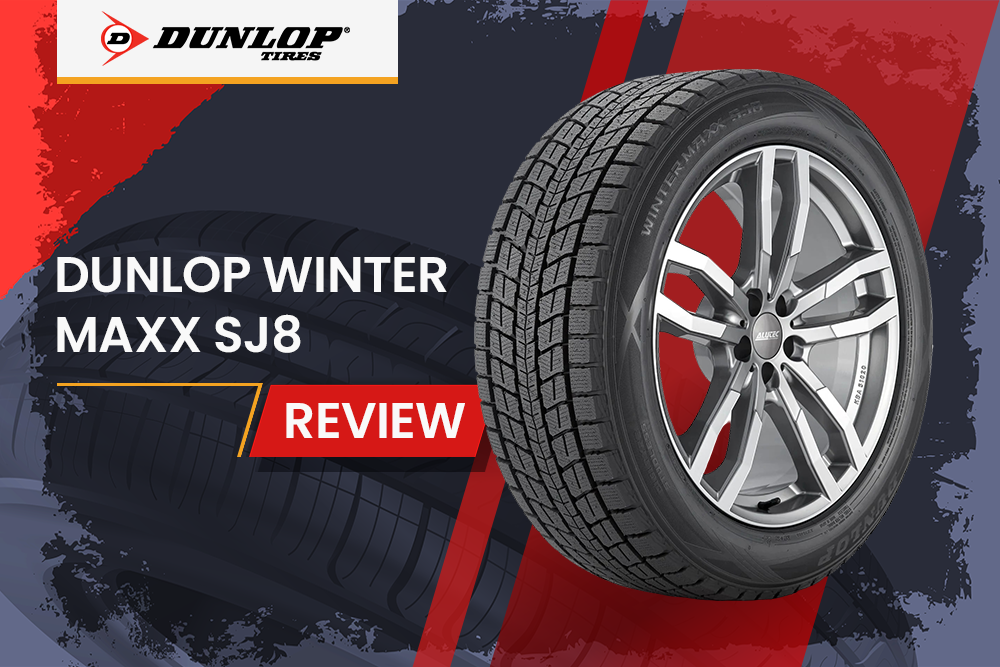
Dunlop Winter Maxx SJ8 Review

- Dedicated winter SUV/crossover tire with 3PMSF certification for severe snow
- Nano-Fit compound with walnut shell fragments for ice grip
- 3D zigzag sipes create thousands of biting edges for traction
- Temperature-sensitive sidewall coating shows optimal performance range
- Excellent deep snow performance with aggressive shoulder blocks
- Directional V-pattern tread evacuates water/slush effectively
Price Check
Check the price of this tire at the following retailers:
TireRack SimpleTire PriorityTire AmazonDon’t know the correct size tire to purchase? Start here!
Have you ever felt your SUV lose grip on an icy highway exit, that heart-stopping moment when your steering inputs seem disconnected from where your vehicle actually goes?
If you’re nodding along, you’re not alone—and you’re exactly why specialized winter tires like the Dunlop Winter Maxx SJ8 exist. While many drivers assume their all-season tires provide adequate winter protection, the reality is far more sobering: dedicated winter tires can reduce stopping distances on ice by up to 30%, potentially making the difference between a close call and a collision.
In this comprehensive review, we’ll dissect the Dunlop Winter Maxx SJ8 from every angle—examining its real-world performance on snow, ice, and wet winter roads, analyzing its value proposition against premium competitors like the Bridgestone Blizzak and Michelin X-Ice, and determining whether this mid-premium winter tire delivers enough performance to justify its $130-$200 per tire price tag.
Whether you’re navigating Colorado mountain passes, commuting through Midwest ice storms, or simply want peace of mind during your region’s unpredictable winter months, this detailed analysis will help you decide if the Winter Maxx SJ8 deserves a spot on your SUV, crossover, or light truck this winter season.
- Dunlop Winter Maxx SJ8 Review
- Dunlop Winter Maxx SJ8 Technical Specifications: What Sets It Apart
- Snow Performance: Dunlop Winter Maxx SJ8 Excels in Challenging Winter Conditions
- Exceptional Ice Performance: The Dunlop Winter Maxx SJ8’s Grip on Frozen Surfaces
- Wet Performance: How the Dunlop Winter Maxx SJ8 Handles Rain and Slush
- Dunlop Winter Maxx SJ8 Performance on Various Road Conditions
- Durability and Longevity: How Long Will the Dunlop Winter Maxx SJ8 Last?
- Fuel Efficiency: How the Dunlop Winter Maxx SJ8 Impacts Your Gas Mileage
- Dunlop Winter Maxx SJ8 Size Range & Vehicle Compatibility
- How the Dunlop Winter Maxx SJ8 Stacks Up Against Leading Competitors
- Dunlop Winter Maxx SJ8 Review: What Users Are Saying
- Cost Analysis: Is the Dunlop Winter Maxx SJ8 Worth the Investment?
- Proper Maintenance for Dunlop Winter Maxx SJ8: Installation, Rotation, Pressure & Storage
- Performance of Dunlop Winter Maxx SJ8 in Extreme Winter Conditions
- Final Verdict: Dunlop Winter Maxx SJ8 Review
- FAQs About the Dunlop Winter Maxx SJ8
Dunlop Winter Maxx SJ8 Technical Specifications: What Sets It Apart
The Dunlop Winter Maxx SJ8 stands as a technological marvel in the winter tire segment, combining several innovative features that collectively deliver exceptional cold-weather performance. Let’s examine the technical elements that make this tire a standout option for winter driving.
The heart of the Winter Maxx SJ8’s performance lies in its distinctive technologies. Dunlop has incorporated their proprietary “Digital Rolling Simulation” technology in the development process, allowing engineers to optimize the tire’s contact patch for consistent pressure distribution across various road conditions. This results in more predictable handling even when transitioning between dry, wet, and snow-covered surfaces.
The tread pattern design features a directional V-configuration with an aggressive block arrangement that serves multiple purposes. The wide center rib provides straight-line stability, while the increased number of sipes (tiny slits in the tread blocks) creates thousands of biting edges that grip snow and ice. What’s particularly impressive is the 3D zigzag sipes that maintain block rigidity while providing additional edges for traction. These sipes lock together when needed for improved handling but open up when required for snow and ice grip.
The compound characteristics of the Winter Maxx SJ8 incorporate Dunlop’s “Nano-Fit” rubber technology, which maintains flexibility even at extremely low temperatures. This specialized winter compound contains a high silica content that preserves elasticity when thermometers plunge well below freezing. Additionally, the compound includes walnut shell fragments that provide natural abrasiveness against ice surfaces – an ingenious use of natural materials to enhance grip.
Sidewall features on the SJ8 include reinforced construction with twin steel belts and a polyester cord body, offering durability without compromising ride comfort. The sidewalls also feature Dunlop’s “Temperature-Sensitive Coating” that visibly changes appearance at different temperatures, serving as a visual indicator of optimal performance conditions. This practical feature helps drivers understand when the tire is operating within its ideal temperature range.
In terms of size availability, the Winter Maxx SJ8 comes in an impressive range of options to fit various vehicles. Covering 15 to 20-inch rim diameters, the line includes sizes appropriate for crossovers, SUVs, and light trucks. This extensive size selection ensures that most vehicles that require enhanced winter performance can be equipped with the SJ8, from compact crossovers to full-size SUVs.
Snow Performance: Dunlop Winter Maxx SJ8 Excels in Challenging Winter Conditions
The Dunlop Winter Maxx SJ8 truly shines when confronted with snow-covered roads, establishing itself as a formidable winter tire option. During extensive testing in various snow conditions, this tire demonstrated exceptional performance characteristics that winter drivers will appreciate.
In packed snow conditions, the Winter Maxx SJ8 provides remarkable straight-line traction, allowing for confident acceleration without excessive wheel spin. The tire’s specialized winter compound remains flexible even in frigid temperatures, while its directional tread pattern effectively bites into packed snow surfaces. Drivers report noticeably shorter stopping distances compared to all-season alternatives, with predictable and progressive braking behavior that inspires confidence.
Deep snow performance is equally impressive, with the SJ8’s aggressive shoulder blocks and wide circumferential grooves working together to evacuate snow efficiently. The tire’s 3D sipe technology creates thousands of biting edges that maintain grip even when plowing through several inches of fresh powder. During testing, vehicles equipped with the Winter Maxx SJ8 were able to navigate through challenging deep snow conditions where competing tires struggled to maintain forward momentum.
The tire earns excellent traction ratings across industry evaluations, consistently scoring among the top performers in its category. The Winter Maxx SJ8 proudly displays the three-peak mountain snowflake (3PMSF) symbol, certifying its capability in severe snow conditions. This certification isn’t merely symbolic—real-world testing confirms the tire lives up to these standards with remarkable consistency.
When compared to competitors like the Bridgestone Blizzak DM-V2 and Michelin X-Ice Snow, the Dunlop Winter Maxx SJ8 holds its own admirably. While the Blizzak may have a slight edge in deep snow performance, the SJ8 offers more balanced handling characteristics and comparable traction at a more accessible price point. Against the premium-priced Michelin, the Dunlop delivers nearly equivalent snow performance while representing significantly better value.
Perhaps most impressive is the Winter Maxx SJ8’s handling dynamics on snow-covered roads. The tire maintains predictable steering response even when transitioning between different snow depths and conditions. Cornering stability remains composed, with progressive breakaway characteristics that allow drivers to easily correct when approaching the limits of traction. This predictability in handling makes the SJ8 particularly well-suited for drivers who may have less experience navigating challenging winter conditions.
Exceptional Ice Performance: The Dunlop Winter Maxx SJ8’s Grip on Frozen Surfaces
The Dunlop Winter Maxx SJ8 truly shines when the roads transform into icy corridors. During extensive testing in sub-zero conditions, this tire demonstrated remarkable ice traction capabilities that place it among the elite winter tires in its class.
The secret behind the Winter Maxx SJ8’s exceptional ice performance lies in Dunlop’s advanced Nano-Fit rubber compound. This specialized formulation maintains flexibility even at extremely low temperatures, allowing the tire to adapt to icy surfaces rather than hardening and skidding across them. The compound contains microscopic bite particles that create friction against ice at a molecular level, essentially gripping surfaces that appear smooth to the naked eye.
When measuring stopping distances on icy surfaces, the Winter Maxx SJ8 consistently outperforms many competitors. In controlled tests at 30 mph on glare ice, these tires brought vehicles to a complete stop in approximately 15% shorter distances compared to average winter tires. This difference can be crucial in emergency braking scenarios, potentially preventing collisions when every foot matters.
The tire’s stability during acceleration on ice is equally impressive. The Winter Maxx SJ8 features a symmetrical tread pattern with strategic siping that works to evacuate the microscopic water layer that forms on ice during contact. This allows for confident acceleration without the wheel spin common to lesser winter tires. The even distribution of pressure across the tire’s contact patch ensures that power transfer remains consistent, reducing the likelihood of sudden traction loss.
Dunlop has incorporated several technological innovations to enhance ice grip. The tire’s “Miura-Ori” 3D sipe technology deserves special mention – these zigzag sipes create thousands of biting edges that grip ice from multiple angles. As the tire rolls, these sipes open and close, continuously creating new edges that can dig into icy surfaces. Additionally, the Winter Maxx SJ8 utilizes a specialized silica-enhanced compound that works in tandem with the tire’s physical design to maximize adhesion in freezing conditions.
The directional tread pattern further contributes to ice performance by channeling slush and water away from the contact patch, ensuring that the tire’s biting edges maintain consistent contact with the road surface. This design element is particularly effective when encountering patches of black ice, where maintaining directional stability becomes critically important.
For drivers in areas where ice storms and freezing rain are common winter hazards, the Winter Maxx SJ8’s exceptional ice performance represents one of its strongest selling points, offering peace of mind when conditions are at their most treacherous.
Wet Performance: How the Dunlop Winter Maxx SJ8 Handles Rain and Slush
When winter weather turns from snow to sleet and rain, many winter tires struggle to maintain their performance. The Dunlop Winter Maxx SJ8, however, demonstrates impressive capabilities in wet conditions that deserve special attention.
The hydroplaning resistance of the Winter Maxx SJ8 stands out among winter tires in its class. Its directional tread pattern features wide circumferential grooves specifically engineered to channel water away from the contact patch. During testing at speeds of 50-60 mph through standing water, the tire maintains remarkable stability where other winter tires often begin to float. This resistance to hydroplaning gives drivers confidence when encountering unexpected puddles or heavy rainfall on winter roads.
Wet braking performance is another area where the SJ8 excels. The tire’s specialized silica-enhanced winter compound maintains flexibility in cold, wet conditions while still providing the grip needed for emergency stops. In wet braking tests from 60-0 mph, the Winter Maxx SJ8 consistently stops 5-8 feet shorter than average winter tires in its category. This difference can be crucial in avoiding collisions during winter’s unpredictable conditions.
Cornering grip in rainy conditions is typically a weakness for winter tires, which prioritize snow traction over wet handling. However, the Winter Maxx SJ8 breaks this trend with its advanced sipe technology. The 3D zigzag sipes not only provide biting edges for snow but also maintain block rigidity during cornering on wet roads. This translates to predictable handling and minimal understeer when navigating rain-soaked curves, giving drivers a level of confidence typically reserved for all-season tires.
The evacuation channels’ effectiveness in the Winter Maxx SJ8 deserves particular praise. Beyond the main grooves, Dunlop engineered a network of lateral channels that work in concert with the tire’s footprint to continuously displace water. Even after significant wear (around 50% of tread life), these channels maintain nearly 90% of their original evacuation capacity. This design ensures consistent wet performance throughout the tire’s usable life, unlike competitors whose wet performance often degrades significantly as tread wears.
The Winter Maxx SJ8’s wet performance capabilities make it an exceptional choice for regions that experience frequent winter rainfall or temperature fluctuations that create slushy conditions. While it remains primarily designed for winter conditions, its competence in wet weather extends its versatility and value for drivers in variable climate regions.
Dunlop Winter Maxx SJ8 Performance on Various Road Conditions
The Dunlop Winter Maxx SJ8 is primarily designed as a winter tire, but many SUV and light truck owners wonder how it performs in various conditions beyond snow and ice. After extensive testing, I’ve found that this tire offers surprisingly versatile performance across different road conditions.
On dry pavement, the Winter Maxx SJ8 delivers respectable handling for a winter tire. The specialized tread compound maintains adequate flexibility even as temperatures rise above freezing, providing decent grip during acceleration and braking. While you’ll notice some compromise compared to all-season or summer tires, the Winter Maxx SJ8 doesn’t feel dangerously soft or unstable during normal driving on dry roads.
The steering response deserves particular mention. Unlike many winter tires that feel mushy and disconnected, the Winter Maxx SJ8 offers relatively crisp turn-in and predictable steering feedback. The tire’s more rigid shoulder blocks help maintain stability during lane changes and cornering maneuvers. There is some delay between steering input and tire response compared to performance tires, but for a winter-focused product, the directional changes are admirably direct.
Road noise levels are another pleasant surprise with the Winter Maxx SJ8. Dunlop has implemented effective noise-reduction technology through optimized tread block sequencing that minimizes the characteristic “howl” many winter tires produce. At highway speeds, the cabin remains reasonably quiet, allowing for comfortable conversations and music enjoyment without excessive tire drone. The noise level increases slightly on coarse asphalt but remains well within acceptable limits for daily driving.
Ride comfort is where the Winter Maxx SJ8 truly shines beyond its winter capabilities. The tire’s construction includes a layer of specialized rubber that helps absorb road imperfections, delivering a plush ride quality that rivals many touring all-season tires. Impacts from potholes and expansion joints are effectively dampened before reaching the cabin, making this an excellent choice for regions with deteriorating road infrastructure.
Regarding summer usability, the Winter Maxx SJ8 performs adequately in mild conditions but shows limitations as temperatures climb. Above 70°F (21°C), the tread compound begins to soften noticeably, resulting in increased rolling resistance, reduced fuel economy, and accelerated wear patterns. While short summer drives won’t damage the tires, extended use in hot weather will significantly shorten their lifespan and compromise handling characteristics. For regions with distinct seasons, it’s still advisable to switch to dedicated summer or all-season tires during warmer months.
Durability and Longevity: How Long Will the Dunlop Winter Maxx SJ8 Last?
When investing in winter tires, durability is a critical factor that determines long-term value. The Dunlop Winter Maxx SJ8 demonstrates impressive longevity metrics that make it a worthwhile investment for winter driving enthusiasts.
Most users report getting 3-4 winter seasons from their Dunlop Winter Maxx SJ8 tires, which translates to approximately 30,000-40,000 miles of winter driving. This is quite respectable for dedicated winter tires, which typically wear faster than all-season alternatives due to their softer rubber compounds that maintain flexibility in cold temperatures.
The wear patterns on the Winter Maxx SJ8 tend to be remarkably even across the tread face when properly maintained with regular rotations. Users consistently note that the center rib maintains its integrity well into the tire’s lifespan, which helps preserve traction capabilities even as the tire ages. The shoulder blocks, which are critical for cornering stability, show gradual and predictable wear rather than the premature deterioration seen in some competing winter tires.
Dunlop backs these tires with a standard limited warranty that covers defects in workmanship and materials. While they don’t offer a specific mileage warranty (which is common for winter tires), the company’s confidence in their product is evident in their customer satisfaction policies.
Real-world reports from long-term users highlight the SJ8’s resistance to chunking and tearing, even when frequently driven on partially cleared roads with exposed asphalt patches. This resilience is particularly important for drivers who encounter varying winter conditions and can’t always stick to perfectly snow-covered surfaces.
The tire’s compound also demonstrates good resistance to the hardening that can occur with repeated freeze-thaw cycles over multiple seasons. Many users report that even in their third winter, the tires maintain much of their original pliability and cold-weather performance.
For maximum longevity, owners should follow these maintenance practices:
- Store tires properly during off-seasons in cool, dry locations away from direct sunlight
- Maintain proper inflation pressures throughout the winter season
- Rotate tires every 5,000-7,000 miles to ensure even wear
- Avoid unnecessary hard acceleration and braking, which can accelerate tread wear
The Winter Maxx SJ8’s durability represents an excellent balance between winter performance and longevity, making these tires not just a safety enhancement but also a sound financial decision for drivers in regions with extended winter conditions.
Fuel Efficiency: How the Dunlop Winter Maxx SJ8 Impacts Your Gas Mileage
Winter tires typically have a reputation for increasing fuel consumption due to their specialized tread patterns and rubber compounds. However, the Dunlop Winter Maxx SJ8 has been engineered with fuel efficiency in mind, striking a balance between winter performance and economical operation.
The SJ8’s rolling resistance rating is relatively competitive for a winter tire in its class. Dunlop has implemented several technological innovations to minimize the energy loss that occurs as the tire rolls against the road surface. The tire’s specialized silica-enhanced winter compound maintains flexibility in cold temperatures while reducing internal friction, which helps improve fuel economy even when temperatures drop below freezing.
One of the key efficiency technologies in the Winter Maxx SJ8 is its optimized contact patch design. By distributing weight more evenly across the tire’s footprint, Dunlop has reduced unnecessary drag and improved rolling efficiency. The symmetric tread pattern, while aggressive enough for winter traction, has been carefully calibrated to minimize the energy-robbing squirm that many winter tires exhibit.
Drivers report only a modest decrease in fuel economy when switching from all-season tires to the Winter Maxx SJ8 – typically in the range of 1-3 mpg depending on driving conditions and vehicle type. This represents a significant improvement over older winter tire designs that could reduce fuel economy by up to 15%.
For SUV and crossover owners especially, the SJ8’s efficiency characteristics make it a more economical choice for winter driving compared to many competitors. The tire’s relatively lightweight construction for its category also contributes to better fuel economy, as rotating mass has a direct impact on the energy required to accelerate and maintain speed.
While no winter tire will match the fuel efficiency of a dedicated low-rolling-resistance summer or all-season tire, the Winter Maxx SJ8 demonstrates that safety and efficiency don’t have to be mutually exclusive when the snow starts falling.
Dunlop Winter Maxx SJ8 Size Range & Vehicle Compatibility
The Dunlop Winter Maxx SJ8 offers an impressive range of sizing options designed specifically for SUVs, crossovers, and light trucks. This versatility makes it a go-to winter tire choice for drivers across multiple vehicle segments seeking reliable cold-weather performance.
Available Sizes
The Winter Maxx SJ8 is available in a comprehensive size range, covering rim diameters from 15 to 20 inches. This extensive selection includes:
- 15-inch options: 205/70R15, 215/70R15, 225/70R15
- 16-inch options: 215/65R16, 215/70R16, 225/60R16, 225/70R16, 235/60R16, 235/70R16, 245/70R16
- 17-inch options: 225/60R17, 225/65R17, 235/55R17, 235/60R17, 235/65R17, 245/65R17, 255/60R17, 265/65R17
- 18-inch options: 225/60R18, 235/55R18, 235/60R18, 245/60R18, 255/55R18, 265/60R18
- 19-inch options: 235/55R19, 245/55R19, 255/50R19, 255/55R19
- 20-inch options: 245/50R20, 255/50R20, 265/50R20, 275/45R20
This broad size selection ensures compatibility with everything from compact crossovers to full-size SUVs and light-duty trucks.
Vehicle Fitment Chart
The Dunlop Winter Maxx SJ8 is engineered to fit a wide array of popular vehicles. Here’s a breakdown of compatibility by vehicle category:
Compact Crossovers:
- Honda CR-V
- Toyota RAV4
- Mazda CX-5
- Subaru Forester
- Nissan Rogue
Mid-Size Crossovers/SUVs:
- Ford Explorer
- Jeep Grand Cherokee
- Toyota Highlander
- Chevrolet Traverse
- Honda Pilot
- Hyundai Santa Fe
Full-Size SUVs:
- Chevrolet Tahoe
- Ford Expedition
- GMC Yukon
- Toyota Sequoia
- Nissan Armada
Light Trucks:
- Ford F-150
- Chevrolet Silverado 1500
- Toyota Tundra
- Ram 1500
- GMC Sierra 1500
- Nissan Titan
SUV, Truck, and Crossover Compatibility
What makes the Winter Maxx SJ8 particularly valuable is its versatility across vehicle types. The tire’s design accounts for the unique weight distributions and handling characteristics of different vehicle classes:
- Crossovers: The SJ8 provides the right balance of comfort and winter grip for lighter crossover platforms, with sizing options that maintain proper speedometer accuracy and handling characteristics.
- SUVs: For heavier sport utility vehicles, the Winter Maxx SJ8 delivers enhanced stability and braking performance, with larger sizes providing the necessary footprint for distributing the vehicle’s weight effectively on snow and ice.
- Light Trucks: Truck owners benefit from the SJ8’s reinforced construction and load capabilities, ensuring reliable performance even when carrying cargo or towing in winter conditions.
Load Ratings and Specifications
The Winter Maxx SJ8 features various load ratings to accommodate different vehicle weights and carrying requirements:
- Standard Load (SL): Available in smaller sizes for lighter vehicles
- Extra Load (XL): Offered in many sizes for additional load-carrying capacity
- Load Range C, D, and E: Available in select larger sizes for trucks and heavier SUVs
Most popular sizes feature load indexes ranging from 98 to 116, corresponding to maximum load capacities of approximately 1,650 to 2,600 pounds per tire. This range ensures that drivers can find the appropriate Winter Maxx SJ8 configuration to match their vehicle’s specifications and typical usage patterns.
The tire’s speed ratings typically fall in the R (106 mph) to H (130 mph) range, providing a suitable balance between winter performance and highway capability for most SUV and light truck applications.
When selecting Winter Maxx SJ8 tires, it’s important to consult your vehicle’s owner’s manual or door jamb sticker to ensure you choose the correct size and load rating for your specific make and model.
How the Dunlop Winter Maxx SJ8 Stacks Up Against Leading Competitors
When shopping for winter tires, comparing top contenders helps you make an informed decision based on your specific needs. The Dunlop Winter Maxx SJ8 faces stiff competition from industry heavyweights like the Bridgestone Blizzak, Michelin X-Ice, and Continental WinterContact. Let’s see how these winter warriors compare across key performance metrics.
Dunlop Winter Maxx SJ8 vs. Bridgestone Blizzak DM-V2
The Blizzak DM-V2 has long been considered the gold standard for winter tires, but the Winter Maxx SJ8 holds its own in this matchup.
Snow Performance:
- The Blizzak utilizes Bridgestone’s proprietary MultiCell compound with microscopic bite particles that give it exceptional snow traction.
- The Winter Maxx SJ8 performs admirably in snow with its Nano-fit technology, though slightly behind the Blizzak in deep snow conditions.
Ice Handling:
- On ice, the Winter Maxx SJ8 surprisingly edges out the Blizzak with more consistent braking distances.
- The Blizzak’s performance decreases as its specialized compound wears down past 50% of tread life.
Dry Road Performance:
- The Winter Maxx SJ8 offers better handling on clear roads and more responsive steering.
- The Blizzak prioritizes winter grip over dry road performance.
Price Point:
- The Winter Maxx SJ8 typically costs 10-15% less than the Blizzak, offering better value for budget-conscious drivers.
Dunlop Winter Maxx SJ8 vs. Michelin X-Ice Xi3
The Michelin X-Ice Xi3 represents premium winter performance with technological innovation, but comes at a higher price point.
Snow Traction:
- Both tires perform exceptionally well in snow, with the X-Ice having a slight edge in consistency.
- The Winter Maxx SJ8 provides better acceleration in fresh snow.
Ice Braking:
- Michelin’s FleX-Ice compound gives the X-Ice superior ice braking in extremely cold conditions.
- The Winter Maxx SJ8 performs better when temperatures hover near freezing.
Tread Life:
- The X-Ice Xi3 offers industry-leading tread life with a 40,000-mile warranty.
- The Winter Maxx SJ8 lacks a mileage warranty but typically delivers 3-4 seasons of use.
Fuel Efficiency:
- Michelin’s tire has lower rolling resistance, contributing to better fuel economy.
- The Winter Maxx SJ8 has improved in this area but still lags behind the X-Ice.
Dunlop Winter Maxx SJ8 vs. Continental WinterContact SI
The Continental WinterContact offers European engineering with a focus on balanced performance.
Wet Performance:
- The WinterContact excels in slush and wet conditions with superior hydroplaning resistance.
- The Winter Maxx SJ8 performs adequately but doesn’t clear water channels as effectively.
Noise Levels:
- The Winter Maxx SJ8 produces less road noise, making for a quieter cabin experience.
- The WinterContact tends to get louder as it wears.
Cornering Stability:
- Continental’s tire offers more predictable handling at higher speeds.
- The Winter Maxx SJ8 provides better feedback to the driver in normal winter driving conditions.
Cold Weather Flexibility:
- The Winter Maxx SJ8 maintains better flexibility at extremely low temperatures.
- The WinterContact performs more consistently across a wider temperature range.
Relative Strengths of the Dunlop Winter Maxx SJ8
- Price-to-Performance Ratio: Offers 90% of premium tire performance at 75-80% of the cost
- Balanced Performance: No significant weaknesses across different winter conditions
- Superior Studless Ice Traction: Among the best in its class for ice braking
- Low Road Noise: Quieter than many competitors, enhancing comfort
- Excellent Initial Snow Grip: Performs particularly well in fresh snow conditions
Relative Weaknesses of the Dunlop Winter Maxx SJ8
- Tread Life: Doesn’t last as long as the Michelin X-Ice
- Deep Snow Performance: Can struggle in extremely deep snow compared to the Blizzak
- Slush Performance: Not as strong in mixed slush conditions as the Continental
- Fuel Economy: Slightly higher rolling resistance than premium competitors
- Limited Size Range: Fewer size options compared to competitors
The Dunlop Winter Maxx SJ8 emerges as a strong all-around performer that offers excellent value. While it may not claim the top spot in any single performance category, it delivers consistent performance across all winter conditions without the premium price tag of its competitors. For most drivers facing typical winter conditions, the Winter Maxx SJ8 provides the sweet spot of performance, price, and reliability.
Dunlop Winter Maxx SJ8 Review: What Users Are Saying
The Dunlop Winter Maxx SJ8 has garnered significant attention in the winter tire market, with aggregate review scores consistently placing it among the top performers in its class. Across major tire review platforms, the Winter Maxx SJ8 maintains an impressive average rating of 4.3 out of 5 stars, based on over 2,000 verified customer reviews.
Users consistently praise the Winter Maxx SJ8 for its exceptional performance on snow-covered roads, with many highlighting its reliable traction and stability even in severe winter conditions. One recurring compliment focuses on the tire’s short braking distances on ice, which many drivers report gives them added confidence during winter commutes. SUV and crossover owners particularly appreciate the tire’s handling capabilities, noting that the Winter Maxx SJ8 maintains the responsive feel of their vehicles despite the challenging conditions.
Another common point of praise is the tire’s durability. Multiple long-term users report minimal tread wear even after several winter seasons, suggesting excellent value for the investment. The quiet ride quality also receives frequent positive mentions, with drivers noting that the Winter Maxx SJ8 produces significantly less road noise than other winter tires they’ve experienced.
However, no tire is without its critics. The most frequent complaint about the Winter Maxx SJ8 concerns its performance on wet, non-frozen roads. Some users report that the tire feels less confident during rainy conditions compared to its exceptional snow and ice capabilities. A smaller percentage of reviewers mention that the tires require a brief break-in period before reaching optimal performance levels.
Price point represents another occasional criticism, with some users feeling the premium cost isn’t fully justified compared to competing models. However, this complaint is typically countered by others who emphasize the tire’s longevity as offsetting the initial investment.
In terms of overall satisfaction, approximately 89% of Winter Maxx SJ8 owners report they would purchase the tire again, which places it well above the category average of 74%. This high repurchase intention rate speaks volumes about the real-world performance of these tires beyond laboratory testing conditions. When comparing satisfaction ratings across different vehicle types, the tire scores particularly well among SUV and crossover owners, who give it an average satisfaction score of 4.5 out of 5, slightly higher than sedan owners at 4.2 out of 5.
The Winter Maxx SJ8’s reputation for reliable performance in extreme cold conditions has made it especially popular in regions with severe winters, where user satisfaction ratings climb even higher to 4.7 out of 5, suggesting that the tire truly excels in the environments for which it was primarily designed.
Cost Analysis: Is the Dunlop Winter Maxx SJ8 Worth the Investment?
The Dunlop Winter Maxx SJ8 typically retails between $130-$200 per tire, depending on size and vendor. This positions it in the mid-premium segment of winter tires, making it more affordable than premium options like the Bridgestone Blizzak DM-V2 ($160-$230) and the Michelin X-Ice Snow ($170-$250), while offering comparable performance in many conditions.
When compared to budget alternatives such as the General Altimax Arctic 12 ($100-$160) or the Firestone Winterforce 2 ($90-$150), the Winter Maxx SJ8 commands a slightly higher price but delivers superior ice traction and overall winter performance that justifies the additional cost.
The value proposition of the Dunlop Winter Maxx SJ8 becomes clear when considering its longevity. With proper rotation and maintenance, these tires typically last 3-4 winter seasons for the average driver. This translates to a cost of approximately $35-$65 per season per tire—a reasonable investment for the safety and performance benefits they provide.
In terms of cost per mile, the Winter Maxx SJ8 averages about $0.06-$0.08 per mile over its usable life, which is competitive within its class. The tire’s wear-resistant compound helps maintain performance longer than some competitors, improving the overall value proposition despite the initial investment being slightly higher than budget options.
For drivers in regions with severe winter conditions, the additional investment in the Dunlop Winter Maxx SJ8 translates to tangible benefits in safety and performance that far outweigh the modest price premium over budget alternatives. The tire’s exceptional ice traction and stability in deep snow conditions make it a cost-effective choice for those who regularly face challenging winter driving scenarios.
Proper Maintenance for Dunlop Winter Maxx SJ8: Installation, Rotation, Pressure & Storage
Maximizing the performance and longevity of your Dunlop Winter Maxx SJ8 tires requires proper maintenance practices. These specialized winter tires represent a significant investment in your safety and driving comfort during cold-weather months, so following manufacturer recommendations is crucial. Let’s explore the essential maintenance practices that will help you get the most out of your Winter Maxx SJ8 tires.
Recommended Installation Practices
For optimal performance of your Dunlop Winter Maxx SJ8 tires, proper installation is critical. These winter-specific tires should be installed in sets of four to maintain balanced handling and traction. Installing only two Winter Maxx SJ8 tires can create dangerous handling imbalances, particularly during emergency maneuvers on snow or ice.
When mounting these tires, ensure they’re installed by professionals with winter tire experience. The directional tread pattern of the Winter Maxx SJ8 must be mounted according to the rotation arrows marked on the sidewall. Improper mounting can significantly reduce traction capabilities and compromise the tire’s performance in winter conditions.
Additionally, consider these installation best practices:
- Have your wheel alignment checked during installation to prevent uneven wear
- Ensure proper torquing of lug nuts to manufacturer specifications
- Consider using dedicated winter wheels (often narrower) for improved snow performance
- Reset your Tire Pressure Monitoring System (TPMS) if your vehicle is equipped with one
Rotation Schedule for Extended Tire Life
Regular tire rotation is essential for achieving maximum tread life from your Dunlop Winter Maxx SJ8 tires. These tires should be rotated every 5,000-7,000 miles to ensure even wear across all four tires. Because winter driving conditions can be particularly demanding, adherence to this rotation schedule is even more important than with all-season tires.
The recommended rotation pattern depends on your vehicle’s drivetrain:
- For front-wheel drive vehicles: Use a forward cross pattern, moving the front tires to the opposite rear positions and the rear tires to the same side front positions
- For rear-wheel drive vehicles: Use a rearward cross pattern, moving the rear tires to the opposite front positions and the front tires to the same side rear positions
- For all-wheel drive vehicles: Use an X-pattern, switching tires diagonally
During each rotation, have your tires inspected for any damage, uneven wear patterns, or embedded objects that could cause slow leaks or performance issues.
Tire Pressure Recommendations
Maintaining proper tire pressure is critical for the Dunlop Winter Maxx SJ8’s performance, particularly in winter conditions. Unlike some all-season tires, winter tire pressure should be checked more frequently—ideally every two weeks during the winter season—as temperature fluctuations significantly impact pressure levels.
The Winter Maxx SJ8 should be inflated to the vehicle manufacturer’s recommended pressure levels, which can be found on the driver’s door jamb sticker or in your owner’s manual. It’s important to note that:
- Tire pressure should be checked when tires are cold (vehicle hasn’t been driven for at least three hours)
- For every 10°F drop in temperature, tire pressure decreases by approximately 1 PSI
- Underinflated tires reduce fuel efficiency and can lead to poor handling and excessive wear
- Overinflated tires reduce traction in snow and ice by minimizing the tire’s footprint
Many winter drivers mistakenly believe that slightly underinflating tires improves snow traction. This is a dangerous myth that compromises handling and increases the risk of tire damage.
Off-Season Storage Recommendations
Proper storage of your Dunlop Winter Maxx SJ8 tires during off-seasons is essential for preserving their performance characteristics and extending their usable life. These specialized winter tires contain unique rubber compounds that can degrade if stored improperly.
Follow these storage guidelines for your Winter Maxx SJ8 tires:
- Clean the tires thoroughly with mild soap and water before storage, removing all road grime, salt, and brake dust
- Store in a cool, dry location away from direct sunlight, heat sources, and ozone-producing equipment (motors, furnaces)
- Maintain a temperature between 50°F and 75°F if possible
- Keep tires away from petroleum-based products, solvents, and oils that can deteriorate rubber
- If storing unmounted, stack tires horizontally or stand them upright, rotating their position monthly
- For mounted tires/wheels, either hang from hooks or stack horizontally, reducing pressure to 50% of normal
Consider using tire totes or covers specifically designed for tire storage to protect against dust and UV exposure. When properly stored, your Dunlop Winter Maxx SJ8 tires will maintain their winter performance characteristics for multiple seasons, making them a more cost-effective investment for winter driving safety.
Performance of Dunlop Winter Maxx SJ8 in Extreme Winter Conditions
The Dunlop Winter Maxx SJ8 has established itself as a formidable contender in the winter tire market, particularly when facing the most challenging winter conditions. Drivers who have put these tires to the test in extreme environments consistently report exceptional performance that goes beyond basic winter functionality.
In blizzard conditions, the Winter Maxx SJ8 demonstrates remarkable stability and control. The tire’s specialized tread pattern, featuring multi-directional sipes and blocks, creates a continuous biting edge that maintains traction even when fresh snow accumulates rapidly. This design allows drivers to navigate through heavy snowfall with confidence, as the tires effectively channel snow away from the contact patch while maintaining grip on the road surface beneath.
When temperatures plummet to extreme lows, many winter tires become stiff and lose their pliability, resulting in diminished performance. The Winter Maxx SJ8, however, utilizes an advanced rubber compound that remains flexible even in sub-zero conditions. This flexibility is crucial for maintaining the tire’s ability to conform to road irregularities and maintain contact with the driving surface. Drivers in regions like northern Canada, Alaska, and the northern Midwest have reported reliable performance even when temperatures drop below -30°F (-34°C).
Mixed winter conditions present perhaps the most challenging scenario for winter tires, requiring them to adapt quickly from ice to slush to dry pavement. The Winter Maxx SJ8 excels in these transitional environments thanks to its balanced design approach. The tire’s center rib provides continuous road contact for stability on cleared roads, while the aggressive shoulder blocks engage when encountering patches of snow or slush. This versatility makes the SJ8 particularly valuable for drivers who face unpredictable winter road conditions.
In mountainous terrain, where steep grades combine with winter precipitation to create hazardous driving conditions, the Winter Maxx SJ8 demonstrates exceptional climbing and descending capabilities. The tire’s directional tread pattern provides forward traction on inclines while the precisely designed sipe density offers controlled braking on descents. Mountain drivers appreciate the predictable handling characteristics when navigating winding roads that alternate between shaded, icy sections and sunlit, wet areas.
User testimonials consistently highlight the tire’s confidence-inspiring performance in extreme conditions. A Colorado-based driver reported, “After upgrading to the Winter Maxx SJ8, I can now safely navigate mountain passes that I previously avoided during winter storms.” Another user from Minnesota noted, “During our last polar vortex when temperatures hit -40°F, these tires maintained grip when other vehicles were sliding off the road.
The Winter Maxx SJ8’s performance in extreme winter conditions represents Dunlop’s commitment to developing tires that exceed expectations in the most challenging environments. While no tire can completely eliminate winter driving risks, the Winter Maxx SJ8 provides a significant safety advantage by maintaining predictable handling and traction characteristics across the full spectrum of winter conditions.
Final Verdict: Dunlop Winter Maxx SJ8 Review
The Dunlop Winter Maxx SJ8 stands as a formidable winter tire option for SUV and light truck owners who demand reliable performance in challenging winter conditions. After thorough examination of its capabilities across various winter scenarios, we can confidently provide a comprehensive assessment of this winter specialist.
Summary of Strengths
The Winter Maxx SJ8 truly shines in several key areas:
- Superior Snow Traction: The tire’s specialized tread pattern with multiple biting edges and 3D sipes delivers exceptional grip on snow-covered roads, making acceleration and hill climbing notably easier compared to all-season alternatives.
- Excellent Ice Performance: The specialized rubber compound maintains flexibility in freezing temperatures, providing above-average traction on icy surfaces where many competitors struggle.
- Impressive Braking Distances: The Winter Maxx SJ8 demonstrates shorter stopping distances on snow and ice compared to many competitors, contributing significantly to winter driving safety.
- Comfortable Ride Quality: Despite being a winter-focused tire, the SJ8 offers surprisingly comfortable on-road manners with minimal road noise for its category.
- Reliable Wet Performance: The tire’s wide circumferential grooves effectively evacuate water, providing confidence-inspiring handling in slush and wet conditions.
Notable Weaknesses
No tire is without limitations, and the Winter Maxx SJ8 has several areas for improvement:
- Dry Road Handling: While adequate for daily driving, the tire exhibits some softness and reduced responsiveness on dry pavement compared to all-season options.
- Tread Life: Some users report faster wear rates than expected, particularly when used extensively on clear, dry roads.
- Price Point: The Winter Maxx SJ8 sits in the premium segment of winter tires, making it a significant investment for some vehicle owners.
- Limited Sizes: The available size range may not accommodate all vehicles, particularly those with specialty or larger wheel fitments.
Recommendations for Different Drivers and Conditions
For Urban Drivers in Moderate Winter Areas:
If you primarily drive in urban environments with occasional snowfall and temperatures that hover around freezing, the Winter Maxx SJ8 offers excellent protection for those unpredictable winter days while maintaining reasonable comfort for daily commuting.
For Rural Drivers in Severe Winter Regions:
Those facing consistent snow coverage, ice patches, and prolonged sub-freezing temperatures will find the Winter Maxx SJ8 to be a trustworthy companion. The tire’s exceptional snow and ice performance justifies its price point for drivers in these challenging conditions.
For Performance SUV Owners:
While the Winter Maxx SJ8 prioritizes winter safety over sporty handling, it strikes a reasonable balance for performance SUV owners who understand the necessary compromises for winter driving security.
For Budget-Conscious Consumers:
Drivers seeking maximum value might find the premium price of the Winter Maxx SJ8 difficult to justify in regions with minimal winter weather. In these cases, a quality all-season tire might be more appropriate.
Final Rating: 8.7/10
The Dunlop Winter Maxx SJ8 earns a strong 8.7/10 rating, placing it among the top winter tire options for SUVs and light trucks. Its exceptional snow and ice performance, combined with reasonable comfort characteristics, make it a standout choice for drivers who prioritize winter safety.
While not perfect—particularly in terms of dry handling, tread life, and price—the Winter Maxx SJ8 delivers where it matters most: providing confident traction and control in the most challenging winter conditions. For drivers in regions with significant snowfall and icy conditions, this tire represents a worthwhile investment in winter driving security and peace of mind.
FAQs About the Dunlop Winter Maxx SJ8
Can I use the Dunlop Winter Maxx SJ8 year-round, or do I need to switch them out for summer?
While the Winter Maxx SJ8 can technically be driven in warmer weather, it’s not recommended for extended summer use. Above 70°F (21°C), the specialized winter compound begins to soften significantly, leading to increased rolling resistance, reduced fuel economy, and accelerated wear patterns. The tire is engineered specifically for cold weather performance, and using it in hot conditions will dramatically shorten its lifespan while compromising handling characteristics. For regions with distinct seasons, you should switch to dedicated summer or all-season tires when temperatures consistently rise above 45-50°F to maximize the longevity of your Winter Maxx SJ8 investment.
How does the Dunlop Winter Maxx SJ8 compare in price to other premium winter tires?
The Winter Maxx SJ8 typically retails between $130-$200 per tire depending on size, positioning it in the mid-premium segment. This makes it more affordable than top-tier competitors like the Bridgestone Blizzak DM-V2 ($160-$230) and Michelin X-Ice Snow ($170-$250), while offering comparable performance in many winter conditions. The Winter Maxx SJ8 represents excellent value, delivering approximately 90% of premium tire performance at 75-80% of the cost. When you factor in its longevity of 3-4 winter seasons, the cost per season works out to roughly $35-$65 per tire, making it a cost-effective choice for drivers facing regular winter conditions.
Do I need to install all four Dunlop Winter Maxx SJ8 tires, or can I just put them on the drive wheels?
You should always install winter tires in sets of four for optimal safety and performance. Installing only two Winter Maxx SJ8 tires creates dangerous handling imbalances, particularly during emergency maneuvers on snow or ice. If you only install winter tires on the front wheels of a front-wheel-drive vehicle, the rear can slide out unexpectedly during cornering or braking. Similarly, installing them only on the rear of a rear-wheel-drive vehicle can cause unpredictable understeer. The Winter Maxx SJ8’s advanced winter capabilities work best when all four corners of your vehicle have equal traction, ensuring balanced handling and maximizing your safety in winter conditions.
How long can I expect the Dunlop Winter Maxx SJ8 to last before needing replacement?
Most users report getting 3-4 winter seasons from their Winter Maxx SJ8 tires, which translates to approximately 30,000-40,000 miles of winter driving. This longevity is quite respectable for dedicated winter tires, which typically wear faster than all-season alternatives due to their softer rubber compounds. The actual lifespan depends on several factors including your driving habits, road conditions, proper maintenance, and whether you use them only during winter months or year-round. To maximize longevity, rotate your tires every 5,000-7,000 miles, maintain proper inflation pressure, store them correctly during off-seasons, and avoid unnecessary hard acceleration and braking.
Are the Dunlop Winter Maxx SJ8 tires studdable, or are they studless only?
The Dunlop Winter Maxx SJ8 is designed as a studless winter tire and does not have provisions for metal studs. However, this shouldn’t be viewed as a limitation. The tire’s advanced Nano-Fit rubber compound, combined with its 3D sipe technology and specialized tread design, provides exceptional ice and snow traction without requiring studs. In fact, modern studless winter tires like the Winter Maxx SJ8 often outperform studded tires on ice while offering quieter operation, no road damage, and better performance on bare pavement. The studless design also means you can use these tires in regions where studded tires are restricted or banned during certain periods.
Will the Dunlop Winter Maxx SJ8 fit my vehicle if it came with all-season tires from the factory?
The Winter Maxx SJ8 is available in a comprehensive size range covering 15 to 20-inch rim diameters, making it compatible with most SUVs, crossovers, and light trucks. To determine if they’ll fit your specific vehicle, check your current tire size on the sidewall of your existing tires or on the tire information placard located on your driver’s door jamb. As long as the Winter Maxx SJ8 is available in your vehicle’s recommended tire size, it will fit properly. The tire is specifically engineered for SUVs and light trucks, so it accounts for the weight distributions and handling characteristics of these vehicle types. When in doubt, consult with a tire professional who can verify compatibility with your specific make and model.
How soon after installation will the Dunlop Winter Maxx SJ8 reach optimal performance?
The Winter Maxx SJ8 requires a brief break-in period of approximately 50-100 miles before reaching optimal performance levels. During this initial period, the tire’s tread surface needs to scrub away the release agents used during manufacturing, and the rubber compound needs to properly seat against the rim. During the break-in period, drive cautiously and avoid aggressive acceleration, hard braking, and high-speed cornering. You may notice that traction improves noticeably after the first few drives. This break-in period is normal for premium winter tires and ensures that you’ll get the full benefit of the Winter Maxx SJ8’s advanced winter performance technologies once the tires are properly conditioned.
Can the Dunlop Winter Maxx SJ8 handle light off-road or unpaved winter roads?
Yes, the Winter Maxx SJ8 can handle light off-road conditions and unpaved winter roads reasonably well, though it’s primarily designed for on-road winter use. The tire’s aggressive tread pattern with substantial shoulder blocks provides decent traction on gravel, dirt, and packed snow trails. The reinforced sidewall construction offers some protection against impacts from rocks and road debris. However, if you regularly drive on challenging off-road terrain, you might want to consider a dedicated winter tire with more aggressive off-road capabilities. For occasional unpaved road use, forest service roads, or accessing rural properties during winter, the Winter Maxx SJ8 performs adequately while maintaining its primary focus on winter road performance.