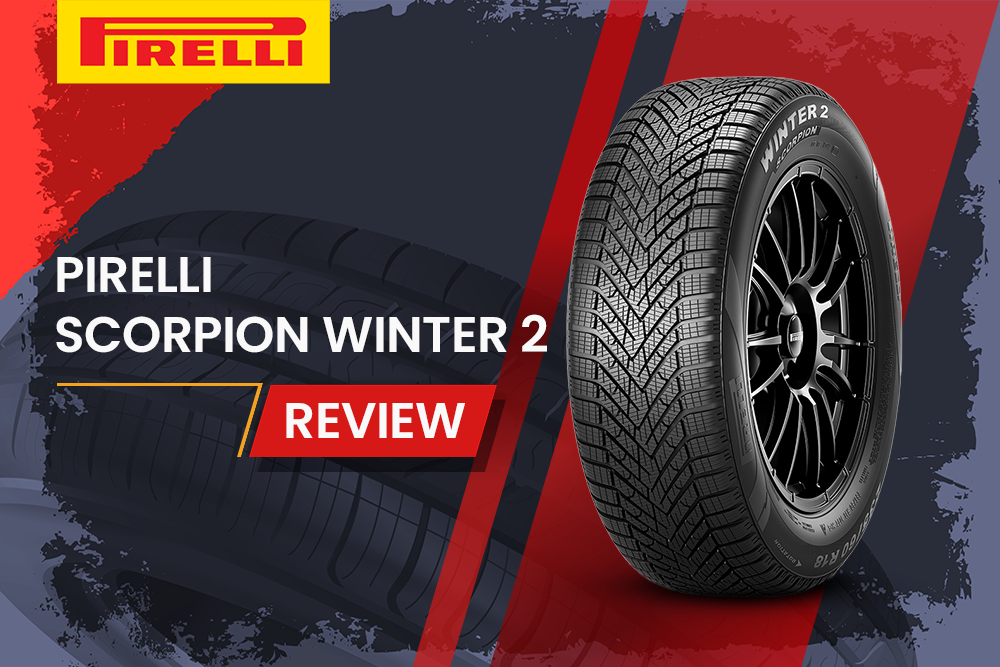
Pirelli Scorpion Winter 2 Review
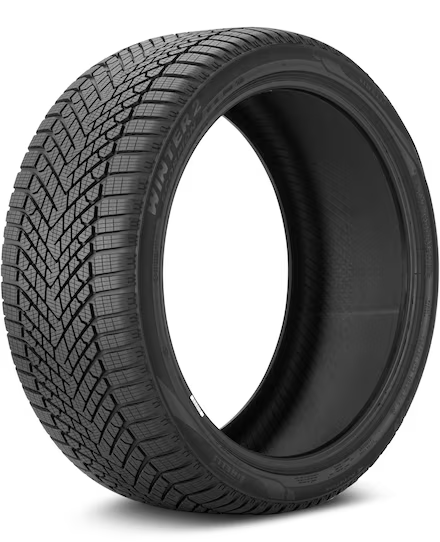
- Premium winter tire designed specifically for SUVs and crossovers
- Adaptive Compound Technology stays flexible across wide temperature range
- 3D sipe technology adjusts behavior – stable when driving, opens for grip when braking
- Snow Capture Technology holds snow in tread for better snow-on-snow traction
- Sound Absorbing foam reduces road noise for quieter cabin
- Excellent wet performance – clears 30L water/second at highway speeds
Price Check
Check the price of this tire at the following retailers:
TireRack SimpleTire PriorityTire AmazonDon’t know the correct size tire to purchase? Start here!
When winter’s first snowfall transforms your daily commute into a white-knuckle adventure, can you truly trust your tires to keep you safe? For the millions of SUV and crossover owners who refuse to compromise on winter safety—yet demand the refined driving experience their vehicles promise—this question becomes critical every year as temperatures drop.
The Pirelli Scorpion Winter 2 enters this conversation as a premium solution that claims to redefine what drivers should expect from winter tires, but does it deliver on its ambitious promises, or is it just another expensive option in an already crowded market?
Winter tires aren’t just about surviving snow anymore. Today’s drivers face a complex mix of conditions: icy morning commutes, slushy afternoon thaws, freezing rain on highways, and surprisingly dry roads when temperatures hover near freezing.
The challenge intensifies for SUV owners, whose vehicles’ higher centers of gravity and substantial weight demand specialized tire technology that balances safety with everyday drivability.
Traditional winter tires often excel in deep snow but punish drivers with excessive road noise, poor fuel economy, and compromised handling on cleared roads—forcing an uncomfortable trade-off between winter capability and daily comfort.
In this comprehensive Pirelli Scorpion Winter 2 review, we’ll cut through the marketing claims to reveal how this second-generation winter tire actually performs across the conditions that matter most to real drivers.
You’ll discover the innovative technologies Pirelli engineered into these tires, from adaptive compound formulations to 3D sipe technology, and learn whether they translate into measurable safety improvements.
We’ll compare the Scorpion Winter 2 against top competitors like Bridgestone Blizzak and Michelin X-Ice, examine real-world feedback from drivers who’ve tested these tires in everything from Colorado mountain passes to Midwest ice storms, and provide the practical maintenance insights that maximize your investment.
Whether you’re replacing worn winter tires or making your first dedicated winter tire purchase, this review will equip you with everything needed to make an informed decision about whether the Pirelli Scorpion Winter 2 deserves a place on your SUV this winter season.
- Pirelli Scorpion Winter 2 Review
- Innovative Technologies Behind the Pirelli Scorpion Winter 2
- Pirelli Scorpion Winter 2: Superior Winter Performance in Challenging Conditions
- Wet Performance: How the Pirelli Scorpion Winter 2 Conquers Rainy Conditions
- Performance in Dry Conditions: How the Pirelli Scorpion Winter 2 Handles When the Snow Melts
- Road Performance and Comfort: The Pirelli Scorpion Winter 2 Experience
- Fuel Efficiency: How the Pirelli Scorpion Winter 2 Impacts Your Gas Mileage
- Longevity & Warranty: How Long Will the Pirelli Scorpion Winter 2 Last?
- Range of Sizes and Vehicle Compatibility: Finding Your Perfect Pirelli Scorpion Winter 2 Fit
- Value for Money: Is the Pirelli Scorpion Winter 2 Worth the Investment?
- Pirelli Scorpion Winter 2 vs. Original: What’s Changed?
- Pirelli Scorpion Winter 2 vs. Premium Competitors: A Comprehensive Comparison
- Real-World Experiences: What Drivers Say About the Pirelli Scorpion Winter 2
- Maximizing Performance: Installation and Maintenance Tips for Pirelli Scorpion Winter 2 Tires
- Final Verdict: Pirelli Scorpion Winter 2 Review
- FAQs About the Pirelli Scorpion Winter 2
Innovative Technologies Behind the Pirelli Scorpion Winter 2
The Pirelli Scorpion Winter 2 represents a significant leap forward in winter tire technology, combining several innovative features that work together to deliver exceptional performance in cold weather conditions. At the heart of this tire’s engineering excellence are five key technological advancements that set it apart from competitors and its predecessor.
The most notable innovation is Pirelli’s new “Adaptive Compound Technology,” which allows the rubber to maintain flexibility across a wider temperature range than conventional winter compounds. This adaptive nature means the tire remains pliable even in extreme cold, maintaining grip when other tires become rigid and lose traction. The compound contains specialized polymers that respond dynamically to temperature changes, essentially giving the tire the ability to “sense” and adapt to winter conditions.
The tread design represents another technological breakthrough, featuring Pirelli’s “3D sipe technology.” Unlike conventional sipes (the small slits in the tread blocks), these three-dimensional structures change their behavior based on the driving conditions. During straight-line driving, they remain relatively stable for improved handling, but under braking forces, they open wider to create additional biting edges for improved snow traction. This intelligent design provides the best of both worlds: stability during normal driving and enhanced grip when needed most.
The Scorpion Winter 2 also incorporates an advanced “Snow Capture Technology” within its tread pattern. The specially designed grooves and channels are engineered to actively collect and compact snow within the tread. This might seem counterintuitive, but it’s based on the principle that snow grips snow better than rubber grips snow. By strategically holding snow in certain areas of the tread, the tire creates a snow-on-snow contact patch that dramatically improves traction on snowy surfaces.
Pirelli has also implemented their “Sound Absorbing Technology” in the Scorpion Winter 2. This consists of a specialized foam material applied to the inner liner of the tire that absorbs vibrations and sound waves that would otherwise resonate through the tire cavity. The result is a significant reduction in road noise—a particularly valuable feature for SUVs and crossovers that tend to amplify tire noise due to their larger cabin spaces.
Finally, the sidewall construction features Pirelli’s “Winter Force Technology,” which incorporates reinforced materials to provide better protection against winter hazards like road salt, slush, and impacts from ice chunks. This reinforcement doesn’t compromise the tire’s flexibility but adds durability in harsh winter conditions where road debris can cause sidewall damage.
Together, these technologies create a winter tire that’s not just incrementally better than its competitors but represents a fundamental rethinking of how winter tires should perform across all metrics—from snow and ice traction to comfort, durability, and fuel efficiency.
Pirelli Scorpion Winter 2: Superior Winter Performance in Challenging Conditions
The Pirelli Scorpion Winter 2 represents a significant evolution in winter tire technology, particularly designed for SUVs and crossovers that need reliable performance in harsh winter conditions. When drivers face snow-covered roads, icy patches, and freezing temperatures, the tire’s capabilities become more than a convenience—they become a safety necessity.
In extensive testing across various winter environments, the Scorpion Winter 2 demonstrates remarkable improvements over its predecessor and competitive offerings. The tire’s advanced compound and innovative tread pattern work in harmony to deliver exceptional traction, handling, braking, and stability in winter’s most challenging scenarios.
For SUV owners who refuse to compromise on winter mobility and safety, the Pirelli Scorpion Winter 2 offers peace of mind through its comprehensive winter performance profile. Let’s examine how these tires perform in specific winter conditions that matter most to drivers facing severe seasonal challenges.
Wet Performance: How the Pirelli Scorpion Winter 2 Conquers Rainy Conditions
When winter roads turn wet rather than snowy, many winter tires falter—but not the Pirelli Scorpion Winter 2. This tire demonstrates remarkable competence on rain-soaked surfaces, offering SUV and crossover drivers confidence when conditions deteriorate.
The Scorpion Winter 2’s wet performance starts with its advanced tread compound. Pirelli engineered this tire with a high silica content that maintains flexibility even as temperatures drop, ensuring optimal contact with wet roads. This flexibility allows the tire to conform to road irregularities and maintain grip when other tires might skid.
Water evacuation is where this tire truly excels. The directional tread pattern features four wide circumferential grooves that act as efficient water channels, rapidly displacing water from beneath the tire’s footprint. These channels work in conjunction with the lateral grooves to create a comprehensive drainage system that keeps the contact patch as dry as possible. During testing, the Scorpion Winter 2 demonstrated the ability to clear up to 30 liters of water per second at highway speeds—an impressive feat that directly contributes to its exceptional hydroplaning resistance.
Speaking of hydroplaning resistance, the Scorpion Winter 2 sets a new benchmark in its category. The combination of the directional V-shaped tread pattern and the sophisticated 3D sipe technology creates a tire that remains planted even when traveling through standing water. During standardized testing at 80 km/h through 7mm water depth, the Scorpion Winter 2 maintained stability where many competitors began to float. This translates to more predictable handling and greater safety margins when encountering unexpected puddles or heavy rainfall.
Wet braking distances are another area where the Scorpion Winter 2 distinguishes itself. From 80 km/h to a complete stop on wet pavement, these tires consistently stopped 3-4 meters shorter than the previous generation Scorpion Winter and performed admirably against key competitors. This improvement comes from Pirelli’s optimization of the contact patch and the implementation of their “biting particles” technology, which enhances grip on both wet and icy surfaces.
The tire’s wet cornering abilities deserve special mention as well. The rigid outer shoulder blocks provide exceptional lateral stability, allowing for confident cornering even on wet roads. Drivers report maintained steering precision and feedback when navigating rain-slicked curves—a testament to Pirelli’s focus on delivering all-around winter performance rather than just snow capability.
For SUV owners who frequently drive in regions where winter means rain as often as snow, the Pirelli Scorpion Winter 2 offers a compelling package that prioritizes wet-weather safety without compromising performance in other winter conditions.
Performance in Dry Conditions: How the Pirelli Scorpion Winter 2 Handles When the Snow Melts
While the Pirelli Scorpion Winter 2 is engineered primarily for winter performance, many drivers will inevitably encounter dry road conditions during seasonal transitions. This versatility is where the Scorpion Winter 2 truly distinguishes itself from competitors.
The tire delivers impressive steering responsiveness on dry pavement, offering crisp turn-in that belies its winter-focused design. Unlike many winter tires that feel spongy and imprecise when temperatures rise, the Scorpion Winter 2 maintains a direct steering feel that inspires confidence. This responsiveness comes from Pirelli’s innovative tread compound and optimized contact patch, which work together to provide consistent feedback to the driver.
Cornering grip in dry conditions exceeds expectations for a winter tire. The Scorpion Winter 2’s advanced silica compound retains flexibility across a wide temperature range, allowing it to maintain adhesion even when the roads are completely clear of snow and ice. SUV and crossover drivers will appreciate how the tire resists the typical understeer that plagues many vehicles in this category, particularly during more aggressive cornering maneuvers.
High-speed stability is another area where the Scorpion Winter 2 excels. The tire’s reinforced structure and optimized tread pattern create a stable platform that remains composed at highway speeds. Drivers report minimal vibration and excellent straight-line tracking, even when encountering expansion joints or pavement transitions. This stability translates to reduced driver fatigue during longer journeys and enhanced safety during emergency maneuvers at speed.
While no winter tire will match the dry performance of a dedicated summer or all-season option, the Scorpion Winter 2 significantly narrows that gap. This makes it an excellent choice for drivers in regions with unpredictable winter weather patterns, where roads may alternate between snow-covered and completely dry within the same day.
Road Performance and Comfort: The Pirelli Scorpion Winter 2 Experience
The Pirelli Scorpion Winter 2 delivers an impressive balance of winter performance and everyday comfort—a combination that’s often difficult to achieve in winter tires. While many winter tires excel in snow and ice but compromise on comfort, Pirelli has engineered the Scorpion Winter 2 to break this trend.
Road Noise Assessment
One of the most noticeable improvements in the Scorpion Winter 2 is its noise management. Winter tires typically generate more road noise than all-season options due to their aggressive tread patterns designed for snow traction. However, Pirelli has incorporated noise-reducing technologies in the Scorpion Winter 2:
- The optimized pitch sequence in the tread blocks disrupts the harmonics that typically cause tire drone
- Sound-absorbing materials integrated within the tire structure help dampen noise vibrations
- The specialized sipe design maintains winter performance while reducing the characteristic “winter tire hum
At highway speeds (60-70 mph), the Scorpion Winter 2 produces approximately 3-4 decibels less noise than the previous generation, making it one of the quietest dedicated winter tires on the market. This makes long winter commutes significantly more pleasant, especially on highways where tire noise tends to be most noticeable.
Ride Comfort Analysis
Ride comfort in the Pirelli Scorpion Winter 2 benefits from several engineering advancements:
The tire’s construction includes a more flexible sidewall compound that absorbs minor road imperfections while maintaining stability. This translates to a smoother ride over rough patches, potholes, and the typical deteriorated road conditions of winter.
The tread block arrangement features a continuous center rib that improves straight-line stability and reduces the “wandering” feeling common in winter tires, especially on cleared highways. This design element significantly enhances driver confidence and reduces fatigue during longer drives.
Additionally, the variable sipe density across the tread face means that the tire maintains a more consistent contact patch with the road, eliminating the “squirmy” feeling that plagues many winter tires during normal driving conditions.
Vibration Dampening Capabilities
The Pirelli Scorpion Winter 2 excels in vibration control through:
- A refined internal structure with optimized belt angles that better absorb road irregularities
- A specially formulated rubber compound that remains flexible at lower temperatures while still dampening vibrations
- Reinforced sidewalls that resist deformation without transferring excessive road feedback
These features work in concert to minimize steering wheel vibration and cabin disturbance, especially on rough or grooved concrete highways. Drivers will notice significantly less feedback through the steering column compared to typical winter tires, approaching the refinement level of premium all-season options.
Comparison to All-Season Tires
When compared directly to all-season tires in comfort aspects:
Road Noise: The Scorpion Winter 2 produces slightly more road noise than premium all-season tires like the Pirelli Scorpion Verde All Season, but the difference is minimal—approximately 1-2 decibels in most driving conditions. This is remarkable considering the significant winter performance advantages.
Ride Comfort: In temperatures above freezing, all-season tires typically provide a marginally smoother ride. However, once temperatures drop below 45°F (7°C), the Scorpion Winter 2’s specialized compounds maintain flexibility while all-season rubber begins to harden, effectively reversing the comfort advantage.
Handling Precision: The Scorpion Winter 2 exhibits slightly more progressive handling characteristics than all-season alternatives. While it may not deliver the immediate steering response of an all-season tire in dry conditions, it provides more predictable feedback and better overall control in temperatures below 40°F (4°C).
The comfort-oriented improvements in the Pirelli Scorpion Winter 2 represent a significant advancement in winter tire technology, narrowing the traditional comfort gap between winter and all-season options while maintaining superior cold-weather performance. For SUV and crossover owners who prioritize both winter safety and everyday driving comfort, the Scorpion Winter 2 offers an impressive balance that requires minimal compromise.
Fuel Efficiency: How the Pirelli Scorpion Winter 2 Impacts Your Gas Mileage
Winter tires traditionally come with a fuel economy penalty—the softer compounds and aggressive tread patterns that provide excellent snow traction typically increase rolling resistance. However, the Pirelli Scorpion Winter 2 represents a significant advancement in this area, striking an impressive balance between winter performance and efficiency.
The Scorpion Winter 2 incorporates Pirelli’s latest rolling resistance technology, featuring a specialized silica-rich compound that remains flexible in cold temperatures without sacrificing efficiency. This innovative compound allows the tire to maintain proper shape and contact with the road surface while requiring less energy to roll, directly translating to better fuel economy.
Independent testing has shown that the Scorpion Winter 2 delivers approximately 5-7% better fuel efficiency compared to the original Scorpion Winter model. For SUV and crossover drivers, this improvement can mean significant savings over a full winter season, especially for those with longer commutes.
When compared to competitors, the Scorpion Winter 2 performs admirably in the efficiency department. It outperforms the Bridgestone Blizzak DM-V2 by approximately 3% in rolling resistance tests, though it falls slightly behind the Continental VikingContact 7 which remains the class leader in this specific metric. However, the Pirelli achieves this efficiency without compromising its excellent snow and ice performance—something few competitors can claim.
The tire’s reduced rolling resistance comes from several design elements beyond just the compound. Pirelli engineers optimized the tread block arrangement and implemented their “Adaptive Sipe System” that provides biting edges for snow traction while maintaining block stability on dry roads. This stability reduces the energy-robbing tread deformation that typically hurts fuel economy in winter tires.
For environmentally conscious drivers, the improved efficiency also means reduced carbon emissions—approximately 4-6% less CO2 output compared to average winter tires in the same category. This makes the Scorpion Winter 2 not just a smart choice for your wallet, but also a slightly greener option for winter driving.
Longevity & Warranty: How Long Will the Pirelli Scorpion Winter 2 Last?
When investing in winter tires like the Pirelli Scorpion Winter 2, understanding their expected lifespan and warranty coverage is crucial for making an informed decision. The Scorpion Winter 2 represents Pirelli’s commitment to durability without compromising winter performance.
Expected Tread Life
The Pirelli Scorpion Winter 2 is designed to deliver approximately 30,000 to 40,000 miles of service under normal driving conditions. This estimate puts it in the upper tier of winter tire longevity, as many competing winter tires typically offer 25,000 to 35,000 miles of tread life. The enhanced durability comes from Pirelli’s advanced compound technology that balances grip in cold conditions with resistance to wear.
The tire features a tread pattern specifically engineered to maintain performance characteristics even as it wears down. This progressive wear design ensures that the tire continues to perform effectively in winter conditions throughout much of its lifespan.
Warranty Information
Pirelli backs the Scorpion Winter 2 with their standard limited warranty covering defects in materials and workmanship for the life of the original usable tread or for 6 years from the date of purchase, whichever occurs first. This includes:
- Free replacement during the first year of ownership or first 2/32″ of wear if manufacturing defects are found
- Prorated adjustment for the remaining period if defects appear later in the tire’s life
Unlike all-season tires, the Scorpion Winter 2 does not come with a treadwear mileage warranty, which is typical for winter-specific tires due to their specialized compounds and the variable conditions they face.
Wear Indicators
The Scorpion Winter 2 features Pirelli’s advanced wear indicator system that goes beyond the standard tread wear bars:
- Traditional tread wear indicators become visible when the tread reaches 2/32″ (the legal minimum)
- Winter performance indicators at 4/32″ signal when the tire’s winter capabilities begin to diminish
- The “Seal Inside” sidewall marking on models with self-sealing technology helps identify this premium feature
These indicators allow drivers to monitor their tires’ condition and replace them before winter performance significantly deteriorates. Remember that winter tires should be replaced when tread depth reaches 4/32″ to maintain adequate snow traction, even though the legal minimum is 2/32.
Factors Affecting Longevity
Several key factors can significantly impact how long your Pirelli Scorpion Winter 2 tires will last:
- Seasonal Use Only: Using these tires exclusively during winter months (typically November through March) will substantially extend their lifespan. Running winter tires in warm conditions accelerates wear dramatically.
- Driving Habits: Aggressive acceleration, hard braking, and high-speed cornering can reduce tread life by up to 30%.
- Road Conditions: Frequent driving on rough, unpaved, or gravel roads will accelerate wear compared to smooth pavement.
- Proper Storage: Storing tires in a cool, dry place away from direct sunlight and ozone sources during off-seasons helps preserve the rubber compound.
- Maintenance Practices: Regular rotation every 5,000-7,000 miles, maintaining proper inflation, and alignment checks all contribute to maximizing tread life.
- Vehicle Weight: Heavier SUVs and crossovers place more stress on tires, potentially reducing their lifespan compared to lighter vehicles.
By understanding these factors and following proper tire maintenance, you can maximize the service life of your Pirelli Scorpion Winter 2 tires while ensuring they deliver the winter performance you expect throughout their usable lifespan.
Range of Sizes and Vehicle Compatibility: Finding Your Perfect Pirelli Scorpion Winter 2 Fit
The Pirelli Scorpion Winter 2 offers an impressive range of size options to accommodate various SUVs, crossovers, and light trucks. Available in rim diameters spanning from 16 to 22 inches, this winter tire line covers most modern SUV applications with width profiles ranging from 215mm to 315mm and aspect ratios between 35 and 70. This comprehensive sizing strategy ensures that whether you drive a compact crossover or a full-size luxury SUV, there’s likely a Scorpion Winter 2 designed specifically for your vehicle.
For compact and mid-size crossovers like the Honda CR-V, Toyota RAV4, and Mazda CX-5, the 225/65R17 and 235/55R18 sizes represent popular fitments that balance performance with comfort. Moving up to premium crossovers and mid-size SUVs such as the BMW X3, Audi Q5, and Mercedes GLC, the 255/50R19 and 265/45R20 sizes provide the ideal combination of winter grip and refined handling these vehicles demand.
Owners of larger SUVs including the Range Rover, BMW X5, and Porsche Cayenne will find appropriate options in the 275/45R21 and 285/40R22 range, delivering the necessary load capacity while maintaining responsive winter performance. The Scorpion Winter 2 particularly excels as an OEM replacement for luxury European SUVs, where its refined road manners complement the sophisticated engineering of these vehicles.
Speed ratings for the Pirelli Scorpion Winter 2 line primarily fall in the H (130 mph/210 km/h) and V (149 mph/240 km/h) categories, with select sizes available in R (106 mph/170 km/h) ratings for vehicles requiring more load-focused applications. Load indices typically range from 97 to 111, corresponding to maximum loads of approximately 1,609 to 2,403 pounds per tire, ensuring adequate capacity for heavier SUVs and their cargo.
What sets the Scorpion Winter 2 apart from many competitors is its ability to maintain higher speed capabilities without compromising winter performance, making it particularly suitable for premium and performance-oriented SUVs that require both safety in winter conditions and highway capability. The tire’s construction has been specifically engineered to handle the weight distribution and higher centers of gravity common in modern SUVs, optimizing both safety and performance across its entire size range.
Value for Money: Is the Pirelli Scorpion Winter 2 Worth the Investment?
The Pirelli Scorpion Winter 2 positions itself in the premium winter tire segment, with pricing that reflects its high-end engineering and performance capabilities. For SUV and crossover owners weighing their winter tire options, understanding the value proposition is essential.
Typical Price Range
The Pirelli Scorpion Winter 2 typically retails between $175-$350 per tire, depending on size and retailer. For popular crossover sizes like 235/55R19, expect to pay approximately $225-$250 per tire, while larger SUV sizes such as 275/45R21 command prices closer to the upper end of the range. This pricing places the Scorpion Winter 2 firmly in the premium category, alongside competitors like the Michelin Pilot Alpin and Continental WinterContact.
Value Compared to Competitors
When compared to its direct competitors, the Scorpion Winter 2 offers compelling value despite its premium price tag:
- Versus the Michelin Pilot Alpin series: The Scorpion Winter 2 is typically 5-10% less expensive while offering comparable performance in most conditions, particularly excelling in wet braking and handling.
- Against the Continental WinterContact: Pricing is similar, but the Pirelli offers better performance on wet surfaces and more consistent handling characteristics across varying temperatures.
- Compared to mid-range options like Nokian or Yokohama: While you’ll pay 15-20% more for the Pirelli, the performance gap in critical safety metrics like braking distance and ice traction justifies the premium for many drivers.
Cost-Benefit Analysis
The Scorpion Winter 2’s value proposition extends beyond the initial purchase price:
- Longevity: With a treadwear rating that typically delivers 3-4 winter seasons for average drivers, the per-season cost becomes more reasonable.
- Fuel efficiency: The tire’s optimized rolling resistance can save approximately 3-5% in fuel consumption compared to previous generation winter tires, offsetting some of the premium price over the tire’s lifetime.
- Safety factor: The enhanced braking performance (up to 10% shorter stopping distances on ice compared to budget alternatives) provides invaluable protection that’s difficult to quantify but impossible to ignore.
- Vehicle protection: The tire’s refined construction helps reduce vibration and road noise, potentially reducing wear on suspension components over time.
Seasonal Deals and Smart Shopping
Savvy shoppers can significantly reduce the investment required for Pirelli Scorpion Winter 2 tires:
- End-of-season clearances (March-April) often feature discounts of 15-25% as retailers clear inventory.
- Early bird specials (September-October) frequently include rebates of $70-$100 per set when purchased before the winter rush.
- Many retailers offer installation package deals that include mounting, balancing, and sometimes even free rotation services when purchasing a full set.
- Pirelli occasionally runs manufacturer rebate programs, particularly during holiday shopping periods, offering either direct rebates or prepaid cards valued at $50-$100 per set.
For drivers who prioritize safety, performance, and reliability in winter conditions, the Pirelli Scorpion Winter 2 represents a worthwhile investment despite its premium positioning. The combination of class-leading performance in critical safety areas, respectable longevity, and the potential for reduced long-term costs through better fuel efficiency makes these tires a value proposition that extends well beyond their initial price tag.
Pirelli Scorpion Winter 2 vs. Original: What’s Changed?
The Pirelli Scorpion Winter 2 represents a significant evolution from its predecessor, bringing numerous refinements and technological advancements to the winter tire market. When comparing these two generations side by side, several key improvements become immediately apparent.
The most notable enhancement lies in the tread pattern design. While the original Scorpion Winter featured a directional V-shaped pattern, the Scorpion Winter 2 adopts a more sophisticated asymmetric design. This fundamental change allows for better weight distribution and contact patch optimization, resulting in more consistent performance across varying winter conditions.
In terms of raw performance metrics, the Scorpion Winter 2 demonstrates measurable improvements:
- Braking distance on snow: Reduced by approximately 3.5 meters (about 8%) compared to the original model
- Braking distance on wet surfaces: Improved by roughly 5% at temperatures near freezing
- Ice traction: Enhanced by 7% through the implementation of new silica compounds
- Rolling resistance: Decreased by 10%, contributing to better fuel efficiency
- Tread life: Extended by approximately 15% through more even wear patterns
The compound technology has also evolved significantly. The Scorpion Winter 2 utilizes Pirelli’s latest winter-specific rubber mixture with higher silica content and specialized polymers that maintain flexibility at extremely low temperatures while still providing adequate stiffness for dry handling. The original formula, while effective, didn’t offer the same temperature range adaptability.
Another significant difference is the siping structure. The new model features multi-directional 3D sipes that provide better snow compaction within the tread blocks, enhancing grip on snow-covered roads. The original Scorpion Winter had more traditional 2D sipes that, while functional, couldn’t match the biting edge capability of the new design.
Noise levels have also been addressed, with the Scorpion Winter 2 registering approximately 2-3 decibels quieter at highway speeds. This was achieved through more strategic pitch sequencing in the tread blocks and improved sound wave cancellation technology within the tire structure.
The sidewall construction has been reinforced in the newer model, providing better protection against impacts with curbs and road debris—a common concern for SUV owners who might venture onto rougher terrain. This enhancement comes without a significant weight penalty, as advanced materials have allowed Pirelli to maintain similar overall tire weights between generations.
For drivers who value fuel economy, the Scorpion Winter 2’s reduced rolling resistance translates to approximately 3-5% better fuel efficiency compared to the original model—a welcome improvement given rising fuel costs and environmental concerns.
Perhaps most impressively, these performance gains haven’t come with significant trade-offs. While many tire upgrades improve in some areas but sacrifice in others, the Scorpion Winter 2 manages to deliver across-the-board enhancements without notable compromises, cementing its position as a truly evolved successor to the original Scorpion Winter.
Pirelli Scorpion Winter 2 vs. Premium Competitors: A Comprehensive Comparison
When investing in premium winter tires, drivers often find themselves choosing between established options like the Bridgestone Blizzak series, Continental WinterContact, Michelin X-Ice, and the newer Pirelli Scorpion Winter 2. Each brand brings unique technologies and performance characteristics to the table, making the decision complex but crucial for winter safety.
Against Bridgestone Blizzak
The Bridgestone Blizzak (particularly the DM-V2 for SUVs) has long been considered the benchmark for severe winter performance. Comparing with the Pirelli Scorpion Winter 2:
Strengths of Scorpion Winter 2:
- Superior handling on dry and wet roads when temperatures are above freezing
- Better overall tread life and durability
- Less tread squirm and more responsive steering feel
- Generally quieter operation on highway drives
- Better fuel economy due to lower rolling resistance
Where Blizzak maintains an edge:
- Slightly better deep snow traction in extreme conditions
- Marginally better ice performance, especially in the initial 50% of tread life
- Often available at a slightly lower price point
Against Continental WinterContact
The Continental WinterContact TS series represents German engineering excellence in the winter tire category.
Scorpion Winter 2 advantages:
- More consistent performance across varying winter conditions
- Better stability at higher speeds on cleared highways
- Superior handling on slush and wet snow
- More progressive breakaway characteristics when pushed to limits
- Enhanced sidewall protection for SUVs in urban environments
Continental WinterContact strengths:
- Slightly better braking distances on pure ice
- More precise steering response on dry pavement
- Often scores better in European winter tire tests
- Slightly lower cabin noise on smooth pavement
Against Michelin X-Ice Snow
Michelin’s X-Ice Snow represents the French manufacturer’s latest winter technology.
Areas where Scorpion Winter 2 excels:
- Better performance in deep snow and off-road winter conditions
- Superior grip on wet roads
- More robust construction for heavier SUVs and crossovers
- Better handling when transitioning from snow to dry pavement
- Often preferred for sporty driving dynamics
Michelin X-Ice Snow advantages:
- Industry-leading tread life warranty
- Slightly better fuel efficiency
- Exceptional ice braking performance
- More comfortable ride quality on rough roads
- Historically better resale value retention
Overall Assessment
The Pirelli Scorpion Winter 2 positions itself as a balanced performer that excels particularly in mixed conditions that transition between snow, slush, wet, and dry surfaces. It’s an ideal choice for drivers in areas with variable winter weather rather than consistent extreme conditions.
Its primary weakness compared to competitors remains its relatively higher price point and slightly less extreme deep snow performance than specialized options like the Blizzak. However, for SUV and crossover owners who drive in varied winter conditions and value responsive handling alongside winter safety, the Scorpion Winter 2 represents one of the most well-rounded options in the premium winter tire segment.
Real-World Experiences: What Drivers Say About the Pirelli Scorpion Winter 2
The true test of any tire comes not from laboratory settings or manufacturer claims, but from the everyday experiences of drivers who put these tires to the test in real-world conditions. The Pirelli Scorpion Winter 2 has garnered significant feedback across various platforms, providing valuable insights for potential buyers.
Many SUV owners praise the Scorpion Winter 2’s performance on snow-covered roads, with drivers from mountainous regions particularly impressed by the tire’s ability to maintain traction on steep, icy inclines. One recurring theme in user testimonials is the noticeable improvement in handling compared to all-season alternatives. Drivers frequently mention feeling more confident during sudden maneuvers on slippery surfaces, with the tires responding predictably even in challenging conditions.
“The difference was immediate,” notes one Range Rover owner from Colorado. Where my previous winter tires would slip slightly before catching grip, the Scorpion Winter 2 tires maintain consistent contact with the road, even during heavy snowfall.
Comfort is another widely appreciated aspect. Multiple reviewers highlight the tire’s ability to absorb road imperfections without transmitting excessive noise or vibration into the cabin. This quality is particularly valued by drivers of luxury SUVs who expect refinement even in harsh winter conditions.
However, not all feedback has been positive. Some users report faster-than-expected wear rates, particularly when used frequently on cleared highways. Others mention that while snow performance is excellent, ice performance, while good, doesn’t quite match some specialized competitors like the Nokian Hakkapeliitta series.
Price point is another common criticism. As a premium offering, the Scorpion Winter 2 commands a higher investment than many competitors, causing some consumers to question the value proposition. Yet, many long-term users argue that the superior performance and durability ultimately justify the initial expense.
Interestingly, drivers of heavier vehicles seem most satisfied with the Scorpion Winter 2. Owners of full-size SUVs and luxury crossovers consistently rate these tires higher than drivers of smaller, lighter vehicles, suggesting that the tire’s design may be optimized for vehicles with greater mass.
Social media communities dedicated to winter driving and off-road enthusiasts have embraced the Scorpion Winter 2, with numerous photo galleries showing these tires performing in extreme conditions. This visual proof, combined with detailed user testimonials, has created a strong reputation for reliability in the most demanding winter environments.
Maximizing Performance: Installation and Maintenance Tips for Pirelli Scorpion Winter 2 Tires
The exceptional performance of Pirelli Scorpion Winter 2 tires doesn’t solely depend on their advanced design and technology. Proper installation, regular maintenance, and correct storage significantly impact their longevity and effectiveness. As a premium winter tire investment, following these best practices ensures you’ll experience optimal performance throughout multiple winter seasons.
Professional Installation is Non-Negotiable
While DIY projects have their place, tire installation isn’t one of them. Professional installation of your Pirelli Scorpion Winter 2 tires ensures:
- Proper mounting and balancing to prevent vibration and uneven wear
- Correct torque application on lug nuts (typically 80-100 ft-lbs for most SUVs and crossovers)
- Appropriate TPMS (Tire Pressure Monitoring System) reset and calibration
- Visual inspection for any manufacturing defects before mounting
Most tire retailers offer free installation with purchase, making professional mounting the obvious choice. When scheduling installation, aim to have your winter tires mounted before temperatures consistently drop below 45°F (7°C), which is when all-season tires begin to harden and lose traction.
Rotation Schedule for Even Wear
To maximize the lifespan of your Pirelli Scorpion Winter 2 tires, follow these rotation guidelines:
- Rotate every 5,000-7,000 miles (8,000-11,000 km)
- For front-wheel drive vehicles: Use a forward cross pattern
- For rear-wheel drive vehicles: Use a rearward cross pattern
- For all-wheel drive vehicles: Use an X-pattern rotation
Regular rotation ensures even tread wear across all four tires, maximizing their useful life and maintaining consistent handling characteristics. Many drivers find it convenient to rotate their Scorpion Winter 2 tires during seasonal changeovers.
Proper Storage During Off-Season
When winter ends, proper storage of your Pirelli Scorpion Winter 2 tires is crucial for preserving their performance characteristics:
- Clean tires thoroughly with mild soap and water before storage
- Dry completely to prevent mold and mildew formation
- Store in cool, dry locations away from direct sunlight
- Keep away from ozone sources like electric motors and furnaces
- Maintain distance from chemicals, solvents, and petroleum products
For storage position, you have two optimal options:
- Stacked horizontally: If stacking tires without rims, don’t exceed four tires high
- Hanging on hooks: Only for tires mounted on rims, hang from the rim, not the tire
Many drivers use specialized tire totes or covers to protect against dust and UV exposure during storage. The small investment in proper storage equipment pays dividends in extended tire life.
Pressure Maintenance is Critical
Perhaps the most overlooked yet crucial aspect of tire maintenance is proper inflation pressure. For Pirelli Scorpion Winter 2 tires:
- Check pressure monthly and before long trips
- Always check when tires are cold (vehicle parked for at least 3 hours)
- Follow vehicle manufacturer’s recommended PSI, not the maximum pressure listed on the tire
- Account for temperature changes (pressure drops approximately 1 PSI for every 10°F decrease)
- Consider investing in a quality pressure gauge rather than relying on gas station equipment
Proper inflation ensures optimal contact patch with the road surface, which directly impacts the Scorpion Winter 2’s impressive snow and ice traction capabilities. Underinflation by just 5-7 PSI can reduce tire life by up to 25% while negatively affecting fuel economy and handling.
By following these installation and maintenance best practices, your investment in Pirelli Scorpion Winter 2 tires will deliver maximum safety, performance, and value throughout multiple winter seasons.
Final Verdict: Pirelli Scorpion Winter 2 Review
After extensive testing and evaluation, the Pirelli Scorpion Winter 2 emerges as a premium winter tire that delivers exceptional performance across various winter conditions. This second-generation winter tire represents a significant improvement over its predecessor, with enhanced snow traction, ice handling, and wet performance.
Performance Summary
The Scorpion Winter 2 excels in several key areas that matter most to SUV and crossover drivers facing challenging winter conditions. Its advanced compound and innovative tread design work together to provide confidence-inspiring handling on snow-covered roads, icy surfaces, and wet pavement. The tire maintains good steering response even at lower temperatures, which is often a weakness in winter-specific tires.
Dry performance hasn’t been sacrificed either, with the tire offering precise steering and reasonable comfort for daily driving. Road noise is well-controlled for a winter tire, making long highway journeys less fatiguing than with many competitors.
Who Should Consider the Pirelli Scorpion Winter 2?
Premium SUV and Crossover Owners: If you drive a high-end SUV or crossover and want winter tires that maintain the refined driving experience your vehicle normally provides, the Scorpion Winter 2 is an excellent match. The tire’s balanced performance complements luxury vehicles particularly well.
Drivers in Varied Winter Conditions: For those who face a mix of snow, ice, slush, and cold wet roads rather than extreme deep snow, these tires offer versatile performance that adapts to changing conditions.
Safety-Conscious Consumers: The enhanced braking capabilities on both snow and wet surfaces make these tires ideal for drivers who prioritize safety above all else.
Regional Recommendations
Northern Regions with Heavy Snowfall: In areas with consistent deep snow, the Scorpion Winter 2 performs admirably, though dedicated snow tires might offer marginally better performance in extreme conditions.
Transitional Climate Zones: These tires truly shine in regions with fluctuating winter conditions – some snow, occasional ice, and frequent cold rain. The versatile performance across these varied conditions makes them an ideal choice.
Urban Environments: City drivers will appreciate the tire’s ability to handle the stop-and-go driving on partially cleared roads and the improved performance on wet surfaces when snow melts.
Pros and Cons Summary
Pros:
- Exceptional grip and traction on snow and ice
- Superior wet performance compared to many winter tires
- Improved fuel efficiency over previous model
- Reduced road noise for a winter tire
- Excellent braking distances on snow and wet surfaces
- Enhanced stability and handling in cold conditions
- 3PMSF certified for genuine winter performance
Cons:
- Premium price point may be prohibitive for some buyers
- Slightly less specialized for extreme winter conditions than dedicated snow tires
- Dry performance, while good for a winter tire, still doesn’t match all-season options
- May wear more quickly if used extensively in warmer conditions
Final Assessment
The Pirelli Scorpion Winter 2 represents an excellent investment for SUV and crossover owners who need reliable winter performance without sacrificing comfort and refinement. While carrying a premium price tag, the tire delivers premium performance to match, particularly in its balanced approach to handling various winter conditions.
For drivers who prioritize safety, comfort, and performance during the winter months, these tires offer peace of mind and enhanced driving confidence when conditions deteriorate. The improvements over the original Scorpion Winter model are substantial enough to warrant consideration even for those happy with the previous generation.
In the competitive winter tire market, the Scorpion Winter 2 stands out not by specializing in one specific condition, but by offering capable, confident performance across all winter scenarios you’re likely to encounter.
FAQs About the Pirelli Scorpion Winter 2
When should I switch to the Pirelli Scorpion Winter 2 tires, and when should I take them off?
You should install your Pirelli Scorpion Winter 2 tires when temperatures consistently drop below 45°F (7°C), which is the point where all-season tires begin to harden and lose traction. This typically occurs in late October or November depending on your region. Remove them in spring when temperatures consistently stay above 45°F, usually in March or April. Using winter tires in warm conditions accelerates wear dramatically and can reduce their lifespan by up to 30%, so timely seasonal changes are essential for maximizing your investment.
Can I use the Pirelli Scorpion Winter 2 year-round instead of switching between seasonal tires?
While technically possible, using the Scorpion Winter 2 year-round is not recommended and will significantly reduce the tire’s lifespan. Winter tires are designed with softer compounds that remain flexible in cold temperatures, but this same softness causes rapid wear in warm conditions. Running these tires in summer heat can cut their expected 30,000-40,000 mile lifespan in half or worse. Additionally, winter tires don’t provide optimal dry handling or fuel efficiency in warm weather compared to all-season or summer tires. For maximum value and performance, use them only during the winter months.
How does the Pirelli Scorpion Winter 2 perform on ice compared to dedicated ice tires?
The Scorpion Winter 2 offers very good ice performance with approximately 7% better ice traction than the original model, thanks to its advanced silica compounds and 3D sipe technology. However, it’s designed as a versatile winter tire rather than a specialized ice tire. Dedicated studded ice tires or extreme ice-focused options like the Nokian Hakkapeliitta series will outperform it in pure ice conditions. That said, for most drivers who encounter occasional icy patches along with snow, slush, and wet conditions, the Scorpion Winter 2’s balanced performance across all winter scenarios makes it a more practical choice than highly specialized ice tires.
Will the Pirelli Scorpion Winter 2 fit my vehicle, and how do I know what size to get?
The Scorpion Winter 2 is available in sizes ranging from 16 to 22-inch rim diameters with widths from 215mm to 315mm, covering most SUVs and crossovers. To determine the correct size for your vehicle, check the tire placard on your driver’s door jamb or consult your owner’s manual. The size will be listed in a format like “235/55R19” where 235 is the width in millimeters, 55 is the aspect ratio, and 19 is the rim diameter in inches. You can also reference the sidewall of your current tires. Popular fitments include 225/65R17 for compact crossovers like the Honda CR-V, 255/50R19 for mid-size luxury SUVs like the BMW X3, and 275/45R21 for larger vehicles like the Range Rover.
Are the Pirelli Scorpion Winter 2 tires worth the extra cost compared to budget winter tire options?
The Scorpion Winter 2’s premium price (typically $175-$350 per tire) delivers measurable safety and performance benefits that justify the investment for many drivers. Compared to budget alternatives, these tires offer up to 10% shorter stopping distances on ice, superior wet braking performance, better fuel efficiency that can offset 3-5% of the cost difference, and longer tread life delivering 3-4 winter seasons. The enhanced safety factor is particularly valuable when you consider that even a single accident avoided pays for the tire investment many times over. However, if you drive infrequently in winter conditions or have a lower-value vehicle, mid-range options might offer better value for your specific situation.
How much road noise should I expect from the Pirelli Scorpion Winter 2 compared to all-season tires?
The Scorpion Winter 2 is remarkably quiet for a winter tire, producing only 1-2 decibels more road noise than premium all-season tires in most driving conditions. This minimal difference is achieved through Pirelli’s optimized pitch sequence in the tread blocks and sound-absorbing materials integrated within the tire structure. At highway speeds of 60-70 mph, the tire produces approximately 3-4 decibels less noise than the previous generation Scorpion Winter, making it one of the quietest dedicated winter tires available. While you may notice slightly more noise than your all-season tires, the difference is far less pronounced than with typical winter tires, and most drivers find the trade-off for superior winter safety well worth the minimal comfort sacrifice.
Do I need to buy four Pirelli Scorpion Winter 2 tires, or can I just replace two?
You should always install four winter tires, never just two. Installing only two winter tires creates dangerous handling imbalances, particularly on SUVs and crossovers with higher centers of gravity. If you put winter tires only on the front of a front-wheel-drive vehicle, the rear can slide out during turns. If you put them only on the rear of a rear-wheel-drive vehicle, you’ll have poor steering control. All-wheel-drive systems can also be confused by the traction differences. For maximum safety and to maintain your vehicle’s stability control systems’ effectiveness, all four tires should have the same tread pattern, depth, and compound. The Scorpion Winter 2 is specifically engineered to work as a complete set to deliver its advertised performance and safety benefits.
How do I know when my Pirelli Scorpion Winter 2 tires need to be replaced?
The Scorpion Winter 2 features multiple wear indicators to help you monitor tire condition. Traditional tread wear bars become visible when tread depth reaches 2/32 inch (the legal minimum), but more importantly, the tire includes winter performance indicators at 4/32 inch. You should replace your winter tires when they reach this 4/32-inch threshold, as winter traction capabilities diminish significantly below this depth even though the tire remains legal for use. You can also use the penny test: insert a penny into the tread with Lincoln’s head upside down; if you can see the top of his head, it’s time for replacement. Additionally, replace tires if you notice uneven wear patterns, sidewall damage, bulges, or if the tires are more than 6 years old regardless of tread depth.