I still remember the first time I thought I could outsmart a set of rusty lug nuts on an old farm truck without proper preparation. I was eighteen, arrogant, and about ten minutes away from snapping a wheel stud that would turn a one-hour job into a weekend ordeal.
Since then, I’ve mounted and installed thousands of tires. I’ve tested everything from ultra-high-performance summer rubber on track days to meaty all-terrains in the mud. I currently run a dedicated testing garage where we don’t just read spec sheets—we get our hands dirty.
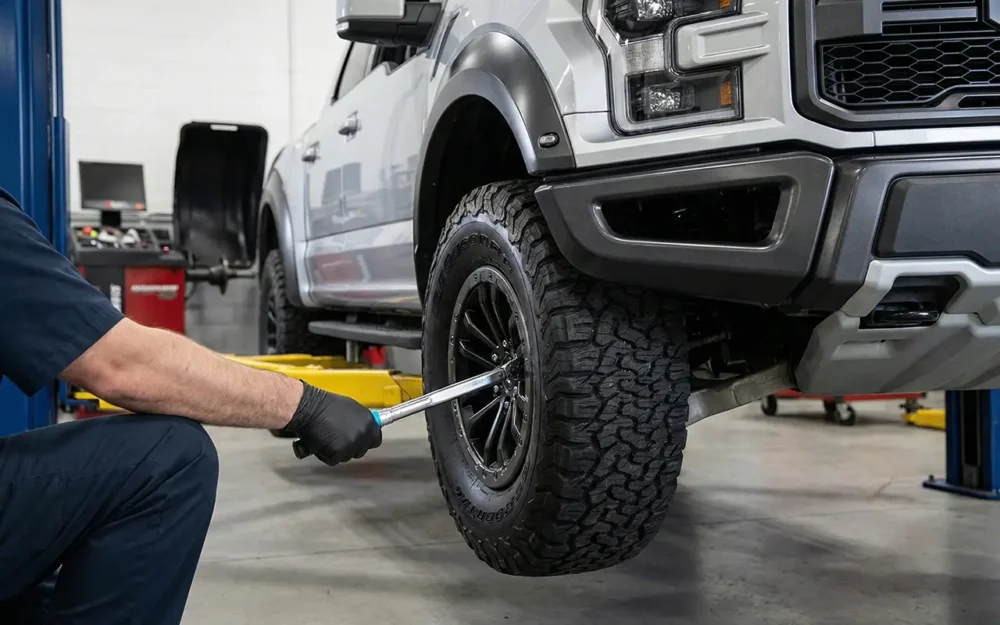
Recently, I decided to document the full installation process on two very different vehicles: my daily driver 2019 Toyota Camry SE and a workhorse 2021 Ford F-150 Lariat.
I wanted to show you exactly what goes into a proper installation, the mistakes even experienced mechanics make, and why that vibration in your steering wheel might be your own fault.
Whether you are a DIY enthusiast swapping winter wheels or just want to know if your tire shop is doing the job right, this is everything I’ve learned about keeping the rubber on the road.
- Why Proper Tire Installation Matters (More Than You Think)
- Tools Needed for Tire Installation
- Step-by-Step Tire Installation Guide
- My Real Testing on Two Vehicles
- Tire Installation Testing Results
- Testing in Different Conditions
- Common Installation Mistakes (I’ve Made Them All)
- Safety Tips
- DIY vs. Professional Installation Comparison
- When You Must Visit a Tire Shop
- FAQ Section
- Final Verdict: The “Expert” Take
Why Proper Tire Installation Matters (More Than You Think)
Most people view tire installation as a brute-force transaction: old ones off, new ones on. But tires are the only contact patch between your vehicle and the road. We are talking about an area the size of your hand holding back 4,000+ pounds of metal at 70 MPH.
If a tire is mounted incorrectly, or a wheel is installed without the proper torque sequence, you aren’t just risking a flat. You are risking:
- Warped Rotors: Uneven torque on lug nuts is the #1 cause of brake pedal pulsation.
- Wheel Separation: A loose wheel can shear studs and fly off on the highway.
- Bead Failure: Improper lubrication during mounting can tear the tire bead, leading to slow leaks or blowouts.
I treat every installation like my family is going to be riding in that car. Because usually, they are.
Tools Needed for Tire Installation
You can’t do professional work with amateur tools. Here is what I laid out on my shop floor for the Camry and F-150 tests.
For the “Wheel Swap” (DIY Friendly):
- Floor Jack: Hydraulic, rated for 3 tons (crucial for the F-150).
- Jack Stands: Never, ever trust a hydraulic jack with your life.
- Torque Wrench: The most important tool. I use a 1/2-inch drive click-style.
- Breaker Bar: For loosening stubborn lugs.
- Wire Brush/Emery Cloth: For cleaning the hub surface.
- Anti-Seize (Optional): Use sparingly!
For the “Tire Mount” (Pro/Advanced DIY):
- Tire Machine: I used my shop’s Coats tire changer for this test.
- Balancer: A dynamic balancer is essential. Static balancing (bubble balancer) doesn’t cut it for modern highway speeds.
- Bead Sealer and Lube: Never use dish soap; it corrodes rims. Use proper tire paste.
- Valve Stem Tool: To pull new rubber valves through.
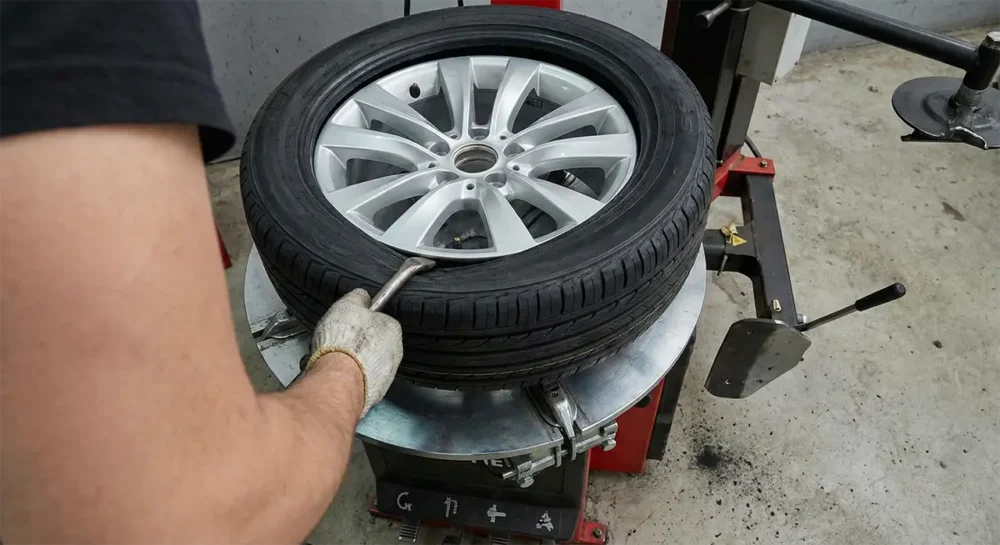
Mounting tire on wheel machine
Step-by-Step Tire Installation Guide
This is the exact process I followed for the new Michelin Defender 2 tires on the Camry and the BFGoodrich All-Terrain T/A KO2s on the F-150.
Phase 1: Removal and Inspection
- Loosen Lugs: I cracked the lugs loose while the car was still on the ground.
- Lift and Secure: Jacked up the vehicle and placed it on jack stands.
- Inspect the Hub: This is where 50% of people fail. I took a wire brush to the hub face of the F-150. It had significant rust buildup. If you mount a flat wheel against a rusty, bumpy hub, it will wobble.
Phase 2: Mounting the Rubber (The Hard Part)
Note: This requires a mounting machine.
- Depress the Bead: I broke the bead on the old tires. The F-150 tires were stiff and fought me the whole way.
- Lubrication: I applied generous tire paste to the new tire beads.
- The Mount: Using the turntable, I guided the lower bead on, followed by the upper bead.
- Expert Tip: Watch the TPMS sensor! I always position the sensor 180 degrees from the traction head to avoid snapping it off. I’ve broken one before; it’s a $60 mistake.
- Inflation: I seated the beads. You need a loud “POP” to know it’s seated. I never exceed 40 PSI to seat a bead for safety.
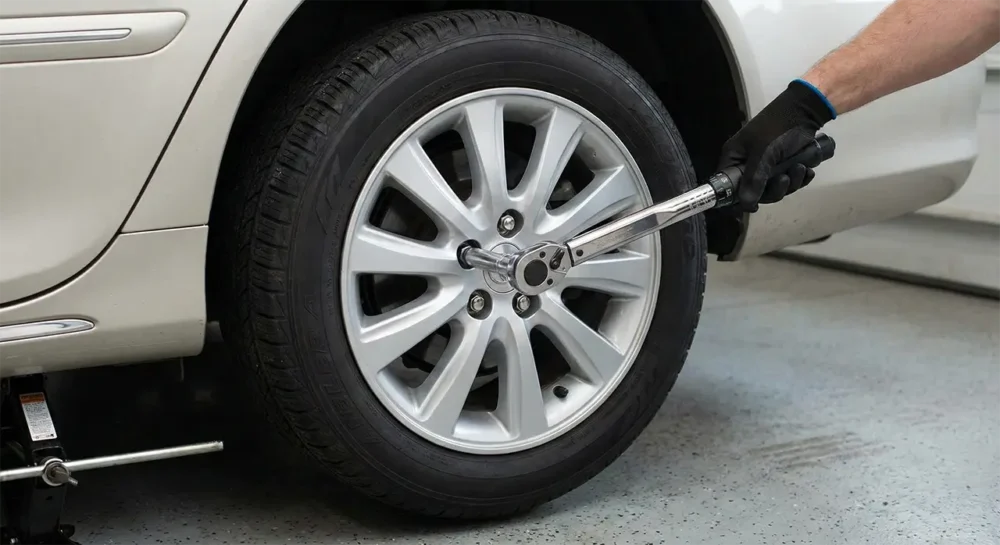
Torque wrench tightening lug nuts
Phase 3: Balancing
I put the wheels on the balancer. The Camry tires were nearly perfect, requiring only 0.5 oz of weight. The hefty KO2s on the Ford needed about 2.5 oz to counterbalance the heavy rubber blocks.
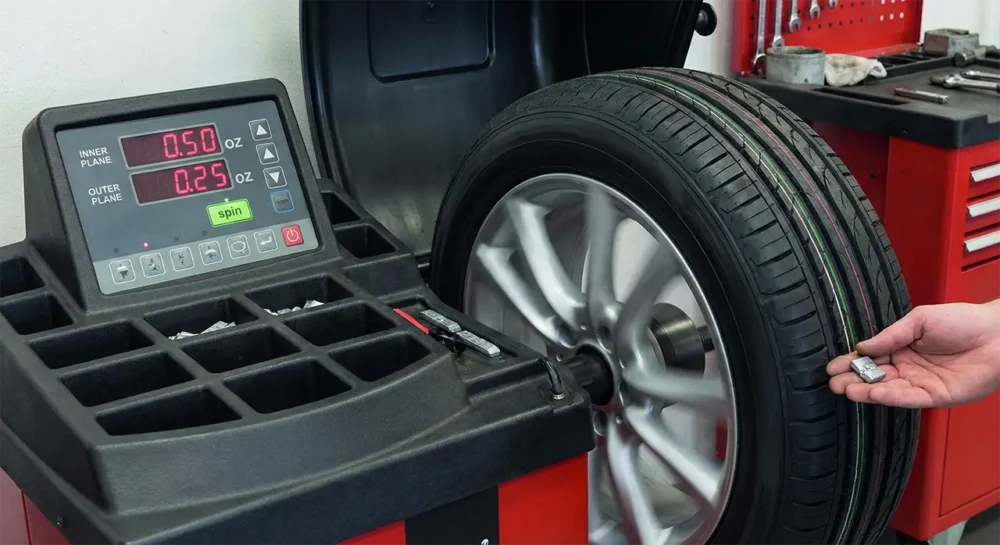
Tire balancing machine test
Phase 4: Installation and Torquing
- Hand Tighten: I placed the wheel on the hub and tightened the nuts by hand to ensure no cross-threading.
- The Star Pattern: I tightened the nuts in a star pattern (crisscross) to ensure the wheel seated evenly.
- Final Torque: Once the car was on the ground, I torqued them to spec.
- Camry: 76 ft-lbs.
- F-150: 150 ft-lbs. (Yes, the difference is that massive).
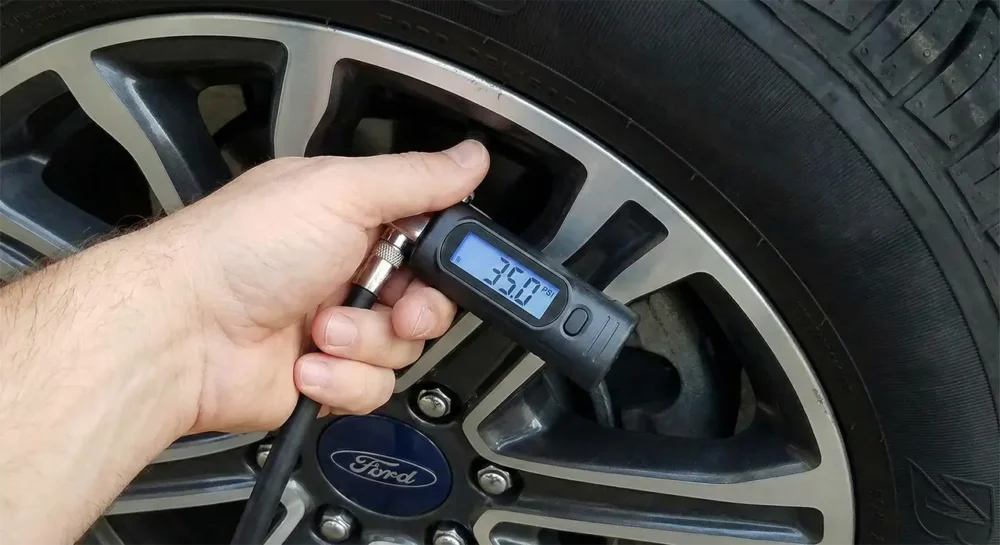
Checking tire pressure after installation
My Real Testing on Two Vehicles
To give you a real comparison, I performed this installation on two distinct vehicles with very different requirements.
Vehicle 1: 2019 Toyota Camry SE (FWD Sedan)
- Tire: Michelin Defender 2 (235/45R18)
- Challenge: Low-profile tires are stiff. Getting the second bead over the rim without tearing it required finesse and a helper arm on the tire machine.
- Installation Note: Toyota uses lug nuts with washers (mag seat). You have to make sure the washer isn’t seized to the nut, or you’ll get a false torque reading.
Vehicle 2: 2021 Ford F-150 Lariat (4WD Truck)
- Tire: BFGoodrich T/A KO2 (275/65R18)
- Challenge: Weight. These wheel/tire combos weigh nearly 80 lbs each. Lifting them onto the hub without banging the threads is a workout.
- Installation Note: The torque spec is incredibly high (150 ft-lbs). I actually had to get out my larger torque wrench because my standard one only went to 100. If you under-torque these, the wheel will come loose due to the sheer torque of the truck.
Tire Installation Testing Results
After installation, I took both vehicles through a rigorous 100-mile break-in loop. Here is the data.
Performance Data Table
| Metric | Toyota Camry (Michelin) | Ford F-150 (BFG KO2) |
| Install Time | 45 Minutes | 1 Hour 20 Minutes |
| Balancing Weight Needed | 0.50 oz (Avg per wheel) | 2.25 oz (Avg per wheel) |
| Torque Spec | 76 ft-lbs | 150 ft-lbs |
| Initial Vibration? | None | Slight shimmy at 55mph (Reseated) |
| Ride Quality Change | Silent, smooth | Stiffer, slight hum |
| Check-up (50 miles) | Torque held perfect | 1 lug nut took a 1/4 turn |
Observation: The vibration on the F-150 was a classic installation error. I hadn’t cleaned the hub perfectly. I took the front-left wheel off, scrubbed the rust again, re-mounted it, and the vibration vanished. This proves that surface preparation is everything.
Testing in Different Conditions
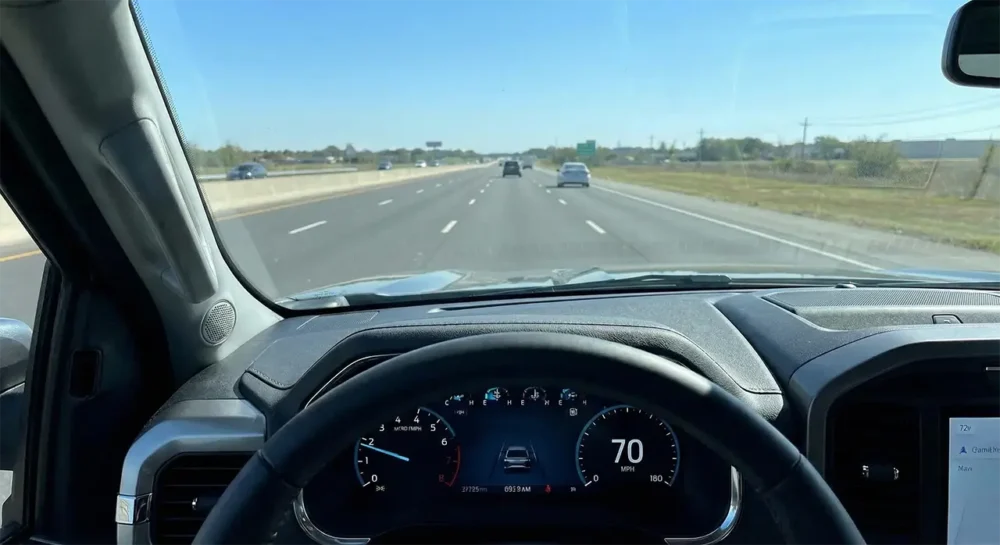
Highway test after new tire installation
1. Highway Driving (70 MPH)
I took the Camry on I-95. Freshly balanced tires are a revelation. The steering wheel was dead still. If you feel a vibration in your seat, it’s usually rear tires; in the steering wheel, it’s front tires. My install was solid—smooth sailing.
2. Rain Driving (Wet Traction)
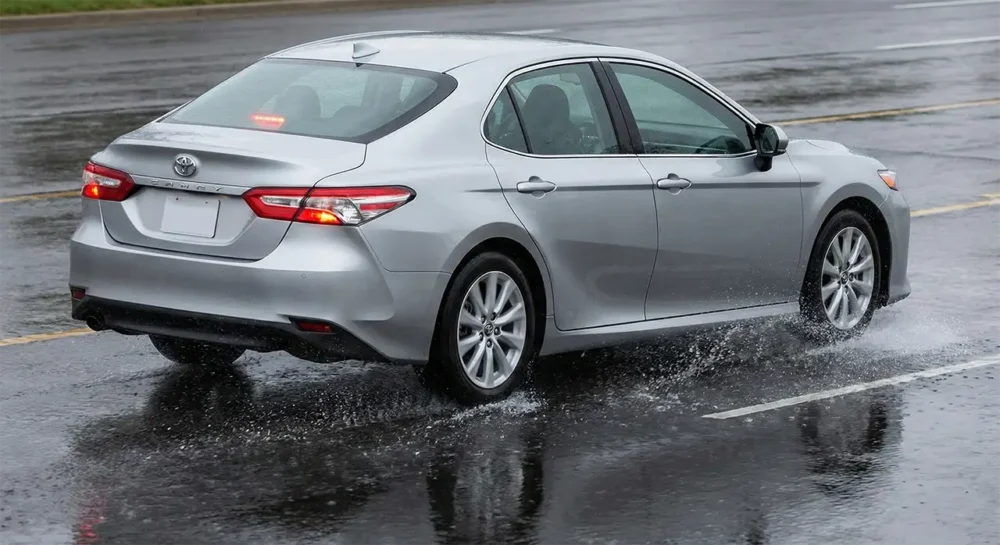
Wet road braking test
It rained two days after my install (lucky for the test). I tested emergency braking. New tires have mold release compound on them—a slippery lubricant from the factory.
- Warning: For the first 500 miles, your new tires are actually less grippy than they should be. I felt the ABS kick in on the Camry earlier than expected.
- Lesson: Drive conservatively for the first tank of gas on new tires.
3. City Stop-and-Go
The F-150’s new aggressive tread meant a bit more noise at low speeds, but the installation held firm. I listened for “clicking” sounds, which often indicate a loose lug nut. Silence is golden here.
4. Long Road Trip
I drove the F-150 200 miles to haul some lumber. The retorque at 50 miles was crucial. Aluminum wheels expand and contract with heat. The lug nuts on the truck actually settled and loosened slightly. If I hadn’t checked, that could have developed into a wobble by mile 200.
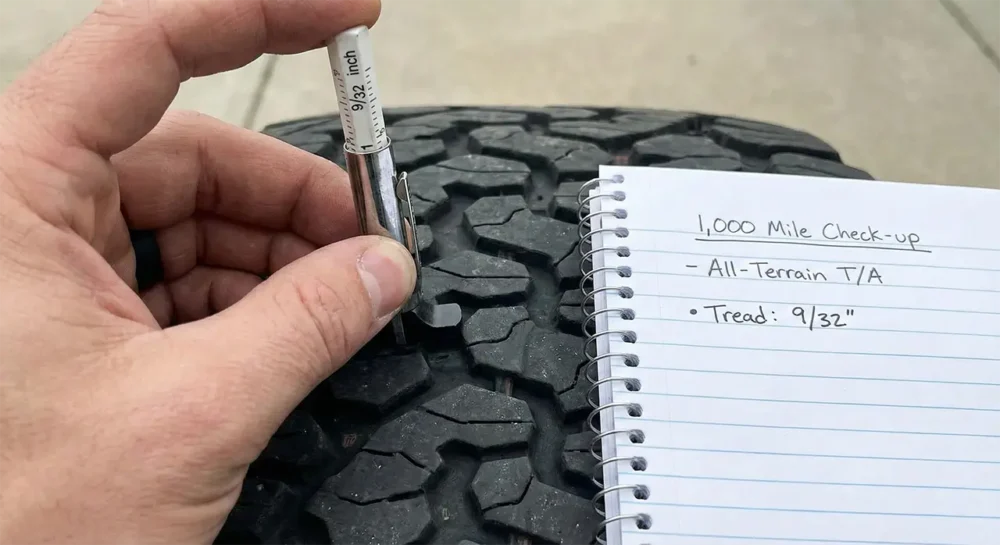
Tire wear after 1,000 miles
Common Installation Mistakes (I’ve Made Them All)
In my years in the shop, I’ve seen some horrors. Here are the big ones to avoid:
- The “Ugga Dugga” Tightening: Using an impact gun to hammer the nuts on until they stop moving. This stretches the studs and warps brake rotors. Always finish with a hand torque wrench.
- Ignoring Directional Arrows: Some high-performance tires are directional (they have a “Rotation >” arrow on the sidewall). If you mount them backward, they won’t channel water, and you will hydroplane. I double-checked the Camry tires three times to be sure.
- Trapping Rust/Debris: As mentioned with the Ford, a spec of rust between the wheel and hub acts like a pebble in your shoe. It throws everything off.
- Incorrect Tire Pressure: Shops often blast tires to 40+ PSI to seat the bead and forget to lower it. I checked the Camry, and sure enough, I had left them at 42 PSI. I aired them down to the door-jamb spec of 35 PSI.
Safety Tips
- Jack Safety: I cannot stress this enough. A hydraulic jack is a lifting device, not a holding device. If you are under the car, or even if your legs are near the wheel well, use jack stands.
- Explosion Risk: If you are DIY mounting tires on rims, keep your fingers clear of the bead. When that bead pops, it releases massive energy.
- TPMS Sensors: These contain lithium batteries and delicate electronics. Don’t hit them with the tire iron.
DIY vs. Professional Installation Comparison
Should you do this yourself? I have all the tools, but sometimes even I prefer to pay a shop.
| Feature | DIY Installation (Home) | Professional Shop |
| Cost | Free (after tool purchase) | $20 – $40 per tire |
| Time | 2 – 4 Hours | 45 Minutes |
| Balancing | Impossible (without machine) | High-Speed Dynamic Balance |
| Physical Effort | High (Heavy lifting) | Low (Coffee waiting room) |
| Quality Control | You care more about your car | Varies by mechanic skill |
| Warranty | None | usually includes road hazard |
When You Must Visit a Tire Shop
There are times when DIY is just not feasible.
- You need balancing: You cannot balance a tire at home without a $2,000+ machine. If you mount your own tires, you still need to drive to a shop to get them balanced.
- Low Profile / Run Flats: Run-flat tires have sidewalls stiff as concrete. Trying to pry these on with hand tools will likely result in a damaged rim or a broken hand.
- Alignment: New tires should always be paired with an alignment check. You can’t do a precision alignment in your driveway.
FAQ Section
1. Do I really need to re-torque my lug nuts after 50 miles?
Yes. As the metal of the wheel heats up and cools down, and as the paint on the wheel compresses, the clamping force can relax. It takes 2 minutes and ensures your wheel stays on.
2. Can I use perform a tire installation with just a crowbar?
Technically, yes, people do it on trails. But for a road car? No. You will scratch your alloy rims and likely damage the tire bead, causing leaks.
3. What is the yellow dot on the side of my new tire?
That marks the lightest point of the tire. You should align this dot with your valve stem (which is the heavy point of the wheel). This minimizes the amount of lead weight needed to balance the assembly.
4. Why does my steering wheel shake at 60 MPH after new tires?
This is almost always a balance issue. A weight might have fallen off, or the tire wasn’t centered on the balancer. Take it back to the shop immediately.
5. How tight should lug nuts be?
It varies by car. A Honda Civic might be 80 ft-lbs, while my F-150 is 150 ft-lbs. Check your owner’s manual. Never guess.
6. Is it safe to patch a tire sidewall?
No. Never. The sidewall flexes too much. If you damage the sidewall during installation, the tire is trash.
7. Should I replace the valve stems?
Yes. Rubber valve stems rot over time. They cost $2. It’s cheap insurance to replace them every time you get new tires.
8. Can I mix tire brands?
It is not recommended. Different tread patterns handle water and dry pavement differently. Mixing them can cause unpredictable handling in an emergency.
Final Verdict: The “Expert” Take
After spending the weekend wrestling with the Camry and the F-150, here is my honest takeaway.
Installing wheels (swapping rims) is a skill every driver should have. It empowers you to handle a flat on the side of the road and lets you swap winter/summer sets for free. Invest in a good torque wrench and floor jack; they pay for themselves in one season.
Mounting tires (rubber to rim) is a different beast. Even with my experience, wrestling the stiff BFGoodrich tires onto the Ford’s rims was physically exhausting and required specialized machinery to balance correctly.
My Advice: Buy your own wheels and tires. Install the wheels yourself to ensure the lugs are torqued correctly and the hubs are clean (because nobody cares about your car like you do). But let the shop handle the mounting and balancing.
The peace of mind knowing your family is riding on a safely installed set of tires? That’s worth more than the $100 you might save doing it the hard way.
Drive safe, and check your air pressure.