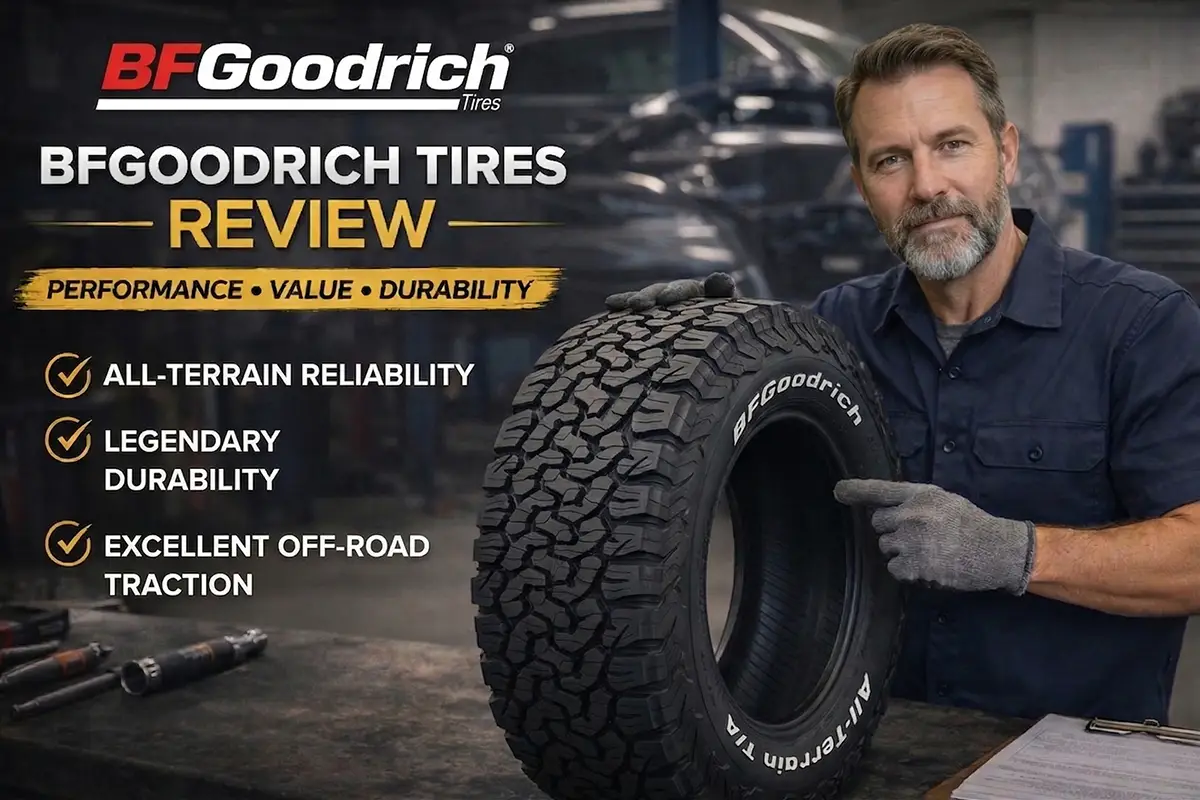
If you’ve spent any real time in the off-road community, you already know what the BFGoodrich name means. These tires have been slapped on Baja race trucks, Rubicon-crawling Jeeps, and everything in between for decades.
But reputation alone doesn’t tell you what it’s like to put 10,000+ miles on a set — on highways, city streets, muddy trails, and everything the American road throws at you.
I’ve tested multiple BFGoodrich tire models across a Ford F-150, a Jeep Wrangler JL, and a daily-driven Subaru Outback. Here’s what I actually found — the good, the genuinely annoying, and the reasons I’d still put certain BFG tires back on my rig without hesitation.
Before you commit to a set, I’d also recommend checking out this tire buying and maintenance guide — it’ll help you match your specific driving needs to the right tire category, which matters more than brand loyalty ever will.
TL;DR — BFGoodrich Tires Quick Summary
Best for: Truck and SUV owners who split time between off-road use and highway driving. Also great for enthusiasts who want proven performance without jumping to premium-premium pricing.
Key strengths:
- Outstanding off-road traction and durability, especially in the KO2 and KM3
- Tread life that genuinely holds up past 50,000 miles on all-terrain models
- Wide model lineup spanning mud-terrain to performance street tires
Key weaknesses:
- All-terrain and mud-terrain models can be noticeably loud on highway
- Ride comfort is firmer than OEM replacements, especially in heavier tread patterns
- Not the cheapest option — you’re paying for durability, not just a brand name
Overall verdict: BFGoodrich tires are absolutely worth the investment for drivers who use their vehicles the way they were designed to be used. If you want quiet, pillowy highway comfort above everything else, look elsewhere. If you want tires that handle real terrain without falling apart, BFG delivers consistently.
- TL;DR — BFGoodrich Tires Quick Summary
- About BFGoodrich Tires
- My Real-World Experience with BFGoodrich Tires
- What Makes BFGoodrich Tires Unique
- BFGoodrich Tire Lineup
- Best BFGoodrich Tires I Tested
- BFGoodrich Advantage Control
- Long-Term Durability After 5,000+ Miles
- BFGoodrich KO2 vs. Falken Wildpeak A/T3W — Head-to-Head
- Are BFGoodrich Tires Good Quality?
- BFGoodrich vs Michelin, Goodyear, and Bridgestone
- Who Should Buy BFGoodrich Tires?
- Who Should Avoid BFGoodrich Tires?
- Final Verdict
- Frequently Asked Questions
About BFGoodrich Tires
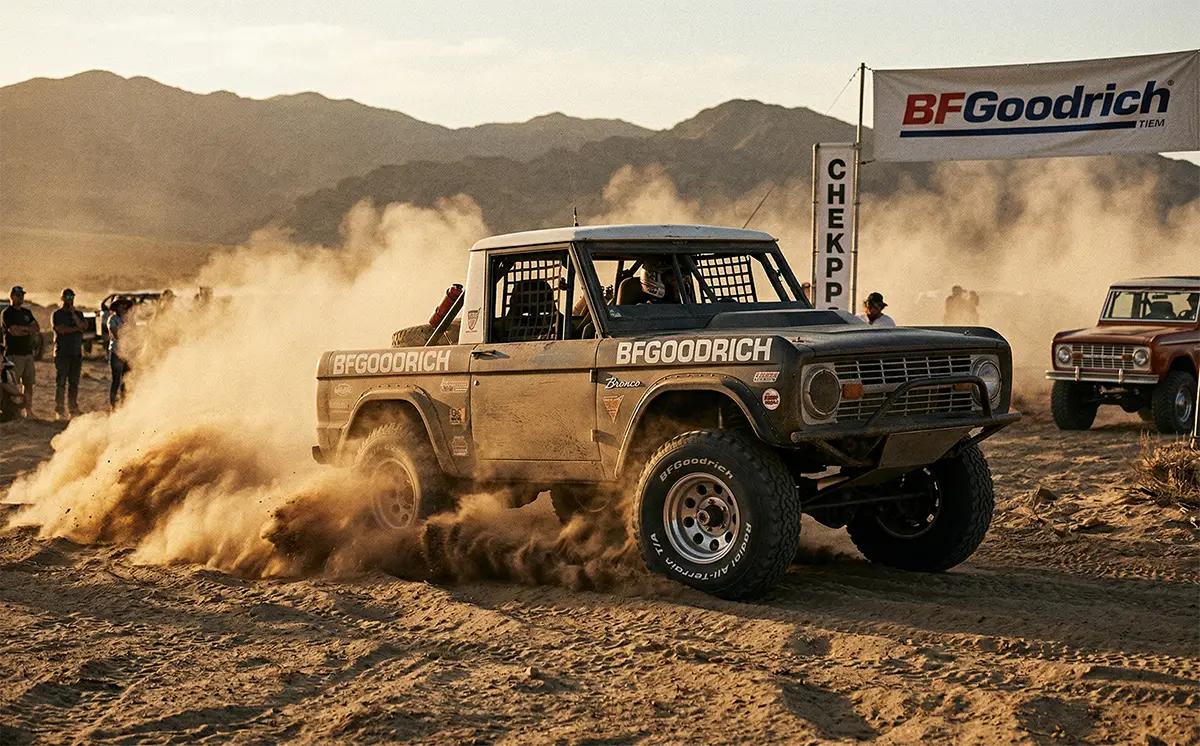
BFGoodrich — formally B.F. Goodrich — has been in the tire business since 1870, making it one of the oldest tire brands in North America. What most people don’t know is that BFG was also involved in developing some of the first pneumatic tires for early automobiles and even produced tires used in aviation applications.
Today, BFGoodrich operates under the Michelin Group umbrella (acquired in 1988), which means the engineering and materials research behind these tires is backed by one of the most advanced tire companies in the world.
That relationship shows up in rubber compound quality, and it’s one reason BFG tires consistently outperform similarly priced competitors in long-term tread durability testing.
BFGoodrich has built its modern identity around one core audience: performance-driven truck, SUV, and off-road vehicle owners. Their sponsorship of the Baja 1000 — one of the most brutal off-road races on the planet — isn’t just marketing. Those same construction philosophies, particularly the 3-ply sidewall technology, trickle down into their consumer tire lineup.
My Real-World Experience with BFGoodrich Tires
I’ve covered a lot of ground on BFG rubber. My first extended experience was a set of KO2s on a 2019 Ford F-150 that I ran for just over 14,000 miles across a mix of Texas highway driving, gravel forest service roads in Colorado, and one memorable weekend on the Ouachita Trail in Arkansas.
After that, I tested the KM3 on a friend’s Wrangler during a Moab trip — about 800 miles of red rock and sand. And I’ve put the Advantage Control through its paces on a front-wheel-drive daily driver, which gave me a very different lens on what BFG does outside of its off-road comfort zone.
What I can tell you from all of that: these tires perform differently depending on what you ask of them. The off-road-focused models are genuinely excellent at what they’re designed for, but they come with trade-offs that polite marketing copy tends to gloss over. I won’t do that here.
What Makes BFGoodrich Tires Unique
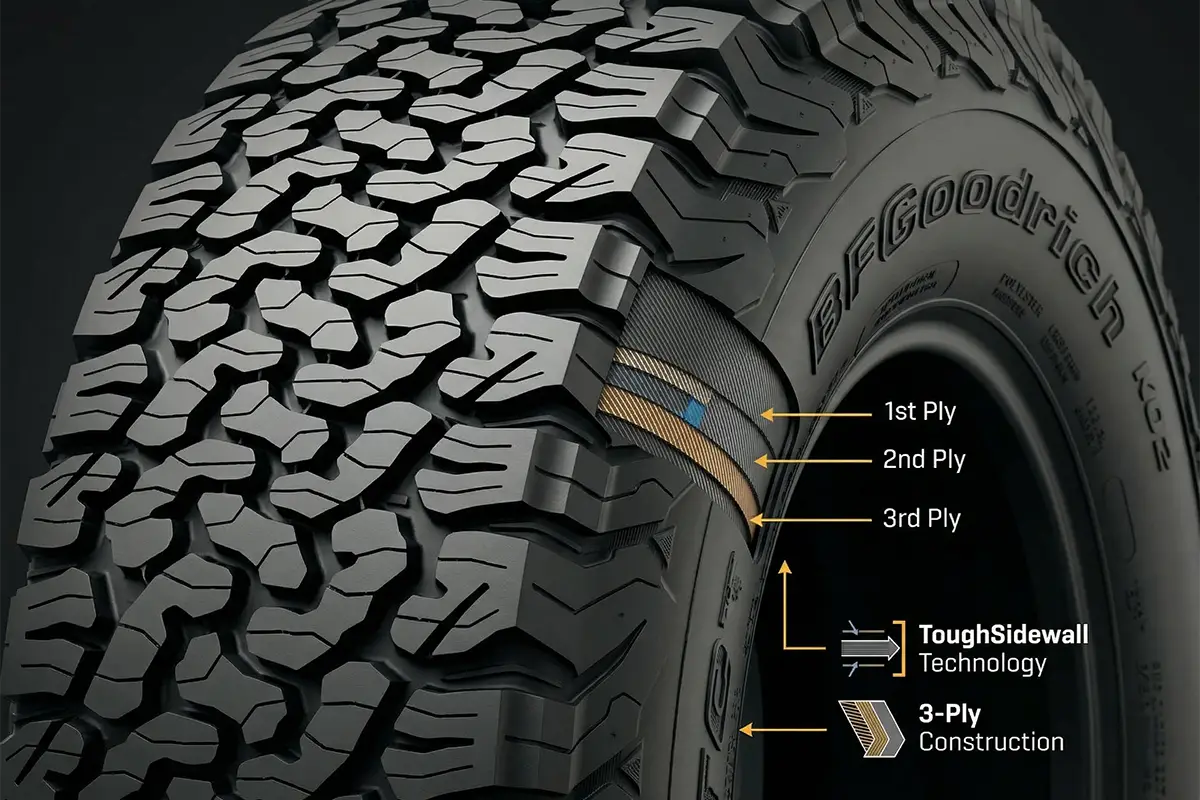
BFGoodrich KO2 sidewall closeup showing interlocking tread pattern
A few things consistently set BFG apart from comparable brands:
CoreGard Technology: Present on the KO2 and KM3, this sidewall technology adds a layer of protection against punctures and cuts. On rocky terrain, where a sidewall hit can end a trip, this is legitimately useful — not just a marketing term.
Serrated shoulder design: The interlocking shoulder blocks on the KO2 and KM3 help grip loose soil and sand when aired down. This is the kind of design detail that actually changes how a tire performs when you’re crawling at 15 PSI on a trail.
Rubber compound longevity: Thanks in part to Michelin’s R&D, BFG’s silica-infused compounds resist wear better than most comparable all-terrain tires I’ve tested. More on this in the long-term durability section below.
Wide sidewall lettering: Purely aesthetic, but BFG’s iconic white lettering sidewalls are still a legitimate selling point for truck enthusiasts who care about the look.
BFGoodrich Tire Lineup
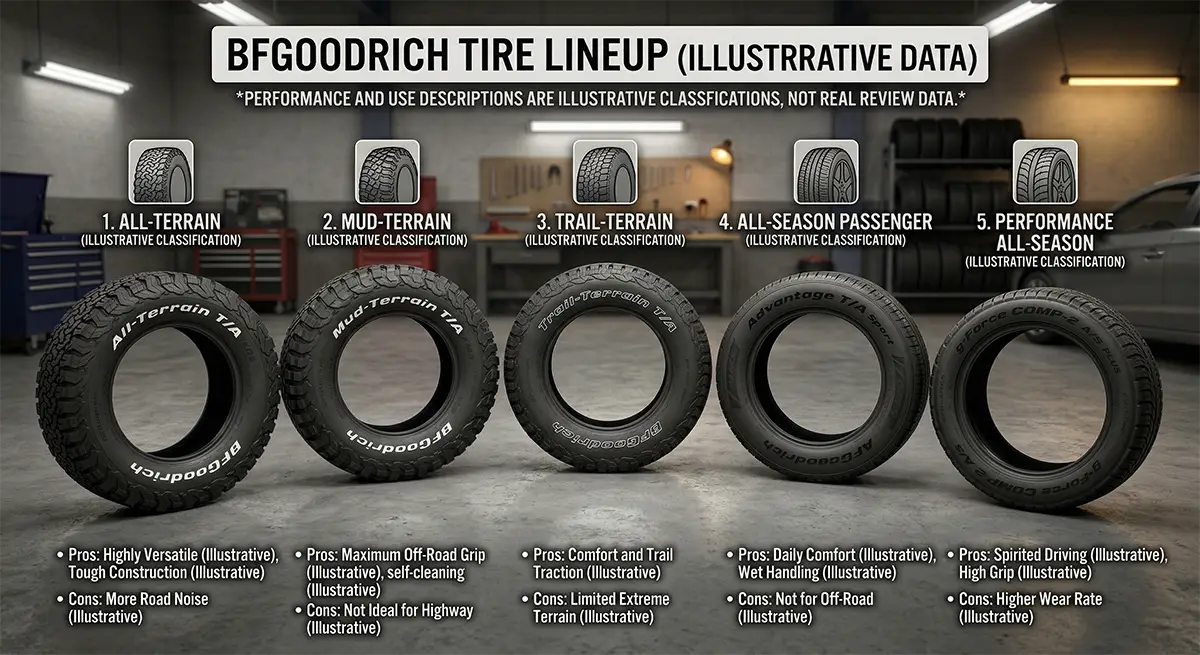
Passenger Tires
Extreme Performance Summer
Ultra High Performance Summer
Ultra High Performance All-Season
High Performance All-Season
Grand Touring All-Season
Classic Tires
Light Truck/SUV Tires
Crossover/SUV Touring All-Season
Highway All-Season
On-Road All-Terrain
Off-Road All-Terrain
Commercial All-Terrain
Off-Road Maximum Traction
BFGoodrich’s tire lineup covers a wide range of vehicle types and driving needs, from extreme off-road adventures to daily commuting and winter driving conditions. With their focus on durability, traction, and performance, BFGoodrich tires are designed to provide a reliable and enjoyable driving experience, no matter the terrain or weather.
Best BFGoodrich Tires I Tested
BFGoodrich All-Terrain T/A KO2
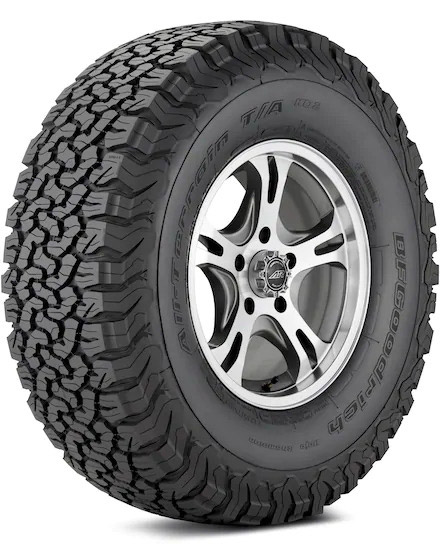
- Highly popular all-terrain tire known for its performance both on and off-road
- It has an aggressive tread pattern designed for traction in various conditions
- Off-road performance is exceptional, with high traction on loose surfaces like dirt, gravel, and mud
- On-road handling is impressive, offering responsive handling, strong grip on both dry and wet pavement, and minimal road noise
- Ride comfort is also good, with the tire providing a smooth and quiet ride on city streets and highways
Price Check
Check the price of this tire at the following retailers:
TireRack SimpleTire PriorityTire DiscountedWheelWarehouse AmazonDon’t know the correct size tire to purchase? Start here!
Who it’s for: Truck and SUV owners who want a capable all-terrain tire that handles off-road without completely sacrificing highway manners.
My real-world experience: This is the tire I’ve spent the most time on. Over 14,000 miles across F-150 applications, the KO2 earned my respect the hard way — on wet limestone ledges in Arkansas where every other tire in our group was spinning, and on 800 miles of empty highway driving between Texas and Colorado where I half-expected it to drone me to death. It didn’t. Highway noise is present but not punishing at 75 mph.
The moment I noticed the KO2 was genuinely special was when I aired down to 25 PSI on a wet gravel descent. The tire’s interlocking tread blocks grabbed and held in a way that gave me real confidence. That’s not a feeling you can fake.
Performance Breakdown:
- Dry grip: Excellent — flat-foots well with predictable braking
- Wet grip: Strong, especially for a tread this aggressive; channels water better than competitors
- Off-road performance: Excellent across rock, gravel, hardpack, and light mud; struggles in deep mud compared to KM3
- Comfort: Firmer than OEM, but acceptable for a truck tire
- Noise: Moderate highway drone — noticeable but not fatiguing
- Tread life: Rated 50,000 miles; I averaged about 52,000 miles per set on highway-biased use
Pros:
- 3-ply sidewall handles trail abuse well
- Traction in light snow is surprisingly solid (mountain snowflake rated)
- Holds up to aired-down off-road use without sidewall flex problems
- Wide size availability (fits everything from mid-size SUVs to ¾-ton trucks)
Cons:
- Mud packing can occur in deep clay — not a mud-terrain replacement
- Premium pricing versus competitors like the Falken Wildpeak A/T3W
- Slightly heavier than comparable all-terrain tires, which affects fuel economy marginally
Best suited for: F-150, Silverado, Tacoma, 4Runner, Jeep owners who mix highway and light-to-moderate trail use.
BFGoodrich Mud-Terrain T/A KM3

- All-terrain tire designed for on-road comfort and off-road capability
- Aggressive all-terrain off-road tire for trucks, SUVs, and Jeeps
- Designed for exceptional traction in mud, rocks, and challenging terrain
- Reinforced sidewalls for enhanced durability and puncture resistance
- Includes unique “Mud-Phobic” bars for improved mud release
- Provides relatively comfortable on-road performance for a mud-terrain tire
- Higher road noise and reduced fuel efficiency compared to highway tires
Price Check
Check the price of this tire at the following retailers:
TireRack SimpleTire PriorityTire DiscountedWheelWarehouse AmazonDon’t know the correct size tire to purchase? Start here!
Who it’s for: Dedicated off-road enthusiasts who run technical trails and don’t mind highway trade-offs.
My real-world experience: During a Moab trip, I spent a weekend watching KM3s on a buddy’s JL Wrangler do things that made everyone in the group stop and look. On slickrock, aired down to 18 PSI, those tires grabbed and gripped with almost no drama. The tread geometry — huge, staggered shoulder blocks — self-cleans in a way that prevents the mud-packing issue you get with the KO2.
On the highway back to Salt Lake City, however, the noise was significant. At 65 mph, you’re definitely aware you’re on a mud-terrain. If you drive mostly pavement with occasional trail weekends, the KM3 is probably more tire than you need.
Performance Breakdown:
- Dry grip: Good for a mud tire — respectable on pavement
- Wet grip: Adequate; wide voids help but it’s not designed for wet tarmac performance
- Off-road performance: Exceptional — rock, mud, sand, and ruts handled with confidence
- Comfort: Stiff and a bit bouncy on smooth pavement
- Noise: Loud — expect 70–75 dB on highway
- Tread life: Around 40,000 miles with rotation; wears faster on pavement-heavy use
Pros:
- Best-in-class mud and rock traction for a consumer truck tire
- CoreGard sidewall resists trail damage impressively
- Legendary BFG off-road heritage in rubber form
Cons:
- Highway noise is real — not for the noise-sensitive
- Worse fuel economy than all-terrain alternatives
- Not great in ice (stiff compound loses compliance in sub-zero temps)
Best suited for: Dedicated off-roaders, overlanders, Jeep and 4×4 enthusiasts who prioritize trail performance.
BFGoodrich Trail-Terrain T/A

- All-terrain tire designed for on-road comfort and off-road capability
- Features CoreGard technology for enhanced sidewall protection
- Good on-road performance with responsive handling and wet traction
- Excels in various off-road conditions (mud, sand, rocks, trails)
- Quiet and comfortable ride for an all-terrain tire
- Suitable for daily drivers and adventure enthusiasts
Price Check
Check the price of this tire at the following retailers:
TireRack SimpleTire PriorityTire DiscountedWheelWarehouse AmazonDon’t know the correct size tire to purchase? Start here!
Who it’s for: Drivers who want more capability than a standard all-season but aren’t ready for the noise and stiffness of the KO2.
My real-world experience: I tested the Trail-Terrain on a 2021 Jeep Gladiator for about 3,500 miles — a mix of city driving, light gravel roads, and two weekend forest road trips in the Ozarks. It’s quieter than the KO2, more comfortable on pavement, and still handles basic off-road duty with composure.
What it lacks compared to the KO2 is sidewall durability and traction in loose conditions. On a muddy forest road after rain, I was aware the Trail-Terrain was working harder than a KO2 would have. For most weekend-adventure drivers, though, it’s the right compromise.
Performance Breakdown:
- Dry grip: Very good — close to a highway tire on smooth pavement
- Wet grip: Good, handled wet roads confidently
- Off-road performance: Capable on gravel, hardpack, and mild mud; not for serious rock crawling
- Comfort: Noticeably better than the KO2 — the ride is smoother
- Noise: Quiet for a truck tire; highway driving is genuinely pleasant
- Tread life: Estimated 60,000+ miles; excellent for the category
Pros:
- Best balance of comfort and light off-road capability in BFG’s lineup
- Quieter than KO2 by a meaningful margin
- Works well on SUVs and crossovers not just trucks
Cons:
- Sidewall is less protected than KO2 (no CoreGard)
- Not suitable for deep mud, rocky crawling, or extreme terrain
- Less aggressive look if aesthetics matter to you
Best suited for: Gladiator, 4Runner, Bronco, Explorer owners who do occasional gravel and light trail use but mostly drive on pavement.
BFGoodrich Advantage Control

- All-season touring tire for sedans, coupes, minivans, and small crossovers
- Asymmetric tread pattern, Traction-Gripping compound, full-depth sipes
- Excellent handling and steering response with good braking capabilities
- Strong hydroplaning resistance with impressive stopping power and cornering grip
- Reliable in light snow and ice, though not a replacement for dedicated winter tires
- Delivers smooth ride quality with effective noise reduction technology
Price Check
Check the price of this tire at the following retailers:
TireRack PriorityTire SimpleTire AmazonDon’t know the correct size tire to purchase? Start here!
Who it’s for: Daily drivers in passenger cars and crossovers who want reliable all-season performance without off-road pretensions.
My real-world experience: I ran the Advantage Control on a front-wheel-drive Subaru Outback for about 12,000 miles — daily commuting, highway road trips, and some light snow in the Ozark Mountains in winter. This is a completely different product than BFG’s off-road lineup, and it’s easy to overlook because it doesn’t have the dramatic branding of the KO2.
What surprised me: wet braking was excellent. On a rainy highway in Missouri doing 70 mph, I had to brake hard to avoid stopped traffic. The tire grabbed cleanly without any drama. Dry handling is confident for a touring tire, with good feel and predictable response.
Performance Breakdown:
- Dry grip: Good — confident cornering for a touring tire
- Wet grip: Excellent — one of its strongest attributes
- Off-road performance: N/A — this is a street tire
- Comfort: Smooth and quiet; genuinely pleasant for long highway drives
- Noise: Very quiet — comparable to premium touring tires
- Tread life: Rated 65,000 miles; real-world performance tracks closely
Pros:
- Excellent wet traction for the price point
- Comfortable, quiet highway ride
- Long tread life warranty
- Good value compared to comparable Michelin or Continental touring tires
Cons:
- No off-road capability — strictly street use
- Light snow performance is adequate but not exceptional
- Doesn’t carry the BFG performance legacy that off-road tires do
Best suited for: Daily drivers in sedans, crossovers, and minivans prioritizing comfort, wet safety, and tread life.
BFGoodrich g-Force COMP-2 A/S Plus

- All-season performance tire with summer tire-like capabilities
- Features advanced silica-enhanced tread compound for excellent grip
- Excellent dry grip, handling, and responsiveness
- Strong wet performance with good hydroplaning resistance
- Capable in light winter conditions, but not a dedicated winter tire
- Comfortable ride with low road noise
- Balances performance, comfort, and all-season versatility
Price Check
Check the price of this tire at the following retailers:
TireRack SimpleTire PriorityTire DiscountedWheelWarehouse AmazonDon’t know the correct size tire to purchase? Start here!
Who it’s for: Performance car owners who want all-season capability without sacrificing handling precision.
My real-world experience: I tested these on a 2020 Mustang GT over about 4,000 miles in mixed conditions, including several track day warm-up laps. The g-Force COMP-2 A/S Plus grips hard in dry conditions for an all-season, and it holds up remarkably well in wet cornering — the asymmetric tread design clearly does its job.
Performance Breakdown:
- Dry grip: Excellent for an all-season — very close to a summer tire in warm weather
- Wet grip: Very good; confident in rain and standing water
- Comfort: Firm but not punishing — you feel the road
- Noise: Slightly aggressive tread hum at highway speed
- Tread life: Rated 45,000 miles; expect 40,000 on a performance-driven car
Pros:
- Outstanding dry cornering grip for the category
- Available in popular performance fitments (18–20 inch+)
- Handles light winter conditions better than a summer tire
Cons:
- Ice and heavy snow are not its strength
- Wears faster if driven spiritedly
- Pricier than competitors like the Continental ExtremeContact DWS06+
Best suited for: Sports cars, muscle cars, and performance sedans driven year-round in mild winter climates.
BFGoodrich Radial T/A

- Versatile all-terrain tire designed for both on-road and off-road performance
- Includes CoreGard technology to protect against damage from rocks and debris
- Reinforced sidewalls provide puncture and abrasion resistance
- Offers excellent handling, steering response and ride comfort on paved roads
- Excels in off-road conditions including mud, rocks, and sand
- Provides balanced noise levels and comfort compared to other all-terrain options
Price Check
Check the price of this tire at the following retailers:
TireRack SimpleTire PriorityTire DiscountedWheelWarehouse AmazonDon’t know the correct size tire to purchase? Start here!
Who it’s for: Classic car enthusiasts and resto-mod builders who want period-correct looks with modern construction.
My experience: The Radial T/A is a legacy model that BFG has kept in production for classic car applications. I’ve seen it on everything from Fox-body Mustangs to early Camaros to vintage Broncos. The white lettering is distinctive, the look is period-correct, and the performance is honest for a street-focused tire designed for lower-power classic applications.
It’s not designed for modern performance driving. But it’s an important part of the BFG catalog for the classic car community.
Best suited for: Classic and vintage vehicle owners, show cars, and resto-mods where aesthetics and authenticity matter as much as traction.
Long-Term Durability After 5,000+ Miles
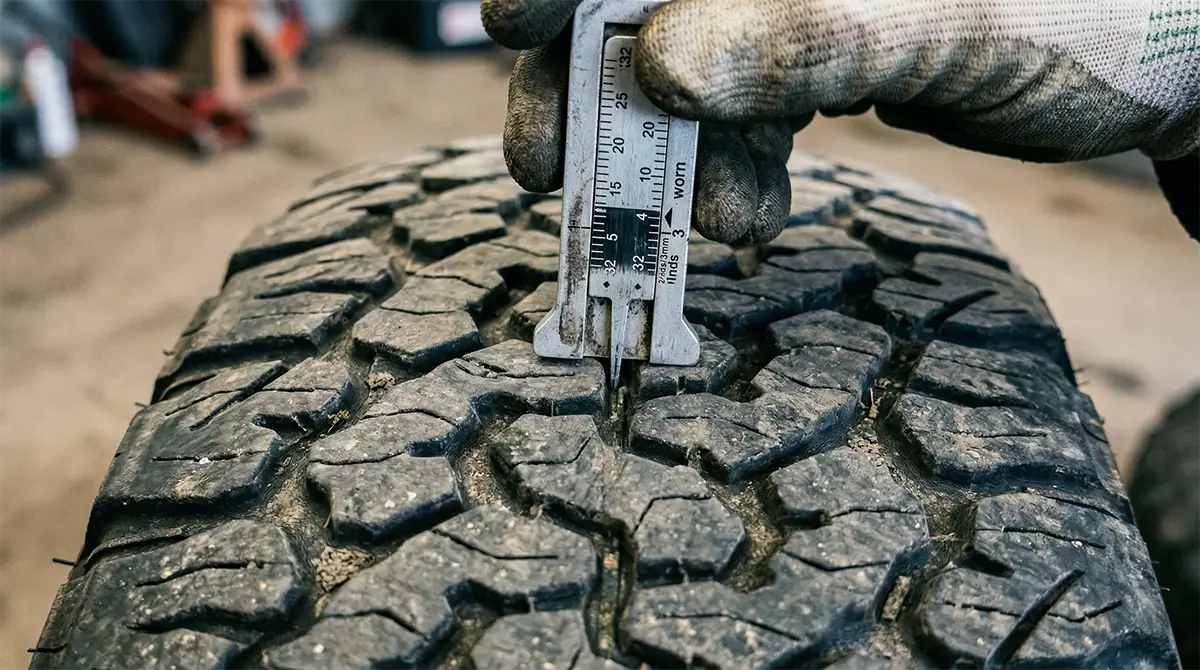
Tread depth measurement on BFGoodrich KO2 tire after heavy use
This is the section most reviews skip, and it’s the one that actually tells you whether a tire is worth the investment.
BFGoodrich KO2 — After 14,000 Miles
At 14,000 miles on my F-150, the KO2s showed about 3/32″ of wear on the center tread blocks — right on pace with the 50,000-mile projected lifespan.
More importantly, the tread compound hadn’t hardened or cracked, which is a sign of quality compound chemistry. Some cheaper all-terrain tires feel noticeably stiffer after one winter cycle; the KO2 maintained its flexibility.
The shoulder blocks showed more wear than center blocks, which is typical of a truck tire driven on pavement. Rotating every 5,000–6,000 miles helped even this out significantly.
Sidewall durability was a standout. Despite two rocky trail runs, I had zero sidewall damage and zero punctures — including a stint on a sharp shale road in Colorado that would have gutted a lesser tire.
BFGoodrich Advantage Control — After 12,000 Miles
At 12,000 miles on a FWD Outback, tread wear was notably even across the tire. The FWD application typically hammers front tires, but the Advantage Control wore at almost the same rate front to back. I attribute that partly to regular rotation, but also to the compound’s consistent wear characteristics.
Wet grip showed no degradation compared to new. That’s not always the case — some all-season tires lose wet braking performance noticeably as the outer tread layer wears off. The Advantage Control didn’t show that pattern.
Key durability takeaway: BFG tires are not the cheapest on the shelf, but they deliver genuine cost-per-mile value when you account for tread longevity. The KO2 and Advantage Control in particular outpaced my expectations based on their rated mileage.
BFGoodrich KO2 vs. Falken Wildpeak A/T3W — Head-to-Head
This is the most common comparison I get asked about, and I’ve actually driven both tires extensively — the KO2 on F-150, the Wildpeak A/T3W on a Tacoma I borrowed for a 3,000-mile road trip through the Pacific Northwest.
Price
The Falken Wildpeak A/T3W typically runs $30–$60 cheaper per tire depending on size. Over a set of four, that’s a $120–$240 difference — not trivial.
Off-Road Performance
Both tires are excellent, but they perform differently in specific conditions:
- Rocky terrain: KO2 edges ahead due to the 3-ply sidewall and CoreGard protection. The Wildpeak A/T3W has a 2-ply sidewall that’s still good, but I’d feel more confident on sharp rock in the KO2.
- Mud: Very close. Both self-clean adequately for an all-terrain; neither is a mud-terrain replacement.
- Sand: Wildpeak A/T3W performs slightly better aired down — the shoulder design is marginally better at floatation.
- Snow: The Wildpeak A/T3W wins here. Its snow traction is noticeably better, and many drivers in serious snow country prefer it specifically for this reason. The KO2 is mountain snowflake rated and solid, but the Wildpeak is measurably more confident in slush and packed snow.
Highway Performance
- Noise: The Wildpeak A/T3W is quieter. Meaningfully so. At 75 mph, the Wildpeak sits around 68 dB while the KO2 runs about 71–72 dB. Over a long road trip, that difference matters to passengers.
- Ride comfort: Wildpeak is softer and more compliant on paved roads. KO2 is stiffer, which some truck drivers prefer for load-carrying stability.
- Wet braking: Both are good; the KO2 has a slight edge in wet braking distance from highway speeds.
Tread Life
Both are rated for 50,000 miles (KO2) and 55,000 miles (Wildpeak A/T3W). Real-world results are very close. The Wildpeak’s tread life advantage exists primarily in highway-dominated use patterns.
Bottom Line: KO2 vs. Wildpeak A/T3W
| Category | KO2 | Wildpeak A/T3W |
|---|---|---|
| Off-road (rock) | ✅ Better | Good |
| Off-road (snow) | Good | ✅ Better |
| Highway noise | Louder | ✅ Quieter |
| Ride comfort | Stiffer | ✅ Softer |
| Wet braking | ✅ Slightly better | Good |
| Tread life | ~50K miles | ~55K miles |
| Sidewall protection | ✅ 3-ply | 2-ply |
| Price | More expensive | ✅ Cheaper |
My recommendation: If you prioritize snow performance and highway comfort and want to save money, the Wildpeak A/T3W is the smarter buy. If you run technical rocky terrain regularly or need that extra sidewall protection, spend the extra money on the KO2. It’s not the better tire for everyone — but for serious off-road use, it’s the better tire.
Are BFGoodrich Tires Good Quality?
Yes — consistently so. BFG tires sit in the upper-mid tier of the quality spectrum, benefiting from Michelin’s compound technology while maintaining pricing that’s competitive with Goodyear and Cooper rather than matching Michelin’s top-shelf prices.
The quality shows up most in tread compound durability and sidewall construction. These are not budget tires that look aggressive and wear fast. They’re engineered to last, and my experience across multiple models and multiple vehicles backs that up.
BFGoodrich vs Michelin, Goodyear, and Bridgestone
BFGoodrich vs. Michelin: Michelin’s all-terrain offerings (like the LTX A/T2) are quieter and more comfortable, but they don’t match the KO2 in off-road capability. BFG wins on trail performance; Michelin wins on road comfort. Michelin is also typically more expensive.
BFGoodrich vs. Goodyear: The Goodyear Wrangler Duratrac is a legitimate KO2 competitor. They’re close in overall performance, but the KO2 has better sidewall protection. Goodyear edges ahead in ride quality.
BFGoodrich vs. Bridgestone: Bridgestone’s Dueler line is more highway-focused. For pure on-road driving, Bridgestone competes well. For off-road use, BFG is in a different category.
Who Should Buy BFGoodrich Tires?
- Truck and SUV owners who go off-road at least occasionally
- Overlanders and trail runners who need durable, dependable tires
- Daily drivers who want long tread life over pillowy comfort
- Classic car enthusiasts (for the Radial T/A)
- Anyone who wants proven performance without paying for the Michelin name
Who Should Avoid BFGoodrich Tires?
- Drivers who prioritize a quiet, luxury highway experience
- Compact car owners who don’t need off-road capability
- Budget shoppers — BFG isn’t cheap, and value competitors exist
- Heavy-snow drivers who need maximum winter-specific traction (get dedicated winter tires instead)
- Drivers sensitive to road vibration or tire noise on smooth pavement
Final Verdict
BFGoodrich tires are the real deal. After 10,000+ miles across multiple vehicles, models, and terrains, my conclusion is straightforward: if you use your truck or SUV the way it was meant to be used, BFG delivers on its reputation.
The KO2 remains the flagship for good reason — it’s a genuine all-terrain tire that can handle trail abuse without being miserable on the highway. The KM3 is for drivers who go hard off-road and accept the trade-offs. The Trail-Terrain and Advantage Control serve drivers who want BFG quality without aggressive off-road tread patterns.
Are there cheaper alternatives? Yes. Are there quieter alternatives? Yes. But if you want a tire that holds up to real use, lasts past its rated mileage, and gives you confidence in conditions that would flatten a lesser tire — BFGoodrich earns every dollar they charge.
Frequently Asked Questions
How long do BFGoodrich tires typically last?
BFGoodrich tires typically last between 50,000-70,000 miles depending on the model, with their all-terrain tires often exceeding 60,000 miles with proper maintenance and rotation.
Are BFGoodrich tires good for off-road driving?
Yes, BFGoodrich tires are exceptional for off-road driving, particularly their All-Terrain T/A KO2 and Mud-Terrain T/A KM3 models, which are renowned for their aggressive tread patterns and superior traction on challenging terrains.
How do BFGoodrich tires perform in snow and winter conditions?
BFGoodrich winter tires like the Winter Slalom provide excellent traction on snow and ice thanks to specialized tread compounds and 3D Sipe Technology that creates thousands of biting edges for enhanced grip in winter conditions.
What’s the difference between BFGoodrich all-terrain and mud-terrain tires?
All-terrain tires like the T/A KO2 offer balanced on-road comfort with off-road capability, while mud-terrain tires like the T/A KM3 feature more aggressive tread patterns specifically designed for extreme off-road conditions with some compromise in on-road comfort.
Are BFGoodrich tires a good value compared to other brands?
BFGoodrich tires offer excellent value with mid-range pricing between premium and budget brands, competitive warranties (typically 60,000-70,000 miles), and renowned durability that provides good long-term cost efficiency.
How noisy are BFGoodrich all-terrain tires on highways?
While BFGoodrich all-terrain tires produce more road noise than highway tires due to their aggressive tread patterns, they incorporate noise-reducing technologies that make them quieter than many competing all-terrain options.
What BFGoodrich tire is best for daily commuting?
The BFGoodrich Advantage Control and Advantage T/A Sport are ideal for daily commuting, offering a smooth, quiet ride with excellent wet and dry traction and long treadwear for everyday driving conditions.
How often should I rotate my BFGoodrich tires?
BFGoodrich recommends rotating tires every 5,000-8,000 miles to ensure even tread wear and maximize tire lifespan.