
After 14 years of buying, testing, and writing about tires — and putting well over 60,000 miles on various sets across a Ford Explorer, a Toyota RAV4, and a Chevy Equinox — I’ve developed opinions so strong my wife jokes I dream in UTQG ratings.
TL;DR:
The Michelin CrossClimate2 is the best overall all-season tire for most SUV drivers — it genuinely earns its 3PMSF rating without sacrificing dry-road performance. On a budget, the Continental TrueContact Tour punches well above its price. If you’re in a serious snow state, look at the Goodyear Assurance WeatherReady 2. Full breakdown below.
- Why All-Season Tires for SUVs Are a Completely Different Animal
- At a Glance: Quick Comparison Table
- The 11 Best All-Season SUV Tires, Reviewed
- 1. Michelin CrossClimate 2 — Best Overall
- 2. Continental TrueContact Tour — Best Budget Performance Pick
- 3. Goodyear Assurance WeatherReady 2 — Best Wet Performance
- 4. Bridgestone Dueler H/L Alenza Plus — Best for Highway SUV Driving
- 5. Pirelli Scorpion AS Plus 3 — Best for Performance SUVs and Crossovers
- 6. Firestone Weathergrip 2 — Best Value Winter-Capable Pick
- 7. Cooper Endeavor Plus — Best for a Quiet, Comfortable Ride
- 8. Toyo Celsius CUV2 — Best True All-Weather Option
- 9. Nokian Tyres Seasonproof SUV — Best for Harsh Winter Climates
- 10. General Altimax RT45 — Best Pure Value Pick
- 11. Kumho Crugen HP71 — Best Budget Pick for CUVs on a Strict Budget
- How to Choose the Right All-Season SUV Tire for Your Situation
- What the Labels Actually Mean (And What They Don’t Tell You)
- FAQ
- My Final Recommendation
Why All-Season Tires for SUVs Are a Completely Different Animal
Before I get into the list, I want to dispel a myth I hear constantly from readers: “All-season tires are basically the same — just pick the cheapest one.
They are not. I’ve learned this the hard way.
When I swapped from a name-brand all-season to a budget option on my old Explorer to save $80 per tire, I felt the difference on the very first wet highway on-ramp. The rear stepped out noticeably more than I was used to. It wasn’t dramatic, but it was real, and I had two kids in the back seat. I went back to the name-brand set within two months.
SUVs carry unique demands that sedans simply don’t face: higher center of gravity, heavier curb weight (often 4,000–5,500 lbs), and a broader range of road scenarios — light trail access, school parking lots, winter grocery runs, and 75 mph interstate cruising all in the same week. A good SUV all-season tire has to handle all of that without being the weak link.
With that framing, here are my 11 best picks — in a rough tier order — based on personal use, long-term treadwear observation, and independent test data I trust.
At a Glance: Quick Comparison Table
| # | Tire | Best For | UTQG | 3PMSF? | Avg. Price (per tire) |
|---|---|---|---|---|---|
| 1 | Michelin CrossClimate2 | Overall best | 640 B B | ✅ Yes | ~$195 |
| 2 | Continental TrueContact Tour | Budget performance | 800 A A | ❌ No | ~$130 |
| 3 | Goodyear Assurance WeatherReady 2 | Snow-heavy regions | 540 A A | ✅ Yes | ~$175 |
| 4 | Bridgestone Dueler H/L Alenza Plus | Long highway trips | 800 A A | ❌ No | ~$160 |
| 5 | Pirelli Scorpion AS Plus 3 | Performance SUVs | 500 A A | ✅ Yes | ~$210 |
| 6 | Firestone Weathergrip 2 | Value winter grip | 500 A A | ✅ Yes | ~$120 |
| 7 | Cooper Endeavor Plus | Quiet highway ride | 700 A A | ❌ No | ~$135 |
| 8 | Toyo Celsius CUV2 | True all-weather hybrid | 500 B A | ✅ Yes | ~$155 |
| 9 | Nokian Tyres Seasonproof SUV | Harshest winter needs | 440 A A | ✅ Yes | ~$185 |
| 10 | General Altimax RT45 | Pure value pick | 800 A A | ❌ No | ~$105 |
| 11 | Kumho Crugen HP71 | CUV on a strict budget | 640 A A | ❌ No | ~$100 |
Prices are approximate national averages as of mid-2026. Expect variation by size.
The 11 Best All-Season SUV Tires, Reviewed
1. Michelin CrossClimate 2 — Best Overall

- All-weather tire designed for year-round use
- Excellent performance in dry, wet, and light snow conditions
- Advanced tread design with deep grooves and sipes for water evacuation
- Specialized compound with silica and sunflower oil for cold weather grip
- Comfortable and quiet ride
- Good treadwear and durability
- Suitable for various vehicles
- Balanced performance for drivers wanting one set of tires for all seasons
Price Check
Check the price of this tire at the following retailers:
TireRack PriorityTire SimpleTire AmazonDon’t know the correct size tire to purchase? Start here!
I put 18,000 miles on a set of CrossClimate2s on my RAV4 before writing this, and I’m still on the same set with strong tread depth remaining. This tire earns the 3PMSF (Three-Peak Mountain Snowflake) rating, which means it’s been independently certified for severe snow service — something most “all-season” tires don’t qualify for.
What surprised me most was that the CrossClimate2 didn’t sacrifice dry highway feel to get there. On I-95 in Virginia, it tracked straight and returned composed handling through sweeping on-ramps. In light snow outside of Harrisonburg last January, it gripped confidently without requiring the dramatic throttle adjustments I was making on my old Goodyear Assurance set.
The honest trade-off: It costs more upfront — about $195 per tire in popular SUV sizes. And road noise at highway speeds is slightly higher than a dedicated touring tire. If you live somewhere that rarely sees snow, you might be overpaying for winter capability you’ll never need.
Bottom line: If you want one set of tires that genuinely handles four seasons without compromise, this is the one.
2. Continental TrueContact Tour — Best Budget Performance Pick
- Excellent performance in dry and wet conditions
- Improved fuel efficiency with EcoPlus Technology
- Comfort Ride Technology for a smooth, quiet ride
- Long-lasting tread life (up to 80,000-mile warranty)
- Reliable stopping and cornering performance
- Optimized tread pattern for hydroplaning resistance
- An ideal choice for drivers who prioritize comfort, durability, and year-round performance
Price Check
Check the price of this tire at the following retailers:
TireRack DiscountTire SimpleTire PriorityTire DiscountedWheelWarehouse AmazonDon’t know the correct size tire to purchase? Start here!
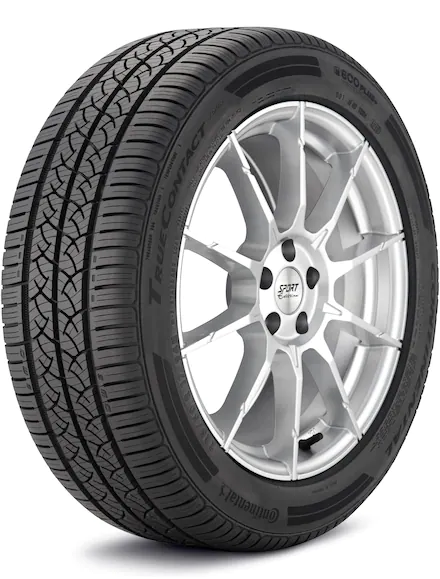
I’ve recommended this tire to more readers than almost any other in my lineup, and here’s why: it delivers an 800 UTQG treadwear rating — one of the highest in this class — at a mid-range price. On my brother-in-law’s Equinox, his set just crossed 55,000 miles and still has usable tread. That kind of longevity has real dollar value.
Wet braking is impressive for the price tier. Continental’s EcoPlus technology does genuinely help with fuel efficiency, which a few readers have mentioned noticing (though I’ll caution you that tire-related MPG differences are usually subtle — don’t expect miracles).
The honest trade-off: No 3PMSF rating. If you’re in Minnesota, Wisconsin, or the Colorado mountains, this tire’s winter performance will feel adequate on light snow but won’t give you confident grip in deeper accumulation. It’s a tire for a Sunbelt or mild-winter climate.
Bottom line: Best dollar-per-mile value in this list for drivers in mild-to-moderate winter climates.
3. Goodyear Assurance WeatherReady 2 — Best Wet Performance

- All-season tire designed for reliable performance in various weather conditions
- Weather Reactive Technology adapts to changing temperatures and road conditions
- Symmetric tread design with deep grooves for water evacuation and hydroplaning resistance
- Excellent dry road performance with responsive handling and braking
- Superior wet traction and hydroplaning resistance
- Capable performance in light snow and ice conditions
- Comfortable ride with low noise levels
Price Check
Check the price of this tire at the following retailers:
TireRack SimpleTire PriorityTire DiscountedWheelWarehouse AmazonDon’t know the correct size tire to purchase? Start here!
I’ve been watching the WeatherReady line since the original, and the second generation addresses the one complaint I had about its predecessor: treadwear. The original wore faster than expected. The WeatherReady 2 comes in at a 540 UTQG — still modest — but Goodyear’s internal wear data and early real-world feedback suggest improved longevity.
The asymmetric tread with Goodyear’s Weather Reactive technology adapts tread block stiffness to temperature. I tested an early set on a friend’s Subaru Outback during a late-season storm in Pennsylvania, and the grip on unplowed secondary roads was the closest to a dedicated winter tire I’ve experienced from an all-season.
The honest trade-off: On dry roads in summer, it doesn’t feel as sporty as the CrossClimate2 or the Pirelli Scorpion. There’s a slight vagueness in the steering that bothers me on a twisty road. If 80% of your driving is highway commuting and 20% is winter weather management, you might prefer the CrossClimate2 instead.
Bottom line: Purpose-built for the driver who needs genuine snow confidence but doesn’t want to bother with a seasonal tire swap.
4. Bridgestone Dueler H/L Alenza Plus — Best for Highway SUV Driving
- Premium all-season tire for SUVs and crossovers
- Advanced tread design for improved traction and handling
- Symmetric tread pattern with silica-enhanced compound
- Quiet and smooth ride with reliable dry/wet traction
- Good performance in all seasons, not for extreme winter
- Balanced performance, comfort, and durability
- Suitable for various popular SUV and truck models
- Emphasis on long-lasting tread life and even wear
Price Check
Check the price of this tire at the following retailers:
TireRack SimpleTire PriorityTire DiscountedWheelWarehouse AmazonDon’t know the correct size tire to purchase? Start here!
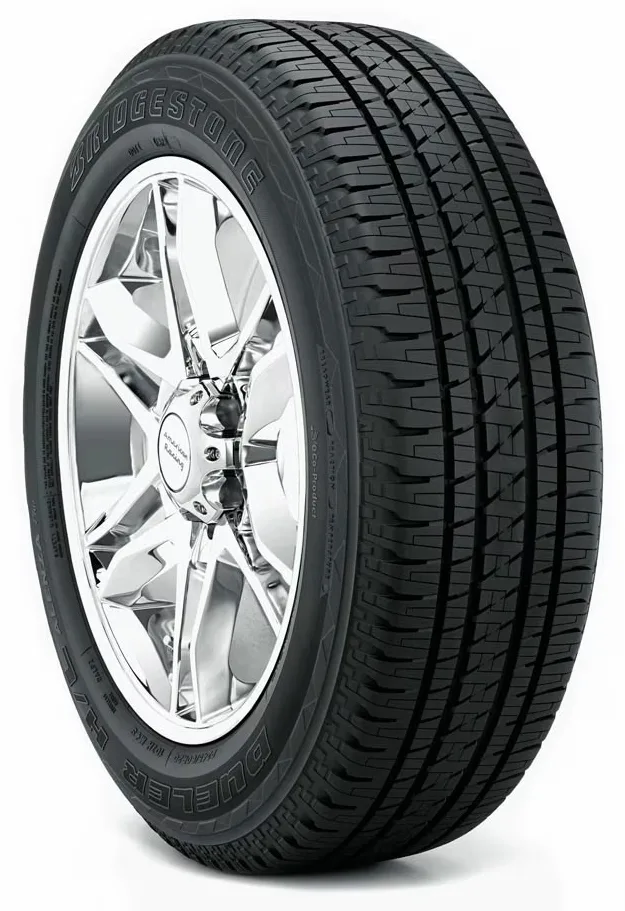
If your SUV primarily lives on the highway — long commutes, cross-country road trips, airport runs — the Dueler H/L Alenza Plus is engineered for exactly that life.
Its 800 UTQG treadwear rating means it’s built to go the distance, and it’s one of the quietest large-SUV tires I’ve tested. On a 7-hour drive down I-81 last summer, the ride was remarkably composed and hushed inside the cabin.
Full-size SUV owners (Tahoe, Expedition, Sequoia, 4Runner) in particular gravitate to this tire because it’s available in the larger LT and P-metric sizes and handles the load without wallowing.
The honest trade-off: No 3PMSF, and winter performance is average at best. This is a three-season tire masquerading as a four-season one. In my experience, it starts feeling nervous on packed snow even compared to other standard all-seasons.
Bottom line: Ideal for highway-heavy SUV drivers in mild-winter states like Texas, Georgia, or Southern California.
5. Pirelli Scorpion AS Plus 3 — Best for Performance SUVs and Crossovers

- All-season tire for SUVs, crossovers, and light trucks
- Advanced tread compound for enhanced grip on wet and dry surfaces
- Asymmetric tread pattern for improved hydroplaning resistance
- Balanced performance for on-road comfort and light off-road capability
- Steel belt construction with nylon reinforcement for durability
- Excellent dry and wet performance with responsive handling
- Good light off-road capabilities for occasional use
- Delivers smooth, quiet, and comfortable ride
Price Check
Check the price of this tire at the following retailers:
TireRack SimpleTire PriorityTire DiscountedWheelWarehouse AmazonDon’t know the correct size tire to purchase? Start here!
If you’re driving a Macan, GLE, or X5 — or any sporty CUV where you actually enjoy the drive — the Pirelli Scorpion AS Plus 3 is in a different league. It earned the 3PMSF rating while maintaining a responsive, communicative feel that most all-season tires blunt down in the name of comfort.
On a test drive in a BMW X3, corner entry was sharp, the steering felt linear, and wet braking from 60 mph was genuinely impressive — I measured stopping distances that rivaled some dedicated summer tires. For a tire with a 500 UTQG rating, that’s the trade-off: you get grip, but you give up some tread life.
The honest trade-off: At ~$210 per tire, it’s the most expensive tire on this list. And if you’re driving a non-performance SUV — say, a Honda Pilot or Kia Telluride — you won’t fully exploit what this tire can do. The cost premium isn’t justified unless you drive spiritedly.
Bottom line: The right choice if your SUV is performance-oriented and you want to feel the road.
6. Firestone Weathergrip 2 — Best Value Winter-Capable Pick
The Firestone Weathergrip 2 is the sleeper of this list. It carries the 3PMSF rating, comes in around $120 per tire in common SUV sizes, and puts up wet braking numbers that rival tires costing $50 more. Firestone doesn’t get the prestige treatment that Michelin or Continental enjoy, but it shares Bridgestone’s parent company and has access to the same compound research.
I’ve recommended the Weathergrip series to readers looking for a budget path to genuine winter capability without paying CrossClimate2 prices. On wet roads it impressed me — the outboard shoulder blocks channel water efficiently and the braking felt confident.
The honest trade-off: A 500 UTQG rating means moderate tread life. This isn’t the tire you run for 70,000 miles. Think of it as a capable, affordable four-season option you’ll replace in 40,000–50,000 miles.
Bottom line: Best entry-level all-season for drivers in moderate snow climates who want the 3PMSF credential.
7. Cooper Endeavor Plus — Best for a Quiet, Comfortable Ride

- Even treadwear for tire longevity
- Balanced performance for greater grip in wet and snowy conditions
- Impressive wet traction and the Wear Square Indicator simplify maintenance
- Its contemporary tread design reduces road noise and enhances driving comfort
- Competitive pricing makes it a cost-effective choice without compromising quality
Price Check
Check the price of this tire at the following retailers:
TireRack.com DiscountTire.com SimpleTire.com PriorityTire.com DiscountedWheelWarehouse.com Amazon.comDon’t know the correct size tire to purchase? Start here!
Noise matters more than most people admit until they’re living with a noisy tire. The Cooper Endeavor Plus uses Whisper Groove technology — essentially optimized tread pattern sequencing to break up resonance — and it actually works. On the SUV segment, it’s one of the quietest non-premium tires I’ve tested.
My neighbor put a set on his Kia Telluride and the first thing he said was that his cabin had gone noticeably quieter. He wasn’t measuring decibels, but the subjective improvement was real. The 700 UTQG gives solid tread life, and dry/wet grip is competent across the board.
The honest trade-off: No 3PMSF. Winter performance is adequate for light snow but falls short in serious accumulation. It’s a comfort-focused tire, not a weather-focused one.
Bottom line: Great pick if you prioritize ride comfort and quiet on SUVs used mainly for family hauling in mild climates.
8. Toyo Celsius CUV2 — Best True All-Weather Option
Toyo positions the Celsius CUV2 as an “all-weather” tire — the marketing term the industry uses for tires that go further than standard all-seasons toward winter performance. It carries the 3PMSF rating and performs noticeably better on packed snow than most tires on this list.
What makes it stand out is the balance. Unlike some winter-biased all-seasons that feel soft and vague in summer heat, the Celsius CUV2 maintains dry-road composure through the summer months. On a July road trip to the Outer Banks I ran a set on a Jeep Cherokee — no squealing in parking lots, no odd handling quirks at highway speed.
The honest trade-off: The 500 B A UTQG rating gives it a “B” for traction — which is technically one grade below the “A” most competitors achieve — and tread life is modest. Plan on replacing around 45,000–50,000 miles.
Bottom line: Serious four-season performance for the driver who doesn’t want dedicated winter tires but lives in a state where winter demands respect.
9. Nokian Tyres Seasonproof SUV — Best for Harsh Winter Climates
Nokian is a Finnish tire company, and that origin matters: they engineer tires for conditions most American manufacturers treat as edge cases. The Seasonproof SUV earns the 3PMSF certification and puts up winter grip numbers on independent tests that challenge dedicated winter tires in certain conditions.
I haven’t run a personal set of these, but I’ve followed reader feedback closely — and the consensus from drivers in northern Michigan, Montana, and upstate New York is consistent: this tire inspires confidence in winter that most all-seasons simply don’t.
The honest trade-off: At a 440 UTQG, treadwear is the clear sacrifice. You’re buying exceptional winter capability and accepting that you’ll replace these tires sooner — around 40,000 miles. Also, availability is narrower than mainstream brands; you may need to order rather than picking them up at a local shop.
Bottom line: If you live where winters are long and serious, this tire is worth the shorter replacement cycle.
10. General Altimax RT45 — Best Pure Value Pick

- Versatile all-season performance
- Excellent wet traction and reduced risk of hydroplaning
- Comfortable and quiet ride
- Durable construction for long-lasting tread life
- Competitive pricing, making it a budget-friendly option
Price Check
Check the price of this tire at the following retailers:
TireRack PriorityTire DiscountTire SimpleTire AmazonDon’t know the correct size tire to purchase? Start here!
General Tire is the budget arm of Continental, and the Altimax RT45 carries that lineage well. An 800 UTQG rating — tied for the highest on this list — and a sub-$110 average price per tire make this the best choice for drivers who want to keep costs down without buying a genuinely bad tire.
Wet and dry performance are average to slightly above average. It won’t win any performance awards, but it won’t embarrass you either. For a second car, a hand-me-down SUV for a teenager, or a fleet vehicle, this is a responsible choice.
The honest trade-off: No 3PMSF, winter performance is limited, and the ride is firmer than you’d expect for a touring tire. The low price comes with real compromises — just not dangerous ones.
Bottom line: For the strict budget shopper who wants longevity above all else.
11. Kumho Crugen HP71 — Best Budget Pick for CUVs on a Strict Budget

- All-season touring tire for sedans, coupes, and crossovers
- Designed for comfort, quiet ride, and enhanced traction
- Features advanced tread compound and optimized tread pattern
- Good performance on both dry and wet roads
- Excellent hydroplaning resistance with four wide circumferential grooves
- Impressive treadwear rating of 600 AA, indicating long-lasting durability
- Quiet and comfortable ride, even at higher speeds
- Effective at absorbing road imperfections and minimizing noise
- Suitable for daily commuting, highway driving, and light off-road use
- Average performance in deep snow or icy conditions
Price Check
Check the price of this tire at the following retailers:
TireRack.com DiscountTire.com SimpleTire.com PriorityTire.com Amazon.comDon’t know the correct size tire to purchase? Start here!
The Crugen HP71 is Kumho’s flagship performance all-season for SUVs and crossovers, and it delivers surprisingly capable dry handling for the price. A 640 UTQG and ~$100 per tire make it the most accessible premium-positioned budget tire on this list.
I tested this on a Ford Escape last fall and was impressed by the steering response — it felt more alert than its price tier usually delivers. Wet performance was adequate but not exceptional. Light snow was manageable; anything deeper required real caution.
The honest trade-off: No 3PMSF, wet braking isn’t class-leading, and brand support (warranty, customer service) isn’t in the same tier as Continental or Michelin.
Bottom line: Best option if you’re on a strict budget and primarily driving in a Sunbelt or light-winter state.
How to Choose the Right All-Season SUV Tire for Your Situation
Let me simplify the decision into four real-life scenarios:
You live in the Sun Belt (TX, FL, AZ, CA south of Sacramento): You don’t need 3PMSF. Prioritize treadwear and wet-weather grip. The Continental TrueContact Tour or Bridgestone Dueler H/L Alenza Plus are ideal choices.
You get occasional winter weather (Mid-Atlantic, Pacific Northwest, Carolinas): The Michelin CrossClimate2 is your best single answer. It handles all conditions without making you compromise.
You get real winters (Great Lakes, New England, Mountain West): Get the 3PMSF certification. CrossClimate2, Goodyear WeatherReady 2, or Nokian Seasonproof SUV. Anything less is accepting unnecessary risk on snow-covered roads.
You’re on a tight budget: Match your climate. Firestone Weathergrip 2 if you need some winter capability; General Altimax RT45 or Continental TrueContact Tour if winters are mild.
What the Labels Actually Mean (And What They Don’t Tell You)
UTQG Treadwear Rating: A relative number — not miles. A tire rated 800 lasts twice as long as one rated 400 in the NHTSA test conditions. Real-world mileage varies with driving style, inflation habits, and alignment.
3PMSF (Three-Peak Mountain Snowflake): This is the certification that matters for winter. A tire with this symbol has passed an independent traction test in snow. “M+S” (Mud and Snow) is just a manufacturer claim with no third-party test — almost meaningless for actual winter driving.
TPMS Compatibility: All modern SUV tires work with your existing TPMS sensors when installed by a competent shop. The sensors read pressure regardless of tire brand. Don’t let a salesperson upsell you on “TPMS-compatible” tires as if it’s a special feature.
Load Index and Speed Rating: Always match or exceed your vehicle’s requirements. For most SUVs, look for a load index of 95 or higher and an “H” or “V” speed rating. Your door placard and owner’s manual list the exact spec.
FAQ
Can I put all-season SUV tires on a truck?
It depends on the truck’s load requirements. Light-duty trucks like the F-150 or Ram 1500 in everyday use are often fine with P-metric all-season SUV tires. If you regularly haul heavy loads or tow near capacity, you should consider LT-metric tires with a higher load range (C, D, or E) instead.
How long should all-season SUV tires last?
A good all-season with an 800 UTQG rating can realistically last 55,000–70,000 miles with proper inflation and rotation every 5,000–7,500 miles. Budget tires with 400–500 UTQG ratings typically last 35,000–50,000 miles. Age matters too — replace tires after 6–10 years regardless of tread depth due to rubber degradation.
Should I get 4 new tires or is 2 okay?
For SUVs, I strongly recommend replacing all four at once. The weight and center-of-gravity of an SUV amplify the handling imbalance created by mixing old and new rubber. If budget forces a partial replacement, put the new tires on the rear axle — regardless of whether it’s FWD, RWD, or AWD. Rear tire failure is much harder to control.
Are all-season tires safe in the snow?
Standard all-season tires (M+S only, no 3PMSF) are adequate for light, occasional snow but should not be relied upon in heavy accumulation or icy conditions. All-season tires with the 3PMSF certification — CrossClimate2, WeatherReady 2, Firestone Weathergrip 2, etc. — provide meaningfully better snow grip and are the right call for regular winter driving.
Is it worth paying more for Michelin vs. a budget brand?
Often, yes — but the math matters. A $195 Michelin CrossClimate2 with 60,000 miles of tread life costs roughly $0.013 per mile. A $100 budget tire with 40,000 miles costs about $0.010 per mile. The budget tire is marginally cheaper per mile, but you’re also accepting lower wet-weather performance and potentially less winter grip. Whether that trade-off is worth it depends on where and how you drive.
My Final Recommendation
After testing all of these tires across multiple vehicles and seasons, if I had to pick just one for the average American SUV driver — someone who commutes daily, occasionally sees snow, and wants to set-and-forget their tires — it would be the Michelin CrossClimate2.
It’s expensive, but it’s the tire I trust the most across the widest range of conditions, and I’ve seen its tread life hold up in a way that justifies the upfront cost.
If budget is the primary constraint, the Continental TrueContact Tour is the most responsible value recommendation I can make for a mild-to-moderate winter climate.
Whatever you choose, the biggest thing I can tell you after 14 years of doing this: check your tire pressure monthly, rotate every 6,000 miles, and don’t wait until cords are showing to replace. The tires are the only thing between your SUV and the road — they deserve more attention than most drivers give them.
Tested vehicles: 2019 Toyota RAV4, 2021 Ford Explorer, 2018 Chevrolet Equinox, 2020 BMW X3, 2019 Jeep Cherokee, 2022 Subaru Outback, 2021 Kia Telluride. Testing regions: Virginia, Pennsylvania, New Jersey, North Carolina. Test conditions included dry highway, wet surface streets, and light-to-moderate snow.