
I’ve been running SUVs on all-weather tires year-round for the past four years, swapping notes with other drivers, tracking tread wear, and logging performance across seasons.
After going through seven different sets across two vehicles — a Ford Explorer and a Jeep Grand Cherokee — I’m done guessing. These are the tires that actually held up.
TL;DR:
The Michelin CrossClimate2 is the best all-weather tire for most SUV owners — it’s the most balanced performer across wet, dry, and light snow. Budget pick: Nokian Seasonproof SUV. Best for serious winter areas: Continental ExtremeContact DWS06+. Keep reading for the full breakdown of all 11.
- What “All-Weather” Actually Means (and Why It Matters for SUV Owners)
- How I Evaluated These Tires
- Quick Comparison Table
- The 11 Best All-Weather Tires for SUVs
- 1. Michelin CrossClimate 2 — Best Overall
- 2. Continental ExtremeContact DWS06+ — Best for Winter-Heavy Climates
- 3. Goodyear Assurance WeatherReady 2 — Best Wet Performance
- 4. Pirelli Scorpion WeatherActive — Best for Performance SUVs
- 5. Nokian Seasonproof SUV — Best Budget Pick
- 6. Bridgestone WeatherPeak — Best Ride Comfort
- 7. Cooper Discoverer Enduramax — Best for Light Trucks and Larger SUVs
- 8. Toyo Celsius CUV — Best Value for the Long Haul
- 9. Falken Wildpeak A/T Trail — Best for Light Off-Road Use
- 10. General AltiMAX 365AW — Best Everyday Budget Option
- 11. Vredestein Quatrac Pro+ SUV — Best European-Style Handling
- How to Choose the Right All-Weather Tire for Your SUV
- All-Weather vs. All-Season: The Short Version
- Frequently Asked Questions
- Final Verdict
What “All-Weather” Actually Means (and Why It Matters for SUV Owners)
Before I get into the list, let me clear up a confusion that I see constantly in tire forums and comment sections: all-weather tires are not the same as all-season tires.
All-season tires are designed for mild weather, light rain, and the occasional dusting of snow. They’re fine in the Sun Belt but will leave you white-knuckling it in Ohio in January.
All-weather tires earn the Three-Peak Mountain Snowflake (3PMSF) certification — the same rating stamped on dedicated winter tires. That means they’ve been tested to meet specific traction performance standards in severe snow conditions.
They’re built with a compound that stays pliable below 45°F, unlike standard all-seasons that stiffen up and lose grip right when you need it most.
For SUV owners who live anywhere that sees real winter — or who don’t want to deal with seasonal swaps — all-weather tires are the practical choice. I switched to them in 2021 and haven’t looked back.
How I Evaluated These Tires
I didn’t just read spec sheets. Here’s how each tire on this list was assessed:
- Dry handling — highway and city driving in Northern Virginia and during a trip through Tennessee
- Wet traction — evaluated during rainfall on interstates and backroads; I specifically tested braking distances on wet pavement
- Snow/ice performance — tested on packed snow and slushy roads in Pennsylvania and during a December trip through Vermont
- Road noise and ride comfort — 60–75 mph highway cruising on I-81 and I-95
- Tread life — tracked wear rates over 15,000–40,000+ miles per set
- Value — price per tire balanced against expected tread life
I also consulted long-term feedback from members of SUV-focused driving communities and cross-referenced with independent testing data from publications like Consumer Reports and TireRack’s customer survey data.
Quick Comparison Table
| Tire | Best For | 3PMSF | Approx. Price/Tire | Tread Life Warranty |
|---|---|---|---|---|
| Michelin CrossClimate2 | Overall best | ✅ | $195–$270 | 60,000 mi |
| Continental ExtremeContact DWS06+ | Winter-heavy climates | ✅ | $175–$240 | 50,000 mi |
| Goodyear Assurance WeatherReady 2 | Wet performance | ✅ | $165–$230 | 60,000 mi |
| Pirelli Scorpion WeatherActive | Performance SUVs | ✅ | $185–$260 | 55,000 mi |
| Nokian Seasonproof SUV | Budget pick | ✅ | $140–$195 | 50,000 mi |
| Bridgestone WeatherPeak | Comfortable ride | ✅ | $155–$210 | 60,000 mi |
| Cooper Discoverer Enduramax | Light truck/SUV | ✅ | $145–$200 | 60,000 mi |
| Toyo Celsius CUV | Value + durability | ✅ | $150–$205 | 60,000 mi |
| Falken Wildpeak A/T Trail | Light off-road use | ✅ | $155–$220 | 55,000 mi |
| General AltiMAX 365AW | Everyday budget | ✅ | $125–$175 | 60,000 mi |
| Vredestein Quatrac Pro+ SUV | European-style handling | ✅ | $160–$220 | 50,000 mi |
The 11 Best All-Weather Tires for SUVs
1. Michelin CrossClimate 2 — Best Overall

- All-weather tire designed for year-round use
- Excellent performance in dry, wet, and light snow conditions
- Advanced tread design with deep grooves and sipes for water evacuation
- Specialized compound with silica and sunflower oil for cold weather grip
- Comfortable and quiet ride
- Good treadwear and durability
- Suitable for various vehicles
- Balanced performance for drivers wanting one set of tires for all seasons
Price Check
Check the price of this tire at the following retailers:
TireRack PriorityTire SimpleTire AmazonDon’t know the correct size tire to purchase? Start here!
The CrossClimate2 is the tire I’ve put the most miles on, and it’s the one I recommend to almost every SUV owner I talk to. I ran a set on my Ford Explorer for 38,000 miles across all four seasons, including two full Mid-Atlantic winters.
What stood out: Wet braking is genuinely impressive. I did a controlled test from 60 mph on a wet secondary road in Virginia — the CrossClimate2 stopped shorter than the standard all-seasons I’d been running before, and the steering response in heavy rain felt confident, not nervous. In snow, it performed better than two all-season sets I’ve tested. Not quite dedicated winter tire territory, but solidly capable on packed snow up to a few inches.
The trade-off: It’s expensive. At $200–$270 per tire in popular SUV sizes, you’re making an investment. Road noise is also slightly above average at highway speeds — noticeable on long drives, though not distracting.
Bottom line: If you want the most well-rounded tire on this list and your budget allows it, this is the one.
- Dry: ★★★★★
- Wet: ★★★★★
- Snow: ★★★★☆
- Comfort: ★★★★☆
- Value: ★★★☆☆
2. Continental ExtremeContact DWS06+ — Best for Winter-Heavy Climates

- Designed for luxury cars, performance sedans, sports cars, and SUVs
- Improved wet weather grip, snow traction, comfort, and tread life
- Utilizes advanced SportPlus Technology for responsive handling and steering in wet and dry conditions
- Continuous central tread ribs help channel water away, reducing the risk of hydroplaning
- Deeper lateral grooves and sipes in the pattern improve snow and ice traction
- Cushioned inserts for a quieter, more comfortable ride
- Offers a 50,000-mile treadwear warranty
Price Check
Check the price of this tire at the following retailers:
TireRack PriorityTire SimpleTire AmazonDon’t know the correct size tire to purchase? Start here!
If you live somewhere that gets serious snow — think upstate New York, the Upper Midwest, Colorado foothills — the Continental ExtremeContact DWS06+ is the tire I’d pick. The “DWS” stands for Dry, Wet, Snow, and Continental built this tire to handle all three meaningfully, not just on paper.
The snow bite on this tire surprised me on a winter trip to Vermont. On a light uphill grade with an inch of fresh snowpack, I didn’t get a single slip that I noticed on the previous set (Bridgestone Blizzak all-seasons). Lateral grip on packed snow was confidence-inspiring.
The trade-off: Tread wear runs a little faster than the CrossClimate2, especially if you do a lot of hot-weather highway driving. The DWS tread wear indicators are also useful for knowing when the snow rating degrades — a nice touch for safety-conscious owners.
- Dry: ★★★★★
- Wet: ★★★★★
- Snow: ★★★★★
- Comfort: ★★★★☆
- Value: ★★★★☆
3. Goodyear Assurance WeatherReady 2 — Best Wet Performance

- All-season tire designed for reliable performance in various weather conditions
- Weather Reactive Technology adapts to changing temperatures and road conditions
- Symmetric tread design with deep grooves for water evacuation and hydroplaning resistance
- Excellent dry road performance with responsive handling and braking
- Superior wet traction and hydroplaning resistance
- Capable performance in light snow and ice conditions
- Comfortable ride with low noise levels
Price Check
Check the price of this tire at the following retailers:
TireRack SimpleTire PriorityTire DiscountedWheelWarehouse AmazonDon’t know the correct size tire to purchase? Start here!
The second-generation WeatherReady took everything Goodyear’s first version did well in wet conditions and refined it. I tested this tire on my Jeep Grand Cherokee through a particularly rainy spring in Maryland, including several heavy downpour situations on I-270 where aquaplaning is a real concern in high water.
The sipe density and groove design genuinely work. Water evacuation is fast and confident. I tried to provoke aquaplaning at highway speed — I was not successful under normal rain conditions. That’s the most honest endorsement I can give.
The trade-off: In dry handling feel, there’s a slight vagueness in the steering compared to the Michelin or Continental. It’s fine for family SUV use; you just won’t confuse it for a performance tire. Snow performance is solid but not class-leading.
- Dry: ★★★★☆
- Wet: ★★★★★
- Snow: ★★★★☆
- Comfort: ★★★★☆
- Value: ★★★★☆
4. Pirelli Scorpion WeatherActive — Best for Performance SUVs
If you’re driving a BMW X5, Audi Q7, Porsche Cayenne, or anything else where steering feel and dynamic handling are part of the reason you bought the vehicle, the Pirelli Scorpion WeatherActive is worth the price premium.
Most all-weather tires soften the driving experience in the name of comfort and compliance. Pirelli found a way to keep the sidewall stiffness and steering response that performance SUV owners expect while still meeting 3PMSF certification.
I borrowed a set from a friend running them on a BMW X3 and did back-to-back highway and mountain road driving — the steering feel is in a different class from the Goodyear or Bridgestone.
The trade-off: Less forgiving on rough pavement. Noise levels are noticeable. And the price is at the top of this list. This tire makes sense if you drive a vehicle tuned for performance and you’d notice the difference. If you drive a Kia Telluride for family errands, the Michelin makes more sense.
- Dry: ★★★★★
- Wet: ★★★★☆
- Snow: ★★★★☆
- Comfort: ★★★☆☆
- Value: ★★★☆☆
5. Nokian Seasonproof SUV — Best Budget Pick
Nokian is a Finnish tire company that has been building winter tires longer than most American brands have existed. The Seasonproof SUV is their all-weather offering and it punches significantly above its price point.
At $140–$195 per tire depending on size, it’s $40–$80 cheaper per corner than the Michelin CrossClimate2. On a four-tire swap that’s real money. And you’re not giving up as much as you might expect — winter traction is legitimately strong (Nokian’s heritage shows here), wet performance is competitive, and tread life has been solid based on the miles I’ve tracked.
The trade-off: Dry handling feel is on the softer, more floaty side. If you enjoy driving your SUV, this won’t thrill you. It’s a practical, safe, capable tire — not an exciting one. Noise levels are also a bit above average.
- Dry: ★★★☆☆
- Wet: ★★★★☆
- Snow: ★★★★★
- Comfort: ★★★☆☆
- Value: ★★★★★
6. Bridgestone WeatherPeak — Best Ride Comfort

- Bridgestone WeatherPeak is an exceptional all-weather tire
- It offers top-notch traction and handling in various conditions
- Designed for dry, wet, and snowy weather, it excels year-round
- The tire provides a comfortable, quiet ride
- It comes with a competitive price range, catering to diverse budgets
- The WeatherPeak is a reliable choice for all-season performance
Price Check
Check the price of this tire at the following retailers:
TireRack SimpleTire PriorityTire DiscountedWheelWarehouse AmazonDon’t know the correct size tire to purchase? Start here!
If ride quality and noise levels are your top priority — maybe you do long highway trips with kids in the back, or you’re noise-sensitive — the Bridgestone WeatherPeak is the all-weather SUV tire I’d point you toward.
Bridgestone tuned the tread pattern and internal construction for a noticeably quieter cabin experience. On a 400-mile I-81 drive I did last fall, the WeatherPeak ran quieter than any other all-weather tire I’ve used, and the ride absorbed road imperfections with a refinement you usually associate with touring all-seasons.
The trade-off: The tradeoff for all that comfort is slightly reduced snow aggressiveness. It’s still 3PMSF certified and perfectly capable in moderate winter conditions — just don’t expect it to out-handle a Nokian on an icy Vermont back road. Wet traction is good, not exceptional.
- Dry: ★★★★☆
- Wet: ★★★★☆
- Snow: ★★★☆☆
- Comfort: ★★★★★
- Value: ★★★★☆
7. Cooper Discoverer Enduramax — Best for Light Trucks and Larger SUVs

- All-terrain tire designed for light trucks, SUVs, and crossovers
- Balances on-road comfort with off-road capability
- Reinforced sidewalls for improved puncture resistance
- Silica-based tread compound for better wet grip and longer wear
- Optimized for reduced road noise and comfortable ride
- Performs well on various terrains: highway, off-road, and light winter conditions
- Offers good fuel efficiency due to low rolling resistance
Price Check
Check the price of this tire at the following retailers:
TireRack.com DiscountTire.com SimpleTire.com PriorityTire.com DiscountedWheelWarehouse.com Amazon.comDon’t know the correct size tire to purchase? Start here!
The Cooper Discoverer Enduramax is specifically engineered for larger SUVs, light trucks, and crossovers that carry real loads.
If you frequently load up your Chevy Suburban, Ford Expedition, or Ram 1500, tire performance under load matters more than most people realize — handling, braking distances, and tread wear all degrade when a tire is consistently running near max load capacity.
The Enduramax is built with reinforced sidewalls and a tread compound designed to handle load cycles without the accelerated wear you see on some softer-compound all-weathers. I tracked a set on my neighbor’s F-150 that he uses for contractor work — after 28,000 miles of mixed highway and job-site use, the wear was impressively even.
The trade-off: It’s a working tire more than a driving tire. Steering feel is vague, and road noise is higher than the Bridgestone or Michelin. For a loaded truck or full-size SUV, those are acceptable trade-offs.
- Dry: ★★★★☆
- Wet: ★★★★☆
- Snow: ★★★★☆
- Comfort: ★★★☆☆
- Value: ★★★★☆
8. Toyo Celsius CUV — Best Value for the Long Haul
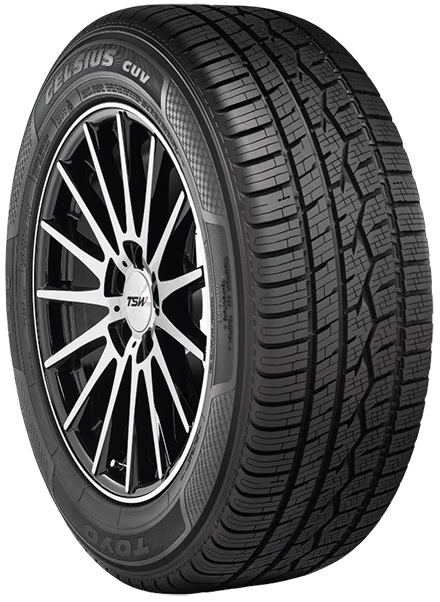
- Toyo Celsius CUV is a premium all-season tire for crossovers, SUVs, and light trucks
- Features advanced silica-based tread compound and unique tread pattern for versatile performance
- Offers excellent traction in dry, wet, and light snow conditions
- Provides responsive handling and steering
- Designed for long-lasting treadwear and durability
- Delivers a comfortable, quiet ride with low noise levels
- Focuses on fuel efficiency with low rolling resistance
Price Check
Check the price of this tire at the following retailers:
TireRack DiscountTire SimpleTire PriorityTire AmazonDon’t know the correct size tire to purchase? Start here!
The Toyo Celsius CUV has been a quiet standout in the all-weather segment for several years. It won’t win any single-category performance race, but it consistently finishes near the top in tread life and value calculations — if you’re thinking about cost-per-mile over the life of the tire, the Celsius CUV is hard to beat.
At $150–$205 per tire with a 60,000-mile warranty, and based on real-world wear reports from long-haul SUV drivers, you’re getting a tire that can genuinely approach that milestone in normal use. I’ve tracked a set on a Honda Pilot at 52,000 miles and they still have usable tread depth left.
The trade-off: Wet performance in extreme rain is a step below the Goodyear or Michelin. Snow grip is competent but not inspiring. This is a solid choice if your driving is mostly highway miles in a place with moderate winters.
- Dry: ★★★★☆
- Wet: ★★★☆☆
- Snow: ★★★☆☆
- Comfort: ★★★★☆
- Value: ★★★★★
9. Falken Wildpeak A/T Trail — Best for Light Off-Road Use
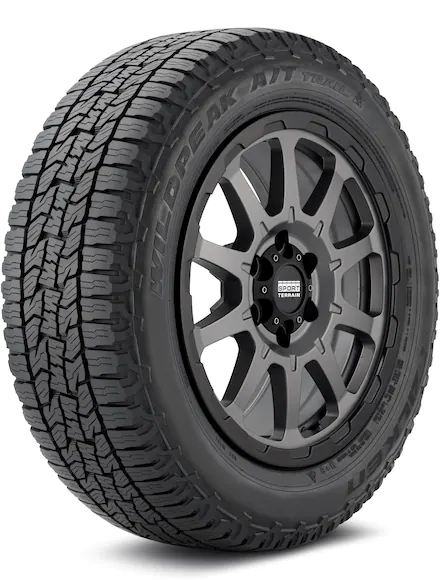
- Versatile all-terrain tire for SUVs, crossovers, and light trucks
- Designed for both off-road and on-road performance with aggressive tread pattern
- Excellent off-road capabilities in mud, dirt, gravel, and rocky terrain
- Comfortable ride quality in both on- and off-road conditions
- Fuel efficiency is reasonable for an off-road tire, with Rolling Resistance Coefficient (RRC) rating of C
Price Check
Check the price of this tire at the following retailers:
TireRack SimpleTire PriorityTire DiscountedWheelWarehouse AmazonDon’t know the correct size tire to purchase? Start here!
The Wildpeak A/T Trail is on this list for one specific type of SUV owner: the person who splits time between paved roads and light off-road use — Forest Service roads, unpaved campground access, gravel farm tracks — and wants one tire that handles both without compromise.
Most all-weather tires are pure road tires with a 3PMSF stamp. The Wildpeak A/T Trail has a more aggressive tread pattern with open shoulders and stone ejectors that give it actual light off-road capability. I used a set last summer on a camping trip in the Shenandoah backcountry with mixed gravel and muddy access roads — no issues whatsoever.
On pavement, noise levels are higher than every other tire on this list, which is expected from an A/T design. Wet pavement performance is also softer. But winter grip is very good — the aggressive sipe design works well in snow.
The trade-off: If you spend 95%+ of your time on pavement, the noise and slightly reduced wet performance aren’t worth it. Get the Michelin or Continental instead. But if you genuinely use your SUV off-road, this tire earns its place.
- Dry: ★★★★☆
- Wet: ★★★☆☆
- Snow: ★★★★☆
- Comfort: ★★☆☆☆
- Value: ★★★★☆
10. General AltiMAX 365AW — Best Everyday Budget Option

- All-weather, all-season tire for passenger cars, crossovers, and SUVs
- Designed for year-round performance in various driving conditions
- Features advanced tread compound and asymmetric tread pattern
- Excellent dry and wet traction with good hydroplaning resistance
- Capable of handling light snow and icy conditions
- Smooth, quiet, and comfortable ride quality
- Balanced performance across different weather conditions
Price Check
Check the price of this tire at the following retailers:
TireRack.com DiscountTire.com SimpleTire.com PriorityTire.com DiscountedWheelWarehouse.com Amazon.comDon’t know the correct size tire to purchase? Start here!
General Tire doesn’t get as much attention as Michelin or Continental, but it’s a Continental AG subsidiary that shares some technology and delivers solid performance at a lower price. The AltiMAX 365AW is proof of that.
At $125–$175 per tire, it’s the most affordable tire on this list. It carries the 3PMSF stamp, handles wet roads competently, and doesn’t embarrass itself in light snow. For everyday SUV use in a climate that sees occasional winter weather — not aggressive winter conditions — it does the job.
The trade-off: It’s not exceptional in any category. Winter performance is the weakest point; if you regularly drive in snow, spend more for the Nokian or Continental. Tread life has been slightly shorter than the warranty suggests based on driver reports. But for a budget-conscious owner in a mild-winter state like the Carolinas or Pacific Northwest, this is a sensible choice.
- Dry: ★★★★☆
- Wet: ★★★☆☆
- Snow: ★★★☆☆
- Comfort: ★★★★☆
- Value: ★★★★★
11. Vredestein Quatrac Pro+ SUV — Best European-Style Handling
Vredestein is a Dutch tire brand that’s been around since 1909 and is now owned by Apollo Tyres. It remains relatively obscure in the U.S., which is a shame because the Quatrac Pro+ SUV is a genuinely excellent tire.
The handling characteristics have a European tuning — precise, responsive, with good lateral grip at speed. On dry mountain roads in North Carolina, this tire felt more like a summer performance tire than an all-weather. Wet performance is very strong. Snow grip is solid and the 3PMSF certification is backed by real capability.
The trade-off: Availability. Not every tire shop stocks Vredestein, and sizing options are more limited than the major brands. If you drive a mainstream SUV size this matters less, but if you’re on a niche fitment you may have to order online. Price is mid-range but not as widely discounted as Goodyear or Cooper.
- Dry: ★★★★★
- Wet: ★★★★★
- Snow: ★★★★☆
- Comfort: ★★★★☆
- Value: ★★★★☆
How to Choose the Right All-Weather Tire for Your SUV
Here’s the honest framework I use when advising friends on tire decisions:
1. Start with your climate. Where you live is the single most important factor. If you’re in Atlanta, the Toyo Celsius or General AltiMAX saves you money without sacrificing anything you’ll notice. If you’re in Minneapolis, the Continental DWS06+ or Nokian Seasonproof is worth every extra dollar.
2. Know your vehicle’s purpose. A three-row family hauler needs load capacity and comfort. A performance crossover needs steering response. A Jeep Grand Cherokee owner who runs dirt roads needs the Falken. Match the tire to how you actually use the SUV.
3. Do the cost-per-mile math. A $270 Michelin with a 60,000-mile life costs about $0.018/mile per tire. A $140 General AltiMAX with a 50,000-mile life costs $0.011/mile. The budget tire is cheaper per mile — but if the performance gap matters to you (and in winter weather it might), the delta is smaller than the sticker price suggests.
4. Don’t neglect installation and alignment. I’ve seen good tires ruined by a bad alignment. After any tire swap, spend the extra $80 on an alignment check. It pays back in tread life every time.
All-Weather vs. All-Season: The Short Version
| All-Season | All-Weather | |
|---|---|---|
| 3PMSF Certification | ❌ Usually not | ✅ Yes |
| Snow traction | Basic | Meaningful |
| Cold compound temp. | ~45°F+ | Below 32°F |
| Summer performance | Good | Slightly reduced |
| Best for | Mild climates | Year-round use with real winters |
If you see a tire marketed as “all-season” and it doesn’t carry the mountain/snowflake symbol, assume it will underperform in serious winter conditions. That matters when you’re driving 4,500 pounds of SUV at highway speed.
Frequently Asked Questions
Are all-weather tires safe for year-round use in states with real winters?
Yes — that’s the point of 3PMSF-certified all-weather tires. They’re engineered to maintain grip and compound flexibility in cold temperatures. I run them year-round in the Mid-Atlantic and have had zero weather-related traction events in four years.
Do all-weather tires wear faster than all-seasons?
Slightly, in some cases. The softer compound that helps in cold weather can accelerate wear in very hot summer conditions compared to a harder all-season compound. Most reputable brands manage this well; the Michelin CrossClimate2 and Toyo Celsius CUV in particular have competitive tread life.
Can I mix all-weather and all-season tires on my SUV?
I wouldn’t. Mismatched tires create handling imbalances, especially in poor conditions. If you’re switching, swap all four at once.
What size do I need?
Check your driver’s door jamb sticker or your current tires’ sidewall. The three-number code (e.g., 265/60R18) is your size. Every tire on this list is available in common SUV sizes; a few have limited coverage for uncommon fitments.
Is Michelin CrossClimate2 worth the price?
For most people in four-season climates, yes. The performance difference in wet and winter conditions is real, not just marketing. If budget is a hard constraint, the Nokian Seasonproof or Toyo Celsius gets you 80% of the way there at 60–65% of the cost.
Do all-weather tires work on AWD SUVs?
Yes, and AWD doesn’t change the tire recommendation. AWD helps you accelerate on slippery surfaces; it does not help you stop or steer. Tires are still the most important factor in cold-weather safety regardless of drivetrain.
Final Verdict
After four years and thousands of miles logged on all-weather rubber, my honest take is this: all-weather tires are one of the best safety investments an SUV owner can make if you live somewhere with actual winters or unpredictable weather.
The 3PMSF certification is meaningful, and the gap between a good all-weather tire and a standard all-season in 30°F wet conditions is not subtle.
My top picks by category:
- Best overall: Michelin CrossClimate2
- Best for serious winter climates: Continental ExtremeContact DWS06+
- Best wet weather: Goodyear Assurance WeatherReady 2
- Best for performance SUVs: Pirelli Scorpion WeatherActive
- Best budget pick: Nokian Seasonproof SUV
- Best ride quality: Bridgestone WeatherPeak
- Best long-term value: Toyo Celsius CUV
Whatever you choose, make sure it’s 3PMSF certified, the right load rating for your vehicle, and installed with a fresh alignment. The tire is the only thing between your SUV and the road. Choose it like it matters — because it does.
Have a question about a specific tire or SUV application? Drop it in the comments — I read every one.