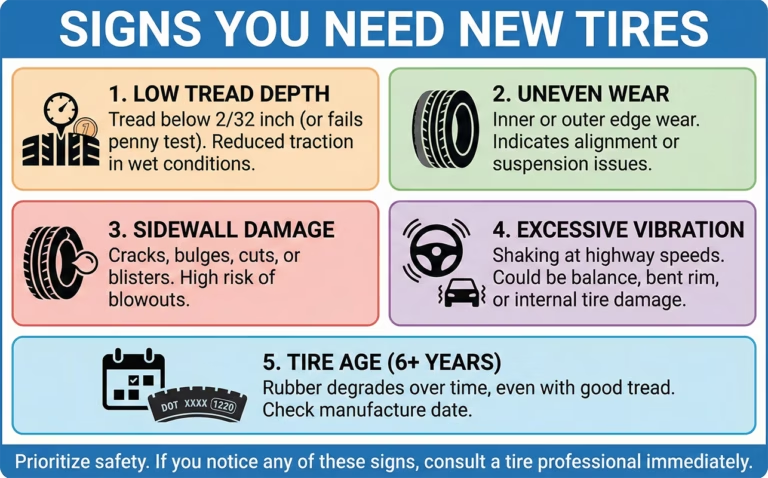
Your vehicle’s tires are the sole point of contact between your car and the asphalt. They are responsible for grip, braking, steering, and supporting the entire weight of your vehicle. Despite their crucial role in safety and performance, tires are often overlooked until a problem arises, which is why referring to an ultimate guide to tire maintenance is so important.
Worn-out tires are not just an inconvenience; they are a significant safety hazard, drastically increasing the risk of accidents, especially in adverse conditions. Understanding the critical signs that your tires are worn out and dangerous is essential for every driver’s security on the road.
- The Silent Threat: Why Worn Tires Are a Critical Safety Hazard
- Critical Sign 1: Insufficient Tread Depth – The Foundation of Grip
- Critical Sign 2: Uneven Tread Wear – A Symptom of Deeper Issues
- Critical Sign 3: Sidewall Damage – Compromising Structural Integrity
- Critical Sign 4: Exposed Tire Cords or Belts – Beyond the Point of No Return
- Critical Sign 5: Excessive Tire Age – The Silent Killer
- Critical Sign 6: Persistent Vibrations, Noises, or Handling Anomalies
- Critical Sign 7: Frequent or Rapid Air Pressure Loss – A Sign of Trouble
- The Real Dangers of Neglecting Worn Tires
- Proactive Steps for Tire Health and Your Security
- Conclusion
- FAQs
The Silent Threat: Why Worn Tires Are a Critical Safety Hazard
Ignoring the condition of your tires is akin to playing with fire. The gradual degradation of tire rubber and tread can lead to a cascade of dangerous situations, transforming a simple drive into a high-risk endeavor. Recognizing these warnings before they become critical failures is paramount for maintaining control and ensuring the safety of yourself and others.
Your Tires: The Only Connection to the Road
The importance of tires cannot be overstated. They are the foundation upon which your vehicle’s performance rests. The grip provided by healthy tire tread allows your car to accelerate, brake effectively, and navigate turns safely.
When this connection weakens, the entire dynamic of your vehicle is compromised. A compromised tire can turn a predictable journey into an unpredictable ordeal, where even minor steering adjustments can have severe consequences.
Understanding the Risks: More Than Just a Flat Tire
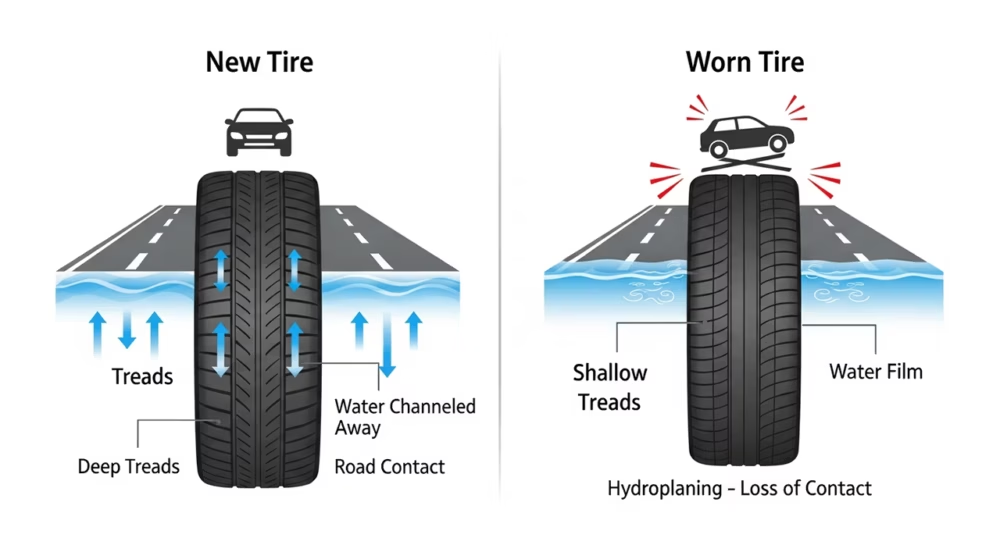
A new tire’s deep tread channels water away, maintaining grip. A worn tire’s shallow tread can’t clear water fast enough, leading to hydroplaning and a complete loss of control.
The dangers associated with worn tires extend far beyond the inconvenience of a flat. Insufficient tread depth dramatically reduces a tire’s ability to channel water away from the contact patch, significantly increasing the risk of hydroplaning – where the tire loses all contact with the road surface.
This loss of traction can occur even at moderate speeds during rain, leaving the driver with no steering or braking control. Furthermore, worn tires lead to extended braking distances, meaning it takes longer to stop your vehicle, a critical factor in avoiding collisions.
In severe cases, the structural integrity of a worn tire can fail suddenly, resulting in a catastrophic blowout, which can lead to a complete loss of control and potentially fatal accidents. It’s estimated that 646 people died in tire-related crashes in 2023, a stark reminder of the life-threatening potential of neglected tires.
A Proactive Approach to Road Safety
The most effective way to mitigate the risks posed by worn tires is through a proactive approach to vehicle maintenance. Regular visual inspections and simple tests can alert you to potential problems before they escalate. Making tire checks a routine part of your vehicle’s upkeep, alongside oil changes and brake inspections, is a fundamental aspect of responsible driving and ensures your vehicle’s overall safety.
Critical Sign 1: Insufficient Tread Depth – The Foundation of Grip
Tread depth is the most commonly discussed indicator of tire wear, and for good reason. The grooves within the tire tread are designed to evacuate water, dirt, and debris, allowing the rubber to maintain direct contact with the road surface for optimal traction. As tread wears down, this essential function is severely impaired.
What Constitutes Safe Tread Depth?
Legally and practically, the minimum tread depth for a tire is generally considered to be 2/32 of an inch. However, for optimal safety, especially in wet conditions, a tread depth of 4/32 of an inch or more is recommended for all-season tires. Below this threshold, your tires’ ability to grip the road diminishes significantly.
In wet weather, studies have shown that tires with only 2/32″ of tread can require up to 50% more distance to stop compared to those with 4/32″ of tread, making the difference between a safe stop and a collision.
The Penny Test: A Quick and Easy Indicator (featuring Lincoln’s head)
One of the simplest and most accessible ways to check your tire’s tread depth is the “penny test.” Take a US penny and insert it into a tire tread groove with “Lincoln’s head” facing you. If you can see the top of Lincoln’s head, your tread depth is likely at or below 2/32 of an inch, indicating that your tires are worn and require replacement. This quick check can be performed on any tire in mere seconds and is an invaluable tool for assessing tire safety.
Decoding Tread Wear Indicator Bars: Your Tire’s Built-in Warning
Most modern tires are equipped with built-in tread wear indicator bars. These are small, raised sections located at the bottom of the main tread grooves. When your tire tread has worn down to be level with these bars, it signifies that the tire has reached its minimum legal tread depth and needs to be replaced immediately. Regularly checking these bars provides a clear, visual cue from the tire manufacturer itself that its optimal performance is compromised.
The Danger: Reduced Traction, Hydroplaning, and Extended Braking Distances
As tread depth decreases, the tire’s ability to displace water from the road surface is drastically reduced. This leads to a heightened risk of hydroplaning, where the tire effectively skates on a thin layer of water, rendering steering and braking ineffective.
Beyond hydroplaning, worn tires simply have less rubber making contact with the road, resulting in a significant increase in braking distances. This means that in an emergency situation, your vehicle will take much longer to stop, escalating the potential for accidents.
How Tread Grooves and Tread Pattern Impact Performance
The design of the tire’s tread pattern plays a vital role in its performance. Aggressive patterns with deep grooves are designed for superior grip in various conditions, while specialized patterns enhance fuel efficiency or noise reduction. However, all these benefits are negated when the tread depth is insufficient.
The sipes and block designs, crucial for biting into the road surface and channeling water, lose their effectiveness as they wear down. This compromise in the tread’s structural design directly impacts the tire’s ability to perform as intended, affecting everything from cornering stability to acceleration.
Critical Sign 2: Uneven Tread Wear – A Symptom of Deeper Issues
While insufficient tread depth indicates general wear, uneven tread wear patterns are often a symptom of more significant underlying issues within your vehicle. These patterns don’t just accelerate tire degradation but also compromise your vehicle’s handling and safety.
Identifying Different Patterns of Uneven Wear
Several distinct patterns of uneven tread wear can signal specific problems:
- Center Wear: If the center of the tread is significantly more worn than the edges, it often indicates the tires have been consistently overinflated.
- Edge/Shoulder Wear (Inner or Outer): Excessive wear on one or both edges suggests underinflation, aggressive cornering, or issues with wheel alignment.
- Feathering: This occurs when the tread blocks are worn smooth on one edge and sharp on the other, often indicating a toe alignment problem.
- Cupping or Scalloping: This pattern of bald spots or scoops on the tread is typically a sign of worn suspension components, such as shocks or struts, or an unbalanced wheel.
Underlying Causes: Wheel Misalignment, Balance Issues, and Suspension Problems
The primary culprits behind uneven tread wear are often related to your vehicle’s mechanical condition. Incorrect wheel alignment (toe, camber, or caster angles being out of specification) forces tires to scrub against the road surface, leading to rapid and irregular wear.
Imbalanced wheels cause vibration at certain speeds, which can lead to spot wear and premature tire failure. Furthermore, worn suspension components like shocks, struts, ball joints, or bushings allow excessive movement, causing the tires to bounce and wear unevenly.
Why Uneven Wear Accelerates Tire Degradation and Compromises Handling
Unevenly worn tires are inherently weaker and less reliable. The areas of deeper tread can provide adequate grip, while the worn sections offer significantly less. This imbalance creates inconsistent traction and compromises the tire’s ability to perform uniformly.
This directly impacts handling, making the vehicle feel unstable, pull to one side, or respond sluggishly to steering inputs, especially during turns or emergency maneuvers.
The Connection to Vehicle Suspension and Steering Stability
The relationship between tire wear and your vehicle’s suspension and steering systems is a critical feedback loop. When suspension components are worn, they can no longer hold the wheels in their proper alignment.
This misalignment causes the tires to wear improperly, and the worn tires, in turn, can exacerbate existing suspension issues or lead to a feeling of reduced steering stability.
Addressing uneven wear often requires not just replacing the tires but also diagnosing and repairing the underlying mechanical faults in the suspension or alignment systems.
Critical Sign 3: Sidewall Damage – Compromising Structural Integrity
The sidewall of a tire is a crucial structural component, responsible for maintaining the tire’s shape and supporting the vehicle’s load. Unlike the tread, the sidewall has less reinforcement against punctures and impact, making it particularly vulnerable to damage.
Visible Cracks: The Effects of Age, Exposure to the Elements, and UV Rays
Over time, the rubber compound in tires degrades. Exposure to sunlight (UV rays), ozone, and fluctuating temperatures can cause the rubber to lose its elasticity and become brittle, leading to the formation of visible cracks.
These can range from fine hairline cracks to deeper fissures. Even if the tread depth appears adequate, significant cracking on the sidewall indicates that the tire’s structural integrity is compromised and it may be susceptible to failure.
Bulges, Blisters, and Bubbles: Signs of Internal Belt Separation
The appearance of bulges, blisters, or bubbles on the sidewall of a tire is a serious warning sign. These indicate internal damage, likely due to the separation of the tire’s internal reinforcing belts or ply separation.
This structural weakness means the tire can no longer withstand the internal air pressure reliably, posing an extremely high risk of a sudden and catastrophic blowout.
Punctures, Cuts, and Impact Damage: From Potholes and Sharp Objects
Sharp objects on the road, such as glass or metal shards, can cause punctures or cuts. Equally damaging are impacts from potholes, curbs, or road debris.
While some cuts might seem superficial, any penetration or significant gouge on the sidewall can weaken the tire’s structure, compromising its ability to hold air and withstand road stress. The sidewall is less protected than the tread, making it more susceptible to this type of damage.
The Danger: High Risk of Tire Blowout and Catastrophic Tire Failure
The sidewall plays a vital role in containing the pressurized air within the tire. When the sidewall is compromised by cracks, bulges, cuts, or impact damage, its ability to perform this critical function is severely diminished.
This significantly increases the risk of a sudden tire blowout, which can cause an immediate loss of control, leading to accidents. Driving on a tire with visible sidewall damage is extremely dangerous.
Understanding the Tire Sidewall and its Vulnerability
The sidewall is the part of the tire located between the tread and the bead, which seals the tire to the wheel rim. It’s designed to flex as the tire rolls, absorbing road imperfections and contributing to ride comfort.
However, this constant flexing, combined with exposure to road hazards, makes it a vulnerable area. Damage here is often more insidious than tread wear, as it affects the fundamental structural integrity of the tire.
Critical Sign 4: Exposed Tire Cords or Belts – Beyond the Point of No Return
When the protective rubber layer of the tread wears down completely, the reinforcing cords or belts beneath the surface become visible. This is a critical indicator that the tire has been driven far beyond its safe lifespan.
What it Means When Cords Are Visible
Seeing the cords or belts, which are typically made of steel or fabric, means that the tire’s tread is essentially gone. These cords are the structural backbone of the tire, but they are not designed to be exposed to the road.
Their exposure signifies that the tire can no longer provide adequate grip, is highly susceptible to punctures, and has lost much of its structural integrity.
The Immediate and Extreme Danger of Driving on Severely Worn Tires
Driving on tires with exposed cords is exceptionally dangerous. The cords offer no protection against road hazards, meaning even small debris can easily penetrate the tire.
Furthermore, the structural integrity is so compromised that the tire is on the verge of catastrophic failure. The risk of a sudden blowout is exceptionally high, leading to an immediate and complete loss of control over the vehicle.
A Clear Indicator for Immediate Tire Replacement
There is no gray area when tire cords are visible. This is an unequivocal sign that the tires are not only worn out but are actively dangerous and must be replaced immediately. Continuing to drive on such tires puts yourself, your passengers, and other road users at grave risk.
Critical Sign 5: Excessive Tire Age – The Silent Killer
While tread wear is the most obvious sign of tire aging, the rubber compound itself degrades over time, regardless of how much tread remains. This gradual deterioration of the rubber makes tires brittle and prone to failure, even if they look good on the surface.
Locating the DOT Code: Understanding Your Tire’s Manufacturing Date
Every tire manufactured in the United States must have a Department of Transportation (DOT) code stamped on its sidewall. This code includes a series of letters and numbers.
The last four digits represent the week and year of manufacture. For example, “3223” indicates the tire was manufactured in the 32nd week of 2023. Knowing how to read this code is crucial for assessing a tire’s age.
Why Rubber Degradation Occurs Even with Good Tread
Even if a tire has plenty of tread remaining, the rubber compound begins to age the moment it’s manufactured. This process is accelerated by exposure to various environmental factors.
Over time, the rubber loses its flexibility and strength, becoming more susceptible to cracking, blistering, and ultimately, failure. A tire that sits unused for extended periods can also degrade due to lack of use and exposure.
The Impact of Climate, Temperature Changes, and Exposure on Rubber Compound
Factors like extreme heat, prolonged exposure to direct sunlight (UV radiation), and arid climates significantly accelerate the aging process of tire rubber. Frequent temperature fluctuations can also cause stress on the rubber compound.
Tires used in harsher environments or stored improperly may degrade more rapidly than those in milder climates or stored correctly. This degradation can lead to cracks and reduced structural integrity, irrespective of tread depth.
General Guidelines for Tire Age and Replacement
While tread depth is a primary concern, tire manufacturers and safety organizations generally recommend replacing tires that are six to ten years old, regardless of their tread wear.
This recommendation acknowledges the inevitable aging of the rubber compound. For optimal safety, it’s prudent to have tires inspected by a professional if they are approaching this age range, even if they appear to have plenty of tread.
Critical Sign 6: Persistent Vibrations, Noises, or Handling Anomalies
Changes in how your vehicle feels, sounds, or handles can be subtle indicators of tire problems, or issues with related systems like the suspension. These aren’t always as obvious as worn tread, but they warrant immediate attention.
Interpreting Vibrations: From Steering Wheel to the Entire Vehicle
If you begin to feel vibrations through your steering wheel or the floor of your vehicle, especially at certain speeds, it’s a sign that something is amiss. This could stem from unbalanced tires, uneven tread wear, or even internal tire damage like a slipped belt. In some cases, more severe vibrations can indicate a bent wheel rim, often a consequence of hitting potholes.
Unusual Noises: Thumping, Humming, or Whining as Warning Signs
Listen for any new or unusual noises coming from your tires. A persistent thumping sound might indicate a tire separation or severe imbalance. A humming or whining noise, particularly noticeable when turning, could suggest worn wheel bearings or issues with the tire’s tread pattern interacting with the road surface due to uneven wear.
Changes in Vehicle Handling: Pulling, Drifting, or Poor Steering Response
If your vehicle starts to consistently pull to one side when driving straight, or if the steering feels vague, unresponsive, or overly sensitive, it’s a critical warning.
These symptoms can point to improper tire inflation, significant uneven wear, or more commonly, problems with wheel alignment or suspension components. Reduced handling capabilities mean less control over the vehicle, particularly in evasive maneuvers.
How These Symptoms Indicate Tire or Suspension Issues, Affecting Braking and Skidding
These performance anomalies are direct indicators that your tires or related systems are not functioning optimally. Poor handling means your ability to steer accurately is compromised, directly impacting your braking effectiveness and increasing the risk of skidding or losing control, especially during emergency stops or in challenging weather conditions.
Critical Sign 7: Frequent or Rapid Air Pressure Loss – A Sign of Trouble
Maintaining the correct tire pressure is vital for tire health, performance, and safety. While temperature fluctuations can cause minor pressure changes, frequent or rapid loss of air pressure signals a problem that needs immediate attention.
Beyond Normal Fluctuations: When to Suspect a Leak
Tire pressure naturally fluctuates with ambient temperature changes. However, if you find yourself needing to add air to a tire much more frequently than usual, or if a tire consistently loses a significant amount of pressure overnight, it indicates a leak. This could be a slow leak from a punctured tire, a damaged valve stem, or a faulty seal between the tire and the wheel rim.
The Role of Tire Pressure Monitoring Systems (TPMS) in Early Detection
Modern vehicles are equipped with Tire Pressure Monitoring Systems (TPMS), which alert drivers to significantly low tire pressure. The direct TPMS segment, which provides more precise readings, is projected to account for a significant share of the market. This technology is becoming increasingly prevalent, aiding drivers in detecting pressure issues early. However, TPMS is not a substitute for regular manual checks.
The Dangers of Improper Inflation: Accelerated Wear and Increased Blowout Risk
Underinflated tires flex excessively, generating heat and leading to accelerated wear on the edges of the tread. This heat buildup can damage the tire’s internal structure and significantly increase the risk of a blowout.
Overinflated tires, on the other hand, have a reduced contact patch with the road, leading to center tread wear, a harsher ride, and a greater susceptibility to impact damage from potholes or debris. Both extremes compromise safety and tire longevity.
How Tire Inflation Affects Tire Health and Fuel Efficiency
Correct tire inflation is essential for maximizing the lifespan of your tires and optimizing fuel economy. When tires are properly inflated, they roll more efficiently, reducing rolling resistance and improving gas mileage.
Underinflated tires require more energy to move, leading to decreased fuel efficiency. Maintaining the manufacturer’s recommended tire pressure, usually found on a sticker on the driver’s side door jamb, is a simple yet critical aspect of tire maintenance.
The Real Dangers of Neglecting Worn Tires
The cumulative effect of driving on worn tires is a significant increase in risk across multiple facets of your driving experience. It’s a situation that escalates from minor inconveniences to potentially life-threatening consequences.
- Severely Reduced Road Safety and Control: The most immediate danger is a drastic reduction in your ability to control your vehicle. Loss of traction means the car may not respond as expected to steering inputs, acceleration, or braking.
- Increased Risk of Skidding and Hydroplaning: As previously detailed, worn treads cannot effectively channel water, making skidding and hydroplaning a constant threat, especially in wet or icy conditions.
- Higher Likelihood of Tire Blowout Leading to Car Crashes: A sudden blowout on a worn tire can cause an immediate loss of control, which is a primary contributor to serious and fatal accidents. More than 51,500 tire-related breakdowns occurred on motorways and A roads in 2023 alone, indicating a significant and increasing problem.
- Damage to Vehicle Components Beyond Just Tires: Continual driving on improperly wearing tires can place undue stress on other vehicle components, including brakes, shocks, struts, and even the drivetrain, leading to premature wear and costly repairs.
- The Financial Cost of Neglect vs. Proactive Tire Replacement: While replacing tires represents an upfront cost, the financial implications of neglecting them can be far greater. This includes the cost of repairs due to consequential damage, potential accident costs (vehicle repairs, insurance deductibles, medical bills), and the economic impact of increased fuel consumption due to improper inflation or tire drag. The global passenger vehicle replacement tire market is substantial, indicating the ongoing need for maintenance and replacement, with projections suggesting it will reach $143.87 billion by 2033.
Proactive Steps for Tire Health and Your Security
Taking a proactive stance towards tire maintenance is the most effective way to ensure your safety and the longevity of your tires. Simple, regular checks can prevent major issues.
How to Conduct a Thorough Tire Inspection at Home
Dedicate a few minutes each month to inspecting your tires:
- Tread Depth: Use the penny test or check tread wear indicator bars. If Lincoln’s head is visible or the tread is level with the bars, it’s time for replacement.
- Sidewall Integrity: Look for cracks, bulges, blisters, or cuts on the sidewall. Any visible damage should be assessed by a professional.
- Uneven Wear: Examine the tread wear patterns across the entire surface of each tire for signs of uneven wear, feathering, or cupping.
- Tire Pressure: Check the pressure in all tires (including the spare) when they are cold using a reliable tire pressure gauge. The recommended pressure is usually found on a sticker inside the driver’s door jamb or in your owner’s manual.
- Overall Condition: Look for embedded objects like nails or screws, or any other visible damage.
Importance of Regular Tire Inflation Checks and Proper Air Pressure
As mentioned, maintaining the correct tire pressure is crucial. Underinflated tires can lead to dangerous overheating and blowouts, while overinflated tires reduce grip and ride comfort. Always refer to your vehicle’s manufacturer recommendations for the proper pressure.
When to Seek Professional Help at a Service Center
While home inspections are valuable, it’s essential to know when to enlist professional help. If you notice any signs of significant sidewall damage, cracks, bulges, or if you suspect issues with alignment, suspension, or wheel balance due to uneven wear or vibrations, it’s time to visit a reputable service center. They have the expertise and equipment to diagnose and repair underlying problems, ensuring your tires are safe and your vehicle performs optimally. Regular tire rotations, recommended every 5,000-7,500 miles, are also best performed by professionals to ensure even wear.
Conclusion
Your tires are more than just black rubber rings; they are critical safety components that directly influence your vehicle’s ability to grip, steer, and stop. Ignoring signs of wear and damage, such as insufficient tread depth, uneven wear, sidewall compromises, visible cords, excessive age, or persistent vibrations, can lead to perilous situations on the road.
The penny test and visual inspections are simple yet effective tools for home maintenance, but when in doubt, professional assessment at a service center is indispensable.
Prioritizing tire health is not just about extending the life of your tires; it’s about safeguarding your safety, the security of your passengers, and the integrity of your vehicle. Make tire inspection a non-negotiable part of your driving routine to ensure a safer journey every time you get behind the wheel.
FAQs
How do I tell if I need new tires?
You can determine if you need new tires by conducting a regular visual inspection for specific warning signs. The most critical indicators include checking for insufficient tread depth, which can be done using the “Penny Test” or by looking at the built-in tread wear indicator bars. Additionally, you should inspect the sidewalls for any visible damage such as cracks, bulges, or cuts, and pay attention to the driving feel of your vehicle; if you experience vibrations, pulling to one side, or sluggish steering, it may indicate that your tires are compromised and need replacement.
Less obvious signs I need new tires?
Beyond visible damage, less obvious signs often manifest through changes in your vehicle’s handling and performance. If your car feels unstable, pulls to one side, or if the steering response feels sluggish especially during turns or emergency maneuvers, this can indicate uneven tire wear or internal structural issues. Additionally, fine hairline cracks on the sidewall, caused by exposure to UV rays and ozone, are subtle signs of aging rubber that suggest the tire’s structural integrity is degrading even if the tread looks fine.
Do I need new tires?
To answer this, you should perform a quick self-check: insert a US penny into your tire’s tread groove with Lincoln’s head facing you. If you can see the top of Lincoln’s head, your tread depth is likely at or below 2/32 of an inch, meaning you definitely need new tires. Alternatively, look for the raised “wear bars” at the bottom of the tread grooves; if the tread is flush with these bars, your tires have reached their legal wear limit and must be replaced immediately to ensure safety.
What are some signs that it’s time to replace my car’s tires?
It is time to replace your tires if you notice significant tread wear, visible structural damage, or signs of aging. Key signs include tread depth below 2/32 of an inch, the appearance of “wear bars” level with the tread, and uneven wear patterns that expose different parts of the tire to the road. You should also look for deep cracks or “dry rot” on the sidewalls, any bulges or blisters indicating internal damage, and in extreme cases, visible cords or belts, which signify the tire is dangerous and on the verge of failure.
What are the common signs that indicate I need new tires?
The most common signs are related to physical wear and aging. Insufficient tread depth is the primary indicator, as it directly reduces traction and braking efficiency. Other frequent signs include uneven tread wear, which can result from alignment issues, and visible sidewall cracking due to the rubber becoming brittle over time. These common symptoms are clear warnings that your tires can no longer safely perform their essential functions of gripping the road and channeling away water.
How can I tell when my tires are worn out and need replacement?
You can tell your tires are worn out by decoding their built-in wear indicators. Modern tires feature small, raised sections of rubber called tread wear indicator bars located in the grooves. When the surrounding tread wears down to the same level as these bars, the tire is legally worn out. Furthermore, if you see any fabric or steel cords poking through the rubber, the tire has gone past the point of no return and is unsafe for driving, requiring immediate replacement.
What visible tire damages mean it’s time to buy new tires?
Visible damages that necessitate immediate replacement include sidewall cracks, bulges, blisters, and cuts. Cracks often result from environmental exposure and indicate the rubber is losing elasticity, while bulges or bubbles suggest a separation of the internal belts, posing a high risk of a catastrophic blowout. Any deep cuts from road hazards like potholes or glass that penetrate the rubber, as well as any exposed tire cords, are critical damages that compromise the tire’s ability to hold air and support the vehicle.
Why is tire tread depth important for vehicle safety?
Tire tread depth is the foundation of your vehicle’s grip on the road. The grooves are engineered to evacuate water, dirt, and debris from the contact patch, preventing hydroplaning where the tire loses contact with the road and skims over water. Adequate tread depth ensures you maintain steering and braking control; studies show that worn tires with only 2/32″ of tread can require up to 50% more stopping distance in wet conditions compared to tires with deeper tread, directly impacting your ability to avoid collisions.
How does tire age affect performance and safety?
Even with sufficient tread, tire age is a critical safety factor because rubber degrades over time. Exposure to sunlight (UV rays), ozone, and fluctuating temperatures causes the rubber compounds to oxidize, become brittle, and lose elasticity. This “invisible” degradation leads to sidewall cracking and structural weakness, meaning an old tire can fail suddenly under stress. Therefore, tires can “expire” and become unsafe simply due to age, regardless of how many miles they have been driven.