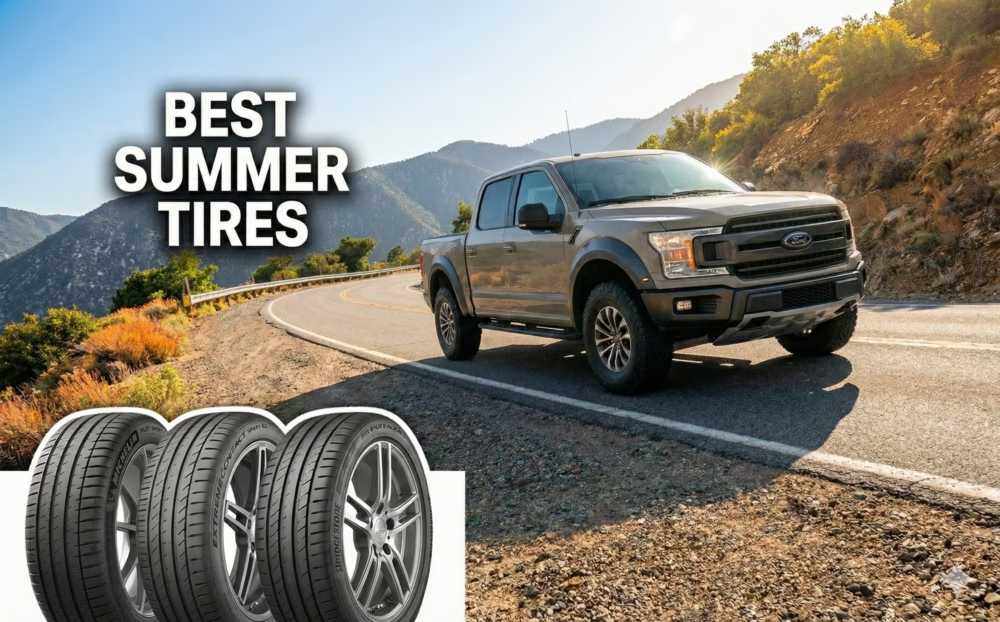
Are you ready to unlock your vehicle’s full performance potential this summer? While many drivers settle for all-season tires year-round, they’re missing out on the dramatic improvements that dedicated summer tires deliver when temperatures rise above 45°F.
Imagine shorter braking distances that could mean the difference between a close call and an accident, razor-sharp handling that makes every curve more engaging, and enhanced wet-weather grip that keeps you confident even during sudden summer storms.
Summer tires aren’t just for sports car enthusiasts or track day warriors—they’re for anyone who values safety, performance, and driving enjoyment during the warmer months.
The specialized rubber compounds and optimized tread patterns in summer tires provide measurably better traction, responsiveness, and braking performance compared to all-season alternatives, transforming everything from your daily commute to weekend road trips.
In this comprehensive guide, we’ve tested and evaluated the 11 best summer tires available in 2026, analyzing each option’s dry and wet performance, handling characteristics, comfort levels, durability, and value proposition.
Whether you’re driving a high-performance sports car, a luxury sedan, or an everyday commuter vehicle, we’ll help you identify the perfect summer tire to match your specific needs, driving style, and budget.
From premium options that deliver track-worthy capabilities to budget-friendly alternatives that don’t compromise on safety, you’ll discover exactly which summer tires deserve a place on your vehicle this season.
- Understanding Summer Tire Technology
- How We Selected Our Top Picks
- Michelin Pilot Sport 4S
- Continental ExtremeContact Sport
- Bridgestone Potenza Sport
- Pirelli P Zero PZ4
- Yokohama ADVAN Sport V107
- Goodyear Eagle F1 Asymmetric 6
- Firestone Firehawk Indy 500
- Yokohama Advan Sport V105
- Hankook Ventus S1 Evo3
- Falken Azenis FK510
- Nitto NT555 G2
- Kumho Ecsta PS31
- General G-MAX RS
- Dunlop Sport Maxx RT2
- How to Choose the Right Summer Tire for Your Needs
- Maintaining Your Summer Tires for Optimal Performance and Longevity
- Choosing the Right Summer Tire for Your Needs
- Understanding Summer Tire Technology
- Conclusion: Finding Your Perfect Summer Tire
- FAQs About Summer Tires
Understanding Summer Tire Technology
Before diving into specific tire recommendations, it’s important to understand what makes summer tires different from other options. Summer tires typically feature:
- Specialized rubber compounds that remain flexible and grippy in hot conditions
- Less aggressive tread patterns with fewer sipes (small slits in the tread blocks)
- Larger tread blocks for increased road contact
- Stiffer sidewalls for improved cornering stability
- Optimized for performance in dry and wet conditions above 45°F (7°C)
These design elements combine to provide superior grip, handling, and braking capabilities during warm weather. However, it’s crucial to note that summer tires are not suitable for winter driving, as their rubber compounds harden significantly when temperatures drop below 45°F, compromising traction and safety.
How We Selected Our Top Picks
Our tire selections are based on several key factors:
- Performance testing results from independent organizations
- Treadwear ratings and longevity expectations
- Wet and dry handling capabilities
- Braking performance
- Road noise and comfort
- Value proposition and price point
- Consumer feedback and satisfaction ratings
Now, let’s explore the best summer tires currently available on the market.
Michelin Pilot Sport 4S

- Ultra-high performance summer tire for sports cars and high-performance vehicles
- Incorporates Michelin’s Helio+ technology for improved treadlife without sacrificing grip
- Exceptional dry performance with excellent grip, handling, and braking
- Impressive wet traction and hydroplaning resistance
- Good balance of comfort and low noise levels for a performance tire
- Not suitable for winter driving or off-road use
- Designed for both street and occasional track use
Price Check
Check the price of this tire at the following retailers:
TireRack SimpleTire PriorityTire DiscountedWheelWarehouse AmazonDon’t know the correct size tire to purchase? Start here!
The Michelin Pilot Sport 4S stands as the gold standard in the ultra-high-performance summer tire category. Developed with technology derived from endurance racing, this tire delivers exceptional performance across multiple dimensions.
Key features include a hybrid belt made of aramid and nylon for high-speed stability, a variable contact patch 3.0 design that distributes forces evenly when cornering, and a bi-compound tread that uses different rubber formulations on the inner and outer portions of the tread.
On dry roads, the Pilot Sport 4S provides razor-sharp steering response and incredible grip, inspiring confidence during aggressive driving. In wet conditions, its wide circumferential grooves and specific tread compound maintain impressive traction and resistance to hydroplaning.
With a UTQG treadwear rating of 300, the Pilot Sport 4S offers respectable longevity for a high-performance tire, with many drivers reporting 25,000-30,000 miles of use. This tire fits a wide range of performance-oriented vehicles, from sports cars to luxury sedans.
Pros:
- Exceptional dry and wet grip
- Precise steering response
- Better longevity than most ultra-high-performance tires
- Comfortable ride quality for its category
Cons:
- Premium price point
- Not ideal for track use (the Pilot Sport Cup 2 would be better)
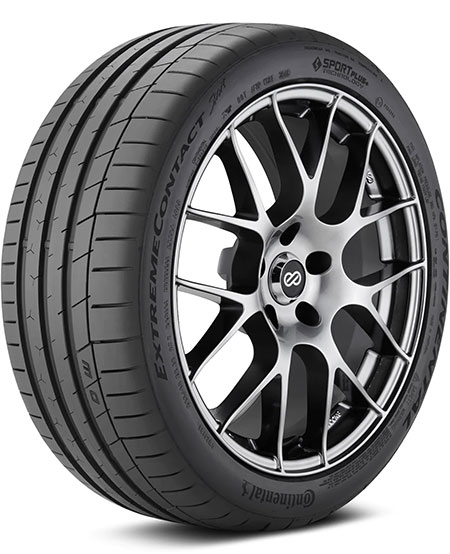
Continental ExtremeContact Sport
- High-performance summer tire for sports cars and performance vehicles
- Exceptional dry and wet traction with advanced compound and tread design
- Impressive handling, cornering, and braking performance
- Comfortable ride and low noise for a high-performance tire
- Good treadwear and durability for its category
- Suitable for drivers seeking performance and all-season versatility
Price Check
Check the price of this tire at the following retailers:
TireRack SimpleTire PriorityTire DiscountedWheelWarehouse AmazonDon’t know the correct size tire to purchase? Start here!
The Continental ExtremeContact Sport represents an excellent balance of performance and practicality in the summer tire segment. Developed with input from professional race car drivers, this tire delivers impressive capabilities without breaking the bank.
The tire features Continental’s SportPlus Technology, which enhances handling and tread life simultaneously. Its asymmetric tread pattern includes large, stable shoulder blocks for cornering grip and wide circumferential grooves for wet weather performance. The tire also incorporates Continental’s D2O curve technology, which creates a curved groove wall that helps channel water away efficiently.
In dry conditions, the ExtremeContact Sport delivers crisp turn-in response and excellent stability at high speeds. Wet performance is particularly impressive, with outstanding hydroplaning resistance and predictable handling on rain-soaked roads.
With a UTQG rating of 340, this tire offers above-average treadwear for its performance category. It’s compatible with a wide range of vehicles from sports coupes to performance sedans and even some sporty crossovers.
Pros:
- Excellent wet weather performance
- Good balance of grip and longevity
- More affordable than some premium competitors
- Predictable at the limit
Cons:
- Not quite as sharp in dry handling as the top-tier options
- Road noise increases as the tire wears
Bridgestone Potenza Sport

- High-performance summer tire for sports cars and performance vehicles
- Exceptional dry and wet traction
- Precise handling and responsive steering
- Excellent cornering stability and high-speed performance
- Impressive wet weather grip and hydroplaning resistance
- Surprisingly comfortable and quiet for a performance tire
- Suitable for sports cars, performance sedans, and some SUVs
Price Check
Check the price of this tire at the following retailers:
TireRack SimpleTire PriorityTire DiscountedWheelWarehouse AmazonDon’t know the correct size tire to purchase? Start here!
The Bridgestone Potenza Sport represents the Japanese manufacturer’s latest ultra-high-performance summer offering. This tire incorporates advanced technology to deliver exceptional handling capabilities in both dry and wet conditions.
Key features include an innovative tread compound with silica and polymer blends that enhance grip while maintaining durability. The asymmetric tread pattern features rigid blocks in the shoulder area for cornering stability and 3D sipes that increase edge effect for improved wet traction.
On dry pavement, the Potenza Sport excels with outstanding steering precision and cornering grip. The tire’s performance in wet conditions is equally impressive, with excellent hydroplaning resistance and predictable handling characteristics.
With a UTQG rating of 300, the Potenza Sport offers reasonable treadwear for its performance category. It’s designed for sports cars, performance sedans, and high-performance luxury vehicles.
Pros:
- Exceptional steering precision and response
- Outstanding dry grip and cornering stability
- Better-than-average wet performance
- Refined ride quality for a performance tire
Cons:
- Premium price point
- Can be noisy on certain road surfaces
Pirelli P Zero PZ4

- Premium ultra-high performance summer tire
- Designed for sports cars, luxury vehicles, and powerful sedans
- Uses silica-enhanced compound for grip and wear resistance
- Offers exceptional dry and wet grip
- Provides precise handling and high-speed stability
- Balances performance with comfort and low noise levels
Price Check
Check the price of this tire at the following retailers:
TireRack SimpleTire PriorityTire DiscountedWheelWarehouse AmazonDon’t know the correct size tire to purchase? Start here!
The Pirelli P Zero (PZ4) is the latest iteration of Pirelli’s flagship summer performance tire, combining cutting-edge technology with the Italian brand’s racing heritage. This tire is often selected as original equipment on many high-performance and luxury vehicles.
The P Zero features an asymmetric tread design with larger outer shoulder blocks for enhanced cornering grip and stability. Its advanced tread compound incorporates specialized polymers and silica content for improved grip in various conditions. The tire’s internal structure includes a hybrid belt package with aramid and nylon to enhance high-speed stability.
In dry conditions, the P Zero delivers exceptional handling with immediate steering response and outstanding grip during aggressive cornering. Wet performance is similarly impressive, with effective water evacuation and maintained traction on damp surfaces.
The UTQG rating varies between 240-300 depending on the specific size and application, indicating moderate treadwear expectations. The P Zero is designed primarily for high-performance sports cars, luxury performance sedans, and supercars.
Pros:
- Exceptional steering response and precision
- Outstanding grip in both dry and wet conditions
- Refined ride quality for a performance tire
- Prestigious brand with racing pedigree
Cons:
- Higher price point
- Treadlife can be shorter than some competitors
- Road noise can be noticeable on certain vehicles
Yokohama ADVAN Sport V107

- Flagship UHP tire for sports cars and luxury vehicles
- OEM approved by Mercedes, BMW, Porsche, and Audi
- Silica-enriched compound for superior grip and longevity
- Matrix Body Ply maintains cornering stability
- Asymmetric tread with 4 grooves for water evacuation
- 8% better wet performance than V105 model
- Exceptional dry handling with precise steering
- 15% longer tread life than predecessor
- 5% lower rolling resistance improves fuel economy
- Quieter ride with reduced road noise
Price Check
Check the price of this tire at the following retailers:
TireRack SimpleTire PriorityTire DiscountedWheelWarehouse AmazonDon’t know the correct size tire to purchase? Start here!
The Yokohama ADVAN Sport V107 continues the ADVAN Sport legacy with significant improvements in wet performance and handling dynamics, making it a worthy contender in the ultra-high-performance summer tire category.
Wet traction capabilities have been enhanced through Yokohama’s advanced silica-rich compound and optimized tread pattern. The tire features four wide circumferential grooves and specialized water evacuation channels that effectively resist hydroplaning while maintaining contact patch integrity. Wet braking performance is particularly impressive.
Handling characteristics are sharp and responsive, with the tire’s rigid construction and specialized bead filler enhancing steering precision. The ADVAN Sport V107 delivers excellent feedback during cornering and maintains composure even during aggressive driving. The tire feels particularly at home on winding roads and during spirited driving.
Durability features include Yokohama’s matrix body ply structure and optimized contact patch design, which help distribute wear more evenly. Tread life is average for the category, with most drivers reporting around 20,000-25,000 miles before replacement.
Noise levels are moderate—not the quietest in its class but generally unobtrusive during normal driving. Some drivers report increased road noise on certain surfaces, particularly as the tires wear.
Pros:
- Excellent handling response and feedback
- Strong wet grip and braking
- Good value compared to premium brands
- OEM fitment on several performance vehicles
- Attractive tread design
Cons:
- Tread life shorter than some competitors
- Road noise increases as tires wear
- Ride comfort not a strong point on rough roads
Goodyear Eagle F1 Asymmetric 6

- High-performance summer tire for sports cars, coupes, and performance sedans
- Advanced asymmetric tread design for optimal dry and wet performance
- Utilizes Goodyear’s latest compound technology for exceptional grip
- Features ActiveBrakeForce Technology for enhanced braking performance
- Excellent dry and wet traction with impressive cornering stability
- Respectable light snow performance, but not suitable for extreme winter conditions
Price Check
Check the price of this tire at the following retailers:
TireRack SimpleTire PriorityTire DiscountedWheelWarehouse AmazonDon’t know the correct size tire to purchase? Start here!
The Goodyear Eagle F1 Asymmetric 6 represents the latest evolution in Goodyear’s ultra-high-performance summer tire lineup. This tire incorporates several technological advancements to deliver improved performance over its predecessor.
Key features include Goodyear’s Dry Contact Plus Technology, which increases the tire’s contact patch during cornering for enhanced grip. The tire also utilizes an adaptive contact patch that helps distribute forces more evenly during various driving conditions. Its asymmetric tread design includes large outer shoulder blocks for cornering stability and wide circumferential grooves for wet performance.
On dry roads, the Eagle F1 Asymmetric 6 provides excellent grip and responsive handling with good feedback to the driver. In wet conditions, the tire performs admirably with effective water evacuation and maintained traction.
With a UTQG rating of approximately 300, this tire offers reasonable treadwear for its performance category. It fits a wide range of vehicles from sports cars to performance sedans and luxury coupes.
Pros:
- Excellent balance of performance characteristics
- Good wet and dry traction
- More affordable than some premium competitors
- Comfortable ride quality
Cons:
- Not quite as sharp as top-tier options in extreme performance driving
- Road noise can increase with wear
Firestone Firehawk Indy 500

- Ultra High-Performance Summer Tire designed for the demanding Indianapolis 500 race
- Highly responsive on both dry and wet roads
- Utilizes advanced materials and construction techniques for durability
- Asymmetric tread design optimizes cornering performance and stability
- Engineered to withstand extreme temperatures and forces in racing conditions
- Incorporates aerodynamic features to reduce turbulence and drag
Price Check
Check the price of this tire at the following retailers:
TireRack SimpleTire PriorityTire DiscountedWheelWarehouse AmazonDon’t know the correct size tire to purchase? Start here!
The Firestone Firehawk Indy 500 stands out as one of the best values in the ultra-high-performance summer tire segment. Despite its more accessible price point, this tire delivers performance that rivals many premium options.
The Firehawk Indy 500 features an asymmetric tread design with Pulse Groove Technology that enhances water evacuation for wet performance. Its silica-enriched tread compound provides excellent grip while maintaining reasonable treadwear. The tire’s internal construction includes twin steel belts reinforced with nylon for high-speed stability.
In dry conditions, the Firehawk Indy 500 delivers responsive handling and impressive grip, particularly considering its price point. Wet performance is a highlight, with excellent hydroplaning resistance and predictable handling on rain-soaked roads.
With a UTQG rating of 340, this tire offers above-average treadwear expectations for its category. It fits a wide range of vehicles from sports cars to performance-oriented sedans and coupes.
Pros:
- Exceptional value for performance delivered
- Impressive wet traction capabilities
- Above-average treadlife for category
- Approachable handling at the limit
Cons:
- Not quite as refined as premium options
- Slightly less steering precision than top-tier competitors
Yokohama Advan Sport V105

- Premium ultra-high performance summer tire
- Designed for sports cars, luxury vehicles, and driving enthusiasts
- Exceptional dry and wet traction
- Precise handling and responsive steering
- Advanced asymmetric tread pattern for even wear
- Silica-enhanced compound for grip and durability
- Excellent cornering stability and braking performance
- Impressive hydroplaning resistance
- Good ride comfort and noise levels for its class
Price Check
Check the price of this tire at the following retailers:
TireRack SimpleTire PriorityTire DiscountedWheelWarehouse AmazonDon’t know the correct size tire to purchase? Start here!
The Yokohama ADVAN Sport V105 is a high-performance summer tire that balances exceptional handling capabilities with reasonable comfort. This tire is often selected as original equipment for several high-performance European vehicles.
Key features include Yokohama’s advanced rubber compound with micro silica and polymer technology for enhanced grip. The asymmetric tread pattern incorporates rigid outside shoulder blocks for cornering stability and four wide circumferential grooves for wet performance.
On dry pavement, the ADVAN Sport V105 delivers sharp steering response and excellent cornering grip. Wet performance is equally impressive with good hydroplaning resistance and predictable handling characteristics.
With a UTQG rating ranging from 240-280 depending on size, the ADVAN Sport V105 offers moderate treadwear expectations. It’s designed primarily for sports cars, performance sedans, and luxury performance vehicles.
Pros:
- Excellent balance of performance and comfort
- Sharp steering response and feedback
- Good wet and dry traction
- Often specified as OE equipment on premium vehicles
Cons:
- Treadlife can be shorter than some competitors
- Premium price point
- Can be noisy on certain road surfaces
Hankook Ventus S1 Evo3

- Premium ultra-high performance summer tire for sports cars and high-end sedans
- Asymmetric tread design with continuous center rib
- Excellent dry and wet performance, with enhanced grip and handling
- Strong hydroplaning resistance and wet braking capabilities
- Not suitable for winter conditions or snow/ice
- Comfortable and quiet ride with good shock absorption
Price Check
Check the price of this tire at the following retailers:
TireRack SimpleTire PriorityTire DiscountedWheelWarehouse AmazonDon’t know the correct size tire to purchase? Start here!
The Hankook Ventus S1 Evo3 represents an excellent mid-range option in the summer performance tire category. This tire demonstrates Hankook’s growing prominence in the performance tire segment with technology that rivals more established brands.
The Ventus S1 Evo3 features an innovative tread compound with high-grip silica and specialized polymers. Its asymmetric tread design includes a reinforced outside shoulder for cornering stability and four wide grooves for water evacuation. The tire’s internal structure includes a high-strength steel belt layer with a reinforced bead area for improved handling response.
In dry conditions, the Ventus S1 Evo3 delivers responsive handling with good grip during aggressive driving. Wet performance is particularly impressive, with excellent hydroplaning resistance and predictable behavior on wet roads.
With a UTQG rating of approximately 320, this tire offers good treadwear for its performance category. It fits a wide range of vehicles from sports coupes to luxury sedans and performance-oriented crossovers.
Pros:
- Excellent value proposition
- Impressive wet weather performance
- Good balance of comfort and handling
- Lower noise levels than many competitors
Cons:
- Not quite as sharp in extreme handling situations as premium options
- Brand prestige lags behind some competitors
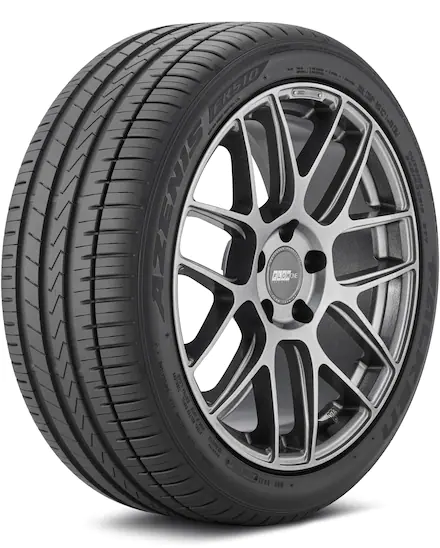
Falken Azenis FK510
- Designed for sedans, minivans, and crossover SUVs
- Features an asymmetric tread design that improves wet and dry performance
- Provides excellent ride comfort, low noise, and vibration
- Offers improved fuel efficiency with lower rolling resistance
- Durable with a 65,000-mile treadwear warranty
- Suitable for various weather conditions, including rain and light snow
- Available in a wide range of sizes to fit many vehicle types
Price Check
Check the price of this tire at the following retailers:
TireRack SimpleTire PriorityTire DiscountedWheelWarehouse AmazonDon’t know the correct size tire to purchase? Start here!
The Falken Azenis FK510 represents an excellent mid-range option in the ultra-high-performance summer tire category. This tire delivers impressive capabilities at a more accessible price point than many premium competitors.
Key features include Falken’s 4D Nano Design technology, which optimizes the interaction between silica and polymer at the molecular level for enhanced performance. The asymmetric tread design incorporates rigid outside shoulder blocks for cornering stability and wide circumferential grooves with switchback siping for wet performance.
On dry roads, the Azenis FK510 provides responsive handling with good grip during aggressive driving. Wet performance is a highlight, with excellent hydroplaning resistance and predictable handling on wet surfaces.
With a UTQG rating of approximately 300, this tire offers reasonable treadwear for its performance category. It’s compatible with a wide range of vehicles from sports coupes to performance sedans and even some sporty crossovers.
Pros:
- Excellent value for the performance delivered
- Impressive wet traction
- Good balance of comfort and handling
- Wide size range availability
Cons:
- Not as refined as premium options
- Road noise can increase with wear
- Steering feel not as precise as top-tier options
Nitto NT555 G2

- High-performance summer tire for sports cars and sedans
- Asymmetric tread for superior dry and wet grip
- Micro-groove siping boosts light snow traction
- Dry handling is precise and stable
- Good hydroplaning resistance and wet stopping distance
- Comfortable and relatively quiet ride.
30,000-mile tread life expectancy - Designed to improve fuel efficiency with low rolling resistance
Price Check
Check the price of this tire at the following retailers:
TireRack SimpleTire PriorityTire DiscountedWheelWarehouse AmazonDon’t know the correct size tire to purchase? Start here!
The Nitto NT555 G2 is a popular choice among enthusiasts looking for a high-performance summer tire with an emphasis on straight-line grip and value. This tire is particularly favored in the muscle car and modern performance car communities.
The NT555 G2 features a silica-enriched tread compound and an asymmetric tread pattern with large, rigid outside shoulder blocks. Two wide center ribs enhance straight-line stability and steering response, while large circumferential grooves provide channels for water evacuation.
In dry conditions, the NT555 G2 delivers excellent straight-line grip and good cornering capabilities. The tire performs well in wet conditions too, though it’s not quite at the level of the top premium options in extreme wet situations.
With a UTQG rating of 320, the NT555 G2 offers good treadwear expectations for its category. It’s particularly popular for American muscle cars, modern performance cars, and sports coupes.
Pros:
- Excellent straight-line grip
- Good value for performance delivered
- Decent treadwear for category
- Popular in the enthusiast community
Cons:
- Not as refined in handling as premium options
- Wet performance good but not class-leading
- Can be noisy on certain vehicles
Kumho Ecsta PS31

- Ultra-high performance summer tire for sports cars, muscle cars, and high-powered sedans
- Asymmetric tread pattern with silica-enhanced compound
- Excellent dry road performance with exceptional grip and handling
- Good wet traction and hydroplaning resistance
- Comfortable ride with low noise levels
- Excels in warm weather and sporty driving conditions
- Suitable for street use and occasional track days
Price Check
Check the price of this tire at the following retailers:
TireRack SimpleTire PriorityTire DiscountedWheelWarehouse AmazonDon’t know the correct size tire to purchase? Start here!
The Kumho Ecsta PS31 stands out as one of the best budget-friendly options in the high-performance summer tire category. Despite its accessible price point, this tire delivers impressive capabilities that make it a favorite among value-conscious enthusiasts.
The Ecsta PS31 features a high-grip tread compound and an asymmetric tread pattern with solid center ribs for steering response. Wide shoulder blocks enhance cornering stability, while four main grooves provide channels for water evacuation.
On dry roads, the Ecsta PS31 delivers responsive handling with good grip during spirited driving. Wet performance is surprisingly capable for its price point, with decent hydroplaning resistance and predictable handling characteristics.
With a UTQG rating of 340, this tire offers above-average treadwear expectations for its category. It fits a wide range of vehicles from compact sports cars to mid-size performance sedans.
Pros:
- Exceptional value proposition
- Good all-around performance
- Above-average treadwear for category
- Wide size availability
Cons:
- Not as refined or capable as premium options
- Wet performance adequate but not class-leading
- Less steering precision than more expensive alternatives
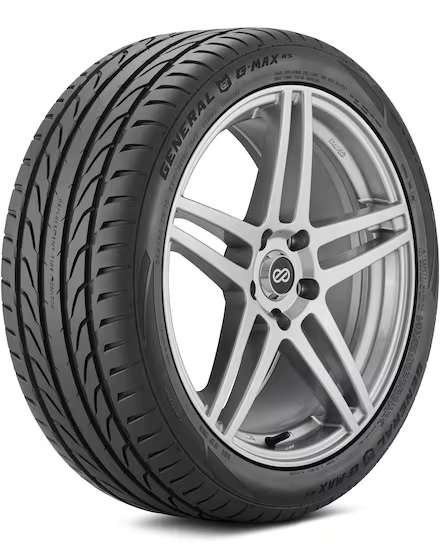
General G-MAX RS
- Budget performance tire that costs 30-40% less than premium competitors
- SmartGrip Technology with asymmetric tread for excellent dry/wet grip
- Silica-enhanced compound maintains flexibility across temperature ranges
- W/Y speed ratings (168-186 mph) suitable for high-performance vehicles
- Excellent hydroplaning resistance with AquaChannel water evacuation
- StabiliTread Technology delivers precise steering response and feedback
Price Check
Check the price of this tire at the following retailers:
TireRack SimpleTire PriorityTire DiscountedWheelWarehouse AmazonDon’t know the correct size tire to purchase? Start here!
The General G-MAX RS represents perhaps the best value proposition in the performance summer tire category, offering impressive capabilities at a price point well below many competitors.
Wet traction is handled surprisingly well through the tire’s SmartGrip Technology and optimized silica compound. The asymmetric tread pattern features wide circumferential grooves and specialized sipe design that maintain grip even in moderate rain. While not matching the absolute best in heavy downpours, the G-MAX RS delivers wet performance that exceeds expectations for its price point.
Handling characteristics are responsive and predictable, with the tire’s StabiliTread Technology enhancing cornering stability and steering precision. While not as razor-sharp as premium offerings, the G-MAX RS delivers confident handling that will satisfy most enthusiasts.
Durability is a strong point, with General’s innovative compound formulation and reinforced internal construction helping to extend tread life. Many drivers report 25,000+ miles before replacement, which is impressive for a performance summer tire in this price range.
Noise levels are well-controlled initially, though some drivers report increased road noise as the tires wear. The tire strikes a good balance between performance and comfort, particularly given its budget-friendly nature.
Pros:
- Exceptional value for money
- Better-than-expected wet and dry grip
- Good tread life for category and price
- Visual alignment indicators
- Comfortable ride for a performance tire
Cons:
- Not as sharp handling as premium brands
- Wet braking distances longer than class leaders
- Less prestigious brand image
Dunlop Sport Maxx RT2
The Dunlop Sport Maxx RT2 (Road & Track 2) represents a strong offering in the high-performance summer tire category, building on Dunlop’s motorsport heritage.
The tire features Dunlop’s Adaptive Performance Compound, which combines various polymers to deliver consistent performance across a range of temperatures. The asymmetric tread pattern includes massive outer shoulder blocks for cornering stability and power braking blocks designed to enhance stopping power.
On the road, the Sport Maxx RT2 delivers excellent steering response and feedback, with particularly impressive cornering stability. Dry grip is a strong point, with short braking distances and confident handling. Wet performance is also good, though not class-leading.
Tread life is average for the category, with users reporting approximately 20,000-25,000 miles before replacement. Pricing is mid-range, typically $150-$250 per tire depending on size.
Pros:
- Excellent steering precision and feedback
- Strong dry grip and cornering stability
- Good high-speed stability
- Competitive pricing
Cons:
- Wet performance good but not best-in-class
- Ride can be firm on rough roads
- Tread life could be better
How to Choose the Right Summer Tire for Your Needs
When selecting summer tires, consider these key factors:
- Driving style: More aggressive drivers should prioritize grip and responsiveness, while casual drivers might value comfort and longevity.
- Local climate: If you experience frequent summer rain, prioritize wet performance. For predominantly dry conditions, focus on dry grip.
- Vehicle type: Match the tire to your vehicle’s performance capabilities. High-horsepower cars benefit from tires with higher grip levels.
- Budget considerations: Premium tires generally offer better performance but at a higher cost. Mid-range options often provide the best value.
- Size compatibility: Ensure you select the correct size according to your vehicle manufacturer’s specifications.
By carefully weighing these factors against the specific strengths and weaknesses of each tire in our list, you can select the perfect summer tire for your vehicle and driving needs.
Maintaining Your Summer Tires for Optimal Performance and Longevity
To get the most from your summer tires, follow these maintenance tips:
- Monitor tire pressure regularly, as both under-inflation and over-inflation can reduce performance and accelerate wear.
- Rotate your tires every 5,000-7,000 miles to ensure even wear patterns.
- Check alignment if you notice uneven wear or pulling to one side.
- Inspect tires regularly for damage, foreign objects, and irregular wear patterns.
- Store summer tires properly during winter months in a cool, dry location away from direct sunlight and ozone sources.
- Replace tires when tread depth reaches 4/32″ or if they’re more than six years old, regardless of tread depth.
Following these guidelines will help maximize the performance and lifespan of your summer tires, ensuring you get the best value from your investment while maintaining optimal safety and handling characteristics.
Choosing the Right Summer Tire for Your Needs
When selecting the perfect summer tire for your vehicle, consider these key factors:
- Your driving style: More aggressive drivers should prioritize grip and handling, while those seeking a balance might prefer tires with better comfort and longevity.
- Local weather conditions: If you frequently drive in rainy conditions, prioritize tires with excellent wet performance ratings.
- Vehicle type: Match the tire to your vehicle’s performance capabilities and your expectations. A high-horsepower sports car will benefit from premium performance tires, while a luxury sedan might be better suited to tires that balance performance with comfort.
- Budget considerations: Remember that with tires, you often get what you pay for. Premium tires generally offer better performance and technology, but several mid-range options provide excellent value.
- Sizing: Always adhere to your vehicle manufacturer’s recommended tire size specifications for optimal performance and safety.
By considering these factors alongside our detailed reviews, you’ll be well-equipped to select the summer tire that best meets your specific needs and preferences. The right set of summer tires can transform your warm-weather driving experience, providing enhanced safety, performance, and enjoyment on the road.
Understanding Summer Tire Technology
Before diving into specific recommendations, it’s important to understand what makes summer tires unique. These specialized tires typically feature:
- Softer rubber compounds that provide exceptional grip in warm conditions
- Less siping and fewer grooves, maximizing road contact
- Stiffer sidewalls for improved cornering stability and steering response
- Specialized tread patterns designed to evacuate water efficiently
- Optimized performance in temperatures above 45°F (7°C)
Summer tires excel in both dry and wet warm conditions but sacrifice performance in cold weather and snow. The rubber compounds stiffen significantly when temperatures drop, compromising grip and potentially leading to cracking if used in freezing conditions.
Conclusion: Finding Your Perfect Summer Tire
Selecting the ideal summer tire involves balancing performance priorities, vehicle requirements, regional conditions, and budget constraints. The premium options like the Michelin Pilot Sport 4S and Continental ExtremeContact Sport deliver exceptional capabilities across all categories but command higher prices. Mid-range choices including the Falken Azenis FK510 and Hankook Ventus S1 Evo3 offer compelling value with minor compromises. Budget-friendly alternatives like the Firestone Firehawk Indy 500 and Kumho Ecsta PS31 provide accessible entry points to true summer tire benefits.
Consider your specific driving environment, typical conditions, and performance expectations when making your selection. Those in rainy regions should prioritize wet performance, while drivers in consistently dry areas might focus on ultimate grip and responsiveness. Remember that even the most affordable summer tire will typically outperform an all-season option in warm weather, making any choice from this list a worthwhile upgrade for the summer driving season.
Whatever your selection, proper maintenance remains essential. Monitor tire pressures regularly, rotate according to manufacturer recommendations, and remember to switch to appropriate tires when temperatures consistently fall below 45°F. With the right summer tires equipped, you’ll experience enhanced safety, improved handling, and a more engaging driving experience throughout the warm-weather months.
FAQs About Summer Tires
What temperature should I switch to summer tires?
Summer tires should be installed when temperatures consistently stay above 45°F (7°C). Below this temperature, the specialized rubber compounds in summer tires begin to harden and stiffen, significantly reducing their grip and traction capabilities. This temperature threshold isn’t just a guideline—it’s a critical safety consideration. When summer tire compounds become cold and rigid, they cannot conform to road surfaces effectively, leading to longer braking distances and reduced handling performance. Conversely, you should switch back to all-season or winter tires before fall temperatures consistently drop below this 45°F mark to maintain optimal safety and performance.
How long do summer tires typically last?
Summer tire lifespan varies significantly based on several factors including driving style, vehicle type, road conditions, and maintenance practices. On average, quality summer tires last between 20,000 to 40,000 miles. Premium options like the Michelin Pilot Sport 4S often exceed 30,000 miles due to advanced compound technologies and construction methods. More performance-focused tires with softer compounds may wear faster, particularly if driven aggressively or used for track days. Regular rotation every 5,000-7,000 miles, proper inflation maintenance, and correct wheel alignment can significantly extend tire life. Additionally, storing summer tires properly during winter months helps preserve the rubber compounds and prevents premature aging or cracking.
Can I use summer tires in light rain?
Yes, modern summer tires are specifically engineered to perform excellently in wet conditions, including moderate to heavy rain. In fact, many premium summer tires outperform all-season alternatives in wet weather due to their advanced tread patterns and specialized silica-enhanced compounds. The wide circumferential grooves and strategically placed channels in summer tire treads efficiently evacuate water from the contact patch, reducing hydroplaning risk and maintaining grip on wet roads. Tires like the Continental ExtremeContact Sport and Goodyear Eagle F1 Asymmetric 6 are particularly noted for their exceptional wet-weather capabilities. However, summer tires are not designed for standing water, flooding conditions, or any winter precipitation including snow or ice.
What’s the difference between summer tires and all-season tires?
Summer tires and all-season tires differ fundamentally in their design philosophy and performance characteristics. Summer tires use softer, more specialized rubber compounds that remain flexible and grippy in warm temperatures but harden in cold weather. They feature less aggressive tread patterns with fewer sipes and shallower depths, maximizing road contact for superior dry and wet grip, shorter braking distances, and more precise handling. All-season tires compromise by using harder compounds and more complex tread patterns to provide acceptable performance across a wider temperature range, including light winter conditions. While all-season tires offer year-round convenience, summer tires deliver significantly better warm-weather performance in cornering, braking, and handling precision. The tradeoff is that summer tires become unsafe below 45°F, requiring seasonal tire changes in regions with cold winters.
Are summer tires worth the extra cost compared to all-season tires?
For drivers who prioritize performance, safety, and driving engagement during warm months, summer tires absolutely justify their cost. The performance advantages are substantial and measurable: summer tires typically reduce braking distances by several feet compared to all-season alternatives, provide dramatically better cornering grip, and offer more precise steering response. These improvements directly translate to enhanced safety during emergency maneuvers and more confident, enjoyable driving. Additionally, the improved fuel efficiency of many summer tires can partially offset their cost over time. However, the value proposition depends on your circumstances. If you live in a region requiring seasonal tire changes, you’ll need to factor in the cost of a second set of wheels or twice-yearly mounting services. For drivers in mild climates who never experience freezing temperatures, dedicated summer tires make excellent sense. For those facing harsh winters, the combination of summer and winter tire sets provides optimal performance year-round, though at higher total cost than all-season compromises.
Do summer tires improve fuel economy?
Quality summer tires can indeed improve fuel economy compared to all-season alternatives, though the gains are typically modest—generally in the range of 1-3% improvement. This efficiency comes from several design factors: summer tires often feature lower rolling resistance due to their optimized tread compounds and patterns, their stiffer construction reduces energy-wasting flex, and their shallower tread depths decrease the amount of rubber deformation during rotation. Tires specifically engineered with fuel efficiency in mind, like certain models in the Continental and Michelin lineups, incorporate low rolling resistance technologies without significantly compromising grip. However, it’s important to note that aggressive driving styles, improper inflation, and performance-focused summer tires with very soft compounds may actually decrease fuel economy. The fuel efficiency benefits are most noticeable with grand touring summer tires that balance performance with efficiency considerations.
Can I mix summer tires with all-season tires on my vehicle?
Mixing summer tires with all-season tires on the same vehicle is strongly discouraged and can create dangerous handling imbalances. Different tire types have fundamentally different grip levels, tread patterns, and performance characteristics that can cause unpredictable vehicle behavior, particularly during emergency maneuvers or adverse conditions. If summer tires are mounted on the front axle with all-seasons on the rear (or vice versa), the vehicle may experience unbalanced braking, inconsistent cornering behavior, and potentially dangerous oversteer or understeer characteristics. Additionally, traction control and stability control systems are calibrated expecting similar grip levels at all four corners—mismatched tires can confuse these systems and reduce their effectiveness. If you must replace fewer than four tires due to damage, the new tires should match the existing ones in type, size, and ideally brand and model. For optimal safety and performance, always replace all four tires simultaneously with the same model.
How do I know when my summer tires need to be replaced?
Several indicators signal that summer tire replacement is necessary. The most straightforward method is the tread depth measurement—summer tires should be replaced when tread depth reaches 4/32 of an inch, which is actually deeper than the legal minimum of 2/32 inch. At 4/32 inch, wet-weather performance begins to degrade significantly, increasing hydroplaning risk and extending braking distances. You can check tread depth using a dedicated gauge, the penny test (insert a penny with Lincoln’s head upside down—if you see the top of his head, replace the tires), or by examining the built-in tread wear indicators in the tire grooves. Beyond tread depth, inspect for visible signs of damage including sidewall cracks, bulges, cuts, or punctures. Uneven wear patterns may indicate alignment issues that should be addressed. Additionally, age matters—even with adequate tread, summer tires older than six years should be replaced due to rubber compound degradation, regardless of mileage or appearance.
What’s the break-in period for new summer tires?
New summer tires require a break-in period of approximately 500 miles before they achieve their full performance potential. During manufacturing, tires are coated with release agents that help them separate from their molds—these compounds remain on the tire surface and need to wear away for optimal grip. Additionally, the tire’s internal structure and tread blocks need to properly seat and conform through normal driving cycles. During this break-in period, drive conservatively and avoid aggressive acceleration, hard braking, and high-speed cornering. Gradually increase your driving intensity as you approach the 500-mile mark. This break-in period is particularly important for high-performance summer tires where maximum grip is crucial. Some manufacturers recommend specific break-in procedures, so consult your tire documentation. Proper break-in not only ensures optimal performance but also helps establish even wear patterns that will extend the tire’s overall lifespan.
Do summer tires make more road noise than all-season tires?
Summer tires’ noise characteristics vary significantly by model and design priorities, making generalizations difficult. Some premium summer tires like the Michelin Pilot Sport 4S and Pirelli P Zero actually produce less road noise than many all-season alternatives due to advanced noise-canceling technologies, optimized tread patterns, and sophisticated rubber compounds. However, ultra-high-performance summer tires with aggressive tread patterns and maximum-grip compounds often generate more noise than comfort-oriented all-season options. The noise also tends to increase as summer tires wear, particularly in models that prioritize performance over refinement. Factors affecting noise levels include tread block size and arrangement, the number and width of grooves, sidewall construction, and the specific rubber compound formulation. If low noise is a priority, look for summer tires specifically engineered with noise reduction technologies, and check professional reviews that include decibel measurements at various speeds. Generally, grand touring summer tires emphasize quietness more than ultra-high-performance models.