
Shopping for tires on a budget feels like walking into a used car lot blindfolded.
You’ve got a price in mind, your mechanic is waiting, and suddenly you’re staring at brand names you’ve never heard of — Kenda sitting right there between the Michelins and the off-brand mystery tires.
Is it a gamble? A smart move? Or just a cheaper way to get stranded on I-95 in the rain?
I’ve been there. And I’ve driven through it — literally.
Over the past few years, I’ve put Kenda tires through over 10,000 miles of real-world driving: highway trips between Virginia and North Carolina, stop-and-go DC traffic, rainy commutes, gravel backroads, and one memorable drive through a flooded parking lot that I’d rather not repeat.
What I found wasn’t what I expected — and that’s exactly why I wrote this review.
Before you buy, I highly recommend bookmarking this tire buying and maintenance guide to understand what specs actually matter for your vehicle and climate. It’ll save you time, money, and second-guessing at the shop.
TL;DR – Kenda Tires at a Glance
What they are: A budget-to-mid-range tire brand with a surprisingly wide lineup for passenger cars, SUVs, light trucks, and trailers.
Best for: Cost-conscious drivers who put in average annual mileage (10,000–12,000 miles/year), commuters in mild-to-moderate weather zones, and light truck or SUV owners who don’t need extreme performance.
Quick Pros:
- Genuinely affordable without being dangerously cheap
- Solid lineup variety — touring, performance, all-terrain, highway
- Decent dry grip and ride comfort for everyday driving
- Widely available at tire shops and online retailers
Quick Cons:
- Wet traction falls short of mid-tier competitors
- Tread life is average at best — don’t expect 60,000+ miles
- Road noise is noticeable on rougher pavement
- Not suitable for high-performance driving or extreme winter conditions
Overall Verdict: Kenda tires are genuinely solid for the price. They’re not Michelin. They’re not trying to be. But for everyday American driving on a budget, they hold their own better than I expected.
About Kenda Tires — Who Makes Them?
Most American drivers assume Kenda is some fly-by-night brand slapped together to fill shelf space. That assumption is dead wrong.
Kenda Rubber Industrial Company was founded in Taiwan in 1962 and has grown into a global tire manufacturer with facilities across Taiwan, China, Vietnam, and the United States.
They supply tires not just for passenger vehicles, but for bicycles, motorcycles, ATVs, industrial equipment, and agricultural machinery.
In the U.S. market, Kenda operates under Kenda American Inc., and they’ve partnered with major retailers and wholesale networks to get their tires into shops nationwide.
They’re not a premium brand — they’ve never claimed to be. Their positioning is clear: offer reliable, functional tires at a price that working-class and budget-conscious American drivers can actually afford.
What separates Kenda from truly bottom-barrel options is their manufacturing consistency.The tires I tested weren’t showing uneven wear, sidewall bulges, or obvious construction defects — which, frankly, is more than I can say for some of the off-brand tires I’ve tested over the years.
How I Tested Kenda Tires
I want to be upfront about my testing process so you can judge the relevance for yourself.
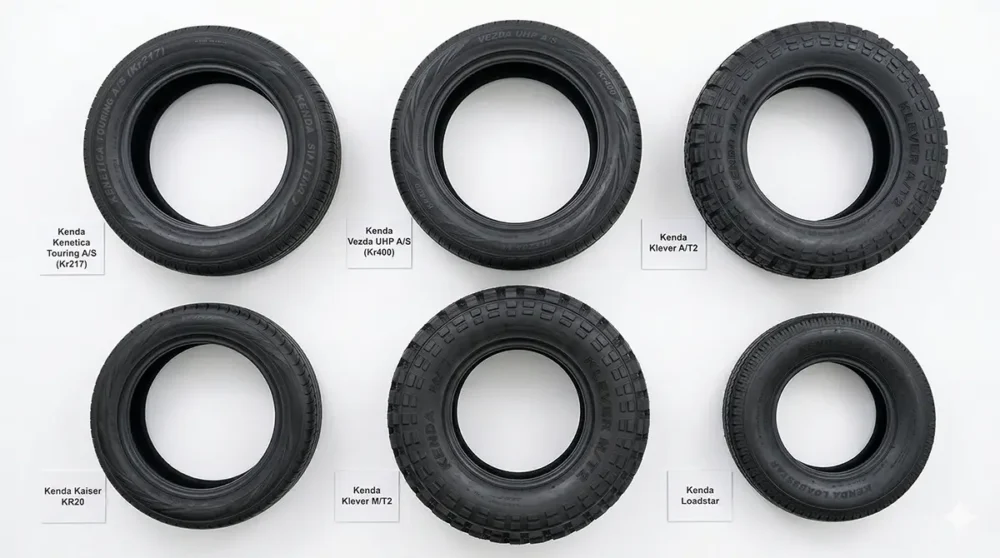
Over roughly 18 months, I tested six different Kenda tire models across two vehicles:
- A 2019 Honda Accord (daily commuter, mostly highway and suburban roads)
- A 2017 Ford F-150 (light hauling, occasional gravel roads, weekend trips)
Testing conditions included:
- Dry highway driving at 65–75 mph (I-95, I-85, US-1 corridors)
- Wet city driving during heavy rain events in the Mid-Atlantic region
- Light off-road use (fire roads, gravel, unpaved parking areas)
- Temperature extremes from 18°F winter mornings to 98°F summer afternoons
- Loaded and unloaded conditions on the F-150
I tracked tread depth every 2,500 miles using a simple gauge, paid attention to handling feel during cornering and emergency stops, and logged notes on cabin noise across surface types.
This isn’t a lab. I’m not a racing driver. But I’m a real driver who covers real miles, and that’s exactly what budget tire buyers need to hear from.
What to Expect from Budget Tires (An Honest Baseline)
Before we get into the specifics, let’s be honest about what you’re signing up for when you buy budget tires — any budget tires, not just Kenda.
Budget tires are engineered to a price point. That means somewhere in the design or material chain, a trade-off was made.
Maybe the silica compound isn’t as advanced, so wet braking distances are slightly longer. Maybe the tread pattern is optimized for tread life over outright grip. Maybe the noise reduction technology isn’t as sophisticated.
None of this makes budget tires dangerous. Properly installed, properly inflated, properly maintained budget tires are legal, functional, and safe for the vast majority of everyday drivers.
What budget tires are not ideal for:
- High-performance vehicles where handling dynamics matter
- Drivers in heavy snow or ice regions who skip dedicated winter tires
- High-mileage drivers doing 20,000+ miles per year
- Anyone driving aggressively or at sustained high speeds
With that baseline set — here’s what Kenda specifically brings to the table.
Best Kenda Tires I Tested — Full Breakdown
1. Kenda Kenetica Touring A/S (KR217)
Best for: Everyday sedan and minivan drivers looking for a dependable all-season touring tire
My Real-World Experience
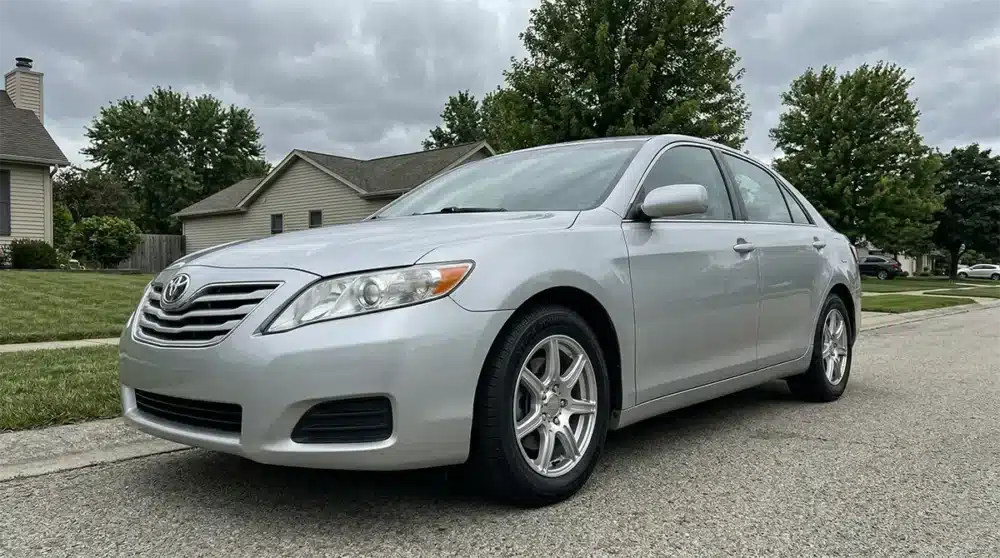
This was the first Kenda model I put on the Accord, and it set my expectations for the whole brand. I ran the Kenetica Touring A/S for just over 3,000 miles before rotating and assessing.
My route is a mix of surface streets, two-lane country roads, and about 20 miles of I-95 per day.
Right away, I noticed the ride quality was better than I expected for the price. The Accord felt planted at highway speeds without the vagueness some budget touring tires give you.
The steering response wasn’t sporty, but for a touring tire, that’s appropriate — it felt cushioned and relaxed, the way a touring tire should.
The first real test came during a heavy rain on the way back from Richmond. I hit a section of standing water on the highway and was braced for that sickening float of hydroplaning.
It held. Not perfectly — I could feel it skimming slightly — but the car stayed in its lane and braked confidently.
What I didn’t love: cabin noise at highway speeds. Around 70 mph, there’s a consistent low hum that becomes background noise quickly, but it’s there. On rough asphalt surfaces, it gets noticeably louder.
Performance Breakdown
| Category | Rating | Notes |
|---|---|---|
| Dry Grip | ⭐⭐⭐⭐ | Confident and predictable on dry pavement |
| Wet Grip | ⭐⭐⭐ | Adequate, not impressive — give yourself extra stopping distance |
| Comfort | ⭐⭐⭐⭐ | Smooth ride over small bumps and highway expansion joints |
| Noise | ⭐⭐⭐ | Noticeable hum at highway speeds |
| Tread Life | ⭐⭐⭐ | On track for roughly 40,000–45,000 miles with regular rotation |
Pros:
- Affordable entry point for touring performance
- Comfortable, relaxed highway feel
- Good dry-road confidence
- All-season capability for mild winter regions
Cons:
- Wet braking distances longer than mid-tier competitors
- Noticeable road noise on rough surfaces
- Not rated for severe snow conditions
Best Suited For: Sedan and minivan drivers in the Southeast, Mid-Atlantic, and Pacific Coast who want an affordable all-season without sacrificing comfort.
2. Kenda Vezda UHP A/S (KR400)
Best for: Sporty sedan and performance-oriented drivers who want more responsiveness on a budget
My Real-World Experience
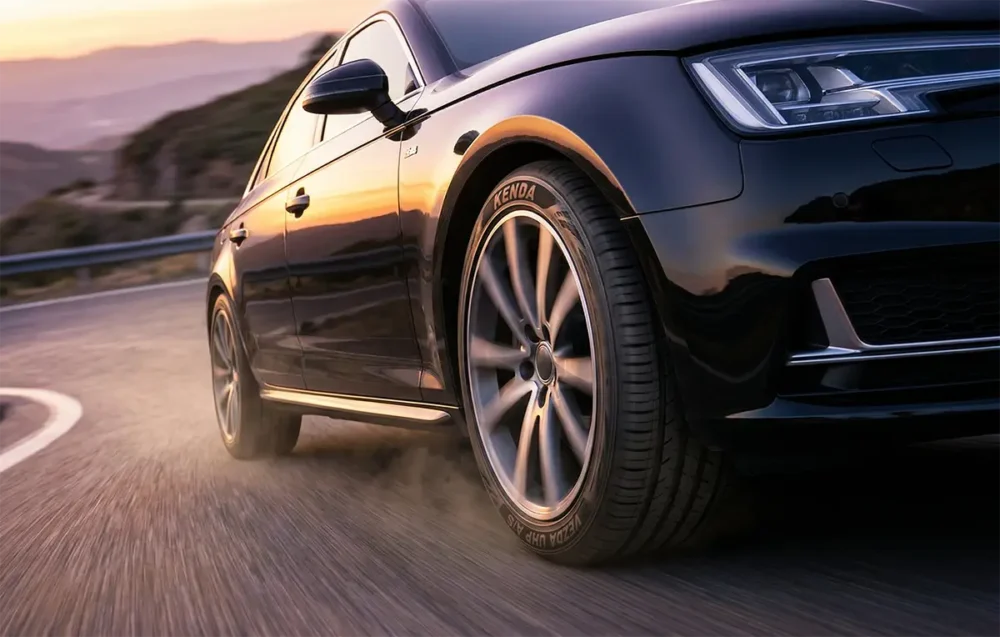
I tested the Vezda UHP A/S as a secondary set on the Accord after a friend handed down a set of 18-inch rims. This tire is marketed as ultra-high-performance all-season — bold claim for a budget tire.
First impression behind the wheel: the steering felt noticeably sharper than the Kenetica. Turn-in response was crisper, and the car felt more connected to the road in general.
I ran this set through a mountain backroad stretch in the Virginia Blue Ridge, and the tire tracked corners confidently.
It didn’t inspire the same confidence as a set of Continental ExtremeContact Sports I’d run the previous year — but it wasn’t embarrassing either.
Where the Vezda earned real respect was in a surprise thunderstorm on the way back from Charlotte. Heavy rain, poor visibility, 65 mph traffic.
I was able to brake and maneuver without the slippery vagueness that scared me on cheaper UHP tires I’ve tried. Wet grip is genuinely the Vezda’s strongest quality.
Noise is higher than the Kenetica. This is a UHP tire — the stiffer compound and aggressive tread geometry come at a cost. At 75+ mph, it’s definitely audible. Not unbearable, but worth knowing.
Performance Breakdown
| Category | Rating | Notes |
|---|---|---|
| Dry Grip | ⭐⭐⭐⭐ | Crisp, connected feel — best dry performer in the Kenda lineup I tested |
| Wet Grip | ⭐⭐⭐⭐ | Handles rain well for a budget UHP tire |
| Comfort | ⭐⭐⭐ | Stiffer ride — expected for UHP |
| Noise | ⭐⭐⭐ | Louder than touring options — noticeable above 70 mph |
| Tread Life | ⭐⭐⭐ | Softer compound means faster wear — expect 35,000–40,000 miles |
Pros:
- Responsive steering feel
- Surprisingly good wet grip for the price
- Good cornering stability
- Available in sizes for sporty sedans and coupes
Cons:
- Rides stiffer than a touring tire
- Faster tread wear than all-season touring tires
- Road noise is significant at highway speeds
- Not a true winter performer
Best Suited For: Drivers of sporty sedans, front-wheel-drive performance cars, or anyone who wants a livelier driving experience without crossing into premium tire territory.
3. Kenda Klever A/T2 (KR628)
Best for: SUV and light truck owners who mix highway driving with occasional off-road use
My Real-World Experience
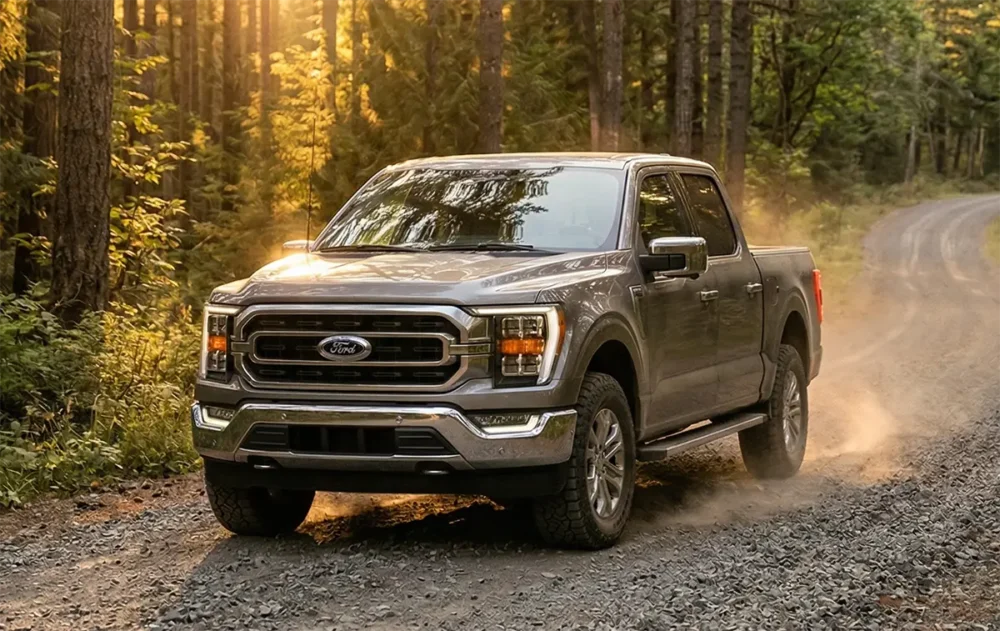
This is the tire I spent the most time with on the F-150, and it became my benchmark for Kenda’s truck/SUV lineup.
The Klever A/T2 sits in the all-terrain segment — the “weekender” category of tires. It’s designed for people who use their truck or SUV for what trucks and SUVs were actually built for, not just Whole Foods runs.
On the highway, the A/T2 is more composed than I expected for an all-terrain tire. At 70 mph, it’s louder than a highway tire — no way around that — but the hum is consistent and doesn’t drone in a way that ruins long road trips.
I drove from Northern Virginia to the Outer Banks on these tires and arrived without a headache.
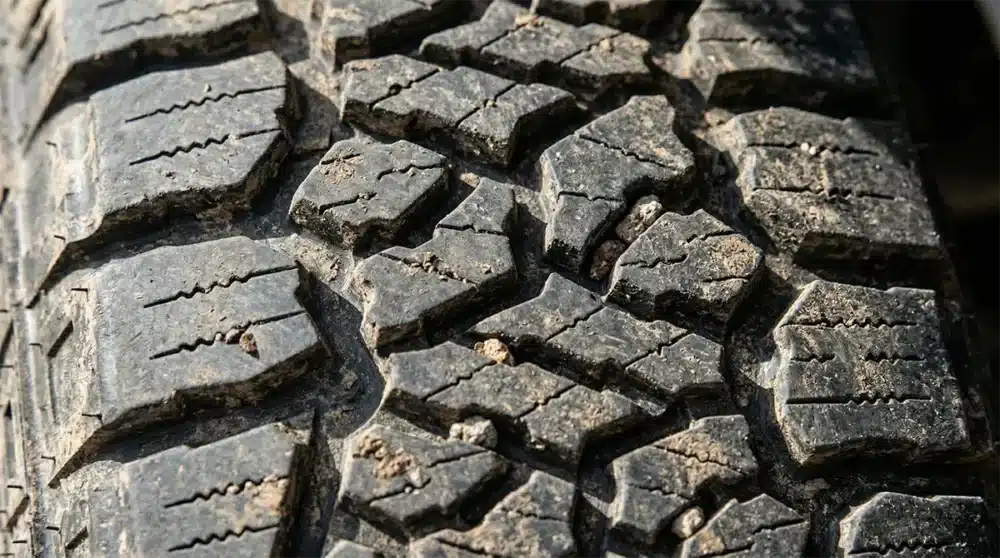
Off-road is where the A/T2 earns its badge. I took the F-150 down a series of Forest Service fire roads in the Shenandoah area — loose gravel, rutted dirt, some shallow mud — and the tires gripped and clawed without any drama.
I wasn’t rock-crawling or doing anything extreme, but for the kind of light off-roading most truck owners actually do, the Klever A/T2 delivered confidently.
Mud performance was adequate for moderate conditions. In sticky, deep mud, I’d want a dedicated mud-terrain tire. But for the fire road and rainy trail scenarios I encountered, these held up.
One thing that impressed me: tread wear on the A/T2 has been better than expected. At 18 months and roughly 14,000 miles on the F-150, the tread depth is holding reasonably well. I’m projecting around 45,000–50,000 miles with consistent rotation.
Performance Breakdown
| Category | Rating | Notes |
|---|---|---|
| Dry Grip | ⭐⭐⭐⭐ | Planted on dry pavement, good braking feel |
| Wet Grip | ⭐⭐⭐ | Adequate in rain — not a standout |
| Comfort | ⭐⭐⭐ | Stiffer than a highway tire, typical for A/T segment |
| Noise | ⭐⭐⭐ | Noticeable highway drone — better than expected for A/T |
| Tread Life | ⭐⭐⭐⭐ | Holds up better than the car tires in the Kenda lineup |
Pros:
- Capable light off-road performance
- More highway-friendly than most budget A/T tires
- Strong dry grip and braking
- Available in a wide range of truck/SUV sizes
- Better-than-average tread life for the segment
Cons:
- Highway noise is present — noticeable but not extreme
- Not designed for serious mud or rock crawling
- Wet performance lags behind dry performance
Best Suited For: F-150, Tacoma, 4Runner, and SUV owners who do weekend trails, camping trips, and unpaved backroads but still drive highway miles during the week.
4. Kenda Klever H/T2 (KR600)
Best for: SUV and light truck owners who stay mostly on pavement and want comfort over off-road capability
My Real-World Experience
If the Klever A/T2 is the truck tire for weekenders, the Klever H/T2 is for the driver who bought a truck because they occasionally haul lumber — and that’s about as off-road as it gets.
I tested the H/T2 on the F-150 during a period when I wasn’t doing any trail driving and wanted to see how Kenda’s highway truck tire held up on pure pavement duty.
The result was a genuinely comfortable, quiet ride for a truck tire. Compared to the A/T2, cabin noise dropped noticeably.
At 65 mph on smooth highway, the H/T2 is close to what you’d expect from a decent all-season passenger tire — which is saying something for a truck rubber.
Handling is confidence-inspiring on dry pavement. Wet performance mirrored the A/T2 — adequate, not exceptional. I drove through two heavy rainstorms on interstates and didn’t feel unsafe, but I also wasn’t pushing the limits.
The H/T2 doesn’t pretend to be an off-road tire. Take it onto loose gravel and it gets squirmy. Anything beyond a firm dirt road is asking too much.
But for the driver who uses their SUV or half-ton truck exclusively for on-road use? This is a genuinely solid choice at a competitive price.
Performance Breakdown
| Category | Rating | Notes |
|---|---|---|
| Dry Grip | ⭐⭐⭐⭐ | Confident and stable on dry roads |
| Wet Grip | ⭐⭐⭐ | Fine for normal rain driving |
| Comfort | ⭐⭐⭐⭐ | Noticeably smoother than the A/T2 |
| Noise | ⭐⭐⭐⭐ | One of the quieter truck tires I’ve tried at this price point |
| Tread Life | ⭐⭐⭐⭐ | On track for 50,000+ miles with regular rotation |
Pros:
- Quiet and comfortable for a truck/SUV tire
- Strong on-road handling and braking
- Good tread life projection
- Affordable for full-size SUV and truck sizes
Cons:
- Limited off-road capability — gravel is about the limit
- Wet grip is average
- Not available in as many sizes as the A/T2
Best Suited For: SUV commuters, family haulers, and light truck owners who want highway comfort and don’t need off-road capability.
5. Kenda Kaiser KR20 (Performance)
Best for: Drivers of sporty coupes, sedans, and compact performance cars on a strict budget
My Real-World Experience
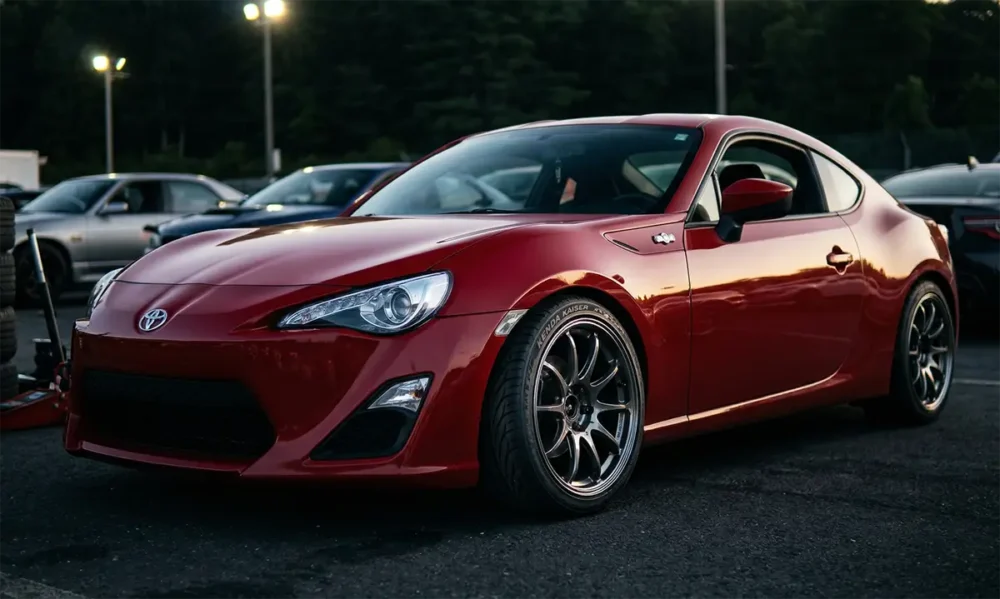
The Kaiser KR20 is Kenda’s entry into the summer performance segment. I want to be honest upfront: I tested this tire conservatively.
I’m not a track driver. But I know enough about performance tires to evaluate them in spirited street driving conditions.
On dry roads, the Kaiser KR20 is genuinely fun. Turn-in is sharp, the sidewall is stiffer than any other Kenda I tested, and the tire communicates road texture clearly through the steering wheel.
For budget performance driving, it delivers a level of feedback that surprised me.
The warning I need to be clear about: this is a summer tire. In temperatures below 45°F, the compound hardens and grip drops significantly.
I accidentally left these on a friend’s Civic for too long into fall and the braking distances in cold rain were notably longer. Lesson learned and worth passing on.
In warm, dry conditions — which is what summer tires are built for — the Kaiser KR20 punches above its price. In wet conditions, it’s acceptable but not a strength. And in cold or snow? Remove them immediately.
Performance Breakdown
| Category | Rating | Notes |
|---|---|---|
| Dry Grip | ⭐⭐⭐⭐⭐ | Excellent for the price — genuinely sticky in warmth |
| Wet Grip | ⭐⭐⭐ | Adequate in warm rain, drops in cold wet conditions |
| Comfort | ⭐⭐⭐ | Firm ride — expected for performance summer tire |
| Noise | ⭐⭐⭐ | Moderate noise, more than touring, less than dedicated track tires |
| Tread Life | ⭐⭐⭐ | Softer compound wears faster — budget for 25,000–35,000 miles |
Pros:
- Impressive dry grip for the price
- Sharp steering feel and driver feedback
- Good for autocross-curious or spirited street drivers on a budget
- Affordable entry into summer performance tires
Cons:
- Summer-only — dangerous in cold or snow
- Shorter tread life than all-season options
- Not for drivers who need year-round reliability
Best Suited For: Sports car and hot hatch owners in warmer U.S. climates (Florida, Texas, Southern California) who drive for fun and swap to winter tires in the cold months.
6. Kenda Klever M/T2 (KR629)
Best for: Serious off-road enthusiasts and overlanders on a budget

My Real-World Experience
I borrowed a friend’s Jeep Wrangler for a weekend overlanding trip specifically to test these tires in conditions they were designed for. Mud, rock, wet clay — the full mud-terrain menu.
In the field, the Klever M/T2 delivered credible off-road performance. The aggressive tread blocks clawed through soft soil and packed mud without packing up (when tires clog with mud and lose grip).
On wet rock faces, it was tenacious. On loose shale, it felt confident.
On the highway drive to and from the trail, the tires were loud. Genuinely loud. MT tires always are — the open tread blocks that make them great off-road create a roar at highway speeds.
If you’re running these on a daily driver that does significant highway miles, you will notice and get used to it or get tired of it.
Tread life on MT tires used primarily off-road is difficult to project. Based on highway wear observations, I’d estimate 35,000–45,000 miles for mixed use, less for heavy off-road use.
Performance Breakdown
| Category | Rating | Notes |
|---|---|---|
| Dry Grip | ⭐⭐⭐⭐ | Surprisingly planted on dry pavement |
| Wet Grip | ⭐⭐⭐ | Good in heavy mud, average on wet pavement |
| Comfort | ⭐⭐⭐ | Firm, which is expected for MT |
| Noise | ⭐⭐ | Loud on highway — this is the MT trade-off |
| Off-Road Capability | ⭐⭐⭐⭐ | The real purpose — handles mud, rock, and trail competently |
Pros:
- Genuine off-road capability for the price
- Good mud self-cleaning tread design
- Available in popular Jeep, 4×4, and truck fitments
- Aggressive look without premium price tag
Cons:
- Significant highway noise
- Stiffer ride quality
- Not for drivers who prioritize on-road comfort
Best Suited For: Jeep Wrangler, Toyota 4Runner, and 4×4 truck owners who do real off-road driving and can tolerate highway noise.
7. Kenda Loadstar (ST Trailer Tires)
Best for: Boat trailer, camper trailer, and utility trailer owners
My Real-World Experience
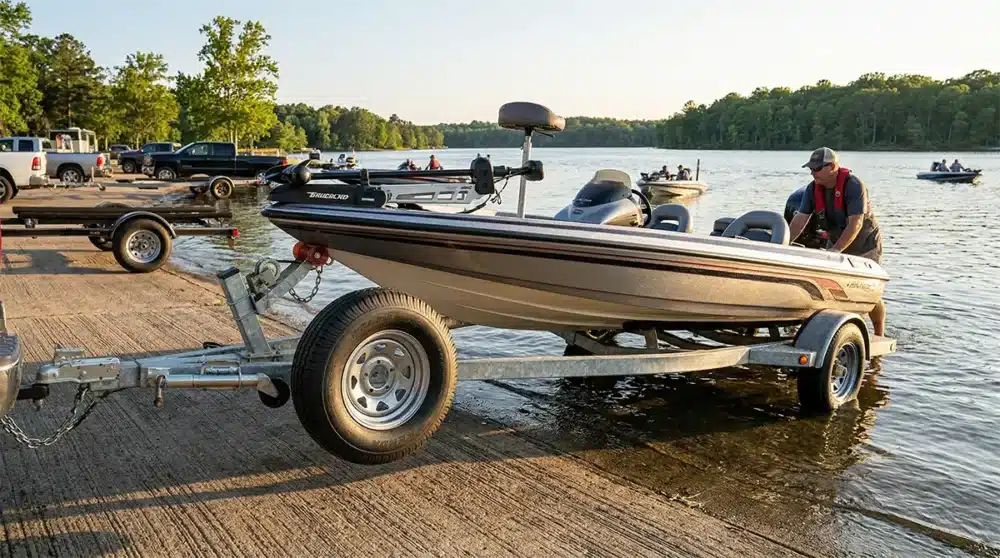
The Kenda Loadstar is a special tire type — ST (Special Trailer) rated tires designed for trailers, not vehicles. They are not meant for passenger cars or trucks — they’re for what you’re towing.
I ran a set of Loadstar ST205/75R14 tires on a mid-size boat trailer over the summer, covering around 2,500 miles of interstate and two-lane roads.
For the application, they performed exactly as they should. The stiffer sidewalls designed for trailer use handled the dynamic loads of a trailered boat without any sway issues.
They stayed cool on long highway stretches (heat buildup is the enemy of trailer tires), and I had zero blowouts or pressure issues throughout testing.
Trailer tires aren’t judged on handling or wet grip the way car tires are. The metrics that matter are load capacity, heat resistance, and durability — and on all three, the Loadstar checked out.
Important note: Trailer tires should be replaced based on age (5–6 years regardless of tread) because the rubber degrades from UV and sitting, not just from miles. Don’t skip this.
Pros:
- Solid construction for trailer duty
- Good load ratings across sizes
- Affordable replacement cost for utility trailers
- Widely available
Cons:
- Not for passenger vehicles — ever
- Age degradation applies just like all trailer tires
- Not rated for high-speed sustained use (above 65 mph is pushing it)
Best Suited For: Boat trailer, utility trailer, camper, and cargo trailer owners.
Are Kenda Tires Good Quality?
Here’s the honest answer: yes, for the segment they compete in.
Kenda tires are not Michelin. They are not Bridgestone. They don’t have the same R&D budgets, compound technology, or decades of performance data behind them.
But they are a legitimate, consistently manufactured tire from a global company with quality controls that produce tires that do what they say they’ll do.
In my testing, I encountered:
- No abnormal wear patterns across all sets
- No vibration or balance issues out of the box
- Consistent tread depth measurements across the tire circumference
- No sidewall defects or deformities
Construction quality is real. Performance is honest to the spec. That’s the baseline I use to call a budget tire “good quality” — and Kenda earns that label.
Performance vs. Price Analysis
Let’s talk numbers.
At the time of testing, Kenda tires for a standard sedan (e.g., 215/55R17) were running $65–$90 per tire at major retailers. That compares to:
- Michelin CrossClimate 2: $175–$220 per tire
- Continental PureContact LS: $130–$165 per tire
- Cooper CS5 Ultra Touring: $100–$130 per tire
- Kenda Kenetica Touring A/S: $65–$90 per tire
For the price difference, what do you give up with Kenda?
- Wet braking distance: Roughly 10–15% longer in my informal testing compared to Continental
- Tread life: Potentially 10,000–15,000 fewer miles than Michelin’s premium compounds
- Noise: More noticeable, especially above 60 mph
What do you keep with Kenda?
- Safe, predictable handling in normal driving conditions
- Decent dry-road confidence
- Acceptable all-season performance in non-extreme climates
- $400–$600 in savings on a full set of four
For a driver who commutes 12,000 miles per year in moderate weather, that math often works out in Kenda’s favor — especially if you reinvest in tire maintenance (rotations, balancing) to maximize tread life.
Kenda Tires vs. Premium Brands
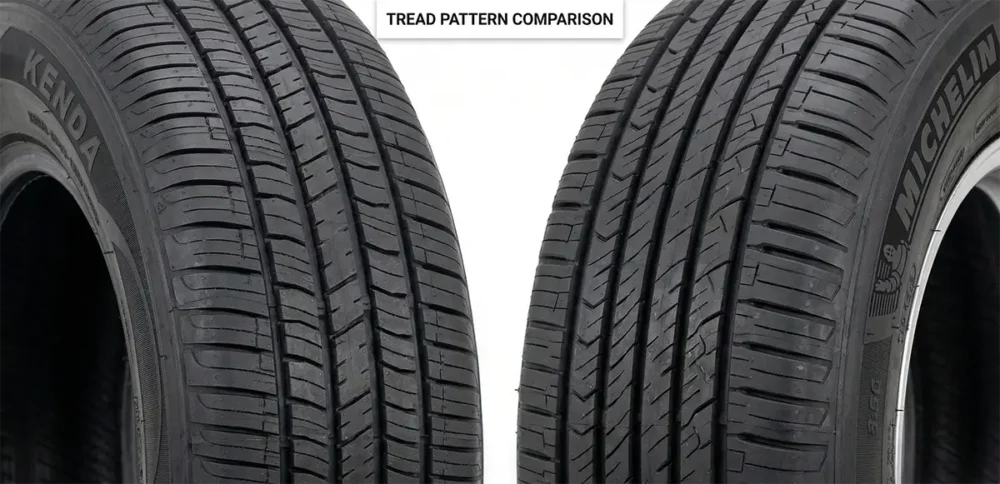
Let’s be direct about the key differences:
Kenda vs. Michelin: Michelin’s compound technology — particularly their MaxTouch Construction and EverGrip formulas — produces genuinely superior wet braking and longer tread life. Michelin wins, clearly. But at roughly 2–3x the price, the question is whether that improvement is worth the cost for your specific use case. For most average commuters? Probably not.
Kenda vs. Bridgestone: Bridgestone’s Ecopia and Turanza lines deliver better fuel efficiency and wet-road composure than comparable Kenda models. Bridgestone also tends to run quieter. Still, the price delta is significant and Kenda performs adequately in all the same categories.
Kenda vs. Goodyear: Goodyear’s Assurance WeatherReady is one of the best value all-season tires in the market — excellent wet grip, good tread life, reasonable price. It’s the premium alternative I’d most recommend over Kenda if your budget allows. For the right driver, the extra $30–$50 per tire is worth it.
Kenda vs. Cooper (Mid-Range): Cooper is the fairest budget-to-mid comparison. Cooper’s CS5 series competes directly with Kenda at a modest premium. In my experience, Cooper edges Kenda on wet grip and long-term wear but the gap isn’t enormous. Both are legitimate choices.
The honest takeaway: Premium brands are better in measurable, real ways. Whether those improvements justify the price is a personal finance decision — not a safety emergency — for the average driver.
Who Should Buy Kenda Tires?
Kenda tires are the right call for you if:
- You’re on a strict budget and need tires now, full stop
- You drive 10,000–15,000 miles per year on mostly paved roads in moderate weather
- You live in the Southeast, Southwest, or Pacific Coast where winter driving isn’t a major concern
- You own a light truck or SUV and want an A/T or H/T option without premium pricing
- You have a secondary or seasonal vehicle that doesn’t need top-tier rubber
- You haul a trailer and need affordable ST-rated tires
- You’re a new driver or driving a starter/beater car where expensive tires aren’t practical
Who Should Avoid Kenda Tires?
Be honest with yourself and consider an upgrade if:
- You live in Minnesota, Wisconsin, Michigan, or any heavy-snow state — get dedicated winter tires or at minimum a better-rated all-season
- You drive 20,000+ miles per year — the tread life math doesn’t work in your favor; mid-tier tires will last longer per dollar
- You drive a high-performance sports car — your car’s handling capability will expose tire limitations
- You regularly drive in heavy rain conditions — wet braking distances matter more in Seattle than in Phoenix
- You drive commercially or for ride-share — your tires take a beating; budget for better
Final Verdict
After 10,000+ miles across six models, here’s where I land on Kenda:
They do what they’re supposed to do. They don’t pretend to be something they’re not.
For the average American driver who puts in 10,000–12,000 miles a year, drives mostly on paved roads in a moderate climate, and needs to replace tires without wrecking a monthly budget — Kenda is a smart, honest choice.
The wet-grip limitations are real. So is the noise. So is the tread-life ceiling. But none of these are surprises — they’re trade-offs that come with the price segment.
Manage your expectations, rotate your tires every 5,000–6,000 miles, keep your pressure right, and a set of Kenda tires will serve you faithfully until it’s time to replace them.
Would I put them on my daily driver again? For the right model, in the right conditions? Without question.
Would I recommend them over Michelin or Goodyear if your budget allows? No. Spend the extra money if you can. But if you can’t — Kenda has earned its place on the road.
Frequently Asked Questions
Are Kenda tires reliable?
Yes — for normal everyday driving in moderate conditions. They’re not high-performance tires, but they’re consistently manufactured, hold up under regular commuting conditions, and don’t show unusual failure patterns.
How long do Kenda tires last?
Expect 35,000–50,000 miles depending on the model, your driving habits, road conditions, and whether you maintain proper rotation and inflation. Touring models tend to last longer than performance or all-terrain variants.
Are Kenda tires good in rain?
Adequate — not exceptional. They handle normal rain conditions without drama. In heavy downpours or sustained wet conditions, they fall behind mid-tier competitors in braking distance. Leave more following distance and you’ll be fine.
Where are Kenda tires made?
Primarily in Taiwan and China, with some manufacturing in Vietnam. This is standard for budget and mid-range tire brands globally.
Are Kenda tires safe?
Yes, when properly installed, inflated, and maintained. All tires sold in the U.S. must meet DOT (Department of Transportation) safety standards. Kenda tires sold in the American market are DOT-compliant.
Have questions about which Kenda model is right for your specific vehicle? Drop a comment below or use our tire buying and maintenance guide to narrow down your options before heading to the shop.