Learning to maintain your own vehicle isn’t just about saving money—though that’s certainly a compelling benefit. Basic car maintenance is a life skill that pays dividends in multiple ways.
When you understand how to perform simple upkeep on your vehicle, you’re taking control of one of your most significant investments. The average American spends over $9,000 annually on their vehicle, with maintenance and repairs accounting for a substantial portion of that cost. By handling even the most basic tasks yourself, you can reduce these expenses dramatically.
Beyond the immediate financial savings, DIY car maintenance empowers you with knowledge about your vehicle’s condition. You’ll be able to identify potential problems before they become expensive repairs, and you’ll develop confidence in understanding what your mechanic is talking about when more complex issues arise.
In this guide, we’ll walk through three levels of car maintenance tasks, organized by complexity and the tools required:
- Level 1: “No-Tools-Required” basics that anyone can master immediately
- Level 2: “Small Investment” tasks that require minimal tools but offer significant savings
- Level 3: “Weekend Warrior” projects that need basic tools but can save hundreds of dollars
Even if you never progress beyond Level 1, you’ll still save money and gain valuable knowledge about your vehicle. The key is starting small and building your skills gradually. Let’s begin with the simplest maintenance tasks that require absolutely no special tools.
- Level 1: The “No-Tools-Required” Basics: Start Your DIY Car Maintenance Journey
- Level 2: The “Small Investment” Tasks
- Level 3: The “Weekend Warrior” (Requires Basic Tools)
- Crucial Safety Section: What NOT to DIY
- Essential Tools for DIY Car Maintenance: Start Small, Save Big
- Conclusion: Becoming Your Car’s Best Friend
- FAQs About DIY Car Maintenance
Level 1: The “No-Tools-Required” Basics: Start Your DIY Car Maintenance Journey
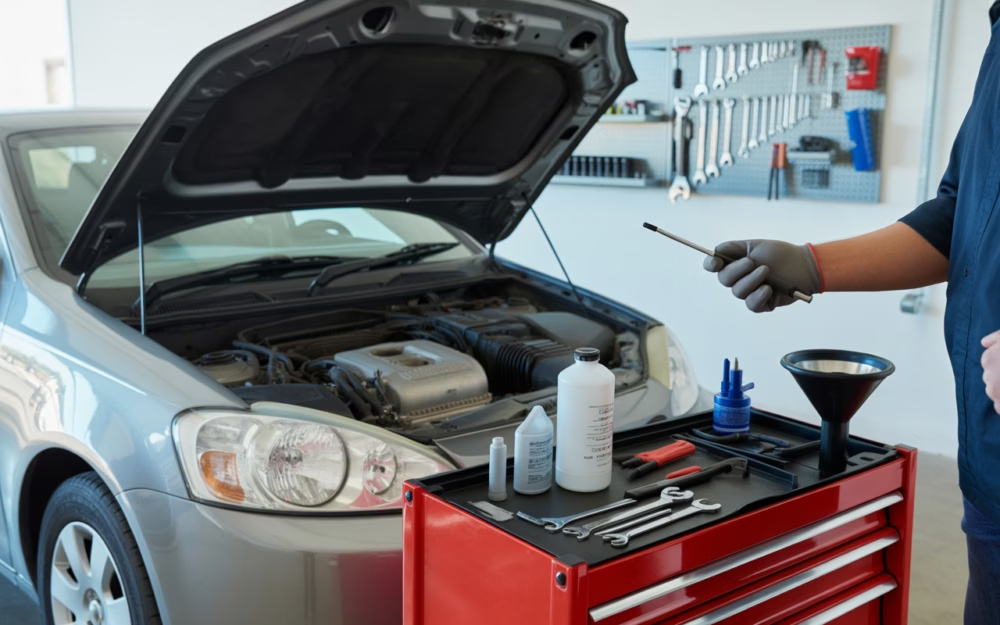
Ever stood at the service counter of a quick-lube place, staring at a bill that seems way too high for what was done? You’re not alone. The good news is that many routine car maintenance tasks require absolutely no tools and can be done in minutes, saving you both time and money.
These no-tools-required basics are the perfect entry point for anyone intimidated by car maintenance. They’re impossible to mess up, require zero mechanical knowledge, and deliver immediate cost savings. Even better, completing these simple tasks gives you a confidence boost that might inspire you to tackle more advanced maintenance down the road.
Think of these tasks as the “training wheels” of DIY car care. They’re designed to help you become more familiar with your vehicle without any risk of damaging something expensive. In just minutes, you can handle maintenance that shops routinely charge $20-50 to perform.
Let’s explore these beginner-friendly tasks that require nothing more than your hands and perhaps a paper towel or two. These simple procedures will keep your car running smoothly while keeping more money in your wallet where it belongs.
1. Windshield Wipers: The 2-Minute Upgrade That Saves You Cash
Windshield wipers might seem like a minor car component, but they’re crucial for safe driving in adverse weather conditions. When they start leaving streaks or making that annoying squeaking sound, it’s time for a replacement. But before you head to the shop, consider this: replacing them yourself is one of the easiest DIY car maintenance tasks you can perform.
Cost Comparison: DIY vs. Shop Replacement
The math here is simple and compelling:
At the shop:
- Wiper blades: $15-25 per blade
- Labor charge: $10-20
- Total cost: $40-70 for both wipers
DIY approach:
- Wiper blades: $15-25 per blade (same quality)
- Your time: About 2 minutes
- Total cost: $30-50 for both wipers
That’s a savings of $10-20 for just a couple minutes of work! Plus, many auto parts stores will even install them for free if you purchase the blades there, though knowing how to do it yourself gives you the freedom to buy online where prices are often better.
Step-by-Step Wiper Replacement Process
- Measure before you buy: Check your owner’s manual or measure your current blades to ensure you get the correct size. Many vehicles use different lengths for driver and passenger sides.
- Prepare the wiper arm: Gently pull the wiper arm away from the windshield until it locks in the “service position” – standing perpendicular to the glass.
- Place a towel on the windshield (more on this clever trick below).
- Locate the release mechanism: Most wipers use a simple hook tab or button that needs to be pressed to release the old blade.
- Remove the old blade: Press the tab or button and slide the blade off the hook of the wiper arm.
- Install the new blade: Slide the new wiper onto the hook until you hear it click into place. Make sure it’s secure by gently tugging on it.
- Lower the arm: Carefully return the wiper arm back to the windshield.
Hook Tab Mechanism Explained
Most modern vehicles use one of these common attachment methods:
- J-hook: The most common type, where the wiper arm has a hook that curves like the letter J. The blade has a matching slot with a tab you press to release.
- Bayonet/Side Pin: Some vehicles use a pin on the side of the wiper arm that slides into a slot on the blade.
- Push Button: These have a button on top of the wiper arm that you press to release the blade.
The packaging of your new wipers will typically indicate which vehicles they fit and include adapters if needed for different attachment styles.
The Towel Trick: Protecting Your Windshield
Here’s a pro tip that can save you from an expensive windshield repair: Before removing your old wiper blades, place a thick towel on the windshield glass under the wiper arm. Why? Because wiper arms are spring-loaded with significant tension to keep the blade pressed against your windshield during use. If the arm slips from your grip without a blade attached, it can snap back with enough force to crack or chip your windshield.
The towel provides a cushion that absorbs the impact if the arm slips, protecting your glass from potential damage. This simple precaution takes seconds but can save you hundreds in windshield repair costs.
Remember to remove the towel before lowering your wipers back to the windshield once the new blades are securely attached.
2. Fluid Top-Offs: The Easiest Money-Saving Maintenance
One of the simplest ways to save money on car maintenance is handling fluid top-offs yourself. Many service centers charge $10-20 just to add washer fluid that costs $3-4 per gallon! Learning to check and replenish your vehicle’s essential fluids not only saves money but helps you catch potential issues before they become expensive problems.
Identifying Fluid Reservoirs Under the Hood
Most modern vehicles have clearly marked fluid reservoirs under the hood. When you pop the hood, you’ll typically find:
- Windshield washer fluid: Usually a blue or black cap with a windshield/spray symbol
- Coolant/antifreeze reservoir: Often translucent with “MIN” and “MAX” markings
- Engine oil: Identified by the dipstick with an oil can icon on the handle
- Brake fluid: Small reservoir near the firewall (driver’s side) with a brake symbol
- Power steering fluid: Small reservoir with a steering wheel symbol (if applicable)
Always consult your owner’s manual if you’re unsure which reservoir is which. The manual will show exact locations for your specific vehicle model.
Washer Fluid Procedure: The Ultimate DIY No-Brainer
Adding windshield washer fluid is perhaps the easiest maintenance task:
- Locate the washer fluid reservoir (usually has a windshield or spray nozzle icon)
- Unscrew the cap (typically blue or black)
- Pour in washer fluid until it reaches the “FULL” line
- Replace the cap securely
Pro Tip: In winter climates, use winter-rated washer fluid with antifreeze properties. In summer, you can use bug-removing formulations for better cleaning power.
Checking Coolant Levels Safely
Coolant/antifreeze is crucial for preventing engine overheating, but checking it requires caution:
- NEVER open the radiator cap when the engine is hot – serious burns can result
- Instead, check the coolant overflow reservoir (translucent plastic tank)
- Engine cold: Fluid should be between “MIN” and “MAX” lines
- If low, add a 50/50 mix of coolant and distilled water
Important Safety Note: Only add coolant when the engine is cool. If you need to add coolant frequently, you likely have a leak that needs professional attention.
Proper Dipstick Reading Technique for Oil Level
Checking your oil level is simple but requires the correct technique:
- Park on level ground with the engine off (ideally cool, or after sitting 5-10 minutes if warm)
- Locate the oil dipstick (usually has a brightly colored loop handle)
- Pull it out completely and wipe clean with a lint-free cloth or paper towel
- Reinsert the dipstick fully, then pull it out again
- Observe where the oil film ends on the dipstick relative to the “MIN/MAX” or “L/H” markings
- If below or near minimum, add the recommended grade of oil for your vehicle
Pro Tip: Check your oil level regularly (every other fuel fill-up is a good habit). Sudden drops in oil level can indicate leaks or consumption issues that need attention before they cause expensive damage.
By mastering these simple fluid checks, you’ll save money on routine maintenance visits while gaining valuable knowledge about your vehicle’s condition.
Level 2: The “Small Investment” Tasks
Moving up from basic maintenance, Level 2 tasks require a modest tool investment of $50-150 but deliver substantial long-term savings. These jobs typically take 30-60 minutes and can save you $100-300 annually.
The beauty of this level is that the tools you purchase will serve you for decades—that $30 socket set or $40 multimeter pays for itself after just one or two uses.
These intermediate tasks include cabin air filter replacements (saves $50-80 per service), battery testing and terminal cleaning, and brake inspections that help you spot wear before emergency repairs become necessary.
You’ll start working with basic hand tools while learning to diagnose simple issues that shops often bundle into expensive service packages.
The real value extends beyond monetary savings—as you develop mechanical intuition, you’ll transform car ownership from a series of expensive surprises into a manageable, planned maintenance schedule.
1. Engine Air Filter: The $15 DIY That Shops Charge $50 For
Your engine air filter is one of the most profitable upsells at quick-lube places for a simple reason: it’s incredibly easy to replace but shops charge a premium for it.
Typical Markup at Quick-Lube Places
When you visit a quick-lube shop for an oil change, the technician will often emerge from under your vehicle with a dirty air filter in hand. “This needs immediate replacement,” they’ll say, quoting you $40-50 for a part that typically costs $15-20 at your local auto parts store. This markup represents one of the highest profit margins in automotive maintenance, often exceeding 200%.
The technician isn’t necessarily being dishonest—your filter might indeed need changing—but the price you’re being charged for a five-minute job is where the issue lies.
Locating the Air Filter Box
Finding your engine air filter is surprisingly simple:
- Open your hood and secure it with the prop rod
- Look for a black plastic box about the size of a shoebox, usually on the top or side of the engine
- In most modern vehicles, this box has clips, clamps, or screws holding the top portion
- Some vehicles have the filter box connected to a large intake tube leading to the engine
If you’re unsure, your vehicle’s owner manual will show the exact location, or you can find a quick tutorial for your specific make and model online.
Step-by-Step Replacement Instructions
- Purchase the correct replacement filter by checking your owner’s manual or using the lookup system at any auto parts store
- Open the hood and locate the air filter box
- Unfasten the clips or clamps holding the air box closed (most modern vehicles use simple plastic clips that require no tools)
- Note the orientation of the old filter before removing it (some filters have a specific direction they must face)
- Remove the old filter and inspect the housing for debris or leaves
- Clean the housing if necessary using a shop vacuum or damp cloth
- Insert the new filter in the same orientation as the old one
- Close the housing and secure all clips or clamps
- Double-check that everything is properly sealed
The entire process typically takes less than five minutes and requires no special tools.
Recommended Replacement Intervals
Most manufacturers recommend replacing your engine air filter every 15,000 to 30,000 miles, but this can vary based on your driving conditions:
- Urban driving with light traffic: Follow the manufacturer’s recommendation (typically every 30,000 miles)
- Dusty or rural environments: Consider changing every 15,000 miles
- Construction areas or gravel roads: Check every 10,000 miles and replace as needed
A simple visual inspection can tell you if replacement is needed before these intervals. If your filter appears gray or black instead of white or tan, or if you can’t see light passing through when held up to the sun, it’s time for a replacement.
By handling this simple maintenance task yourself, you’ll save $25-35 each time while ensuring your engine gets the clean air it needs for optimal performance and fuel economy.
2. Cabin Air Filter: Fresh Air for a Healthier Ride
Your car’s cabin air filter is the unsung hero of your driving experience, quietly protecting you from dust, pollen, and road pollutants. Yet it’s often overlooked until your AC starts smelling like a gym locker or your windows fog up mysteriously.
Signs Your Cabin Filter Needs Replacement
Your vehicle will give you several hints when it’s time for a new cabin air filter:
- Musty or moldy odors when you turn on your AC or heater
- Reduced airflow from your vents, even on the highest fan setting
- Excessive dust settling on your dashboard and interior surfaces
- Increased allergy symptoms while driving
- Foggy windows that take longer than usual to clear
Most manufacturers recommend replacing your cabin filter every 15,000-30,000 miles, but if you drive in dusty conditions or heavily polluted areas, you might need to replace it more frequently.
Locating the Filter Behind the Glove Box
In most vehicles, the cabin air filter is conveniently located behind the glove compartment. Here’s how to find it:
- Open your glove box completely
- Look for plastic tabs, clips, or stoppers on either side
- Press these tabs inward to allow the glove box to hang down further
- On some models, you’ll need to remove the entire glove box (usually just a few screws)
- Behind this area, you’ll find a plastic cover with clips or tabs
- This cover houses your cabin air filter
Some vehicles place the filter under the dashboard on the passenger side or under the hood near the windshield. When in doubt, your owner’s manual will show the exact location.
Replacement Process: A 10-Minute DIY Job
Once you’ve located your cabin air filter, replacing it is straightforward:
- Purchase the correct replacement filter for your specific make and model (typically $10-20)
- Remove the filter housing cover by pressing the tabs or clips that hold it in place
- Note the orientation of the old filter (often indicated by airflow arrows)
- Remove the old filter and be prepared for some dust and debris to fall out
- Vacuum the housing area to remove any accumulated dirt
- Insert the new filter in the same orientation as the old one
- Snap the cover back into place and return the glove box to its original position
Pro tip: Take a photo of the old filter’s orientation before removing it completely. This ensures you install the new one correctly.
Benefits of Clean Cabin Air
Replacing your cabin air filter regularly offers several advantages:
- Improved air quality inside your vehicle, reducing exposure to pollutants and allergens
- Enhanced HVAC performance with better airflow through your vents
- Reduced strain on your car’s blower motor, potentially extending its life
- Prevention of unpleasant odors that can make driving uncomfortable
- Clearer windows due to more efficient defogging and defrosting
This simple maintenance task not only improves your driving comfort but also contributes to your health by ensuring you’re breathing cleaner air during your commute. Best of all, doing it yourself saves you from the $40-80 that many shops charge for this 10-minute job.
3. Battery Maintenance: A Simple Task That Prevents Costly Repairs
Battery maintenance is one of those simple yet crucial tasks that many car owners overlook until it’s too late. That neglect often leads to unnecessary jumpstarts, replacements, or even being stranded. The good news? With basic supplies and about 15 minutes, you can keep your battery in optimal condition.
Identifying Corrosion Signs
Corrosion is the number one enemy of your car’s battery terminals. It appears as a white, blue, or greenish crusty substance around the battery terminals and connections. This powdery buildup isn’t just unsightly—it actively prevents proper electrical flow between your battery and vehicle systems.
Look for these warning signs during your inspection:
- Whitish or bluish powder around terminals
- Green oxidation on copper connections
- Crusty buildup that obscures the terminal connections
- Battery terminals that feel loose when wiggled gently
If you notice any of these symptoms, it’s time for a cleaning session. Catching corrosion early prevents it from spreading and causing more serious electrical problems.
Making Cleaning Solution
Creating an effective battery cleaning solution doesn’t require expensive specialty products. The most effective cleaner is likely already in your kitchen pantry:
Basic Battery Cleaning Solution:
- 1 tablespoon baking soda
- 1 cup warm water
- Mix until the baking soda dissolves completely
The science behind this simple solution is fascinating—baking soda (sodium bicarbonate) neutralizes the acidic nature of battery corrosion, making it easy to remove. For stubborn corrosion, you can increase the concentration to 2-3 tablespoons of baking soda.
Safe Cleaning Procedure
Battery cleaning requires careful attention to safety and sequence. Follow these steps for best results:
- Preparation: Put on protective gloves and safety glasses. Battery corrosion contains sulfuric acid that can irritate skin and damage clothing.
- Disconnect the battery: Always start with the negative terminal (marked with a “-” sign, usually black). This prevents any accidental short circuits. Use a wrench to loosen the terminal clamp and carefully remove it.
- Remove the positive terminal: After the negative is disconnected, remove the positive terminal (marked with a “+” sign, usually red).
- Apply the cleaning solution: Using an old toothbrush, apply your baking soda solution to the corroded areas. The mixture will fizz as it neutralizes the acid—this is normal and shows it’s working.
- Scrub gently: Work the solution into the corrosion with the toothbrush. For stubborn areas, let the solution sit for 2-3 minutes before scrubbing again.
- Rinse and dry: Use a spray bottle with clean water to rinse the terminals, then dry thoroughly with a clean cloth or paper towel. Any remaining moisture can cause new corrosion to form quickly.
Terminal Protection Tips
After cleaning, take these extra steps to prevent future corrosion:
- Apply terminal protectant: Use a specialized battery terminal protectant spray or petroleum jelly (Vaseline) to coat the clean terminals. This creates a moisture barrier that prevents new corrosion from forming.
- Install terminal protectors: Small felt or paper washers designed specifically for battery terminals can be placed between the terminal and connector to absorb corrosive gases.
- Check for tightness: When reconnecting terminals, ensure they’re tight enough that they don’t wiggle, but don’t overtighten and risk damaging the terminals.
- Reconnect in reverse order: Always connect the positive terminal first, then the negative. This reduces the risk of sparks and short circuits.
- Schedule regular checks: Mark your calendar to inspect your battery every 3-6 months, more frequently in extremely hot or cold climates where battery problems are more common.
This simple maintenance routine not only extends your battery’s life but also ensures more reliable starts and better electrical system performance. The few minutes you spend on battery maintenance now can save hours of frustration and hundreds of dollars in emergency service calls later.
Level 3: The “Weekend Warrior” (Requires Basic Tools)
As you grow more confident with basic maintenance tasks, you might be ready to tackle more involved projects that require a modest investment in tools. These “Weekend Warrior” jobs can save you significant money over time while helping you develop a deeper understanding of your vehicle’s systems.
Before diving into these more advanced tasks, take inventory of what you’ll need. A basic socket set, screwdrivers, a funnel, and potentially a jack with jack stands will cover most beginner-friendly projects. While the initial investment in tools might seem substantial, remember that quality tools last decades and pay for themselves many times over.
The satisfaction of completing these maintenance tasks extends beyond financial savings. There’s genuine pride in developing practical skills and becoming more self-sufficient with your vehicle. Each successful project builds confidence for the next challenge, creating a positive cycle of learning and accomplishment.
However, always prioritize safety and know your limits. Work in a well-ventilated area, use proper safety equipment, and never rush through unfamiliar procedures. When in doubt, consult multiple tutorials, service manuals, or consider having a more experienced friend supervise your first attempt at a new repair.
These weekend projects represent the sweet spot between basic maintenance and complex repairs that truly require professional training. Let’s explore two common tasks that fall into this category: oil changes and replacing vehicle lighting.
1. Oil Change (Optional Segment)
While oil changes are one of the most common DIY maintenance tasks, we’ve marked this as optional because it requires more commitment than our other Level 3 tasks. However, mastering the oil change can save you $30-50 per service, adding up to $150-300 annually.
Cost Breakdown
- Shop service: $40-80 (depending on oil type and location)
- DIY cost: $20-35 (oil and filter)
- Savings per change: $20-45
- Annual savings (4-6 changes): $80-270
Tools Required
- Oil drain pan (14+ quart capacity)
- Socket wrench set or box-end wrenches
- Oil filter wrench
- Funnel
- Jack and jack stands OR drive-up ramps
- Disposable gloves
- Shop towels/rags
Why It’s Optional for Beginners
- Disposal requirements: Used oil must be properly recycled at designated facilities
- Messy potential: Oil spills can stain driveways and require cleanup
- Safety concerns: Working under a raised vehicle requires proper precautions
- Time investment: First-timers should budget 45-60 minutes
Quick Process Overview
- Warm the engine (2-3 minutes), then turn off
- Safely raise vehicle using ramps or jack/stands
- Position drain pan under oil pan
- Remove drain plug and let oil drain (15-20 minutes)
- Replace drain plug with new gasket
- Remove old filter and install new one (pre-fill with oil and lubricate gasket)
- Lower vehicle and add new oil per manufacturer specs
- Check level with dipstick and top off as needed
- Run engine briefly, check for leaks
- Properly dispose of old oil and filter
Pro Tips for Success
- Buy oil in 5-quart jugs during sales to maximize savings
- Keep detailed records for warranty purposes
- Consider starting with synthetic blend before moving to full synthetic
- Many auto parts stores accept used oil for free recycling
- Double-check oil capacity in your owner’s manual—overfilling can damage engine
Is It Worth It?
If you’re comfortable working under your vehicle and have proper disposal options nearby, oil changes offer excellent savings. However, if you’re hesitant about any aspect, there’s no shame in leaving this to professionals while mastering the other Level 3 tasks first.
2. Replacing Headlight/Taillight Bulbs: Illuminate Your DIY Skills
Driving with burnt-out lights isn’t just dangerous—it’s illegal and can lead to costly tickets. Yet many drivers pay $50+ at shops for a simple bulb replacement that typically costs under $15 in parts. Here’s your comprehensive guide to handling this straightforward repair yourself.
Access Methods for Different Vehicle Types
Vehicle designs vary widely when it comes to bulb access:
Sedans and Compact Cars: Most headlights are accessible from under the hood. Look for a large circular plastic cover behind each headlight assembly. For taillights, access panels are typically inside the trunk or cargo area—just remove the carpet liner or pop out plastic tabs.
SUVs and Crossovers: Similar to sedans, but sometimes with more clearance space. Some models have quick-release clips that make the entire housing removable without tools.
Trucks: Often feature easier access due to more engine bay space, but may require removal of air intake components for certain models.
Luxury Vehicles: Can be more complex, sometimes requiring partial bumper removal or special tools. Check your owner’s manual before attempting.
If you’re unsure, a quick search for “[your car make/model] headlight replacement” on YouTube often reveals model-specific tutorials.
Halogen Bulb Handling Precautions
This is critical: Never touch the glass portion of a halogen bulb with your bare fingers. The oils from your skin create hot spots that cause premature bulb failure—sometimes within days of installation.
Proper handling techniques:
- Always wear clean gloves (nitrile or cotton)
- Hold bulbs by the plastic or metal base only
- If you accidentally touch the glass, clean it with alcohol and allow it to dry completely
- Keep the new bulb in its packaging until the moment of installation
For LED or HID bulbs, handling is less critical, but still best to avoid touching electronic components.
Testing After Installation
Don’t just install and walk away—proper testing ensures safety and prevents repeat work:
- Immediate verification: Turn on your lights immediately after installation to confirm function
- Check alignment: At night, park facing a wall to ensure headlights are properly aimed
- High/low beam test: Verify both settings work correctly
- Turn signal check: Confirm turn signals operate at the correct flash rate (rapid flashing often indicates a problem)
- Brake light verification: Have someone watch as you press the brake pedal
Legal Requirements for Functioning Lights
Maintaining working lights isn’t just good practice—it’s the law:
- Most states require all factory-installed lights to be functional
- Headlights must be used from sunset to sunrise and during adverse weather
- Both headlights must work on both high and low settings
- Color requirements: headlights must be white or yellow, brake lights must be red
- Aftermarket colored bulbs or excessively bright replacements may violate state laws
Traffic stops for non-functioning lights are among the most common, and officers often use them as probable cause to investigate other potential violations.
By replacing your own bulbs, you not only save money but gain the peace of mind that comes from knowing your vehicle is safe and legally compliant. Plus, you’ll never be caught off-guard by a sudden bulb failure again.
Crucial Safety Section: What NOT to DIY
While DIY car maintenance can save you money and build your confidence, some jobs are best left to professionals. This isn’t about lacking skills—it’s about your safety, avoiding costly mistakes, and protecting your vehicle investment.
Transmission Fluid Flushes: Complex Systems at Risk
Transmission systems are intricate and sensitive. Unlike an oil change, transmission fluid service often requires specialized equipment to properly flush the system and maintain correct pressure. The wrong procedure can introduce air pockets or contamination, potentially causing transmission slippage or failure—a repair that can cost thousands.
Additionally, modern transmissions often have specific fluid requirements that vary dramatically between manufacturers. Using the incorrect fluid type can cause seal deterioration and catastrophic damage, even if the fluid “looks right.”
Timing Belts: One Mistake Away from Engine Destruction
Timing belts synchronize your engine’s critical components. If a timing belt breaks while driving, it can cause valves to collide with pistons, resulting in severe engine damage that often exceeds the car’s value.
The replacement process requires precise alignment of timing marks and specialized tools to properly tension the belt. Even small errors in this procedure can lead to immediate engine damage when started. Unless you have significant mechanical experience and the proper tools, this job carries too much risk for most DIYers.
AC Recharging: Environmental Hazards and High Pressure
Air conditioning systems contain refrigerant under high pressure. Without proper training and equipment, you risk:
- Releasing harmful refrigerants into the atmosphere (which is illegal)
- Overcharging the system, causing compressor damage
- Potential injury from high-pressure components
Modern AC systems require specific evacuation procedures before recharging to remove moisture that can damage components. The specialized vacuum pumps and refrigerant recovery equipment needed are expensive and rarely make economic sense for occasional use.
Check Engine Lights: Beyond the Basic Code Reader
While inexpensive code readers can tell you the error code, they rarely tell you the whole story, especially if the light is flashing (indicating a serious problem that could damage your catalytic converter).
Professional diagnostic equipment can:
- Monitor live data streams from multiple sensors
- Perform active tests of components
- Access manufacturer-specific information
Without this capability, you might replace parts unnecessarily based on a code that’s actually a symptom of a different problem. A flashing check engine light requires immediate professional attention to prevent expensive damage.
Remember: DIY maintenance should enhance your ownership experience, not create anxiety. Know your limits and recognize when professional expertise is the wisest investment for your vehicle’s longevity.
Essential Tools for DIY Car Maintenance: Start Small, Save Big
Car maintenance doesn’t have to be intimidating or expensive. With the right tools and knowledge, you can handle many routine tasks yourself, saving hundreds of dollars annually while gaining valuable skills. Whether you’re a complete beginner or looking to expand your DIY capabilities, having the right tools makes all the difference.
Essential Tools for Beginners
When starting your DIY car maintenance journey, you don’t need to invest in expensive specialty tools right away. Begin with these basics:
- Adjustable wrench: Perfect for various bolt sizes and simple tasks
- Screwdriver set: Both Phillips and flathead in different sizes
- Tire pressure gauge: Essential for monthly tire pressure checks
- Flashlight or headlamp: Proper visibility is crucial for any maintenance task
- Gloves: Protect your hands from grease, chemicals, and sharp edges
- Shop towels/rags: For cleanup and protecting surfaces
These items will enable you to handle most Level 1 maintenance tasks without significant investment. As you grow more confident, you can gradually add to your collection.
Recommended Quality Levels
Not all tools are created equal, but you don’t necessarily need professional-grade equipment for occasional DIY maintenance:
Good Enough (Budget Option): For occasional use, basic store-brand tools from big box retailers will suffice. They’ll get the job done for simple tasks like changing wiper blades or checking fluids.
Better (Mid-Range): If you plan to perform maintenance regularly, brands like Craftsman, Husky, or Stanley offer a good balance of quality and affordability with limited lifetime warranties.
Best (Investment): For those committed to extensive DIY work, brands like Snap-on, Mac, or higher-end Milwaukee tools are worth considering for frequently used items. Start with quality versions of tools you’ll use most often.
Remember: It’s better to have fewer high-quality tools than many low-quality ones that might break when you need them most.
Storage Solutions
Proper tool storage is often overlooked but critically important for:
- Finding what you need quickly
- Preventing damage and rust
- Maintaining organization as your collection grows
Consider these storage options:
Beginners: A simple toolbox or tool bag is sufficient for basic maintenance tools. Look for one with compartments to keep items organized.
Intermediate: As your collection grows, consider a rolling tool cart or small tool chest. These provide better organization and mobility.
Advanced: Wall-mounted pegboards or dedicated tool chests keep everything visible and accessible for extensive collections.
Whichever solution you choose, implement a “return after use” policy to maintain organization.
Gradual Investment Strategy
Building a comprehensive tool collection takes time. Follow this approach to avoid overspending:
- Start with the basics: Purchase only what you need for immediate tasks
- Buy tools as needed: Acquire new tools only when taking on projects that require them
- Upgrade strategically: Replace frequently used tools with higher quality versions first
- Watch for sales: Major retailers offer significant discounts during holidays
- Consider rental: For specialty tools used only once or twice, renting may be more economical
Remember that quality tools often last decades, making them excellent long-term investments. The money you save on a single brake job or oil change can often pay for the tools needed to perform the task.
By starting small and building your collection gradually, you’ll develop both your toolkit and your skills simultaneously, empowering yourself to tackle increasingly complex maintenance tasks with confidence.
Conclusion: Becoming Your Car’s Best Friend
Your journey into DIY car maintenance doesn’t need to be intimidating. By starting with simple no-tools-required tasks like changing windshield wipers and checking fluids, you build the confidence to tackle more complex maintenance jobs over time. Each small success prepares you for the next challenge.
Remember that this progression is natural – today you might just be checking your oil level, but in a few months, you could be changing that oil yourself and saving $40-50 every few thousand miles. The financial benefits add up significantly over the life of your vehicle, potentially saving you hundreds or even thousands of dollars.
Beyond the monetary savings, there’s something deeply satisfying about understanding how your vehicle works. That knowledge helps you communicate better with mechanics when professional service is needed, potentially avoiding unnecessary repairs or maintenance.
Start small, be patient with yourself, and celebrate each new skill you master. Keep a maintenance log to track what you’ve learned and the money you’ve saved. Every time you open the hood, you’re not just maintaining a machine – you’re investing in your own mechanical knowledge and self-reliance.
Your car is one of your biggest investments. Taking an active role in its care not only protects that investment but empowers you with practical skills that will serve you for a lifetime of vehicle ownership.
FAQs About DIY Car Maintenance
How much money can I realistically save by doing my own car maintenance?
Most car owners can save $300-800 annually by handling basic maintenance tasks themselves. Simple jobs like windshield wiper replacement save $10-20 each time, air filter changes save $25-35, and oil changes can save $30-50 per service. Over the lifetime of vehicle ownership, these savings compound significantly. The exact amount depends on how many tasks you’re comfortable performing and how often your vehicle requires maintenance, but even tackling just the no-tools-required basics will noticeably reduce your annual maintenance expenses.
What if I make a mistake while doing DIY maintenance on my car?
The tasks outlined in this guide are specifically chosen because they’re difficult to mess up when following proper procedures. Most no-tools-required and basic maintenance tasks have built-in safeguards—for example, air filters only fit one way, and fluid reservoirs are clearly marked. If you’re ever uncertain, take photos before disassembling anything, consult your owner’s manual, or watch a video tutorial specific to your vehicle model. The key is starting with simple tasks to build confidence before progressing to more complex maintenance. If something doesn’t feel right or seems more complicated than expected, there’s no shame in seeking professional help.
Do I need to buy expensive tools to get started with DIY car maintenance?
No, you can begin with absolutely no tools at all. The Level 1 tasks in this guide—changing windshield wipers, checking fluids, and topping off washer fluid—require only your hands. As you progress to Level 2 tasks like air filter replacement, most modern vehicles use tool-free clips and fasteners. Even when you do need tools for Level 3 tasks, a basic set of screwdrivers, an adjustable wrench, and a few other inexpensive items will cover most needs. You can start with budget-friendly tools from any hardware store and upgrade individual items as you use them more frequently.
How often should I check my car’s fluid levels?
For optimal vehicle health, check your engine oil every other time you fill up with gas, or at minimum once a month. Coolant levels should be checked monthly when the engine is cool. Windshield washer fluid can be checked whenever you notice reduced spray or every few weeks. Brake fluid should be inspected every few months or whenever you notice changes in braking performance. These quick checks take just a few minutes total but can prevent expensive damage by catching leaks or low levels early. Establishing a regular checking routine helps you become familiar with your vehicle’s normal levels, making it easier to spot problems.
Will doing my own maintenance void my car’s warranty?
No, performing basic maintenance yourself will not void your warranty, thanks to the Magnuson-Moss Warranty Act. However, you must use parts that meet manufacturer specifications and keep detailed records of all maintenance performed, including receipts for parts and fluids. Some warranty claims may require proof that proper maintenance was completed. For vehicles still under warranty, it’s wise to have major services like timing belt replacement done by certified professionals to maintain comprehensive documentation. Basic tasks like fluid checks, wiper replacement, and air filter changes are perfectly acceptable to perform yourself without warranty concerns.
How do I know when my windshield wipers need replacing?
Your wipers need replacement when they leave streaks across the windshield, make chattering or squeaking noises during operation, or skip across the glass instead of gliding smoothly. You might also notice the rubber blade appears cracked, torn, or hardened when you inspect it closely. Most manufacturers recommend replacing wipers every 6-12 months, but this varies based on climate and usage. If you live in an area with extreme temperatures or park in direct sunlight regularly, your wipers may deteriorate faster. Rather than waiting for complete failure, replace them at the first signs of reduced performance for optimal visibility and safety.
Is it safe to check my coolant level, or should I leave that to professionals?
Checking your coolant level is completely safe as long as you follow one critical rule: only check when the engine is cool, ideally after the car has been sitting for several hours. Never remove the radiator cap itself—always check the translucent overflow reservoir that’s marked with minimum and maximum lines. The reservoir is specifically designed for safe checking and filling without accessing the pressurized cooling system. If you need to add coolant, use a 50/50 mixture of coolant and distilled water, and pour slowly to avoid air pockets. This simple check takes less than a minute and can prevent overheating damage that costs thousands to repair.
What’s the difference between engine air filter and cabin air filter?
The engine air filter cleans air entering your engine for combustion, affecting performance and fuel efficiency. It’s typically located in a black box under the hood and should be replaced every 15,000-30,000 miles depending on driving conditions. The cabin air filter cleans air coming into your vehicle’s interior through the HVAC system, affecting air quality and comfort for passengers. It’s usually located behind the glove compartment and should be replaced every 15,000-30,000 miles or when you notice reduced airflow or musty odors. Both are easy DIY replacements, but they serve completely different purposes and are located in different areas of your vehicle.
Can I use any type of oil or coolant in my car, or do I need specific products?
You must use fluids that meet your vehicle manufacturer’s specifications, which are listed in your owner’s manual. Using the wrong oil viscosity can cause engine wear or reduced fuel economy, while incorrect coolant can damage seals and gaskets. Modern vehicles often require synthetic oils or specific coolant formulations that differ significantly from older vehicles. When purchasing fluids, check the product label to ensure it meets the specifications listed in your manual, usually indicated by codes like “API SN” for oil or “HOAT” for coolant. While you don’t necessarily need the dealer’s branded products, you do need products that meet the same technical standards.
How can I tell if a maintenance task is too complex for me to handle safely?
A task is likely beyond DIY capability if it requires specialized diagnostic equipment, involves high-pressure systems like air conditioning, requires precise timing adjustments like timing belt replacement, or could result in catastrophic damage if done incorrectly. Warning signs during a project include needing to force parts that should fit easily, encountering components you can’t identify, or feeling uncertain about reassembly. Additionally, if a task requires lifting the entire vehicle on jack stands and working underneath, consider your comfort level and safety equipment carefully. When in doubt, consult multiple resources including your service manual, and remember that calling a professional isn’t admitting defeat—it’s making a smart decision about risk versus reward.