
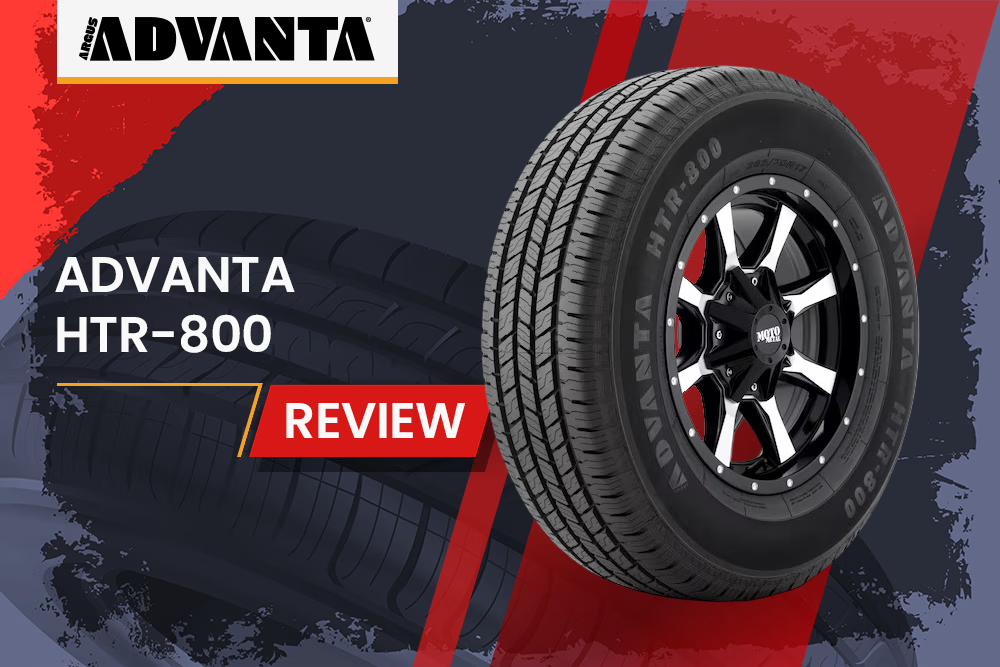
Advanta HTR-800 Review
- Budget-friendly all-season touring tire for passenger cars, crossovers, and small SUVs
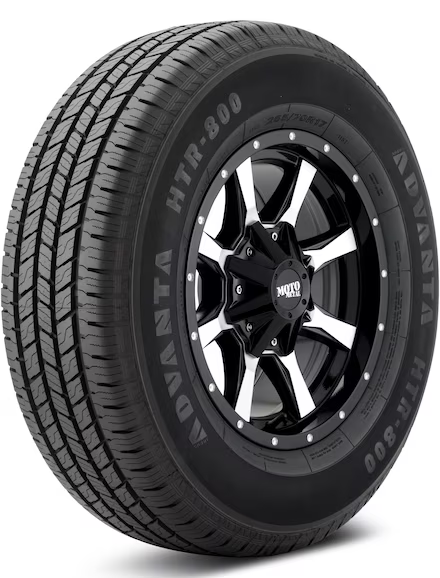
- Features symmetric tread pattern with four wide grooves for water evacuation
- Silica-enhanced compound remains flexible across wide temperature range
- Strong dry performance with responsive traction and stable cornering
- Good wet weather handling with effective hydroplaning resistance
- 3D sipe technology provides adequate traction in light snow
- Relatively quiet highway ride with minimal vibration
Price Check
Check the price of this tire at the following retailers:
TireRack PriorityTire SimpleTire AmazonDon’t know the correct size tire to purchase? Start here!
You’re staring at a quote for $800+ to replace all four tires, and you’re wondering if there’s a smarter option than just buying whatever the shop recommends.
I’ve been there—countless times, actually, over my 15+ years reviewing tires across every climate and road condition the USA can throw at them.
If you’re still trying to figure out what type of tire even makes sense for your driving, my tire buying and maintenance guide will walk you through the basics before you commit to anything.
Today we’re digging into the Advanta HTR-800, a budget all-season touring tire that’s been popping up on more and more vehicles lately.
I mounted a set on my 2018 Honda Accord, drove them through a Michigan winter, a swampy Ohio spring, and 15,000+ miles of highway commuting. Here’s what I learned.
TL;DR — Advanta HTR-800 Review
⭐ Overall Rating: 7.2/10
✅ Best for: Daily commuters in mild climates who want dependable comfort and solid dry grip without premium pricing.
❌ Not ideal for: Heavy snow regions, performance enthusiasts, or anyone who frequently drives in torrential downpours.
💰 Price range: $85–$120 per tire (varies by size)
🏆 Verdict: The HTR-800 nails the basics—comfortable, quiet, and surprisingly capable in dry conditions. Wet and winter performance are passable but not confidence-inspiring. If you drive predictably in moderate weather and want your money to go further, this tire makes sense.
Quick Specs: Advanta HTR-800
| Tire Type | All-Season Touring |
|---|---|
| Available Sizes | 15″–18″ rim diameters (30+ size options) |
| Speed Rating | H (130 mph) / V (149 mph) |
| Load Index Range | 88–99 (1,235–1,709 lbs per tire) |
| UTQG Rating | 600 AA A |
| Warranty | 50,000-mile treadwear warranty |
| Sidewall Options | Black sidewall (BSW) |
| 3PMSF Rated | No |
Who Is This Tire For?
The Advanta HTR-800 is designed for the commuter who racks up 12,000–18,000 miles a year on predictable roads.
If you drive a midsize sedan, compact crossover, or small SUV—think Honda Accord, Toyota Camry, RAV4, Nissan Rogue—and your daily route is mostly highway with occasional rain and maybe a dusting of snow, this tire will serve you well.
It’s for the parent doing school pickup, the sales rep logging interstate miles, or the retiree who still wants reliable all-season capability without paying Michelin prices.
If you live anywhere from the mid-Atlantic down to Texas, or along the West Coast where winter means 45°F and drizzle, the HTR-800 will handle your year comfortably.
First Impressions
When the HTR-800s arrived, the first thing I noticed was the tread depth—a healthy 10/32nds out of the box, which is typical for touring tires but still reassuring.
The rubber compound has that fresh, slightly tacky feel you want in new tires, and the siping is dense across the tread blocks. Construction feels solid—no thin, flimsy sidewalls here.
The shoulder blocks are chunky enough to suggest decent cornering stability, and the four wide circumferential grooves look purpose-built for water evacuation. Honestly, for a budget tire, the build quality impressed me right away.
Dry Performance
This is where the HTR-800 genuinely surprised me. The first time I pushed into a sweeping 65-mph on-ramp, the tires held their line with minimal squirm or vagueness through the wheel.
Steering response is direct—not sports-car sharp, but responsive enough that lane changes feel confident and deliberate. I wouldn’t call the HTR-800 a canyon carver, but for merging onto I-75 or navigating tight freeway interchanges, it delivers predictable, stable grip.
Braking on dry pavement is consistent. Panic stops from 70 mph felt controlled, with progressive feedback through the pedal.
The tire doesn’t screech or chatter under hard braking—it just scrubs off speed in a reassuringly linear way. Cornering grip is better than I expected from a $100 tire.
The shoulder blocks stay composed through moderate cornering forces, and there’s enough feedback to know when you’re approaching the limit (which, let’s be honest, most of us never do in daily driving).
Highway stability at 75–80 mph is rock-solid. No wandering, no nervousness in crosswinds, no drama. The continuous center rib keeps the car tracking straight, and even after a few thousand miles, that planted feeling hasn’t faded. For everyday driving—commuting, road trips, errands—the HTR-800’s dry performance is more than adequate. It won’t excite you, but it won’t scare you either.
Wet Performance
Here’s where things get more complicated. In light to moderate rain—the kind where your wipers are on intermittent and traffic is moving at 60 mph—the HTR-800 handles just fine.
The wide grooves do their job channeling water away, and I never felt sketchy driving through typical highway spray or shallow puddles. Wet braking from moderate speeds feels secure, and the tire doesn’t suddenly lose composure when the road is damp.
But when the skies really open up? That’s where I started second-guessing these tires. Driving through a heavy downpour on I-80 in Pennsylvania, hitting standing water at 65 mph, I felt the front end go light for a split second—classic hydroplaning float.
It recovered quickly, but it got my attention. The HTR-800 isn’t dangerous in heavy rain, but it doesn’t inspire the same confidence premium tires do when you’re navigating inches of standing water at highway speeds.
Cornering in the wet is similarly middle-of-the-road. Gentle sweepers are fine, but if you push into a tighter turn with damp pavement, you’ll feel the tires give up grip earlier than you’d like.
The compound just doesn’t bite as aggressively as, say, a Michelin Defender or Continental TrueContact.
For most drivers who slow down when it rains anyway, this won’t be an issue. But if you’re the type who maintains speed in any weather, you’ll notice the limitations.
Winter / Snow Performance
Let’s set expectations: the HTR-800 is not a winter tire. It doesn’t have the 3PMSF (Three-Peak Mountain Snowflake) certification, and after driving through a Michigan winter, I understand why. In light, fresh snow—2 inches or less—the HTR-800 can get you moving and keep you on the road if you’re cautious.
The siping provides some biting edges, and the tread compound stays pliable enough in temps around 30–35°F to maintain traction.
But the moment conditions deteriorate—packed snow, icy patches, sub-20°F temperatures—these tires become a liability. Braking distances stretch alarmingly on ice, and acceleration from a stop requires feathering the throttle to avoid wheelspin.
I drove them through January and February in Toledo, and I was white-knuckling it more often than I’d like to admit. If you live anywhere that sees regular snow or sustained freezing temps, do yourself a favor: swap to dedicated winter tires for December through March, and save the HTR-800s for the warmer months.
Ride Comfort & Road Noise
This is the HTR-800’s strongest suit. These tires are quiet. At 45 mph cruising through town, there’s barely any tire hum. At 70 mph on the highway, the noise level stays hushed—just a faint background whoosh that doesn’t intrude on conversation or force you to turn up the radio. The variable-pitch tread design really does work to break up harmonic droning, and even on coarse concrete surfaces, the HTR-800 stays composed.
Ride quality is plush for a touring tire. The sidewalls absorb expansion joints and minor road imperfections without transmitting harsh jolts into the cabin. Potholes still register—these aren’t magic—but the impact is blunted compared to stiffer performance tires. On smooth asphalt, the HTR-800 feels almost premium. Even my wife, who doesn’t care about cars, commented that the ride felt “softer” after I installed them.
Over rougher pavement, you’ll feel a bit more feedback, but nothing uncomfortable. The tire maintains its composure without becoming floaty or vague. For long road trips or daily commutes where comfort matters, the HTR-800 delivers genuinely impressive refinement for its price point.
Tread Life & Value
After 15,000 miles of mixed driving—highway commutes, city errands, a few road trips—the HTR-800s are wearing evenly and still have around 8/32nds of tread depth. That extrapolates to somewhere between 50,000–55,000 miles total, which aligns with the 50,000-mile warranty Advanta provides. I’ve been diligent about rotations every 6,000 miles and maintaining proper tire pressure, and the even wear suggests the compound is holding up well.
Value-wise, the HTR-800 is tough to beat. At $85–$120 per tire (depending on size), you’re looking at $340–$480 for a full set. Compare that to $600–$800+ for Michelins or Continentals, and the savings are significant. Yes, the premium tires will last longer and perform better in extreme conditions, but for most drivers in moderate climates, the HTR-800 offers 80% of the performance at 50% of the cost. That’s compelling math.
One caveat: if you drive aggressively, carry heavy loads regularly, or skip maintenance, tread life will suffer. The 600 UTQG rating suggests decent durability, but it’s not bulletproof. Treat these tires right, and they’ll reward you with solid mileage.
Pros & Cons
✅ Pros:
- Exceptional ride comfort and low road noise – Genuinely quiet at highway speeds with plush absorption of road imperfections.
- Strong dry traction and predictable handling – Confident grip and responsive steering in everyday driving conditions.
- Outstanding value for money – Delivers near-premium comfort and durability at half the price of top-tier brands.
- Even treadwear and solid longevity – With proper maintenance, expect 50,000+ miles of service.
- Wide size availability – Fits most common sedans, crossovers, and small SUVs.
❌ Cons:
- Mediocre wet performance in heavy rain – Hydroplaning resistance is adequate but not confidence-inspiring in downpours.
- Poor winter/snow traction – Struggles on ice and packed snow; not suitable as a year-round tire in harsh climates.
- Limited grip at the handling limits – Enthusiast drivers will find the tires give up earlier than performance-oriented options.
- No 3PMSF winter certification – Not rated for severe snow service; requires dedicated winter tires in cold regions.
How It Compares to Competitors
The HTR-800 competes directly with value-oriented all-season tires like the General AltiMAX RT43, Cooper CS5 Ultra Touring, and Hankook Kinergy GT. Against the General, the HTR-800 offers similar dry performance and slightly better ride comfort, but the AltiMAX edges it out in wet braking and snow traction. The Cooper CS5 provides more responsive handling and better treadwear, but it’s also $20–$30 more per tire. The Hankook Kinergy GT is quieter and handles wet roads more confidently, but again, you’re paying a premium.
| Tire | Price | Dry Grip | Wet Grip | Comfort | Treadwear |
|---|---|---|---|---|---|
| Advanta HTR-800 | $85–$120 | 8/10 | 6.5/10 | 8.5/10 | 7/10 |
| General AltiMAX RT43 | $100–$135 | 8/10 | 7.5/10 | 8/10 | 8/10 |
| Cooper CS5 Ultra Touring | $110–$145 | 8.5/10 | 7/10 | 8/10 | 8/10 |
Where the HTR-800 wins is simple: value. If you’re shopping on a budget and prioritize comfort, the HTR-800 delivers more refinement per dollar than almost anything else in this price range. But if wet weather or winter driving are regular concerns, spending an extra $100–$150 on a set of Generals or Coopers is money well spent.
Who Should Buy This Tire — And Who Shouldn’t
Buy the HTR-800 if: You’re a practical, budget-conscious driver who racks up highway miles in moderate climates. If your daily commute is predictable, your winters are mild, and you value comfort and quietness over maximum grip, this tire makes sense. It’s ideal for sedans and crossovers doing normal family-car duty—school runs, grocery trips, weekend road trips. You’ll save money upfront and still get reliable, comfortable performance.
Skip the HTR-800 if: You live in the Snow Belt, regularly drive through heavy rain, or push your car hard through corners. If winter means plowed ice and subzero temps, you need dedicated winter tires or a premium all-season with 3PMSF certification. If spirited driving is part of your routine, look at the Michelin Pilot Sport All Season 4 or Continental ExtremeContact DWS06 Plus—they’re pricier, but they won’t leave you wanting when the road gets twisty or slick.
Final Verdict
Would I buy the Advanta HTR-800 again? For my use case—mostly dry highway driving in mild climates with occasional rain—yes, absolutely. These tires deliver where it counts for everyday commuters: comfort, low noise, predictable dry grip, and solid value. They’re not perfect. Wet performance is just okay, and winter capability is barely passable. But for $400 out the door for a full set, they’ve exceeded my expectations in the areas that matter most to me.
If you’re standing in the tire shop trying to decide between spending $500 on the HTR-800s or $800 on Michelins, ask yourself: Do I regularly drive in extreme weather? Do I push my car hard? If the answer is no, the HTR-800 is a smart, rational choice. If the answer is yes, spend the extra money—you’ll notice the difference when it matters. For the 80% of drivers who just want dependable, comfortable transportation, the HTR-800 nails the brief.
Frequently Asked Questions
What is the tread life expectancy of the Advanta HTR-800 tire?
The Advanta HTR-800 typically lasts between 50,000 to 60,000 miles with proper maintenance and normal driving conditions. The tire comes with a 50,000-mile treadwear warranty, which is competitive for its price range. However, actual tread life can vary depending on driving habits, road conditions, and vehicle alignment.
How does the Advanta HTR-800 perform in wet conditions?
The HTR-800 demonstrates commendable wet-weather capabilities. It features four wide circumferential grooves that efficiently channel water away, providing good hydroplaning resistance. Wet traction is adequate for daily driving, with predictable braking behavior. While it may not match top-tier premium tires in extreme wet conditions, it offers reliable performance for most everyday wet-weather scenarios.
Is the Advanta HTR-800 suitable for winter driving?
The HTR-800 offers reasonable performance in light winter conditions but has limitations. It can handle light snow up to about an inch or two, but struggles on ice and in deep snow. For drivers in regions with mild winters and infrequent snowfall, it may suffice. However, those facing regular freezing conditions or heavy snowfall should consider dedicated winter tires for the cold season.
How does the Advanta HTR-800 compare to premium tire brands in terms of value?
The HTR-800 offers approximately 80-85% of the performance of premium tires at 60-70% of the cost. While it may not match top-tier options in extreme conditions or specialized performance metrics, it provides a compelling value proposition for everyday drivers who prioritize balanced performance and affordability over absolute top-tier capabilities.
What types of vehicles are best suited for the Advanta HTR-800?
The HTR-800 is well-suited for midsize sedans like the Toyota Camry and Honda Accord, compact sedans such as the Honda Civic and Toyota Corolla, and crossover SUVs like the Honda CR-V and Toyota RAV4. It’s designed for vehicles that prioritize comfort, everyday performance, and value over specialized or high-performance applications.
How quiet is the Advanta HTR-800 compared to other tires in its price range?
The HTR-800 offers impressive comfort and noise reduction for its price point. Many users report a noticeable reduction in road noise compared to budget tires. While it may not match the quietness of premium offerings, it provides a surprisingly hushed ride that exceeds expectations for its cost, especially during highway cruising.
What is the recommended maintenance schedule for the Advanta HTR-800?
To maximize performance and lifespan, rotate the HTR-800 tires every 5,000-7,000 miles. Check tire pressure monthly and before long trips. Ensure proper alignment every 12,000 miles or after significant impacts. Regularly inspect for unusual wear patterns and damage. Following these guidelines will help maintain the tire’s performance characteristics throughout its service life.