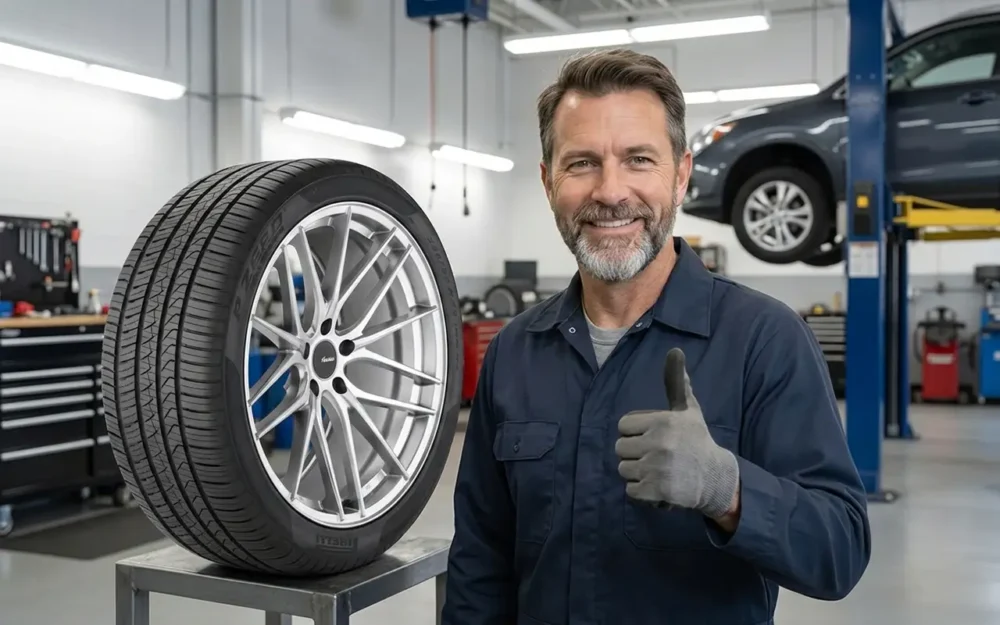
When you purchase a brand-new luxury sports sedan or a high-performance crossover, the manufacturer has already made one of the most critical dynamic decisions for you: the tires.
Automakers spend millions of dollars and thousands of hours tuning a vehicle’s suspension, and they work directly with tire companies to develop rubber that perfectly complements the car’s intended character.
As we note in our comprehensive Pirelli tires review, for many prestigious brands—including BMW, Audi, Volvo, Maserati, and Genesis—that chosen tire is frequently the Pirelli P Zero All Season.
Sitting squarely in the Ultra-High Performance (UHP) All-Season category, this tire is tasked with an almost impossible mission.
It must deliver the razor-sharp steering response expected of a sports car, provide the hushed, isolating ride quality demanded by luxury buyers, and offer enough foul-weather capability to survive a sudden downpour or a light winter snowstorm without sending the driver into a ditch.
But what happens when the odometer rolls past 30,000 miles and the tread wears down? Every owner faces the exact same dilemma: Do you go back to the dealership and spend top dollar to replace the tires with the exact same Original Equipment (OE) Pirelli P Zero All Season? Or do you venture into the aftermarket?
To answer that question, we didn’t just read the spec sheet. We acquired a fresh set of Pirelli P Zero All Seasons (specifically the 245/40R19 fitment) and mounted them on a capable, all-wheel-drive sports sedan.
Over the course of a comprehensive 5,000-mile test encompassing blistering highway commutes, winding canyon roads, torrential rainstorms, and a surprise early-winter freeze, we pushed these tires to their absolute limits.
Here is the definitive, unvarnished truth about what it is like to live with the Pirelli P Zero All Season.
Pirelli P Zero All Season Review
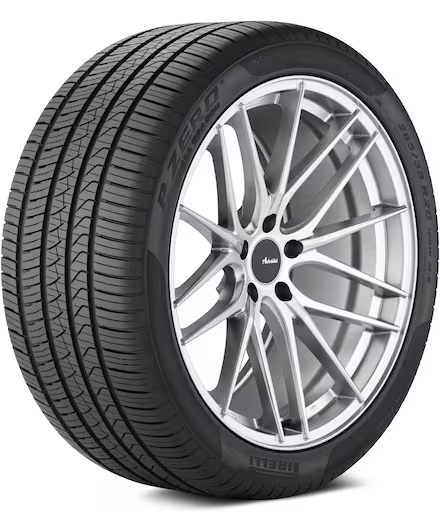
- Factory Favorite: The go-to Original Equipment (OE) choice for luxury brands like BMW and Audi due to its blend of refinement and grip.
- Crisp Dry Handling: Features an asymmetrical tread design with stiff shoulder blocks for sharp steering and cornering stability.
- Whisper Quiet: Often equipped with PNCS acoustic foam to absorb vibrations and drastically reduce cabin noise.
- Wet Weather Safety: Deep circumferential grooves effectively evacuate standing water to resist hydroplaning.
- Light Snow Only: Handles a light dusting of powder but struggles significantly on ice or hard-packed snow.
- Premium Price tag: Offers decent treadwear for an Ultra-High Performance tire, but exact factory replacements are expensive.
Price Check
Check the price of this tire at the following retailers:
TireRack SimpleTire PriorityTire DiscountedWheelWarehouse AmazonDon’t know the correct size tire to purchase? Start here!
- Pirelli P Zero All Season Review
- Key Takeaways
- The Engineering: What Makes a “P Zero” Tick?
- Phase 1: Dry Road Dynamics and Handling
- Phase 2: NVH (Noise, Vibration, and Harshness)
- Phase 3: The Wet Weather Torture Test
- Phase 4: The Winter Reality Check
- Treadwear, Longevity, and the OE Premium
- The Competitor Landscape
- Final Thoughts: Should You Buy It Again?
Key Takeaways
- Original Equipment Pedigree: The Pirelli P Zero All Season is heavily utilized as a factory-installed tire for luxury and performance brands. This OE focus ensures that the vehicle maintains the exact suspension feel and handling dynamics intended by the manufacturer.
- Exceptional Dry Handling: The tire is engineered with an asymmetrical tread pattern that prioritizes performance. It utilizes large, stiff outboard shoulder blocks to deliver crisp steering response and high-speed cornering stability.
- Hushed Cabin Experience: Select sizes of this tire feature the Pirelli Noise Canceling System (PNCS). This technology uses an internal layer of sound-absorbing foam to significantly reduce road drone and vibrations, resulting in a serene, premium ride.
- Strong Wet Weather Security: The inner tread features deep circumferential and lateral grooves designed to rapidly evacuate water from the contact patch. This intelligent design effectively resists hydroplaning and provides highly confident braking in torrential rain.
- Strictly for Light Snow: While the tread contains sipes that help grip a light dusting of powder, this tire is fundamentally a performance compromise. It does not carry the severe snow service Three-Peak Mountain Snowflake (3PMSF) certification and will struggle significantly on hard-packed snow or ice.
- Treadwear and Upgrades: The Original Equipment versions offer reasonable tread life for the Ultra-High Performance category. However, buyers seeking a longer lifespan and slightly better winter capability often upgrade to Pirelli’s aftermarket-focused “Plus 3” variants when their factory tires wear out.
The Engineering: What Makes a “P Zero” Tick?
Before we dive into the driving dynamics, it is crucial to understand the engineering beneath the rubber. The “P Zero” moniker is legendary within Pirelli’s lineup, originally born on the racetrack and synonymous with maximum performance. Adapting that pedigree into an all-season tire requires a host of technological compromises and innovations.
The Asymmetrical Tread Pattern
If you look closely at the face of the P Zero All Season, you will notice that the left side of the tread looks completely different from the right. This is an asymmetrical tread design, a hallmark of modern UHP tires.
The outboard shoulder (the side facing away from the car) features massive, rigid tread blocks with minimal void space between them.
When you throw a heavy vehicle into a tight corner, physics dictates that the weight transfers heavily to the outside edge of the outside tire.
These large, stiff blocks are designed to resist folding over under that immense pressure, providing the stability and crisp steering response required for high-speed cornering.
Conversely, the inboard tread and center ribs are heavily optimized for water and weather. You will find a much higher density of siping (the tiny zigzag cuts in the rubber) and angled grooves.
These elements are specifically engineered to bite into light snow and evacuate water, ensuring that the tire remains functional when the skies open up.
The Compound and UTQG Rating
The rubber compound itself utilizes advanced silica and polymers designed to broaden the tire’s operating temperature window. A dedicated summer tire turns into hard, slippery plastic when ambient temperatures drop below 45 degrees Fahrenheit.
The P Zero All Season’s compound is formulated to remain pliable in cold weather while resisting the rapid degradation that soft winter tires experience on hot summer asphalt.
The government-mandated Uniform Tire Quality Grade (UTQG) for this tire is typically 500 A A.
- 500 Treadwear: This indicates a relatively strong lifespan for a UHP tire, suggesting it will wear roughly five times slower than the government’s standard control tire.
- A Traction: The highest standard rating for straight-line wet braking.
- A Temperature: The highest rating for the tire’s ability to dissipate heat at sustained high speeds.
The Secret Weapon: PNCS
Many of the OE fitments for the P Zero All Season come equipped with the Pirelli Noise Cancelling System (PNCS). If you look inside the tire before it is mounted on the wheel, you will see a thick, continuous band of acoustic polyurethane sponge glued to the inner liner.
As the tire rolls over rough pavement, the air cavity inside the tire acts like a drum, vibrating and transmitting a low-frequency “boom” up through the suspension and into the cabin. The PNCS foam absorbs these acoustic vibrations, dramatically lowering the perceived decibel level inside the car.
Phase 1: Dry Road Dynamics and Handling
Our testing commenced during a stretch of hot, dry weather, providing the perfect environment to test the “Ultra-High Performance” aspect of the tire’s name.
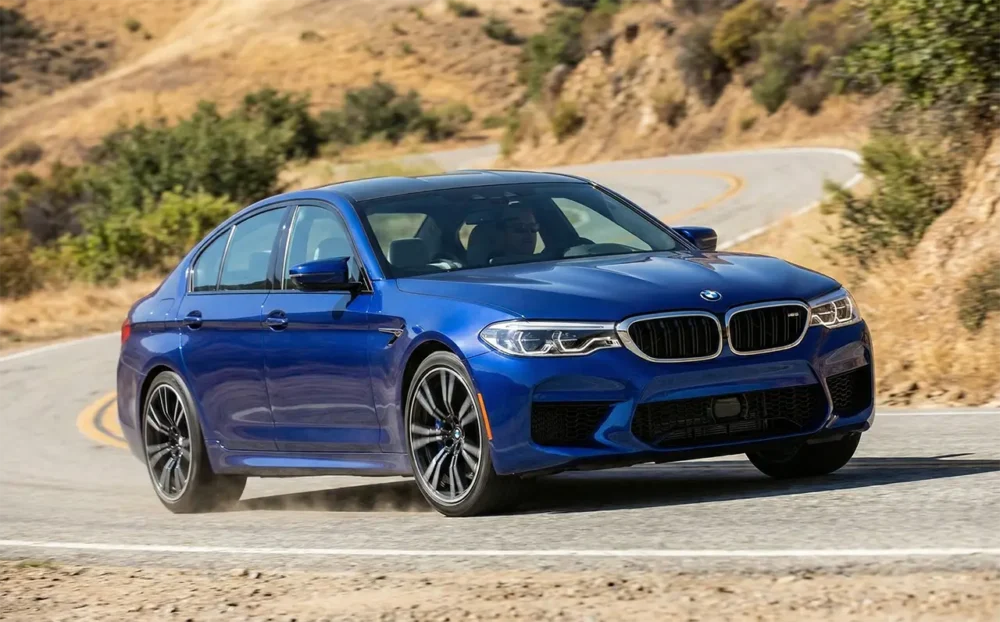
A dynamic, low-angle shot of a blue sports sedan carving through a dry, winding canyon road, with the Pirelli P Zero All Season tire clearly visible and gripping the asphalt.
The immediate sensation when pulling onto the highway is one of supreme stability. High-performance sedans are highly sensitive to tire sidewall stiffness; a soft sidewall makes the car feel vague and floaty.
The P Zero All Season possesses a remarkably taut internal structure. At 75 mph on the interstate, the vehicle tracks perfectly straight, requiring almost no micro-corrections at the steering wheel to stay centered in the lane.
Taking the vehicle to our favorite twisting backroads revealed the true capability of that asymmetrical tread design. When you initiate a turn, the steering response is immediate and direct. There is no perceptible delay between turning the wheel and the vehicle changing direction.
As we pushed harder through sustained, sweeping corners, the grip levels proved to be exceptionally high. You can feel the large outboard shoulder blocks digging into the abrasive asphalt.
The breakaway characteristics—the moment the tire transitions from gripping to sliding—are highly predictable and communicative.
It does not snap into sudden oversteer; instead, it gently lets you know through a mild tire squeal that you are approaching the limit of adhesion.
Is it a replacement for a dedicated summer track tire like the P Zero Trofeo? Absolutely not. If you take this to a racetrack, the all-season compound will eventually overheat and become greasy after several hard laps.
But for spirited, aggressive driving on public roads, the P Zero All Season delivers a level of engagement and precision that honors its motorsport heritage perfectly.
Phase 2: NVH (Noise, Vibration, and Harshness)
While performance is paramount, the primary reason automakers like Jaguar, Volvo, and BMW select this tire is comfort. A luxury car is fundamentally ruined by a loud, harsh-riding tire.
Our test vehicle was equipped with the PNCS foam-lined variant of the P Zero All Season, and the acoustic results were nothing short of astonishing.
On fresh, smooth blacktop, the tires are essentially silent. The only sound infiltrating the cabin is the rush of wind over the side mirrors. However, the true test of NVH engineering comes on older, grooved concrete highways and broken city streets.
Often, UHP tires “sing” or emit a high-pitched whine on grooved concrete. The variable pitch sequencing of the Pirelli’s tread blocks successfully scrambles these sound frequencies, rendering them into an unobtrusive background white noise.
In terms of ride harshness, the tire strikes a brilliant, albeit firm, balance. Because the sidewalls are stiff enough to provide that excellent steering response, you do feel the texture of the road. It is not a pillowy, cloud-like ride.
When you strike a sharp expansion joint or a recessed manhole cover, you feel the impact, but it is beautifully damped. It registers as a muted, solid “thud” rather than a jarring crash that sends shockwaves into your spine.
It feels incredibly premium, matching the suspension tuning of modern German and Italian luxury vehicles flawlessly.
Phase 3: The Wet Weather Torture Test
An Ultra-High Performance Summer tire is fantastic until the skies open up and the temperature drops. The “All Season” designation means this tire must keep you safe when conditions deteriorate.
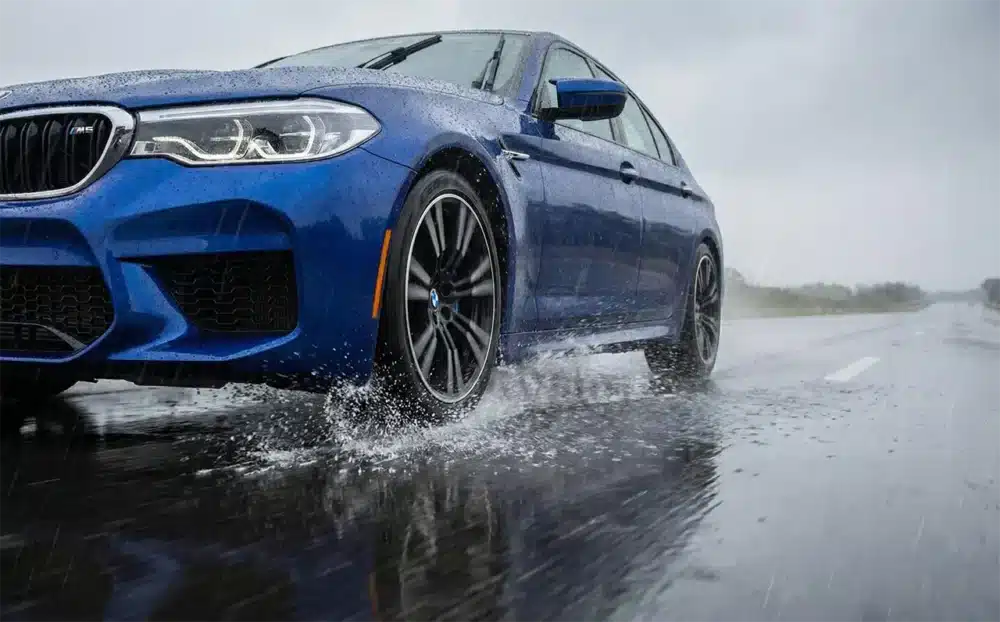
The test vehicle driving at highway speeds through a torrential downpour, with the Pirelli P Zero All Season tires displacing massive amounts of water, creating large rooster tails of spray.
During our second month of testing, we encountered a severe, sustained rainstorm that left deep pools of standing water in the highway ruts. Hydroplaning is the ultimate enemy of a wide, performance-oriented tire.
When the tire cannot evacuate water fast enough, it rides up on top of the puddle, completely severing your connection to the road.
The Pirelli P Zero All Season combats this with four massive, deep circumferential grooves running the entire perimeter of the tire. Driving at 65 mph through heavy rain, the hydroplaning resistance proved to be stellar.
Hitting standing water resulted in a slight tug at the steering wheel, but the tire rapidly sliced through the water, pumping it out the rear and regaining contact with the tarmac almost instantly.
Wet braking is perhaps the most critical safety metric for a daily driver. We conducted a series of simulated panic stops from 50 mph on a closed, soaking wet concrete surface.
The silica-infused compound generated immense mechanical grip. The Anti-lock Braking System (ABS) engaged smoothly, and the vehicle hauled itself down to a stop in distances that rival many dedicated summer tires in the wet.
During wet cornering, you must respect the laws of physics slightly more than in the dry, but the tire remains highly predictable.
The extensive siping on the inner tread blocks acts like hundreds of tiny squeegees, wiping the microscopic layer of water away from the asphalt to allow the rubber to bite.
For drivers living in rainy climates like the Pacific Northwest or the Gulf Coast, the wet-weather security of this tire is a massive selling point.
Phase 4: The Winter Reality Check
This is where the marketing term “All-Season” meets the harsh reality of physics.
To be clear from the outset: The Pirelli P Zero All Season is an M+S (Mud and Snow) rated tire, but it does not carry the 3PMSF (Three-Peak Mountain Snowflake) certification.
It is not a dedicated winter tire, nor is it classified as an “All-Weather” tire like the Michelin CrossClimate2.
Our testing window fortuitously aligned with an early-season cold snap that blanketed our local roads in three inches of fresh, powdery snow, followed by a hard freeze that turned the intersections into sheets of packed snow and ice.
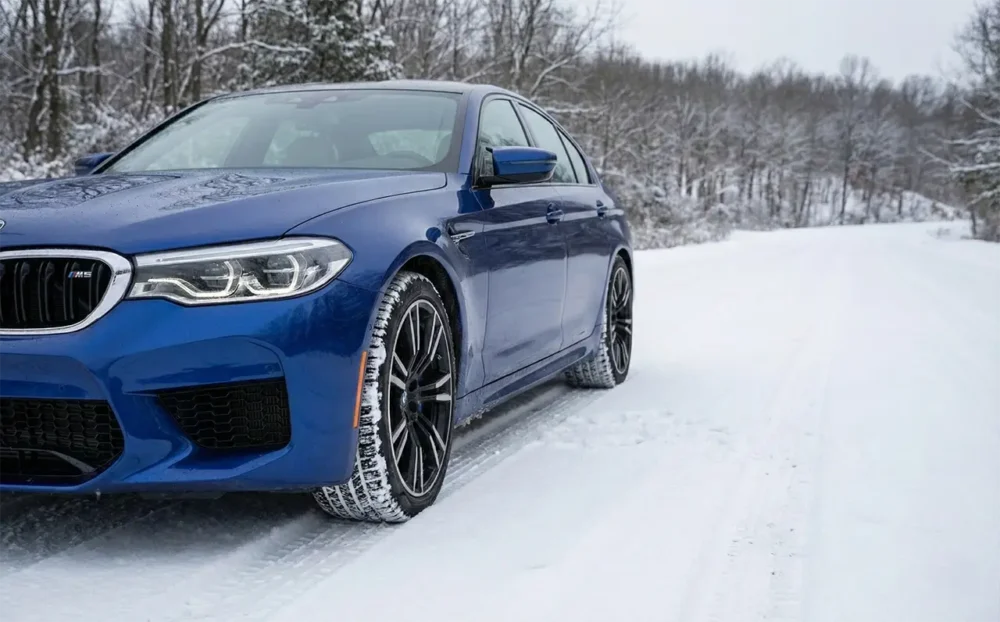
A close-up shot of the Pirelli P Zero All Season tire tread packed with snow, mounted on the test vehicle parked on a heavily snow-covered road.
In light, fresh powder (one to three inches), the tire is surprisingly competent. The specific winter siping cut into the inner tread blocks opens up as the tire rolls, grabbing onto the snow and packing it into the grooves.
Because snow sticks to snow better than rubber sticks to snow, this creates enough traction to get a vehicle moving. Combined with our test car’s all-wheel-drive system, we had no trouble accelerating away from stoplights or navigating gently sloping, unplowed side streets.
However, once that snow becomes hard-packed, or when temperatures drop into the teens and ice forms, the limitations of the UHP compound become blatantly obvious.
Even with the silica additives, the rubber simply becomes too stiff at extreme sub-freezing temperatures to conform to the microscopic irregularities of ice.
Braking distances on packed snow and ice were significantly longer, requiring early, gentle pedal application to avoid sliding through intersections.
Cornering grip on frozen surfaces was minimal; the front end of the car would easily push wide (understeer) if corner-entry speeds were not strictly managed.
The Verdict on Winter: If you live in a region like the Mid-Atlantic or the South, where it snows perhaps once or twice a year and melts the next day, the Pirelli P Zero All Season will get you home safely provided you drive with extreme caution.
However, if you live in the Snowbelt, the Rockies, or Canada, this tire will not suffice for winter duty. You must treat it as a three-season tire and swap to a dedicated winter setup (like the Pirelli Winter Sottozero) when the snow begins to fall.
Treadwear, Longevity, and the OE Premium
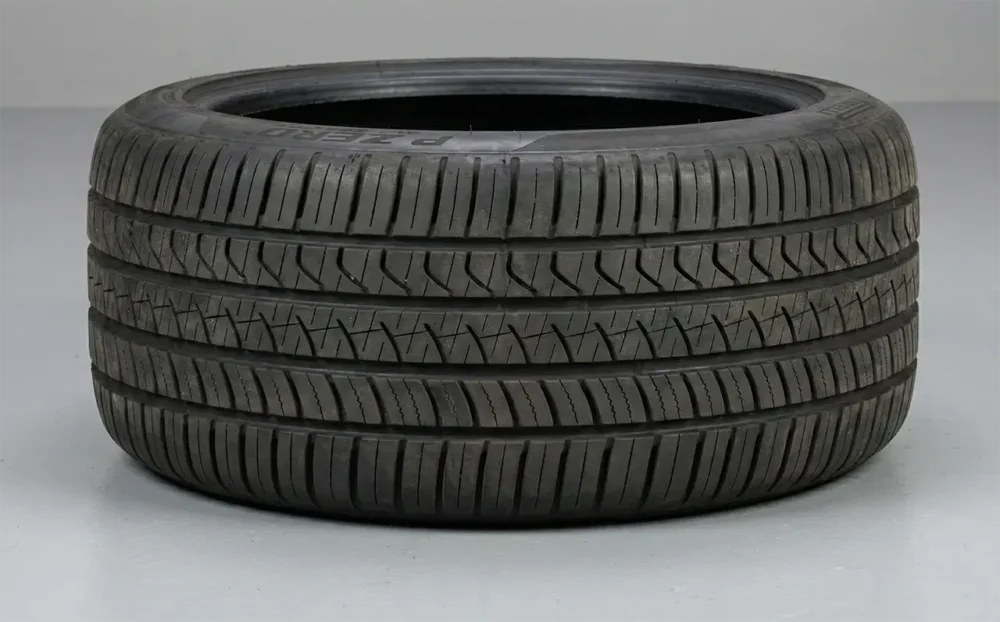
After 5,000 miles of rigorous, varied testing, we put the vehicle on a lift to inspect the tread blocks and measure the remaining tread depth.
OE tires on luxury performance vehicles are notorious for wearing out rapidly. Automakers often request a slightly softer compound variation from the tire manufacturer to ensure the car feels incredibly sticky and quiet during the customer’s initial test drive, sometimes sacrificing long-term durability.
The Pirelli P Zero All Season, carrying its 500 A A UTQG rating, held up remarkably well during our test. We measured roughly 1.5/32″ of tread wear across the set.
More importantly, the wear was perfectly even across the face of the tire, indicating that the asymmetrical design distributes the vehicle’s weight effectively without causing the shoulders to scrub or cup prematurely.
Based on our wear rates and the experiences of countless owners across the country, a driver who rotates their tires religiously every 5,000 miles and maintains proper alignment can reasonably expect to see between 30,000 and 40,000 miles of life out of this tire. For an Ultra-High Performance category tire, this is a highly respectable figure.
However, we must address the financial reality of replacing Original Equipment tires. OE tires are often significantly more expensive than their aftermarket counterparts.
Because these specific P Zero All Seasons are tuned specifically for certain vehicles (indicated by sidewall markings like a “Star” for BMW, “VOL” for Volvo, or “AO” for Audi), they carry a premium price tag.
Depending on the size and the inclusion of technologies like PNCS acoustic foam or Seal Inside puncture resistance, replacing a set of four can easily cost upwards of $1,200 to $1,500.
The Competitor Landscape
To fully evaluate the P Zero All Season, it must be contextualized against its primary rivals in the UHP All-Season segment.
Vs. Michelin Pilot Sport All Season 4: The Michelin is generally considered the benchmark for pure performance in this category. It offers slightly sharper steering response and higher absolute lateral grip in the dry. The Michelin also performs marginally better in the snow. However, the Pirelli strikes back with superior ride comfort and lower cabin noise, especially on vehicles equipped with the PNCS foam. If you prioritize luxury over lap times, the Pirelli is the better companion.
Vs. Continental ExtremeContact DWS06 Plus: The Continental is a legendary tire known for phenomenal wet traction and a surprisingly compliant ride. It is also usually priced lower than the OE Pirelli. While the Continental is softer and more comfortable over broken pavement, it lacks the crisp, taut steering precision that the Pirelli delivers on a winding road.
Vs. Pirelli P Zero AS Plus 3: This is where it gets confusing for consumers. Pirelli makes an aftermarket replacement tire called the P Zero AS Plus 3. This newer, aftermarket-only tire features an updated compound and tread pattern designed explicitly for the North American market. It offers a longer treadwear warranty (up to 50,000 miles) and slightly better snow traction. If your OE P Zero All Seasons wear out, the “Plus 3” is often the smarter financial upgrade, providing 95% of the OE handling characteristics with longer life and a lower price tag.
Final Thoughts: Should You Buy It Again?
Returning to the original dilemma: When the factory-installed Pirelli P Zero All Seasons on your luxury vehicle finally reach the wear bars, should you replace them with the exact same tire?
The answer is highly dependent on what you value most in your driving experience.
If you are a purist who wants your vehicle to drive exactly the way the engineers in Munich, Gothenburg, or Modena intended, replacing them with the OE Pirelli P Zero All Season is the only way to guarantee that specific dynamic harmony.
This tire is a masterclass in compromise. It successfully bridges the vast gap between a high-performance summer tire and a compliant luxury touring tire.
It delivers razor-sharp steering, immense wet-weather security, and an acoustic silence that elevates the entire cabin experience. It transforms a heavy, powerful sedan or crossover into a precise, predictable, and joyous machine to pilot on a winding road.
The drawbacks are inherent to its design: it is not a snow tire, and the privilege of OE-level engineering comes with a premium price tag.
After 5,000 hard miles, the Pirelli P Zero All Season proved exactly why some of the most demanding automotive manufacturers in the world trust it to connect their multi-thousand-pound machines to the pavement.
It is sophisticated, capable, and undeniably premium. If you demand a tire that complements your luxury performance vehicle without dulling its edge, the P Zero All Season remains a top-tier choice.
Pirelli P Zero All Season Review

We tested the Pirelli P Zero All Season for 5,000 miles. Read our real-world review of this UHP tire to see if it's worth the premium OE replacement cost.
Product Brand: Pirelli
Product Price: $156.20
Product In-Stock: InStock
4.6