Your vehicle’s tires are the sole point of contact between your car and the road, making them arguably its most critical safety feature. They are responsible for everything from steering and braking to maintaining traction in diverse conditions. Yet, the importance of tire health is often overlooked until a problem arises.
While following a comprehensive guide to tire maintenance will extend their lifespan, understanding exactly when to replace your tires is not just about performance; it’s fundamentally about ensuring your safety and the safety of others on the road.
This comprehensive guide will walk you through the essential signs, considerations, and proactive measures to help you determine the optimal time to replace your tires, ensuring you never compromise on this vital aspect of vehicle maintenance.
The Unsung Heroes of the Road: Understanding Your Tires’ Role
Tires are complex pieces of engineering designed to perform under strenuous conditions. They are crafted from specialized rubber compounds that provide grip, absorb shock, and channel away water. The tread pattern, with its intricate grooves and sipes, is crucial for dissipating water, snow, and debris, thereby maintaining optimal traction.
This traction is what allows your vehicle to accelerate effectively, brake safely, and maneuver precisely. Without adequate tread depth and healthy rubber, your tires lose their ability to grip the road, significantly increasing the risk of skidding, hydroplaning, and losing control, especially in challenging weather or on slick surfaces. Recognizing the vital role your tires play is the first step toward understanding why their condition requires constant attention.
- The Unsung Heroes of the Road: Understanding Your Tires’ Role
- Sign #1: Tread Depth – The Key to Traction and Safety
- Sign #2: Visual Damage and Irregularities – Don’t Overlook the Obvious
- Sign #3: The Age Factor – When Rubber Reaches Its Limit
- Mileage as a Guideline: Understanding Its Variability
- Performance Degradation: The Subtle Signs You Might Miss
- Making the Smart Decision: When and How Many Tires to Replace
- Proactive Tire Care: Extending Life and Ensuring Safety
- Conclusion
- FAQs
Sign #1: Tread Depth – The Key to Traction and Safety
The most direct and quantifiable indicator of a tire’s remaining service life is its tread depth. Worn tread means reduced grip, which directly translates to compromised safety.
Understanding Tread Depth and Its Importance
Tire tread provides the necessary grip to transfer braking forces, acceleration, and steering inputs to the road surface. The grooves within the tread are essential for channeling water away from the tire’s contact patch, preventing hydroplaning. As the tire tread wears down, these grooves become shallower, diminishing the tire’s ability to maintain traction, particularly in wet or slippery conditions. This reduction in grip significantly impacts braking distances and the vehicle’s overall stability.
How to Measure Tread Depth: Tools and Techniques
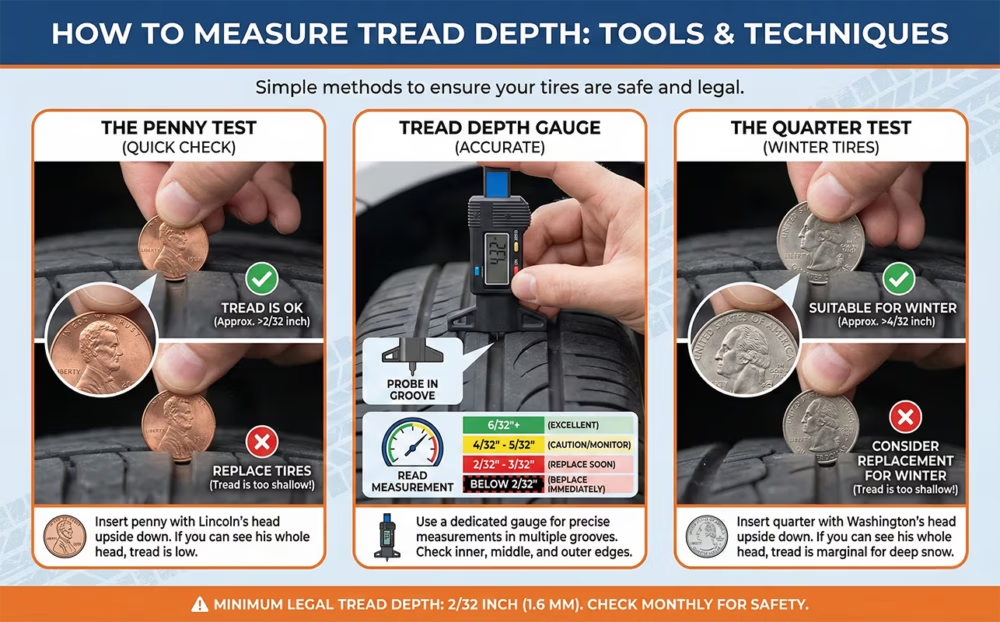
A quick visual guide to checking your tire tread depth using common coins.
You can easily check your tire tread depth at home. The most common method is the “penny test.” Insert a penny into a tread groove with Lincoln’s head facing down. If you can see the top of Lincoln’s head, your tread depth is likely below the recommended safe level of 4/32 of an inch. For a more precise measurement, use a quarter. Insert it the same way; if you can see the top of Washington’s head, your tread depth is below 2/32 of an inch, the legal minimum in many areas. A dedicated tread depth gauge, available at auto parts stores, offers the most accurate measurement and is a worthwhile investment for any car owner. Regularly checking all parts of the tire tread, including the edges and the center, is important, as uneven wear can indicate other issues.
Legal Minimums vs. Safety Recommendations
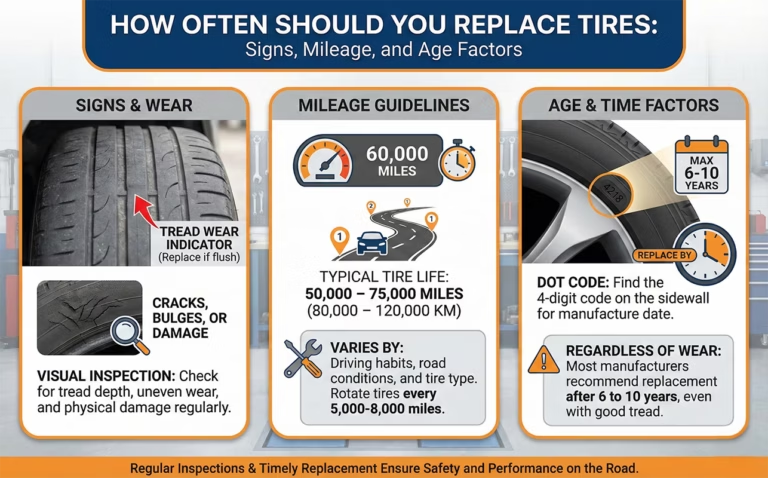
While the legal minimum tread depth for tires is typically 2/32 of an inch, this is the absolute limit and signifies a dangerously worn tire. At this depth, traction is severely compromised, especially in rain. Safety experts and tire manufacturers strongly recommend replacing tires when the tread depth reaches 4/32 of an inch. Beyond this point, the tire’s ability to evacuate water is significantly reduced, leading to a substantial increase in hydroplaning risk and longer braking distances. Therefore, aiming to replace tires before they reach 2/32 of an inch and ideally when they approach 4/32 of an inch is crucial for maintaining optimal safety.
Sign #2: Visual Damage and Irregularities – Don’t Overlook the Obvious
Beyond tread depth, a thorough visual inspection can reveal critical issues with your tires that necessitate replacement, even if the tread appears adequate.
Cracks and Dry Rot: The Silent Deterioration of Rubber
Over time, the rubber compound in tires degrades due to exposure to sunlight (UV rays), ozone, and environmental factors. This aging process can lead to the formation of cracks and fissuring, often referred to as dry rot. These cracks typically appear on the sidewalls and sometimes between tread blocks. Even if the tread depth is still good, these cracks weaken the tire’s structural integrity. A tire with significant cracks is prone to catastrophic failure, such as a blowout, at speed. Inspect your tires regularly for any signs of cracking, especially on the sidewalls.
Bulges, Blisters, and Bubbles: Internal Damage Warning Signs
Bulges, blisters, or bubbles on the sidewall of a tire are serious indicators of internal damage. These deformities often arise from impact with road hazards like potholes, curbs, or debris. They signify that the tire’s internal structure, including the steel belts and cords, has been compromised. The outer rubber layer may appear intact, but the internal layers have separated or are weakened. A tire with a bulge or blister is a ticking time bomb; it is at a very high risk of sudden deflation or blowout and should be replaced immediately.
Punctures and Frequent Leaks: When Repair Isn’t Enough
While minor punctures from nails or screws can often be repaired professionally, repeated punctures or damage to the sidewall may render a tire irreparable. If your tire frequently loses pressure, requiring constant inflation, it’s a sign of an issue that may go beyond a simple puncture. Sidewall damage, in particular, cannot be safely repaired. Furthermore, tires that have been run flat, even for a short distance, can suffer internal damage that isn’t always visible. If you’ve experienced multiple punctures or significant damage, it’s time to consider replacing the tire for safety.
Uneven Wear Patterns: Clues to Deeper Vehicle Issues
The way your tires wear can provide valuable clues about your vehicle’s mechanical health. Uneven tread wear patterns are not just a sign that the tire needs replacing; they often point to underlying problems. Common patterns include:
- Center Wear: Typically caused by over-inflation, where the center of the tire carries more load.
- Edge Wear: Can indicate under-inflation, causing the edges to bear more weight, or aggressive cornering.
- Feathering: Where one edge of the tread blocks is smoother than the other, often a sign of alignment issues.
- Cupping or Scalloping: Irregular, cup-shaped depressions on the tread, usually indicative of worn suspension components or unbalanced tires.
Addressing these wear patterns involves not only replacing the worn tires but also diagnosing and repairing the root cause, such as wheel alignment, suspension issues, or improper inflation.
Sign #3: The Age Factor – When Rubber Reaches Its Limit
Even if tires appear to have plenty of tread and no visible damage, their age is a critical factor in determining when they need to be replaced.
The Invisible Clock: Why Tires Expire Even with Good Tread
Rubber compounds degrade over time, regardless of mileage. Exposure to oxygen, UV radiation, and fluctuating temperatures causes the rubber to become brittle, lose its flexibility, and weaken. This aging process can occur even if the tire is rarely used or has been driven sparingly, meaning a tire with substantial tread depth can still be unsafe. The internal structure of the rubber can deteriorate, making it more susceptible to failure. Therefore, tire age is a critical, often overlooked, safety consideration.
Decoding the DOT Code: Finding Your Tire’s Birthdate
The manufacturing date of a tire is stamped on its sidewall as part of the Department of Transportation (DOT) code. This alphanumeric sequence provides vital information, including the manufacturing plant, tire size, and the date of manufacture. The last four digits of the DOT code are crucial for determining age: the first two digits represent the week of the year, and the last two digits represent the year. For example, “2719” indicates the tire was manufactured in the 27th week of 2019. Most manufacturers and safety organizations recommend replacing tires that are six to ten years old, regardless of tread depth, due to rubber degradation.
Mileage as a Guideline: Understanding Its Variability
Tire manufacturers often provide mileage ratings, but these should be considered general guidelines rather than strict replacement schedules.
Typical Tire Lifespans and What Influences Them
The lifespan of a tire, in terms of mileage, can vary dramatically. A common range is between 40,000 and 60,000 miles, but some high-performance tires may wear out much sooner, while certain touring tires can exceed 80,000 miles. This variability is influenced by a multitude of factors that impact how quickly the tread wears down. Understanding these influences is key to accurately assessing when your tires are nearing the end of their usable life.
Factors That Accelerate or Extend Tire Mileage
Several factors significantly influence how quickly your tires wear out and how long their tread life will last. Driving habits play a major role; aggressive acceleration, hard braking, and sharp cornering put excessive stress on the rubber, leading to faster tread wear. Road conditions are another critical element. Frequent driving on rough surfaces, gravel roads, or in areas with numerous potholes will accelerate tire wear compared to smooth highway driving. The weather also plays a part; extreme heat can cause rubber to degrade faster, while frequent use in very cold conditions can affect tire compound performance. Consistently overloading your vehicle, beyond its rated capacity, also places undue stress on the tires, shortening their tread life. Conversely, gentle driving, consistent tire maintenance (like proper inflation and rotation), and driving on well-maintained roads can help extend a tire’s mileage.
Performance Degradation: The Subtle Signs You Might Miss
Sometimes, the need to replace tires isn’t heralded by a dramatic event but by a gradual decline in performance that can be easy to overlook.
Changes in Handling and Braking
As tire tread wears down and the rubber ages, you might notice subtle but significant changes in how your vehicle handles and brakes. You may experience reduced responsiveness when steering, a feeling of less precise cornering, or a general decrease in road grip. In wet conditions, the impact is more pronounced; braking distances can increase considerably as the tire struggles to maintain traction. If you find yourself needing to brake earlier than usual or feeling less confident during maneuvers, especially in adverse weather, your tires may be worn out.
Increased Vibrations or Noises
Worn or damaged tires can also manifest as changes in the noises and vibrations you feel while driving. You might start to notice increased humming or droning sounds from your tires, particularly at highway speeds. Vibrations felt through the steering wheel or the car’s chassis can indicate uneven wear, imbalance, or internal tire damage. While these symptoms can sometimes be related to wheel balance or alignment, they often become more pronounced as tires wear out and their structural integrity diminishes, signaling a need for replacement.
Loss of Fuel Efficiency
Believe it or not, the condition of your tires can impact your vehicle’s fuel efficiency. Worn tires, or those that are under-inflated, can increase rolling resistance. This means your engine has to work harder to maintain speed, resulting in more frequent trips to the gas station. While other factors also affect fuel economy, consistently poor MPG can sometimes be attributed, in part, to tire wear and improper inflation.
Making the Smart Decision: When and How Many Tires to Replace
Deciding when to replace tires and how many to change at once involves understanding best practices and consulting reliable sources.
The “All Four” Rule vs. Replacing Just Two
For optimal vehicle handling and safety, it is generally recommended to replace all four tires simultaneously. This ensures consistent grip and performance across the entire vehicle, preventing potential imbalances in traction and braking. If you must replace only two tires, always install them on the rear axle, regardless of which end shows more wear. This helps prevent oversteer (the rear of the car becoming unstable and sliding out), which is particularly dangerous in front-wheel-drive vehicles. However, consistently replacing all four tires offers the most predictable and balanced performance.
Consulting the Experts: Your Auto Shop and Owner’s Manual
Your vehicle’s owner’s manual is an excellent resource for recommended tire types, inflation pressures, and general maintenance guidelines. When in doubt, always consult a trusted automotive professional or a reputable tire shop. Technicians can provide expert assessments of your tire condition, advise on necessary replacements, and help identify any underlying mechanical issues contributing to tire wear. They have the experience and tools to give you the most accurate recommendation for your specific vehicle and driving conditions.
Proactive Tire Care: Extending Life and Ensuring Safety
Proper maintenance can significantly extend the lifespan of your tires and ensure they perform optimally throughout their service life.
Regular Tire Pressure Checks
Maintaining the correct tire pressure is fundamental to tire health, safety, and longevity. Under-inflated tires flex excessively, generating heat and leading to faster wear on the edges. Over-inflated tires reduce the contact patch, leading to center wear and a harsher ride. Check your tire pressure at least once a month, and before long trips, using a reliable gauge. The recommended pressure is usually found on a sticker in the driver’s side doorjamb or in your owner’s manual, not on the tire sidewall itself (which indicates maximum permissible pressure).
Tire Rotation and Balancing
Regular tire rotation, typically every 5,000 to 7,500 miles, helps ensure that all tires wear evenly. By moving tires from one position to another on the vehicle, you can equalize wear patterns and maximize their tread life. Tire balancing involves adding small weights to the wheel to counteract any imbalances in the tire and wheel assembly. Unbalanced tires can cause vibrations, uneven wear, and premature wear on suspension components. It’s advisable to balance tires when they are first mounted and whenever significant wear is observed or vibrations are felt.
Wheel Alignment
Proper wheel alignment ensures your tires are positioned correctly in relation to each other and the road. Misalignment can cause rapid and uneven tire wear, such as feathering and edge wear, and can also affect vehicle handling. It’s recommended to have your wheel alignment checked periodically, especially after hitting a pothole or curb, or if you notice signs of uneven tire wear or pulling to one side.
Regular Inspection and Cleaning
Periodically inspecting your tires for any embedded objects, unusual wear, or damage is a simple yet effective way to catch potential problems early. Cleaning your tires, including the sidewalls, can help remove corrosive substances and road grime that might contribute to rubber degradation. While not a primary factor in wear, this practice contributes to overall tire health and allows for easier visual inspection.
Conclusion
Your tires are the frontline defense between your vehicle and the unpredictable road. Recognizing the signs that indicate a need for replacement—whether it’s diminishing tread depth, visible damage like cracks or bulges, the age of the rubber, or subtle changes in driving performance—is paramount for ensuring your safety.
Mileage is a useful guideline, but it’s the interplay of tread wear, age, driving habits, and road conditions that truly dictates a tire’s remaining lifespan. By conducting regular visual inspections, understanding how to check tread depth, and heeding the subtle cues your vehicle provides, you can make informed decisions about tire replacement.
Proactive care, including maintaining correct tire pressure, regular rotation, balancing, and alignment checks, will not only extend the life of your tires but also enhance your vehicle’s safety and fuel efficiency. Prioritizing your tires is a direct investment in your safety and peace of mind on every journey.
FAQs
How long do tires last on average?
While mileage serves as a general baseline, tire lifespan is not a fixed number and varies significantly based on several variables. The article suggests that “typical tire lifespans” are influenced by the interplay of tread wear, the age of the rubber, driving habits, and road conditions. Mileage should be viewed as a guideline rather than a definitive expiration date, as some tires may expire due to age or damage long before they reach their mileage warranty limit.
How often should you replace your car tires?
You should replace your tires when they exhibit specific warning signs, regardless of how long you have owned them. The guide highlights three primary indicators: diminishing tread depth (which compromises traction), visual damage and irregularities (such as cracks, dry rot, or bulges), and the age of the tire. Even with good tread, tires have an “invisible clock” where the rubber degrades over time, making age a critical factor in determining replacement frequency alongside physical wear.
Why is it important to replace tires regularly?
Replacing tires is fundamentally about ensuring the safety of yourself and others on the road. Tires are the “frontline defense” between your vehicle and the road, playing a vital role in accelerating, braking safely, and maneuvering precisely. The post explains that worn tires lose their ability to grip the road, which significantly increases the risks of skidding, hydroplaning, and losing control, particularly in challenging weather or on slick surfaces.
What factors influence tire wear and lifespan?
Several factors dictate how long a tire will safely perform. The guide points to driving habits and road conditions as key influencers that can either accelerate or extend tire mileage. Additionally, proper maintenance plays a huge role; proactive care such as maintaining correct tire pressure, regular rotation, balancing, and alignment checks are essential practices that prevent uneven wear and premature degradation.
How should you inspect tires to determine if replacement is needed?
Inspection involves looking for both “obvious” damage and subtle performance changes. You should regularly measure tread depth using proper tools and techniques to ensure it meets legal and safety minimums. Visually, you need to check for irregularities like cracks, dry rot, bulges, blisters, or bubbles, which indicate internal damage. Finally, pay attention to performance degradation, such as changes in handling, increased vibrations, or new noises, which can be subtle signs that your tires are nearing the end of their life.