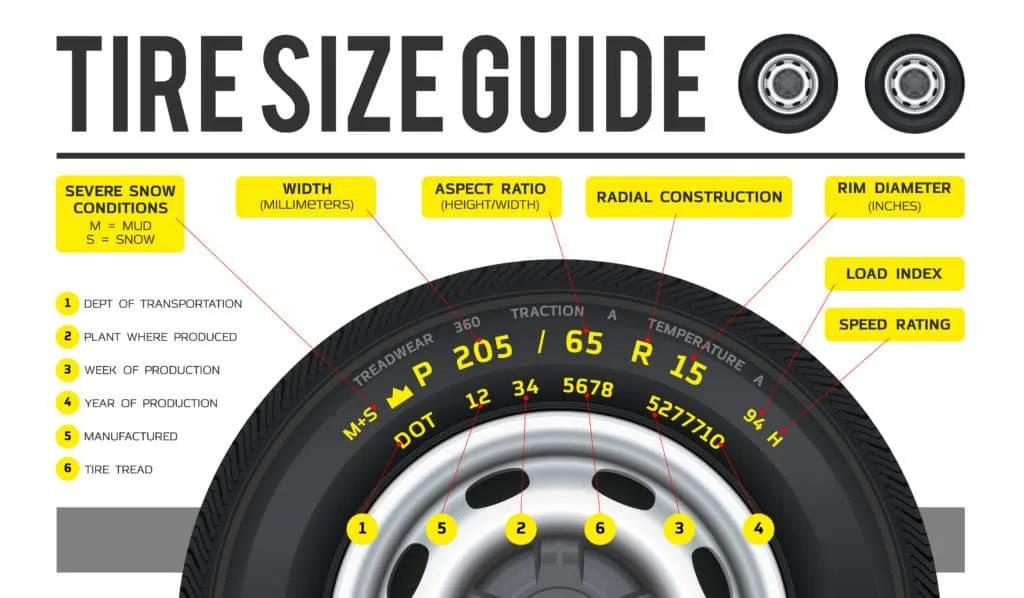
Have you ever stared at the cryptic code on your tire’s sidewall—something like “P225/45R17 91V”—and wondered what it all means? Or perhaps you’ve been told that installing the wrong tire size could damage your all-wheel drive system, but you’re not sure why a difference of just a quarter-inch matters?
You’re not alone. Tire sizing represents one of the most misunderstood yet critical aspects of vehicle maintenance and modification, affecting everything from your speedometer accuracy to the longevity of your drivetrain.
The consequences of getting tire sizing wrong extend far beyond aesthetics. Installing mismatched tires on an AWD vehicle can destroy a transfer case worth thousands of dollars.
Choosing tires that are too large can disable your anti-lock braking system at the moment you need it most. Even a seemingly minor change in tire diameter can turn your speedometer into a liar, potentially earning you speeding tickets or causing premature wear on expensive components.
In this comprehensive guide, you’ll learn how to decode tire size markings, master the mathematics behind tire dimensions, and understand why the “rolling radius” differs dramatically from simple geometric calculations.
We’ll explore the critical tolerances for AWD systems (spoiler: Subaru owners need tires within 1/4 inch circumference of each other), reveal how tire size changes affect your vehicle’s performance and fuel economy, and provide practical guidance for safe modifications.
Whether you’re replacing a single damaged tire, considering a plus-sizing upgrade, or planning an off-road build, you’ll discover why professional tire sizing goes far beyond measuring width and diameter—and how to use this knowledge to keep your vehicle safe, efficient, and performing at its best.
- Understanding Tire Size Codes: Breaking Down the ISO Metric System
- Why Proper Tire Sizing Matters: Safety, Performance, and Drivetrain Health
- Tire Size Calculator: Understanding the Math Behind Your Tires
- Understanding Tire Dynamics: Beyond Simple Geometry
- Dynamic Factors Affecting Tire Size in Operation
- The Art of Plus Sizing: Upgrading Wheels While Maintaining Tire Diameter
- AWD Systems and the Critical Importance of Matching Tire Sizes
- Understanding Speedometer Calculations and Calibration After Tire Size Changes
- Understanding Load Capacity and Tire Safety
- Navigating Off-Road Tire Modifications: The 3% Rule and Beyond
- Choosing the Right Tire Size Calculator: Essential Features and Top Recommendations
- The Mathematics Behind Tire Dimensions
- Why Static Calculations Aren’t Enough: The Reality of Rolling Tires
- Using Online Tire Size Calculators Effectively
- Tire Size Calculator Tools and Resources
- Conclusion: Beyond the Numbers
- FAQs About Tire Size Calculator
Understanding Tire Size Codes: Breaking Down the ISO Metric System
When you look at your tire’s sidewall, those seemingly random numbers and letters actually form a precise code that tells you everything about your tire’s dimensions and capabilities. The ISO Metric designation system is the global standard for tire sizing, and understanding it is essential for anyone looking to maintain or upgrade their vehicle.

Let’s decode a typical tire size like P225/45R17 91V:
Service Category Prefixes
The first letter indicates what type of vehicle the tire is designed for:
- P-Metric (P): Designed for passenger vehicles according to U.S. standards. These tires prioritize comfort and fuel efficiency with lighter casings. Example: P225/45R17
- Euro-Metric (No Prefix): Following European standards, these tires typically carry higher load capacities than their P-Metric counterparts at the same inflation pressure. Example: 225/45R17
- LT-Metric (LT): Light Truck tires with reinforced sidewalls for heavier loads, towing, and higher inflation pressures (50-80 psi). Example: LT245/75R16
Section Width
The first number (225 in our example) represents the tire’s width in millimeters, measured from sidewall to sidewall. A wider tire generally provides more grip but may reduce fuel efficiency.
Aspect Ratio
The number after the slash (45) is the aspect ratio—the percentage relationship between the tire’s height and width. In our example, the sidewall height is 45% of the 225mm width. Lower aspect ratios (like 35 or 40) indicate shorter sidewalls for better handling, while higher numbers (like 65 or 70) provide more cushioning.
Construction Type
The letter “R” stands for Radial construction, where the tire’s internal plies run perpendicular to the direction of travel. This is the standard for modern tires, offering better fuel economy, heat dissipation, and tread life compared to older bias-ply designs (which would be marked with a “D” or “B”).
Rim Diameter
The number after the “R” (17) indicates the diameter of the wheel in inches. This measurement is critical—a tire must match the exact rim diameter of your wheel.
Additional Ratings
The final numbers and letters (91V in our example) represent:
- Load Index (91): A numerical code indicating the maximum weight the tire can support
- Speed Rating (V): A letter code showing the maximum speed capability (V = up to 149 mph)
Understanding these codes isn’t just about knowing what you have—it’s essential for making proper replacements, calculating how tire changes will affect your vehicle’s performance, and ensuring safety on the road.
Why Proper Tire Sizing Matters: Safety, Performance, and Drivetrain Health
When it comes to your vehicle, few decisions impact as many aspects of its operation as tire sizing. While it might seem like a simple matter of aesthetics or personal preference, the reality is that proper tire sizing affects everything from your safety on the road to the longevity of your vehicle’s drivetrain.
From a safety perspective, incorrect tire sizing can compromise your vehicle’s handling characteristics and braking performance. Tires that are too large may rub against suspension components during turns or over bumps, potentially causing sudden tire failure. Conversely, undersized tires might not provide adequate load-carrying capacity, leading to overheating and possible blowouts under stress.
Performance-wise, tire sizing directly influences how your vehicle responds to driver inputs. Larger diameter tires effectively change your vehicle’s gear ratios, potentially reducing acceleration while improving top speed. The sidewall height (aspect ratio) affects steering response and cornering stability – lower profile tires generally provide more immediate steering feedback but transmit more road imperfections to the cabin.
Fuel economy is another consideration that many overlook when changing tire sizes. Larger, heavier tires increase rolling resistance and unsprung weight, forcing your engine to work harder and consume more fuel. Each revolution of a larger tire covers more distance, which can throw off your speedometer and odometer readings if not properly calibrated.
Perhaps most critically for all-wheel-drive and four-wheel-drive vehicles, mismatched tire sizes can cause serious drivetrain damage. These systems rely on all tires rotating at compatible speeds. When tire circumferences differ beyond manufacturer tolerances (often as little as 1/4 inch for some Subaru models or 2mm tread depth difference for BMW), the result is constant strain on differentials, transfer cases, and viscous couplings. This continuous stress generates heat that can lead to premature failure of these expensive components.
Even for two-wheel drive vehicles, proper tire sizing ensures that anti-lock braking systems (ABS) and electronic stability control (ESC) function as designed. These safety systems are calibrated based on specific tire dimensions and rotation speeds, and significant deviations can reduce their effectiveness or cause them to malfunction entirely.
The bottom line is that tire sizing isn’t just about how your vehicle looks or rides—it’s a critical engineering consideration that affects safety, performance, efficiency, and the long-term health of your vehicle’s mechanical systems. Whether you’re replacing worn tires or considering an upgrade, understanding the implications of tire sizing decisions can save you from costly repairs and potentially dangerous situations down the road.
Tire Size Calculator: Understanding the Math Behind Your Tires
When it comes to vehicle modifications, tire upgrades, or simply replacing worn tires, understanding how to calculate tire dimensions is crucial. A tire size calculator helps determine important measurements like overall diameter, sidewall height, and circumference—all vital for ensuring proper fitment and performance.
Tire size calculations might seem complex at first, but once you understand the basic formulas and what those numbers on your tire’s sidewall actually mean, you’ll be able to make informed decisions about your vehicle’s rolling stock. Let’s dive into the mathematics behind tire sizing and explore how these calculations impact your vehicle’s performance, safety, and handling characteristics.
Whether you’re looking to upgrade to larger wheels, switch to a more aggressive off-road tire, or simply ensure your replacement tires maintain factory specifications, mastering tire size calculations will save you time, money, and potential headaches down the road. This comprehensive guide will walk you through everything you need to know about calculating tire dimensions and understanding their real-world implications.
Understanding Tire Dynamics: Beyond Simple Geometry
When calculating tire sizes, many people rely on basic geometric formulas that treat tires as perfect circles. However, real-world tire performance differs significantly from these theoretical calculations.
A tire is not a rigid circle but a flexible toroidal structure that deforms under load. When a vehicle’s weight rests on the tire, the sidewall compresses and the contact patch flattens against the road surface. This creates a fundamental difference between what we calculate on paper and how the tire actually performs on the road.
Static Loaded Radius vs. Dynamic Rolling Radius
Two critical measurements help us understand this difference:
Static Loaded Radius (SLR): This is the actual distance from the wheel center to the ground when the vehicle is stationary with its full weight on the tires. Due to compression at the contact patch, this measurement is always smaller than the unloaded radius calculated geometrically.
Dynamic Rolling Radius (DRR): This represents the effective radius of the tire as it rolls down the road. It’s derived from the rolling circumference and determines the actual distance traveled per revolution.
The relationship between these measurements is not straightforward. The effective radius that determines your vehicle’s gearing, speed, and odometer readings lies somewhere between the unloaded geometric radius and the compressed static loaded radius.
The 97% Rule Explained
Industry engineers have developed a practical approximation known as the “97% Rule.” This standard holds that the actual rolling circumference of a passenger tire is approximately 97% of its geometric circumference.
For example, if you calculate a geometric circumference of 80 inches for your tire, its effective rolling circumference will be closer to 77.6 inches (80 × 0.97). This 3% reduction accounts for the flattening that occurs at the contact patch as the tire rolls.
This difference might seem small, but it translates to significant real-world effects:
- Over the course of a mile, this 3% difference means about 25 more tire revolutions than geometric calculations would predict
- Your speedometer and odometer calibrations depend on this rolling circumference, not the geometric measurement
- Drivetrain components experience loads based on the actual rolling radius, not the theoretical one
The 97% rule provides a reliable approximation for passenger vehicles under normal conditions, but even this can vary based on:
- Inflation pressure (lower pressure increases deflection)
- Vehicle load (heavier loads compress tires further)
- Speed (centrifugal force can slightly expand tires at high speeds)
- Tread wear (as tread wears down, the effective diameter decreases)
Understanding the distinction between geometric calculations and dynamic performance is essential for accurate tire sizing, especially for applications where precise gearing is critical, such as in performance vehicles or all-wheel-drive systems.
Dynamic Factors Affecting Tire Size in Operation
When we calculate tire sizes on paper, we’re working with static, idealized measurements. But in the real world, tires are dynamic components whose effective size changes constantly based on several key factors.
Inflation pressure is perhaps the most significant variable affecting your tire’s actual size during operation. Under-inflated tires flatten more at the contact patch, reducing the effective rolling radius and making your tire functionally “smaller.” This not only affects your speedometer readings but also increases rolling resistance and fuel consumption. Conversely, over-inflated tires bulge more, creating a slightly larger effective diameter and reducing the contact patch area.
Vehicle load dramatically impacts tire dimensions during operation. As you add passengers, cargo, or towing weight, the increased downward force compresses your tires further. A fully loaded SUV might see its tires compressed by an additional 3-5% compared to when empty, effectively changing the gear ratio and increasing engine RPM at any given speed.
At highway speeds—particularly above 60 mph—centrifugal force causes a phenomenon known as “centrifugal growth.” The mass of the tire tread experiences outward force, slightly expanding the tire’s diameter. This can partially offset the compression from vehicle load, adding complexity to real-world size calculations. Performance tires rated for high speeds (V, W, or Y ratings) incorporate special reinforcement belts specifically designed to minimize this growth and maintain dimensional stability.
Tread wear gradually but permanently reduces your tire’s diameter throughout its life. A new tire with 10/32″ of tread depth will lose approximately half an inch in overall diameter by the time it wears down to the legal minimum of 2/32. This seemingly small change translates to about 1.5 inches in circumference—enough to noticeably affect your speedometer reading and potentially stress AWD systems that require tight circumference matching between all four tires.
These dynamic factors explain why tire size calculations must go beyond simple geometry to account for real-world operating conditions. Professional tire size calculators incorporate these variables to provide more accurate predictions of how tire changes will affect your vehicle’s performance and safety systems.
The Art of Plus Sizing: Upgrading Wheels While Maintaining Tire Diameter
Plus sizing is a popular modification technique that allows vehicle owners to install larger diameter wheels while maintaining the original overall tire diameter. This practice, commonly referred to as Plus-1, Plus-2, or even Plus-3 (indicating how many inches larger the new wheel is compared to the original), requires careful calculation to ensure proper vehicle performance.
The Plus Sizing Formula
The basic concept of plus sizing follows a three-step formula:
- Increase the wheel (rim) diameter by 1 inch (Plus-1), 2 inches (Plus-2), etc.
- Increase the tire’s section width by approximately 10mm per plus size
- Decrease the aspect ratio (profile) by 5-10 percentage points per plus size
For example, if your vehicle came with 205/55R16 tires, a Plus-1 upgrade might be 215/45R17, while a Plus-2 upgrade could be 225/40R18.
Benefits of Plus Sizing
Plus sizing offers several potential advantages:
- Improved handling response: Shorter, stiffer sidewalls provide more immediate steering feedback and better cornering stability
- Enhanced braking performance: Wider tires offer increased contact patch area for better grip
- Aesthetic appeal: Larger wheels with lower-profile tires create a more aggressive, sporty appearance
- Increased wheel protection: Lower profile tires provide less cushioning, but the reduced sidewall height means less flex, potentially protecting expensive wheels from curb damage
Drawbacks to Consider
Despite its popularity, plus sizing comes with several important considerations:
- Increased unsprung weight: Larger wheels are typically heavier, negatively affecting acceleration, braking, and fuel efficiency
- Higher rotational inertia: The additional weight is concentrated at the wheel’s perimeter, amplifying the performance penalty
- Reduced ride comfort: Less sidewall means less cushioning over bumps and potholes
- Increased vulnerability: Low-profile tires are more susceptible to damage from potholes and road hazards
- Higher cost: Larger wheels and specialty low-profile tires typically cost significantly more than standard sizes
Maintaining Performance Balance
When plus sizing, it’s critical to maintain the original tire diameter within 3% of factory specifications to preserve:
- Accurate speedometer readings
- Proper ABS and traction control system function
- Original gearing and acceleration characteristics
- Factory-designed suspension geometry
By carefully calculating your plus size upgrade using a tire size calculator, you can enjoy the benefits of larger wheels while minimizing the potential drawbacks to vehicle performance and safety.
AWD Systems and the Critical Importance of Matching Tire Sizes
All-wheel drive systems represent a marvel of modern automotive engineering, delivering enhanced traction and stability across varying road conditions. However, these sophisticated systems come with a critical maintenance requirement that many owners overlook: the need for precisely matched tire sizes across all four corners of the vehicle.
Unlike two-wheel drive vehicles where the non-driven wheels rotate independently, AWD systems mechanically link all four wheels through transfer cases, center differentials, or coupling devices. This mechanical connection means that any difference in tire circumference forces these components to constantly compensate for the speed differential—even when driving in a straight line on a perfect road surface.
Each manufacturer establishes specific tolerance limits based on their drivetrain architecture:
Subaru’s Quarter-Inch Rule: Subaru’s symmetrical AWD system is notoriously sensitive to tire circumference variations. The manufacturer mandates that all four tires must be within 1/4 inch (6.35mm) of rolling circumference of each other. In practical terms, this translates to a maximum tread depth difference of just 2/32 inch (1.6mm) between any tires. This incredibly tight tolerance means that if one tire suffers irreparable damage, you’ll likely need to replace all four tires if the remaining three have significant wear.
BMW xDrive Specifications: BMW’s clutch-based xDrive system requires tires to be within 2mm (approximately 2.5/32 inch) of tread depth difference. The company even works with tire manufacturers to produce special “star-marked” tires with precisely calibrated rolling circumferences, ensuring perfect harmony between differently sized front and rear tires on their staggered setups.
Audi Quattro Requirements: Audi employs multiple AWD architectures, each with different sensitivities. Their traditional Torsen-based systems typically allow up to 4/32 inch tread depth variance, while their newer Haldex/Ultra systems are more restrictive, requiring identical rolling circumferences across all tires.
The consequences of ignoring these tolerances can be severe and expensive:
- Viscous Coupling Failure: In systems using viscous couplings, the constant shear action generates excessive heat, breaking down the silicone fluid and potentially causing permanent coupling lockup (known as “humping”).
- Transfer Case Damage: Clutch-based systems like those in BMW and newer Audi models can experience premature clutch wear, overheated transfer case fluid, and eventual mechanical failure, often presenting as a shuddering sensation during acceleration.
- Differential Stress: Even robust systems with Torsen-type differentials will suffer accelerated wear on thrust washers and gears when constantly managing speed differentials.
- ABS/Traction Control Malfunction: Modern safety systems rely on wheel speed sensors to detect slippage. Mismatched tire sizes can trigger false interventions or mask genuine traction loss.
When replacing tires on an AWD vehicle, remember these practical guidelines:
- Replace all four tires simultaneously whenever possible
- If replacing just two tires, install them on the rear axle and move the moderately worn tires to the front
- Consider professional tire “shaving” services that can machine a new tire down to match your existing set’s wear
- Always consult your owner’s manual for vehicle-specific requirements
The modest additional cost of maintaining matched tires pales in comparison to the potential expense of repairing a damaged AWD system—a repair that can easily exceed several thousand dollars.
Understanding Speedometer Calculations and Calibration After Tire Size Changes
Your vehicle’s speedometer doesn’t actually measure ground speed directly—it measures how fast your wheels are rotating and calculates speed based on a programmed tire circumference. When you change your tire size, you’re essentially changing this fundamental calculation.
A speedometer works by measuring the rotational speed of your transmission output shaft or wheel hubs. The vehicle’s computer then uses a pre-programmed tire circumference value to convert these rotations into miles or kilometers per hour. This is why tire size changes have such a direct impact on speedometer readings.
When you install larger tires, each rotation covers more ground than the factory programmed value accounts for. This means your actual speed will be faster than what your speedometer displays. For example, if your speedometer reads 65 mph with oversized tires, you might actually be traveling at 70 mph—potentially putting you at risk for speeding tickets.
Conversely, smaller tires cover less distance per rotation. This causes your speedometer to read higher than your actual speed and makes your odometer accumulate miles faster than you’re actually driving, which could affect your vehicle’s resale value.
The relationship between tire size and speedometer reading follows a simple formula:
Actual Speed = Indicated Speed × (New Tire Diameter ÷ Original Tire Diameter)
Most manufacturers intentionally calibrate speedometers to read slightly high (typically +4%/-0%) to ensure drivers don’t accidentally speed. This “speedometer bias” means your vehicle is likely traveling slightly slower than the displayed speed even with factory tires.
If you’ve changed your tire size significantly, you have several calibration options:
- ECU Reprogramming: Modern vehicles store a “revolutions per mile” parameter in the engine control unit or ABS module. Dealerships or professional tuners can update this value to match your new tire size.
- Inline Calibrators: These aftermarket devices intercept and modify the speed signal before it reaches your dashboard. They’re popular among truck and Jeep owners who’ve installed significantly larger tires.
- Gear Swapping: Older vehicles with mechanical speedometers use a gear in the transmission to drive the speedometer cable. Changing this gear can recalibrate the system.
The industry standard “3% rule” suggests keeping tire diameter changes within 3% of original specifications. Beyond this threshold, you risk compromising your vehicle’s safety systems like ABS and stability control, which rely on accurate wheel speed data.
For serious off-road vehicles with much larger tires (like upgrading from 31″ to 35″), professional calibration isn’t just about accurate speed readings—it’s essential for maintaining proper function of critical safety systems and preventing transmission damage in AWD vehicles.
Understanding Load Capacity and Tire Safety
When shopping for new tires, most drivers focus on size dimensions and tread patterns, but one critical safety factor often gets overlooked: load capacity. Your tires aren’t just responsible for a smooth ride—they literally carry the entire weight of your vehicle and everything in it.
Load Index (LI) is represented by a number (typically between 75-105 for passenger vehicles) that corresponds to the maximum weight each tire can safely support. This rating is not arbitrary—it’s a carefully calculated safety threshold that should never be compromised.
The relationship between tire pressure and load capacity is direct and critical. A tire can only support its maximum rated load when inflated to its maximum recommended pressure. As pressure decreases, so does load capacity—and at a faster rate than you might expect. For example, a tire rated for 1,500 lbs at 35 psi might only safely carry 1,200 lbs when inflated to 28 psi.
This relationship follows different curves depending on whether you’re using Standard Load (SL) or Extra Load (XL) tires:
- Standard Load tires typically reach their maximum load capacity at 35-36 psi
- Extra Load (Reinforced) tires are designed to handle higher pressures (up to 42-50 psi) and consequently higher loads
A dangerous misconception is that an XL tire automatically carries more weight than an SL tire at any pressure. In reality, at lower pressures (like 30 psi), an XL tire might actually support less weight than an SL tire because its stiffer construction requires more pressure to generate the necessary sidewall tension.
Perhaps most important is this golden rule: Never install replacement tires with a lower Load Index than what came original on your vehicle. Vehicle manufacturers specify minimum load ratings based on the vehicle’s weight distribution, center of gravity, and expected driving conditions. Downgrading the Load Index creates a serious risk of tire failure, particularly during emergency maneuvers when dynamic loads can spike dramatically.
This is especially critical when switching between tire types. For example, replacing a European-metric tire (no prefix) with a P-metric tire (P prefix) of the same size can result in a significant load capacity reduction, as Euro-metric tires typically carry higher load ratings at the same inflation pressure.
Remember: A tire that physically fits your vehicle isn’t automatically safe. Always verify that replacement tires meet or exceed the load index specified in your owner’s manual or door jamb sticker—your safety depends on it.
Navigating Off-Road Tire Modifications: The 3% Rule and Beyond
When venturing off the beaten path, many enthusiasts are tempted to upgrade their vehicle’s tires to larger, more aggressive options. However, proper tire sizing for off-road applications requires careful consideration beyond simply fitting the largest possible tire under your fenders.
The automotive industry has established what’s known as the “3% Rule” as a guideline for safe tire modifications. This rule suggests that replacement tires should not deviate more than 3% in overall diameter from the original equipment (OE) specifications. This isn’t arbitrary—exceeding this threshold can significantly impact your vehicle’s performance and safety systems.
When you install tires that are substantially taller than stock, several critical vehicle systems are affected:
Braking Performance: Larger diameter tires create a longer lever arm against your brake calipers, effectively reducing your vehicle’s stopping power. This can lead to longer stopping distances and increased brake fade during demanding driving conditions.
Suspension Geometry: Taller tires alter your vehicle’s suspension geometry, particularly the scrub radius and trail measurements. These changes can manifest as unpredictable steering behavior, including “tramlining” (the tendency for your vehicle to follow road imperfections) and reduced stability during emergency maneuvers.
Electronic Safety Systems: Modern vehicles rely on precise wheel speed calculations for ABS, traction control, and electronic stability control. Tires outside the 3% window can cause these systems to miscalculate and potentially disable themselves or function improperly when you need them most.
Gearing and Performance: Larger tires effectively increase your vehicle’s final drive ratio, resulting in reduced acceleration and potentially sluggish throttle response. For every 3% increase in tire diameter, you can expect approximately a 3% reduction in effective gear ratio, requiring more throttle input to achieve the same acceleration.
If you’re determined to go beyond the 3% threshold for serious off-road use, consider these necessary modifications:
- Regear Your Differentials: Installing lower (numerically higher) gear ratios can restore your vehicle’s acceleration and climbing ability.
- Recalibrate Your Speedometer: Either through ECU reprogramming or an aftermarket calibrator to ensure accurate speed readings.
- Upgrade Your Braking System: Larger rotors, more aggressive pads, or even a big brake kit may be necessary to maintain safe stopping distances.
- Suspension Modifications: Proper lift kits that correct geometry issues are essential, not just for clearance but for maintaining handling characteristics.
- Reinforce Drivetrain Components: Larger tires place additional stress on axles, CV joints, and differentials, potentially requiring upgrades to these components.
Remember that while aggressive, oversized tires may look impressive, the most effective off-road setup often balances moderate size increases with appropriate vehicle modifications. This approach preserves on-road safety while enhancing off-road capability.
Choosing the Right Tire Size Calculator: Essential Features and Top Recommendations
When it comes to modifying your vehicle with new tires or simply replacing worn ones, a reliable tire size calculator is an invaluable tool. Not all calculators are created equal, however, and the best ones offer far more than basic dimension calculations.
A truly effective tire size calculator should provide comprehensive analysis across multiple critical areas. First and foremost, it must accurately compute the geometric dimensions—overall diameter, sidewall height, and circumference—based on standard tire code inputs. But beyond these basics, several advanced features separate professional-grade calculators from basic conversion tools.
The most important feature to look for is speedometer correction calculation. Since your vehicle’s speedometer is calibrated to the original tire’s revolutions per mile, any change in tire size directly impacts its accuracy. A good calculator will show you the exact percentage of error introduced by a size change and the real-world speed when your speedometer shows common readings (e.g., what your actual speed is when the speedometer reads 60 mph).
Load index verification is another crucial feature often overlooked. When replacing tires, maintaining or exceeding the original load rating is essential for safety. Premium calculators will flag potentially dangerous downgrades in load capacity, even when the physical dimensions seem compatible.
For owners of all-wheel drive vehicles, AWD compatibility checks are non-negotiable. The best calculators incorporate manufacturer-specific tolerance data (like Subaru’s 1/4-inch circumference rule or BMW’s 2mm tread depth variance limit) to warn you when a tire combination might damage expensive drivetrain components.
Other valuable features include rolling radius calculations that account for the tire’s behavior under load, visualization tools that show tire size comparisons, and plus-sizing guides that maintain proper overall diameter while increasing rim size.
For reliable options, TireSize.com and Miata.net offer calculators that include speedometer correction data. Tire Rack’s calculator stands out for its load index verification and detailed fitment information. For off-road enthusiasts, 4×4 community sites like 4WheelParts provide specialized calculators that factor in suspension lift and fender clearance.
The most comprehensive option for professionals is likely the Custom Wheel Offset Calculator from Wheel-Size.com, which incorporates backspacing and offset measurements alongside tire dimensions to provide complete fitment analysis.
Remember that even the best calculator serves as a starting point—always verify physical clearance before making a final purchase, especially for modified vehicles where fender, suspension, and brake caliper clearances become critical factors.
The Mathematics Behind Tire Dimensions
Converting tire size markings into actual physical dimensions involves several calculations. Here’s how to determine the key measurements:
Sidewall Height Calculation
The sidewall height (or section height) is calculated by multiplying the section width by the aspect ratio:
Sidewall Height (mm) = Section Width (mm) × (Aspect Ratio ÷ 100)
For a 225/45R17 tire:
Sidewall Height = 225 × (45 ÷ 100) = 101.25 mm
Overall Diameter Calculation
The overall diameter is the total height of the tire, calculated by adding the rim diameter (converted to millimeters) plus twice the sidewall height:
Overall Diameter (mm) = (Rim Diameter (inches) × 25.4) + (2 × Sidewall Height)
For our 225/45R17 example:
Overall Diameter = (17 × 25.4) + (2 × 101.25) = 431.8 + 202.5 = 634.3 mm
Converting back to inches: 634.3 ÷ 25.4 = 24.97 inches
Tire Circumference
The circumference is calculated by multiplying the diameter by π (3.14159):
Circumference (mm) = Overall Diameter × π
For our example:
Circumference = 634.3 × 3.14159 = 1992.7 mm (or about 78.45 inches)
This geometric circumference is important for comparing different tire sizes and understanding how tire changes will affect your vehicle’s gearing.
Why Static Calculations Aren’t Enough: The Reality of Rolling Tires
While the geometric calculations above provide the unloaded dimensions of a tire, they don’t tell the whole story. In real-world conditions, tires are compressed under the vehicle’s weight, creating what engineers call the “rolling radius.”
The effective rolling circumference of a loaded tire is approximately 97% of its geometric circumference. This means that for every revolution, a tire covers slightly less distance than its geometric circumference would suggest.
For our 225/45R17 example:
Rolling Circumference = 1992.7 × 0.97 = 1932.9 mm (or about 76.1 inches)
This 3% difference might seem small, but it has significant implications for speedometer accuracy, odometer readings, and drivetrain stress.
Using Online Tire Size Calculators Effectively
Online tire size calculators are valuable tools for comparing different tire sizes and understanding the implications of changes. When using these calculators:
- Input the correct current tire size from your vehicle’s sidewall or door jamb sticker
- Compare multiple potential sizes to understand the range of options
- Pay attention to diameter differences and keep changes within 3% if possible
- Consider the effects on speedometer accuracy and whether recalibration will be needed
- Check clearance requirements to ensure the new tires won’t rub against suspension components or fenders
- Verify load ratings to maintain safety margins
Remember that calculators provide theoretical dimensions that may differ slightly from actual measurements due to manufacturing variations and differences between tire models.
Tire Size Calculator Tools and Resources
There are various tire size calculator tools available, both online and offline, to help you determine the right tire size for your vehicle. Here are some popular options:
Online Tire Size Calculators
- Tire Rack Tire Size Calculator: This user-friendly online tool from Tire Rack is one of the most comprehensive and reliable options. It allows you to input your vehicle’s make, model, and year, and provides a list of recommended tire sizes based on the manufacturer’s specifications.
- Discount Tire Size Calculator: Discount Tire’s online calculator is another excellent resource. It not only suggests tire sizes but also provides pricing information and availability for different tire brands and models.
- Edmunds Tire Size Calculator: Edmunds, a well-known automotive resource, offers a simple yet effective tire size calculator on their website. It’s a great option for quickly checking tire size compatibility.
Offline Tire Size Calculators
- Tire Manufacturer Catalogs: Most major tire manufacturers, such as Michelin, Bridgestone, and Goodyear, provide detailed catalogs or guides that include tire size information and compatibility charts for various vehicle models.
- Automotive Repair Manuals: Many automotive repair manuals, like those from Haynes or Chilton, contain comprehensive tire size and fitment data for different vehicle makes and models.
- Tire Shop Resources: Local tire shops and dealerships often have access to specialized tire size calculation software or databases that can provide accurate recommendations based on your vehicle’s specifications.
When choosing a tire size calculator tool, it’s essential to consider factors such as ease of use, accuracy, and the ability to account for modifications or aftermarket parts on your vehicle. Additionally, some tools may offer additional features like pricing information, tire reviews, or compatibility checks for wheels and suspension components.
Conclusion: Beyond the Numbers
While tire size calculators provide valuable information about dimensions and fitment, the science of tire sizing extends beyond simple mathematics. Factors such as load capacity, speed rating, tread pattern, and construction type all play important roles in tire performance and safety.
Whether you’re seeking improved handling, better off-road capability, or simply replacing worn tires, understanding the principles behind tire sizing will help you make informed decisions. Remember that maintaining proper tire dimensions is not just about aesthetics or performance—it’s a critical safety consideration that affects your vehicle’s handling, braking, and stability.
By using tire size calculators as part of a comprehensive approach to tire selection, you can ensure that your vehicle maintains optimal performance while avoiding costly damage to drivetrain components or compromises to safety systems.
FAQs About Tire Size Calculator
What is a tire size calculator and why would I need one?
A tire size calculator is a tool that helps you compare different tire dimensions, understand how changes might affect your vehicle’s performance, and ensure compatibility with your existing setup. You’ll need one when upgrading wheels, replacing worn tires, or modifying your vehicle to ensure proper fitment and maintain accurate speedometer readings.
How do I read tire size notation on my current tires?
Tire size notation (like P215/65R16 95H) follows a specific format: the prefix letter (P for passenger vehicles) is followed by the width in millimeters (215), the aspect ratio as a percentage (65), construction type (R for radial), rim diameter in inches (16), and load index and speed rating (95H).
What happens to my speedometer if I change tire sizes?
Your speedometer will be affected when you change tire sizes. Larger tires cause your speedometer to read slower than your actual speed (potentially leading to unintentional speeding), while smaller tires make it read faster than your actual speed. A 3% change in tire diameter results in approximately a 3% change in speedometer reading.
How much difference in tire size is acceptable when upgrading?
Most automotive experts recommend staying within a 3% variance from your original equipment tire’s overall diameter. This range helps ensure your speedometer remains reasonably accurate and your vehicle’s systems operate properly. Larger variances may require recalibration of your speedometer and could affect vehicle handling.
What is “plus sizing” when it comes to tires?
Plus sizing is a technique that involves installing larger diameter wheels while reducing the tire’s sidewall height proportionally to maintain the original tire’s overall diameter. For example, going from 16-inch wheels with 60-series tires to 17-inch wheels with 55-series tires. This approach provides improved handling while maintaining proper speedometer calibration.
How do winter and summer tire sizing differ?
Winter tires often have narrower tread widths than summer tires to cut through snow more effectively. They typically have a higher aspect ratio to compensate for the narrower width, maintaining a similar overall diameter. This ensures your speedometer remains accurate when switching between seasonal tires.
Will changing tire size affect my vehicle’s fuel economy?
Yes, tire size changes can impact fuel economy. Larger, wider tires typically increase rolling resistance, requiring more energy to maintain speed. Oversized tires can reduce fuel economy by 1-2 MPG on average. The added weight of larger tires and the effect on your engine’s RPM range also contribute to these efficiency changes.
Do I need to adjust my suspension if I change tire sizes?
For significant tire size increases, suspension modifications are often necessary. Generally, for every 1 inch of lift, you can accommodate approximately 1-2 inches of additional tire diameter. Without proper suspension accommodations, larger tires may rub against fenders or suspension components, especially during turning or over bumps.
What’s the difference between P-metric and Euro-metric tire sizes?
The main difference is that P-metric sizes (used in North America) begin with a letter prefix indicating the tire’s intended use (P for passenger vehicles), while Euro-metric sizes (used in Europe) typically omit this prefix. Both systems use the same format for width, aspect ratio, and rim diameter measurements.
How do I know if my new tire size will fit my vehicle?
Use a tire size calculator to compare your current and potential new tire dimensions. Check for clearance issues by ensuring the new tires won’t contact fenders, suspension components, or body parts during normal operation, including when turning or going over bumps. Remember to account for suspension compression and steering articulation when determining proper fit.