A sudden hiss, the disconcerting thump of a flat tire, or even a subtle loss of air pressure can turn a routine drive into a stressful event. In the United States alone, there are an estimated three tire punctures every second, translating to over 94 million flat tires annually.
This common roadside predicament often leads to a crucial question: can this tire be fixed, and if so, how? The world of tire repair can be confusing, with terms like “plug” and “patch” frequently mentioned, often alongside stern warnings about safety.
While the automotive tire service market is experiencing significant expansion, with industry expected to grow from USD 158.91 billion in 2025 to USD 170.15 billion in 2026, understanding the specifics of tire repair is vital for every vehicle owner.
This article aims to demystify the options available for tire punctures, clarify the critical difference between repairing a tread puncture and a sidewall puncture, and ultimately guide you toward making the safest and most informed decision for your vehicle and your safety.
- Navigating the Confusion: Plugs, Patches, and Safety
- What This Article Will Cover: Your Guide to Tire Repair Decisions
- Understanding Tire Anatomy: Why Puncture Location is Critical
- Tire Plugs: A Quick Fix with Specific Limitations
- Tire Patches: The Industry Standard for Permanent Tread Repair
- Sidewall Damage: The Unrepairable Zone and Why
- Special Cases and What to Avoid
- The Indispensable Role of Professional Tire Technicians
- Making an Informed Decision: Repair vs. Replace
- Conclusion: Prioritizing Safety and Structural Integrity
- FAQs About Tire Repair
Navigating the Confusion: Plugs, Patches, and Safety
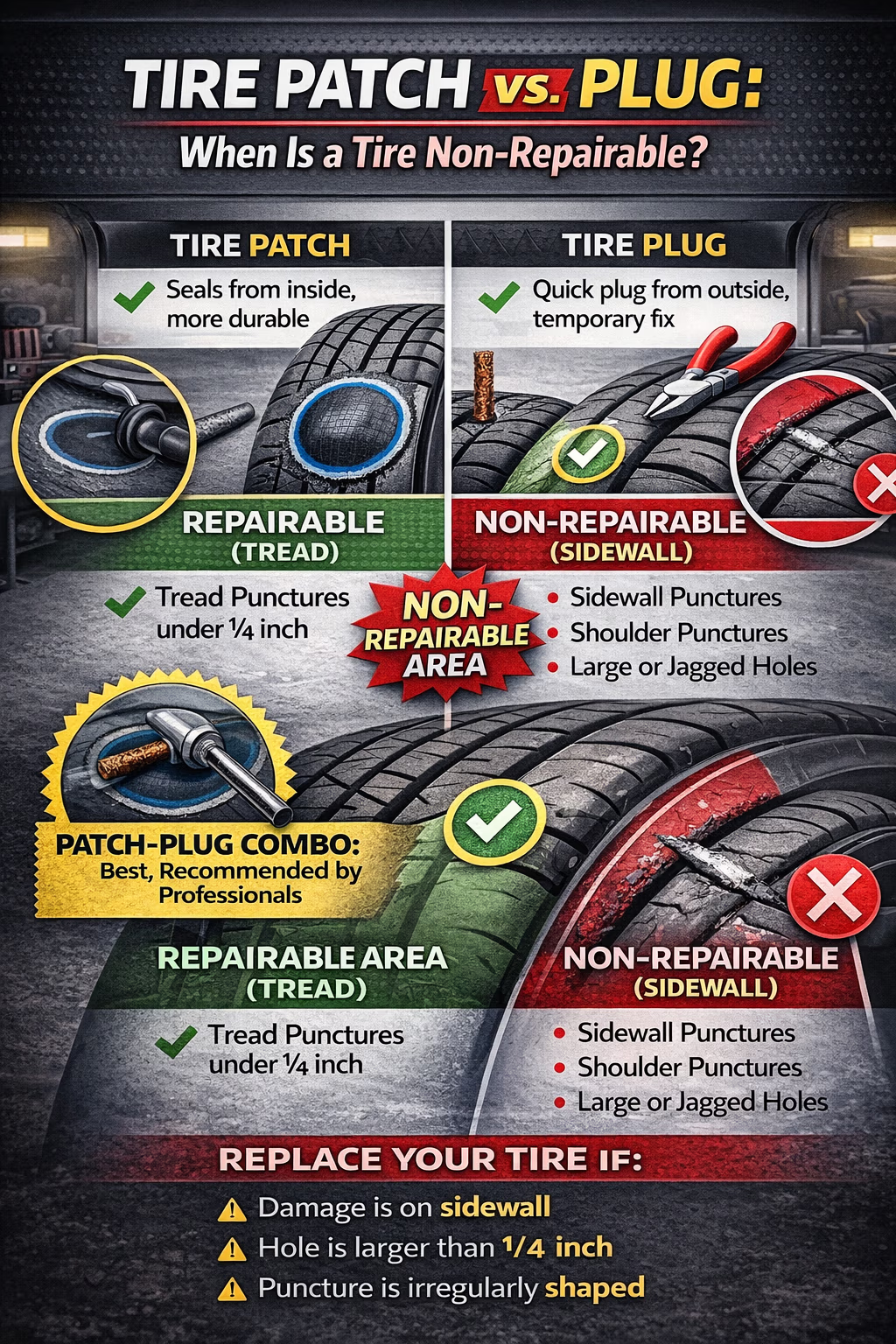
The proliferation of DIY tire plug kits might suggest that most tire punctures are simple fixes. However, the reality is far more nuanced. While a quick plug can be a lifesaver in an emergency, it’s crucial to understand its limitations and when it is genuinely appropriate.
Conversely, a tire patch, often installed professionally from the inside, is generally considered a more permanent solution. The fundamental difference in how these repairs are performed and their underlying structural implications often dictates their suitability.
More importantly, the location of the puncture on the tire is the single most critical factor determining whether a repair is even possible. Ignoring these distinctions can lead to compromised structural integrity, unexpected blowouts, and severe safety risks.
What This Article Will Cover: Your Guide to Tire Repair Decisions
This comprehensive guide will equip you with the knowledge to navigate the complexities of tire repair. We will begin by dissecting the anatomy of a tire, explaining why puncture location is paramount. You will learn the distinct characteristics and limitations of tire plugs and understand when they might serve as a temporary fix.
We will then delve into the industry-standard tire patch and the recommended plug-patch combination. Crucially, we will address the unrepairable nature of sidewall damage and the dangers associated with attempting such repairs.
Finally, we will explore special cases like run-flat tires, the risks of improper DIY repairs, the indispensable role of professional technicians, and how to make the ultimate decision between repairing and replacing your tires, all with an unwavering focus on safety and structural integrity.
Understanding Tire Anatomy: Why Puncture Location is Critical
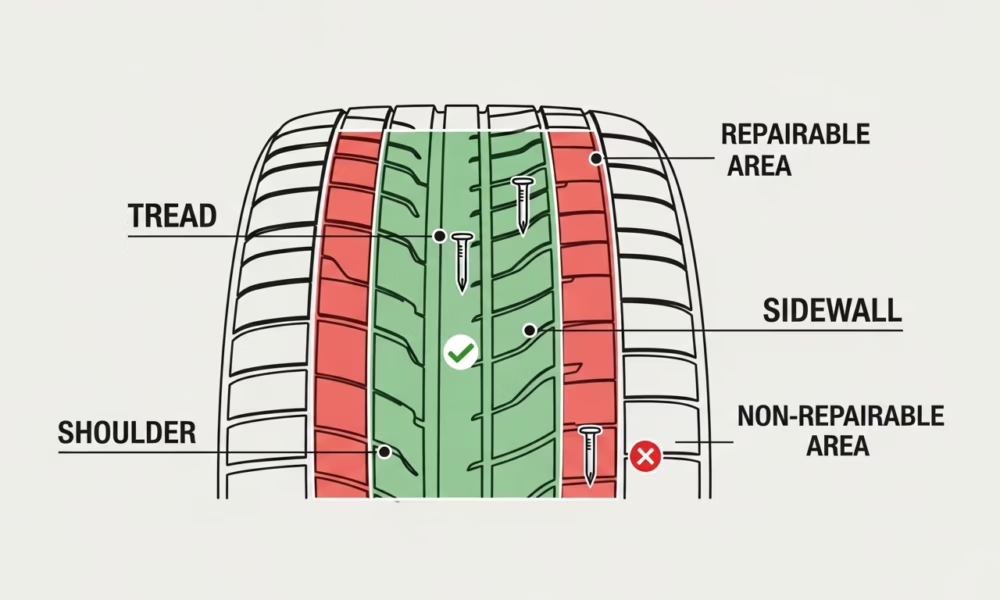
The location of a puncture is the most critical factor in determining if a tire can be safely repaired. Repairs are only considered safe within the central tread area, away from the shoulders and sidewall.
Your tires are complex pieces of engineering, designed to provide grip, support your vehicle’s weight, and absorb road imperfections. They are not monolithic structures; different parts are designed for vastly different purposes and subjected to varying stresses.
Understanding these distinctions is the first step to comprehending why a puncture in one area might be safely repaired, while a similar puncture elsewhere could render the tire scrap. The materials, construction, and the dynamic forces acting upon each part of the tire dictate its repairability.
The Tire Tread: Built for Durability and Road Contact
The tread is the outermost layer of the tire that directly contacts the road. It’s engineered with deep grooves and patterns to provide traction for acceleration, braking, and steering in various conditions.
The tread compound is typically a robust blend of rubber and reinforcing materials designed to withstand significant abrasion, heat, and stress from constant contact with the road surface.
This area is also reinforced with steel belts beneath the rubber, providing structural stability and puncture resistance against road debris like nails and screws. Because the tread area is designed for durability and is relatively stiff, small punctures within its boundaries can often be repaired.
The Tire Sidewall: Designed for Flexibility, Not Repair
In stark contrast to the tread, the tire sidewall is the part of the tire between the tread and the wheel rim. Its primary function is to provide flexibility, absorbing shocks from the road and contributing to a comfortable ride.
The sidewall is constructed with layers of rubber and fabric or steel cords, but crucially, it lacks the rigid steel belts found in the tread. This inherent flexibility allows the tire to deform and flex as it rolls, but it also makes the sidewall a high-stress area, particularly when the tire is under load or at speed.
The constant flexing means any repair made to the sidewall would be subjected to immense, repetitive stress, making it highly prone to failure.
Defining the “Repair Zone”: Where Safety and Structure Align
The automotive industry and tire manufacturers have established a clear definition for the safe “repair zone” of a tire. This zone is confined to the tread area, specifically the portion of the tire that faces the road and is covered by steel belts.
This repairable area is generally considered to extend from the outermost groove to within about one inch of the tire’s edge where the tread meets the sidewall, often referred to as the shoulder. Damage that occurs outside this designated repair zone, including any damage to the sidewall or the shoulder itself, is universally deemed unrepairable.
The diameter of the puncture, while a factor, is secondary to its location; even a small puncture outside the repair zone poses a significant safety risk. This distinction is critical for understanding why a nail in the middle of your tread is a different proposition than a nail near the edge.
Tire Plugs: A Quick Fix with Specific Limitations
Tire plugs, often referred to as string plugs or mushroom plugs, are a common and readily available solution for tire punctures. They are typically made of sticky, fibrous rubber that is inserted into the puncture from the outside of the tire.
What is a Tire Plug?
A tire plug is essentially a strip of pliable rubber impregnated with a sticky sealant. When inserted into a puncture caused by a foreign object like a nail or screw, the plug is intended to expand and create a temporary seal, preventing air loss.
Different types exist, including simple string plugs that fill the hole and mushroom-shaped plugs that also create a larger sealing surface on the inside of the tire. Their primary purpose is to quickly stop air leakage.
When a Tire Plug is (Temporarily) Appropriate
Tire plugs are generally considered a temporary, emergency solution for small tread punctures caused by objects like a nail or screw. They are often used for DIY repairs when a driver is far from professional assistance, especially in an emergency situation.
If you encounter a slow leak and have a tire plug kit, it can provide enough temporary sealing to allow you to reach a tire shop for a proper inspection and repair. It’s important to remember that these are not intended as a permanent fix.
The Plug’s Weakness: Why It’s Often Not a Permanent Solution
While a plug can stop air loss, it rarely restores the tire’s original structural integrity. The plug seals the hole from the outside, but it doesn’t reinforce the internal structure of the tire. Over time, the constant flexing of the tire during driving can cause the plug to loosen, leading to slow air leaks or even a sudden loss of pressure. The primary concern with plug-only repairs is the lack of attention to the tire’s internal structure, which can compromise its overall durability and create a safety risk.
Key Safety Considerations for Plug-Only Repairs
Relying solely on a tire plug carries inherent risks. The plug can fail without warning, potentially leading to a rapid deflation or blowout, which can cause a loss of vehicle control.
Issues with air pressure can also arise if the plug doesn’t seal perfectly. For this reason, any tire repaired with a plug should be inspected by a qualified professional as soon as possible. The plug is a temporary measure, and the tire should be assessed for a proper internal repair or replacement.
Tire Patches: The Industry Standard for Permanent Tread Repair
While plugs offer a quick fix, tire patches, especially when combined with a plug, represent the industry-accepted standard for permanent tire repair in the tread area. These repairs are performed from the inside of the tire, allowing for a thorough inspection and a more robust, long-lasting seal.
What is a Tire Patch?
A tire patch is a piece of reinforced rubber designed to be affixed to the inside surface of the tire, specifically the innerliner – the airtight layer closest to the wheel. The patch creates a permanent chemical seal by bonding with the tire’s innerliner. Unlike a plug that fills the void from the outside, a patch seals the tire internally, preventing air from escaping through the puncture.
The Combined Power: Plug-Patch Repair Units
The most recommended and safest method for repairing a punctured tire in the tread area involves a combination of a plug and a patch. This tire repair patch and plug combo, often called a tire plug-patch or a vulcanized plug, addresses the puncture from both the inside and the outside.
A plug is inserted through the tread to seal the initial hole, while a patch is applied to the innerliner from the inside, reinforcing the area and ensuring a lasting seal. This combined repair unit provides both a plug for the void and a patch for the innerliner, effectively sealing the puncture and helping to maintain the tire’s structural integrity.
Industry bodies like the U.S. Tire Manufacturers Association (USTMA) and the Tire Industry Association (TIA) endorse this method as the correct and proper way to perform a tire repair, though it is important to note that repairs can sometimes invalidate the tire speed rating.
When a Patch or Plug-Patch is the Right Choice
A patch or, more commonly, a tire plug-patch is the appropriate repair method for punctures located within the designated tread area. The puncture must not exceed the recommended size limit, typically 1/4 inch (6.35 mm) in diameter. Professional installation by a tire repair professional is essential.
These technicians have the expertise and tools to properly inspect the tire for internal damage, clean the area, and apply the repair unit correctly, ensuring a safe and durable fix that meets industry standards.
Sidewall Damage: The Unrepairable Zone and Why
The most critical rule in tire repair is that damage to the sidewall or shoulder of a tire is almost always unrepairable. This is not a matter of opinion but a fundamental limitation dictated by tire design and the physics of stress distribution.
The Dangers of Attempting Sidewall Repair
Attempting to repair a sidewall puncture or cut is extremely dangerous and carries a significant safety risk. The sidewall is designed for flexibility, not rigidity. Any attempt to plug or patch this area will create a weak point. Under the constant flexing and pressure of driving, this weak point is highly likely to fail catastrophically, leading to a sudden and violent tire blowout.
A blowout at speed can result in a complete loss of vehicle control, posing a grave danger to the driver, passengers, and other road users. According to the National Highway Traffic Safety Administration (NHTSA), tire-related crashes result in thousands of fatalities annually, underscoring the importance of heeding repair limitations.
Shoulder Damage: A “No-Go” Zone Often Confused with Tread
The shoulder of the tire, the curved area where the tread meets the sidewall, is another critical zone that is generally not repairable. While it appears to be part of the tread, it experiences significant flexing and stress during cornering.
Punctures or cuts in this area are too close to the sidewall’s flexible structure and the inherent stresses involved to be repaired safely and reliably with standard methods. It is a common point of confusion, with drivers mistaking a shoulder puncture for a repairable tread puncture.
The Only Safe Solution for Sidewall Damage: Tire Replacement
For any damage, whether it’s a cut, puncture, bulge, or crack, that affects the sidewall or the shoulder of the tire, the only safe course of action is tire replacement.
Investing in new tires is a fundamental aspect of ensuring your safety and the safe operation of your vehicle.
Special Cases and What to Avoid
Beyond the standard tire construction, certain specialized tires and common DIY practices introduce additional considerations and risks that drivers must be aware of.
Run-Flat Tires: Repair Guidelines and Limitations
Run-flat tires are designed with reinforced sidewalls that allow a vehicle to be driven for a limited distance at a reduced speed even after a complete loss of air pressure. Due to their specialized construction, which includes internal support systems to bear the vehicle’s weight without air, run-flat tires often have stricter repair policy guidelines.
Many manufacturers and tire shops consider run-flat tires non-repairable once they have been driven on with zero air pressure, regardless of the puncture’s location, due to potential internal structural damage that cannot be visually inspected. Always consult the tire manufacturer’s specific guidelines and a professional technician regarding the repairability of run-flat tires.
The Risks of Improper DIY Repairs
While DIY repairs can seem appealing for their immediacy and cost-effectiveness, they carry significant safety risks when not performed correctly or when the damage is beyond what a DIY kit can safely address. Using only a plug, failing to properly inspect the tire’s interior, or attempting to repair damage outside the designated tread area can lead to the same catastrophic failures as any other improper repair.
Furthermore, some DIY repairs might void your tire warranty. While a plug can be a temporary measure to get you to a professional, it should never be considered a permanent fix. The expertise and specialized equipment of professional assistance are invaluable for ensuring a truly safe and lasting repair.
The Indispensable Role of Professional Tire Technicians
When it comes to tire repair, the expertise of trained technicians cannot be overstated. They possess the knowledge, tools, and experience to accurately diagnose tire damage and perform repairs that meet safety standards.
Ensuring Safety and Durability
A tire repair professional can properly inspect the tire for internal damage that might not be visible from the outside. They can determine if a puncture is within the safe repair zone, assess the extent of any damage, and apply the correct repair method—ideally a plug-patch combination.
They understand the nuances of rubber compounds, sealant technologies, and the structural requirements for a safe repair. Their work ensures the durability of the repair and, most importantly, the safety of the vehicle and its occupants.
Relying on a certified auto technician for your tire repair is the most reliable way to ensure your tires are roadworthy after sustaining damage.
Making an Informed Decision: Repair vs. Replace
Deciding whether to repair a damaged tire or replace it involves weighing several factors, with safety and long-term value at the forefront.
Considering Cost, Wear, and Durability
The immediate cost to patch a tire professionally is significantly less than purchasing new tires. However, this should be weighed against the overall tire wear and remaining tread depth. If a tire is already close to its wear limit (below 2/32″ or 1.6 mm), even a perfect repair may not offer substantial remaining durability or safe miles.
A tire with a properly executed plug-patch repair in the tread area can last for many thousands of miles, often as long as the tire’s remaining tread life.
However, if the damage is to the sidewall or shoulder, or if the puncture is too large or complex, replacement is the only option, regardless of cost considerations. The decision ultimately balances immediate expense against the assurance of long-term safety and performance.
Conclusion: Prioritizing Safety and Structural Integrity
The integrity of your vehicle’s tires is paramount to safe driving. While the convenience of DIY tire plug kits is undeniable, understanding the fundamental differences between plugs, patches, and their application based on puncture location is crucial.
A tire plug can be a valuable emergency tool for minor tread punctures, but it is rarely a permanent solution. Tire patches, especially when used in conjunction with a plug (the plug-patch combo), are the industry-standard for safe and lasting repairs within the designated tread area.
However, any damage to the sidewall or shoulder of a tire renders it unrepairable and necessitates immediate replacement to avoid potentially catastrophic failures and ensure vehicle control.
Recap: Key Takeaways on Plugs, Patches, and Puncture Location
Remember, the tread area is generally repairable for small punctures, while the sidewall and shoulder are not. Plugs offer a temporary fix for emergencies, but patches or plug-patch combinations installed by professionals are the benchmark for permanent repairs. Ignoring sidewall damage or attempting improper repairs is a serious safety risk.
The frequency of tire punctures is high, with millions occurring annually, and tire defects contribute significantly to vehicle breakdowns. While the global automotive tire market is vast and growing, the cost of a proper repair is negligible compared to the potential cost of an accident.
Your Best Bet: When in Doubt, Consult a Professional
The complexity of tire construction and the critical safety implications of improper repairs mean that professional expertise is invaluable. If you encounter a flat tire, suspect tire damage, or are unsure about the repairability of your tire, the safest and most reliable course of action is to seek the opinion of a qualified tire repair technician.
They have the diagnostic tools and knowledge to assess the damage accurately and advise on the best course of action, ensuring your safety and the longevity of your tires.
FAQs About Tire Repair
Is a tire plug considered a permanent fix?
Technically, no. While many drivers drive on plugs for years without issue, tire manufacturers and safety organizations consider a simple string plug to be a temporary emergency repair. A plug seals the hole from the outside but does not seal the inner liner or fill the void inside the rubber. The only “permanent” repair approved by the Tire Industry Association is a plug-patch combination applied from the inside of the tire.
Can you ever repair a puncture in the tire sidewall?
No. It is never safe to repair a puncture in the sidewall or the “shoulder” area of a tire. The sidewall undergoes immense flexing and structural stress while driving. A patch or plug in this area will eventually fail, potentially causing a catastrophic blowout. If your sidewall is damaged, the tire must be replaced immediately.
How close to the edge can a tire be patched?
A safe repair can only be performed in the “crown” area of the tire—roughly the center 60-70% of the tread. A good rule of thumb is that the puncture must be at least 1/2 inch to 1 inch away from the shoulder (where the tread starts to curve into the sidewall). If the puncture is on that curved edge, it is in the non-repairable danger zone.
Is it better to patch or plug a tire?
Patching (specifically using a one-piece plug-patch) is significantly better and safer.
Plug: Quick, cheap, and done from the outside. Good for emergencies to get you to a shop.
Patch: Done from the inside. It seals the inner liner to hold air pressure and fills the puncture hole to prevent water from entering and rusting the steel belts.
Can run-flat tires be repaired?
It depends on the manufacturer. Some brands (like Michelin) allow one repair if the puncture is in the center tread and the tire was not driven on with zero pressure. However, many other manufacturers (like Pirelli or Bridgestone) often state that their run-flat tires cannot be repaired once they have been driven on low pressure, as the internal structure may be compromised. Always check your specific tire’s warranty policy.
How many times can you patch a single tire?
Most tire manufacturers allow a maximum of two repairs on a single tire, provided they are not too close to each other (usually they must be at least 16 inches apart). However, if the repairs are done correctly with a plug-patch, the tire’s speed rating is often voided or lowered, meaning you should not drive at high sustained speeds.