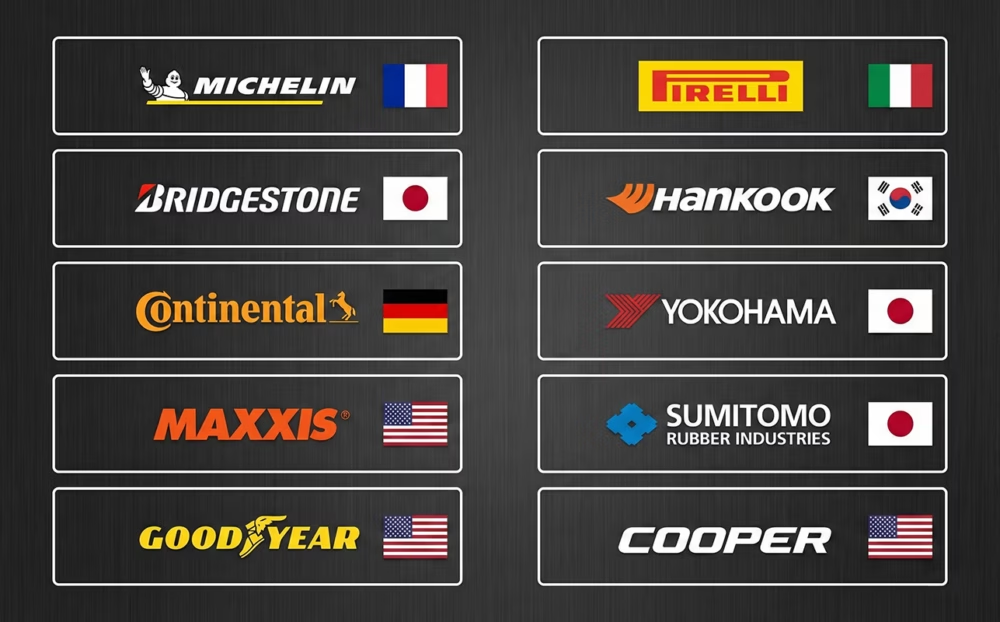
Top tire manufacturers is an essential topic to understand. The global tire industry generates over $180 billion annually, making it one of the most significant automotive sectors worldwide. With millions of vehicles hitting the roads daily, the demand for reliable, high-performance tires continues to surge across passenger cars, commercial vehicles, and specialty applications.
Understanding the landscape of top tire manufacturers requires examining both market share and innovation capacity. The industry is dominated by established giants who have spent decades perfecting rubber compounds, tread designs, and manufacturing processes. These leaders don’t just produce tires—they shape how vehicles perform, from fuel efficiency to safety margins on wet roads.
The competition for producing the best tires for cars has intensified dramatically as manufacturers race to meet evolving consumer demands. Today’s drivers expect tires that deliver superior grip, extended longevity, reduced rolling resistance for better fuel economy, and enhanced comfort.
According to industry analysis, the automotive tire market is projected to grow significantly through 2029, driven by increasing vehicle production and replacement demand.
What sets the market leaders apart isn’t just size—it’s their ability to innovate consistently whilst maintaining quality across millions of units. From revolutionary tread compounds to smart tire technology, the top manufacturers are redefining what’s possible on four wheels.
Let’s examine how innovation leader Michelin has maintained its position at the industry’s forefront.
- 1. Michelin: Leading Through Innovation
- 2. Bridgestone: A Close Competitor
- 3. Goodyear: An American Giant
- 4. Continental: German Engineering Excellence
- 5. Pirelli: Synonymous with Performance
- 6. Sumitomo: Innovation and Expansion
- 7. Hankook: Emerging Global Player
- 8. Yokohama: Consistent Quality and Reliability
- 9. Maxxis: From Niche to Mainstream
- 10. Cooper: The American Performance Value
- Factors Influencing Market Leadership in the Tire Industry
- Limitations and Considerations
- Key Top Tire Manufacturers Takeaways
- Frequently Asked Questions
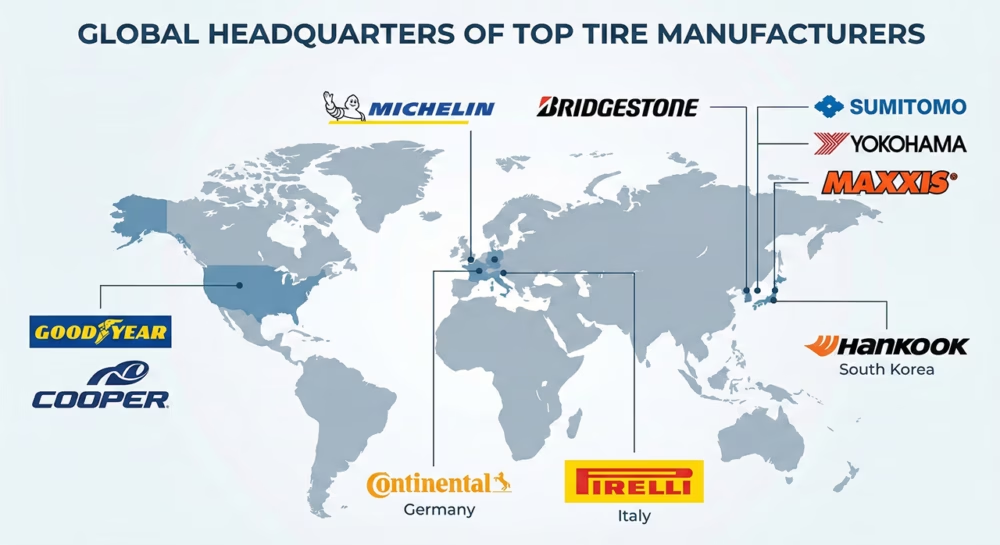
1. Michelin: Leading Through Innovation
Michelin stands as the undisputed global leader in tire manufacturing, commanding an impressive 22.1% market share and generating annual revenues exceeding $28 billion. The French multinational has maintained its position at the top through decades of groundbreaking innovation and strategic market positioning that sets it apart from other leading tire brands.
Founded in 1889, Michelin has consistently pushed the boundaries of tire technology. The company pioneered the removable pneumatic tire and continues to lead with innovations like the revolutionary airless tire concept and advanced rubber compounds that deliver superior fuel efficiency. Their commitment to research and development represents nearly 4% of annual revenue, substantially higher than industry averages.
What distinguishes Michelin from competitors is their premium positioning strategy. Rather than competing solely on price, they’ve built a reputation for quality, durability, and performance that commands higher margins. This approach has proven particularly effective in markets with sophisticated consumers who prioritise long-term value over initial cost.
The company’s global reach spans 170 countries, with manufacturing facilities strategically located across five continents. This extensive network allows Michelin to serve diverse markets effectively whilst maintaining quality standards. Interestingly, whilst Michelin dominates globally, US tire manufacturers face increasing competition from this European giant’s growing American presence.
Michelin’s success story provides valuable context as we examine how other major manufacturers position themselves in this competitive landscape.
2. Bridgestone: A Close Competitor
Japanese tire manufacturer Bridgestone holds the second-largest market share globally, maintaining fierce competition with the Michelin tire leader through strategic innovation and aggressive expansion. The company commands approximately 19.8% of the worldwide tire market, making it a formidable challenger in the industry’s upper echelons.
Founded in 1931, Bridgestone has built its reputation on superior quality control and cutting-edge research capabilities. The company operates 181 production facilities across 24 countries, enabling rapid response to regional market demands whilst maintaining consistent quality standards. Their Potenza and Ecopia product lines have become synonymous with high-performance and eco-friendly driving respectively.
Bridgestone’s competitive advantage lies in its diversified portfolio strategy. Unlike many competitors who focus primarily on passenger vehicles, Bridgestone maintains strong positions across commercial trucking, aircraft, and specialty industrial applications. This diversification provides crucial revenue stability during automotive market fluctuations.
The company invests heavily in sustainable tire technology, including their groundbreaking work with guayule rubber as a natural alternative to petroleum-based materials. Their Tokyo headquarters houses one of the industry’s most advanced research centres, developing everything from run-flat innovations to IoT-enabled smart tires.
Recent partnerships with major automotive manufacturers like Toyota, Ford have solidified Bridgestone’s position as the primary challenger to market leaders, and setting the stage for continued rivalry with American competitors.
3. Goodyear: An American Giant
The Goodyear Tire & Rubber Company represents one of America’s most enduring industrial success stories, maintaining its position as the third-largest tire manufacturer globally with a market share that consistently challenges both Michelin and the Bridgestone market leader. Founded in 1898, this Ohio-based company has weathered over a century of economic upheavals whilst building a reputation for innovation and reliability.
Goodyear’s strength lies in its diverse portfolio approach, manufacturing tyres for virtually every vehicle category from passenger cars to commercial aviation. The company’s run-flat technology and all-weather tyre compounds have become industry benchmarks, particularly in the North American market where it commands significant respect amongst both consumers and automotive manufacturers.
What sets Goodyear apart is its strategic focus on premium segments and original equipment partnerships. The company supplies tyres to major automotive manufacturers including Ford, General Motors, Tesla, and creating a steady revenue stream that cushions against market volatility.
According to industry analysis, premium tyre segments continue showing robust growth, positioning Goodyear advantageously for sustained expansion. The American giant’s recent investments in sustainable manufacturing and smart tyre technology demonstrate its commitment to remaining competitive as the industry evolves towards more environmentally conscious solutions and digitally integrated automotive systems.
4. Continental: German Engineering Excellence
Continental AG stands as Europe’s largest tire manufacturer and ranks among the top four global tire producers, showcasing the precision and innovation synonymous with German engineering. Founded in 1871 in Hanover, the company has evolved from a rubber manufacturer into a comprehensive automotive technology powerhouse that extends far beyond tire production.
The German giant’s tire division generates approximately €12.3 billion in annual revenue, positioning it strategically within the competitive landscape that includes the dominant Goodyear tire market presence in North America. Continental’s strength lies in its integration of tire manufacturing with advanced automotive technologies, creating synergies that benefit both divisions.
Continental’s premium positioning centres on cutting-edge technology integration, particularly in developing intelligent tires equipped with sensors and connectivity features. The company’s ContiSense technology represents a breakthrough in tire monitoring, providing real-time data on tread depth, temperature, and pressure—innovations that align perfectly with the automotive industry’s shift towards autonomous vehicles.
The manufacturer maintains strong relationships with European automotive OEMs, supplying tires for luxury brands including BMW, Mercedes-Benz, and Audi. Continental’s focus on sustainability has resulted in tires containing up to 15% renewable materials, demonstrating environmental responsibility whilst maintaining performance standards.
This technological prowess and environmental consciousness position Continental as a formidable competitor against established giants, combining traditional German engineering excellence with forward-thinking innovation that addresses tomorrow’s mobility challenges.
5. Pirelli: Synonymous with Performance
Pirelli stands as the premium specialist amongst the world’s major tire manufacturers, carving out a distinctive niche through its unwavering focus on high-performance and ultra-high-performance tires. Unlike the broader strategies employed across the Continental tire industry, other major manufacturers, Pirelli has deliberately concentrated on the luxury, motorsport segments, and creating an enviable reputation that commands premium pricing.
Founded in 1872 in Milan, Pirelli has become synonymous with Formula 1 racing, serving as the sport’s exclusive tire supplier since 2011. This motorsport heritage translates directly into consumer products, with the company’s P Zero range epitomising cutting-edge performance technology. The Italian manufacturer’s approach differs markedly from volume-focused competitors, instead prioritising research and development that pushes the boundaries of tire performance.
Pirelli’s strategic positioning in the premium segment has proven remarkably resilient, even as the global tire market faces increasing price pressures. The company maintains manufacturing facilities across Europe, South America, and Asia, with particular strength in original equipment partnerships with luxury automotive brands including Ferrari, Lamborghini, and Maserati.
This focus on performance excellence and premium positioning has established Pirelli as the benchmark for high-end tire technology, setting the stage for examining how Japanese manufacturers like Sumitomo have pursued innovation through different strategic approaches.
6. Sumitomo: Innovation and Expansion
Sumitomo Rubber Industries has quietly established itself as a formidable force in the global tire industry, demonstrating that innovation-driven expansion can challenge traditional market hierarchies. Whilst not the largest tire manufacturer by volume, the Japanese company has carved out a distinctive position through strategic partnerships and technological advancement.
The company’s dual-brand approach has proven particularly effective in capturing diverse market segments. Through its Dunlop brand, Sumitomo targets the premium performance sector, whilst Falken appeals to younger, sport-oriented consumers seeking cutting-edge technology. This strategic positioning allows Sumitomo to compete across multiple price points without diluting brand identity.
Sumitomo’s commitment to sustainable innovation sets it apart from many competitors. The company has invested heavily in developing tyres with enhanced fuel efficiency and reduced environmental impact, responding to growing consumer awareness of sustainability issues. Their advanced silica compounds and optimised tread patterns demonstrate how Japanese engineering principles can deliver both performance and environmental benefits.
Strategic global expansion has transformed Sumitomo from a domestic player into an international competitor. Manufacturing facilities across Asia, Europe, and the Americas ensure regional market responsiveness whilst maintaining quality consistency. This geographical diversification has proven crucial in weathering regional economic fluctuations and supply chain disruptions.
The company’s focus on motorsport partnerships continues to drive technological development that eventually filters into consumer products, maintaining their reputation for high-performance innovation.
7. Hankook: Emerging Global Player
Hankook Tire has transformed itself from a regional South Korean manufacturer into one of the most dynamic competitors amongst the top 10 tire brands worldwide. Founded in 1941, the company has demonstrated remarkable growth trajectory over the past two decades, establishing manufacturing facilities across four continents and securing partnerships with premium automotive manufacturers.
The company’s aggressive expansion strategy has positioned it as a formidable challenger to established European and Japanese competitors. Hankook operates state-of-the-art facilities in South Korea, China, Hungary, Indonesia, and the United States, with their Tennessee plant representing a significant investment in the North American market. This global footprint enables the company to serve local markets efficiently whilst maintaining competitive pricing structures.
Hankook’s technology-driven approach has earned recognition from major automotive manufacturers, securing original equipment contracts with brands including BMW, Mercedes-Benz, and Audi. Their focus on ultra-high-performance tyres and innovative compounds has particularly resonated with the premium segment, where the company competes directly against established European manufacturers.
The company’s commitment to sustainability and smart tyre technology positions it well for future market demands. Hankook’s strategic vision extends beyond traditional manufacturing, incorporating digital solutions and environmentally conscious production methods that appeal to increasingly sophisticated consumers seeking both performance and environmental responsibility.
8. Yokohama: Consistent Quality and Reliability
Yokohama Rubber Company has cultivated a reputation as one of Japan’s most dependable tire manufacturers, consistently delivering products that balance performance with longevity. Founded in 1917, the company has evolved from a regional player into a globally recognised brand that prioritises engineering excellence over flashy marketing.
The company’s approach to quality control sets it apart from many competitors. Yokohama’s manufacturing philosophy centres on precision engineering and rigorous testing protocols, resulting in tires that consistently meet demanding performance standards across diverse driving conditions. This methodical approach has earned the brand particular favour amongst enthusiasts who value reliability over cutting-edge innovation.
While Yokohama may not challenge Bridgestone or Michelin as the biggest tire producer globally, its strategic positioning in premium segments has proven remarkably sustainable. The company excels in specific niches, particularly high-performance summer tires and motorsport applications, where its ADVAN line has garnered considerable respect.
Yokohama’s global footprint includes manufacturing facilities across Asia, North America, Russia, enabling responsive supply chain management, and regional customisation. The company’s BLUEARTH technology demonstrates its commitment to environmental responsibility whilst maintaining performance standards, appealing to increasingly eco-conscious consumers.
What distinguishes Yokohama most notably is its consistency – drivers know exactly what to expect from the brand, making it a trusted choice for those seeking reliable, well-engineered tires without surprises.
9. Maxxis: From Niche to Mainstream
Maxxis International has orchestrated one of the most impressive transformations in the global tire industry, evolving from a specialized manufacturer into a comprehensive tire solution provider that now competes directly with established giants.
Founded in Taiwan in 1967, this manufacturer has systematically expanded its market presence through strategic acquisitions and innovative product development.
The company’s ascent to mainstream recognition stems from its dual-track approach of maintaining excellence in specialized segments whilst aggressively pursuing general passenger vehicle markets. Maxxis initially built its reputation in motorcycle and bicycle tires, where precision engineering and performance characteristics established the brand’s credibility amongst enthusiasts and professional applications.
This foundation proved invaluable as Maxxis expanded into passenger car tires, leveraging its technical expertise to develop products that appeal to budget-conscious consumers without compromising safety standards. The brand has gained particular traction in North America, where value-oriented buyers increasingly recognize Maxxis as a viable alternative to premium brands, contributing to discussions about the best tire brand USA markets can offer at competitive price points.
What sets Maxxis apart is its ability to scale production efficiently whilst maintaining quality control across diverse product lines. The company’s manufacturing facilities span multiple continents, enabling responsive supply chain management and regional market adaptation. This operational flexibility has positioned Maxxis as a formidable competitor, suggesting that market leadership increasingly depends on adaptability rather than heritage alone.
10. Cooper: The American Performance Value
Cooper is one of the few remaining major American tire brands that successfully bridges the gap between premium performance and mid-range pricing. Founded in 1914 in Ohio, the brand has built a reputation for manufacturing “workhorse” tires that prioritize longevity and ruggedness. While Cooper was acquired by Goodyear in 2021, it remains a distinct brand known for its proprietary technology and excellent value-for-money.
What sets Cooper apart is its focus on the replacement tire market rather than original equipment (OE). This means their engineers design tires specifically for drivers looking to improve upon the factory tires their vehicle came with, often resulting in better tread life and specialized performance for SUVs and light trucks.
Why Cooper is a Top Choice:
- Off-Road Heritage: Their Discoverer lineup is legendary among off-road enthusiasts for its cut-and-chip resistance and aggressive traction.
- Adaptive Traction Technology: Cooper utilizes specialized silica compounds and “SnowGroove” technology that helps their all-season tires maintain grip even as the tread wears down.
- Superior Treadwear: It is common to see Cooper tires with 60,000 to 80,000-mile warranties, making them a favorite for high-mileage commuters.
Top Recommended Cooper Tires: Based on our testing and long-term durability ratings, these are the standout models in the Cooper catalog:
- All-Season: Cooper Evolution Tour – A smooth-riding tire designed for fuel efficiency and a quiet cabin.
- All-Terrain: Cooper Discoverer AT3 XLT – Widely considered one of the best AT tires for heavy-duty hauling and off-road durability.
- Highway/SUV: Cooper Evolution H/T – A stable, long-lasting choice for crossovers and SUVs that stay primarily on pavement.
- Mud-Terrain: Cooper Discoverer STT Pro – The flagship for extreme mud and rock crawling performance.
- Winter: Cooper Evolution Winter – A studdable winter tire that offers superior “bite” in deep snow and slush.
Whether you are looking for a reliable set of all-seasons for the family sedan or a beefy set of tires for a 4×4, Cooper provides a dependable, “no-nonsense” alternative to the more expensive luxury brands.
Factors Influencing Market Leadership in the Tire Industry
Market leadership in the global tire industry hinges on several interconnected factors that determine which manufacturers rise to prominence and sustain their positions over time. Understanding these dynamics reveals why certain brands dominate whilst others struggle to gain traction in an increasingly competitive landscape.
Innovation and R&D investment stands as perhaps the most critical differentiator. Leading manufacturers consistently allocate substantial resources to developing new technologies, from advanced rubber compounds to smart tire sensors. This commitment to innovation directly correlates with market share growth and the ability to command premium pricing.
Manufacturing scale and efficiency creates powerful competitive advantages through economies of scale. The top tire manufacturers globally demonstrate how production capacity directly influences market positioning, with larger operations enabling cost advantages and wider distribution networks.
Brand reputation and consumer trust significantly impact purchasing decisions, particularly when consumers evaluate the most reliable tire brands for their vehicles. Established manufacturers benefit from decades of proven performance, whilst newer entrants must invest heavily in building credibility through consistent quality delivery.
Market trends also play a decisive role, with current industry movements showing increased demand for sustainable and high-performance products. Companies that anticipate and adapt to these shifts—such as the growing electric vehicle market—position themselves advantageously for future growth.
However, even market leaders face challenges that can reshape competitive dynamics, particularly as new technologies and changing consumer preferences continue to evolve.
Limitations and Considerations
When analysing tire market leadership, several important caveats must be acknowledged that affect the accuracy and completeness of industry rankings. Market share data varies significantly depending on measurement criteria—whether calculated by revenue, unit sales, or regional focus—creating potential discrepancies in identifying who sells most tires USA versus global leaders.
Data availability represents a significant constraint in comprehensive market analysis. Privately held companies like Continental’s tire division often don’t disclose detailed financial breakdowns, whilst regional manufacturers may lack transparent reporting standards. This opacity makes definitive comparisons challenging, particularly when comparing established multinationals against emerging market players.
Geographic variations further complicate global assessments. A manufacturer dominant in European premium segments might hold minimal market share in Asian commercial vehicle sectors. Similarly, companies leading in original equipment manufacturing may lag in replacement tire sales, creating different leadership narratives depending on the specific market segment examined.
Timing considerations also matter considerably. Industry rankings can shift dramatically due to acquisitions, strategic partnerships, or economic disruptions. The semiconductor shortage affecting automotive production, for instance, temporarily altered OEM tire demand patterns, whilst regional trade policies continue reshaping competitive landscapes.
Finally, technological disruption introduces uncertainty into traditional market dynamics. The transition toward electric vehicles demands different tire specifications, potentially favouring manufacturers with advanced research capabilities over those relying primarily on conventional tire expertise.
These limitations underscore the complexity inherent in definitively ranking tire manufacturers.
Key Top Tire Manufacturers Takeaways
The tire industry’s market leadership reflects a complex ecosystem where traditional powerhouses continue to dominate whilst emerging players reshape competitive dynamics. Bridgestone maintains its position as the global leader, consistently answering the question of what is #1 tire brand through superior manufacturing scale, technological innovation, and strategic market positioning across multiple vehicle segments.
Market leadership extends beyond simple revenue rankings, encompassing factors such as research, development investment, sustainability initiatives, and adaptability to emerging technologies like electric vehicle requirements. The industry’s top nine manufacturers have each carved distinct niches—from Michelin’s premium positioning to Continental’s technology focus—demonstrating that success requires differentiated value propositions rather than one-size-fits-all approaches.
Regional preferences significantly influence global standings, with local manufacturers like Zhongce Rubber gaining prominence in their home markets whilst established brands maintain international presence. The tire market’s projected growth to $295 billion by 2029 underscores the continued importance of strategic positioning and innovation capability.
As the industry navigates evolving consumer demands, sustainability requirements, and technological disruption, market leadership will increasingly depend on manufacturers’ ability to balance traditional performance metrics with emerging priorities. The next decade will likely witness further consolidation amongst smaller players whilst the current top tier continues to define industry standards through innovation and global reach.
Frequently Asked Questions
Which company is the largest tire manufacturer in the world?
Michelin is the largest tire manufacturer globally, commanding a 22.1% market share and generating over $28 billion in annual revenue.
What sets Bridgestone apart from other leading tire brands?
Bridgestone distinguishes itself through superior quality control, a diversified portfolio across various vehicle types, and significant investments in sustainable tire technology.
How does Goodyear maintain its position in the tire market?
Goodyear maintains its position as the third-largest tire manufacturer by offering a diverse portfolio that caters to various vehicle categories and focusing on innovation and reliability.
What innovations has Michelin introduced in tire technology?
Michelin has pioneered several innovations, including the removable pneumatic tire and advanced rubber compounds for better fuel efficiency, along with their airless tire concept.
What is the projected growth of the global tire market?
The global tire market is projected to grow significantly through 2029, driven by increasing vehicle production and replacement demand.