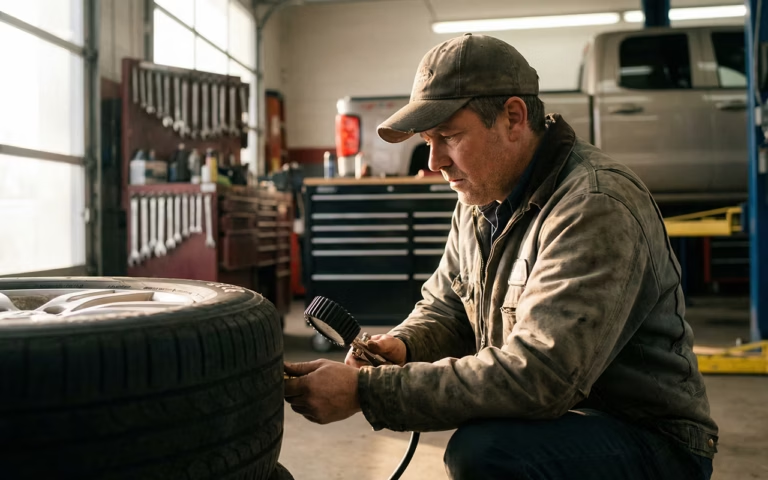
Your tires are the only contact point between your vehicle and the road, yet they’re often the most neglected component of automotive care. Proper tire maintenance isn’t just about extending tire life—it’s about ensuring your safety, maximizing fuel efficiency, and preventing costly breakdowns.
Most drivers overlook critical warning signs until it’s too late. According to tire industry data, 20% of vehicles have at least one tire that’s significantly underinflated. This neglect leads to premature wear, reduced fuel economy, and dangerous blowouts.
Signs of uneven tire wear—such as balding on one edge or irregular tread patterns—often indicate deeper issues with alignment, suspension, and or inflation practices. These red flags shouldn’t be ignored, as they compromise both performance and safety.
Effective tire maintenance encompasses regular pressure checks, tread depth monitoring, rotation schedules, and visual inspections. Understanding these fundamentals will help you recognize problems early and make informed decisions about repairs versus replacements.
- Understanding Tire Basics
- Routine Tire Maintenance Checklist
- Seasonal Considerations for Tire Maintenance
- Learn Tire Care Tips You Need to Be Doing Regularly
- What is the 3% tire rule?
- Common Misconceptions About Tire Care
- Must-Have Tire Maintenance Tools
- How to Practice Tire Changes at Home
- Limitations and Considerations
- Future Implications of Tire Maintenance
- Key Takeaways
- FAQs
Understanding Tire Basics
Before diving into any DIY tire maintenance guide, it’s essential to grasp the fundamental components that make your tires function effectively. Modern tires are sophisticated engineering marvels consisting of multiple layers working together: the tread provides traction, the sidewall offers structural support, and internal steel belts maintain shape under pressure.
The three critical measurements you’ll encounter throughout this ultimate guide to tire maintenance are tire size, load rating, and speed rating—all found on your tire’s sidewall. According to the NHTSA’s TireWise program, understanding these specifications is crucial for safe vehicle operation.
The tire size follows a standardized format like P215/60R16, where each number indicates width, aspect ratio, and rim diameter. Proper tire construction directly impacts your vehicle’s handling, fuel efficiency, and safety.
The tread depth, measured in 32nds of an inch, determines your tire’s ability to channel water and maintain grip on various surfaces. However, tire performance isn’t just about individual components—it’s about how air pressure, alignment, and rotation patterns work together to maximize longevity.
With these fundamentals in mind, you’re ready to explore specific maintenance practices that will keep your tires performing optimally.
Routine Tire Maintenance Checklist
Establishing a consistent routine for tire care is the foundation of safe driving and optimal vehicle performance. A systematic approach not only extends tire life but also helps identify potential issues before they become costly problems.
Monthly inspections should include checking tire pressure when tires are cold, examining tread depth using the penny test, and looking for signs of uneven wear patterns. Visual inspections for cuts, bulges, or embedded objects can prevent sudden failures on the road. According to the U.S. Tire Manufacturers Association, proper maintenance can increase tire life by up to 20%. Weekly checks during your regular vehicle walkthrough should focus on obvious damage or significant pressure loss. However, don’t rely solely on visual inspection for pressure—underinflated tires can appear normal while being dangerously low.
Essential tire care products for your maintenance routine include a reliable pressure gauge, tire pressure monitoring system, and appropriate cleaning supplies. Quality tire care goes beyond basic pressure checks to include proper storage during seasonal changes and understanding load ratings for your specific driving needs. This proactive maintenance approach naturally leads to one of the most important practices: regular tire rotation to ensure even wear patterns across all four tires.
Tire Rotation: How and Why
Tire rotation is the systematic practice of moving tires to different positions on your vehicle to ensure even wear patterns. Front tires typically wear faster due to steering, braking, and acceleration forces, making regular rotation essential for maximizing tire lifespan and maintaining optimal performance.
The standard rotation pattern for most vehicles involves moving front tires straight back and crossing rear tires to the front opposite sides. However, directional tires require a front-to-back rotation on the same side only. According to Cooper Tires, proper rotation can extend tire life by up to 20,000 miles when combined with correct tire pressure maintenance.
Before rotating, check what tire maintenance tools needed: a quality jack, lug wrench, torque wrench, and tire pressure gauge. Always maintain manufacturer-recommended tire pressure specifications after rotation, as pressure requirements may vary between front and rear positions on some vehicles.
Most manufacturers recommend rotation every 5,000-7,500 miles, though this timing can be adjusted based on your driving conditions and wear patterns. Regular rotation, combined with proper pressure monitoring, creates the foundation for comprehensive tire care that naturally leads into addressing wheel balance and alignment issues.
Tire Balancing and Alignment
Proper tire balancing and wheel alignment work hand-in-hand with tire rotation to maximize your investment and ensure safe driving conditions. While rotation addresses wear patterns, balancing corrects weight distribution issues that cause vibrations and premature tire deterioration.
Tire balancing involves adding small weights to your wheels to counteract heavy spots in the tire and wheel assembly. Unbalanced tires create noticeable vibrations at highway speeds and can reduce tread life by up to 30%. Signs you need balancing include steering wheel vibration, seat or floorboard vibrations, and uneven wear patterns despite regular tire rotation. Wheel alignment ensures your tires contact the road at the proper angle. Misalignment causes rapid, uneven tire wear and affects vehicle handling. Proper tire maintenance, including alignment checks, should be performed every 6,000 miles or when you notice pulling to one side.
Most tire professionals recommend balancing every 5,000-6,000 miles and alignment checks annually or after hitting significant potholes. These services complement your routine maintenance schedule and help ensure that seasonal changes don’t catch you unprepared with compromised tire performance.
Seasonal Considerations for Tire Maintenance
Seasonal changes demand specific adjustments to your tire maintenance routine to ensure optimal performance year-round. Temperature fluctuations affect tire pressure significantly, with tires losing approximately 1-2 PSI for every 10°F drop in temperature. Winter conditions require more frequent pressure checks, while summer heat can cause over-inflation if not monitored carefully.
Cold weather also impacts tire balancing, as the rubber compounds become stiffer and may reveal previously unnoticed imbalances. Schedule professional tire balancing during seasonal transitions, particularly before winter, when even minor vibrations can compromise traction on slippery surfaces.
Summer maintenance focuses on preventing heat-related damage through proper inflation and regular tread depth monitoring. Hot pavement and extended highway driving can accelerate wear patterns, making rotation schedules more critical during peak driving seasons.
However, seasonal maintenance extends beyond basic pressure and rotation adjustments. Understanding these seasonal fundamentals prepares you for the comprehensive tire care practices that ensure maximum performance and safety throughout the year.
Learn Tire Care Tips You Need to Be Doing Regularly
Establishing a consistent tire care routine goes beyond the basics—it’s about developing habits that protect your investment and ensure safety. Regular maintenance creates a foundation for optimal tire performance and longevity.
Monthly visual inspections should become second nature. Walk around your vehicle and look for unusual wear patterns, embedded objects like nails or screws, and sidewall damage such as bulges or cracks. These quick checks often reveal problems before they become costly repairs.
Check tire pressure at least once monthly, preferably when tires are cold. According to Consumer Reports, proper inflation is crucial for even tread wear and optimal fuel efficiency. Use a quality gauge and don’t rely solely on visual inspection—tires can lose significant pressure while still appearing normal.
Document your maintenance activities in a simple log or smartphone app. Track rotation dates, pressure readings, and any issues discovered. This record helps identify patterns and ensures you stay on schedule with preventive care.
Beyond routine checks, ensure your tire alignment remains within specifications. Proper alignment prevents premature wear and maintains vehicle stability, working alongside regular rotation to maximize tire life and performance consistency across all positions.
What is the 3% tire rule?
The 3% tire rule states that tires should be replaced when tread depth reaches 3/32 of an inch, providing a safety margin before reaching the legal minimum of 2/32 inch. This measurement represents the critical point where wet-weather traction begins to deteriorate significantly, making it a practical benchmark for proactive tire replacement.
Unlike the traditional penny test that indicates the absolute minimum tread depth, the 3% rule focuses on maintaining optimal safety performance rather than pushing tires to their legal limit. When tires reach this 3/32-inch threshold, stopping distances on wet pavement increase dramatically, and hydroplaning risk escalates substantially.
Understanding this rule helps drivers make informed decisions about how long do tires last in real-world conditions. Most quality tires begin at 10/32 to 12/32 inch of tread depth when new, meaning the 3% rule activates when approximately 70% of the tire’s usable tread has worn away.
Professional mechanics and tire experts increasingly recommend this conservative approach because it accounts for the exponential decrease in wet-weather performance that occurs in the final millimeters of tread life. The difference between 3/32 and 2/32 inch might seem minimal, but it represents the margin between controlled stopping and potential accidents on wet roads.
By following the 3% tire rule alongside regular maintenance practices covered throughout this guide, drivers can maximize both safety and value from their tire investment while avoiding the risks associated with worn tread.
Common Misconceptions About Tire Care
Despite decades of automotive education, several persistent myths continue to mislead drivers about proper tire maintenance. One widespread misconception suggests that tires should be replaced only when they’re completely worn down or flat. In reality, waiting until tread depth reaches dangerous levels significantly compromises vehicle safety and performance.
Another common fallacy claims that all four tires must be replaced simultaneously, regardless of their individual condition. While this approach works for some driving scenarios, it’s often unnecessary and costly. Mastering tire maintenance requires understanding when partial replacement makes sense, particularly when tread differences remain within acceptable limits.
The “visual inspection is enough” myth also persists among drivers who believe they can assess tire health through casual observation. However, internal damage, sidewall deterioration, and subtle tread irregularities often escape untrained eyes. Professional assessments reveal issues that could lead to sudden failures.
Having the right tools makes identifying these hidden problems much easier and more reliable.
Must-Have Tire Maintenance Tools
Having the right tools transforms tire maintenance from guesswork into precision care that maximizes tire lifespan. While basic equipment gets the job done, professional-grade tools provide accuracy that can extend tire life by thousands of miles.
A quality tire pressure gauge remains the cornerstone of any maintenance toolkit. Digital gauges offer superior accuracy over analog versions, with many models providing readings within 0.1 PSI. Combine this with a reliable air compressor or portable inflator to address pressure issues immediately rather than waiting for service station visits.
Tread depth measurement tools prove equally essential for safety monitoring. While the penny test provides rough estimates, a dedicated tread depth gauge delivers precise measurements crucial for replacement timing. Professional tire technicians use digital calipers for ultimate accuracy, measuring tread depth to the thousandth of an inch.
Don’t overlook tire rotation tools if you plan to extend tire lifespan through regular rotation. A quality jack, jack stands, and proper lug wrench ensure safe, efficient rotation at home. However, never compromise on safety equipment – inadequate lifting equipment poses serious risks during maintenance procedures.
With proper tools in hand, you’ll be ready to tackle routine maintenance confidently and safely practice more advanced procedures.
How to Practice Tire Changes at Home
Practicing tire changes in your driveway builds the confidence and muscle memory needed for roadside emergencies. Start by familiarizing yourself with your vehicle’s spare tire location, jack points, and lug wrench—components that vary significantly between vehicle models.
Set up practice sessions using your current tires, loosening lug nuts just enough to understand the required force without fully removing them. Practice the proper sequence: loosen lug nuts while the tire touches ground, raise the vehicle, remove lug nuts completely, then reverse the process. This repetition develops the procedural knowledge that becomes invaluable during actual emergencies.
Create realistic scenarios by practicing in different weather conditions and lighting situations. Work with gloves on to simulate winter conditions, and use a flashlight to replicate nighttime changes. Regular practice sessions also help maintain your tools in working condition, ensuring your jack operates smoothly and your spare tire maintains proper pressure—both critical factors that affect fuel efficiency when you need to drive on a temporary spare.
Time yourself during practice runs to build efficiency, but never sacrifice safety for speed. A well-executed tire change typically takes 15-30 minutes for experienced individuals, giving you a realistic timeframe expectation.
Limitations and Considerations
Even the most comprehensive tire maintenance routine has inherent limitations that every driver should understand. While proper care significantly extends tire life, environmental factors beyond your control can accelerate wear patterns. Extreme temperatures, road salt exposure, and UV radiation gradually degrade rubber compounds regardless of maintenance frequency.
Tire cleaning products and techniques have their own constraints. Harsh chemicals can actually damage sidewall compounds over time, while insufficient cleaning leaves contaminants that promote premature aging. The Tire Industry Association notes that even well-maintained tires face material fatigue after 6-10 years regardless of tread depth.
Budget considerations also play a crucial role in maintenance effectiveness. Premium tire pressure monitoring systems and professional balancing services deliver superior results but require ongoing investment. However, neglecting these limitations doesn’t negate maintenance benefits—it simply means understanding that tire care works within natural material constraints while still providing substantial safety and economic advantages that will become increasingly important as automotive technology continues evolving.
Future Implications of Tire Maintenance
The evolution of tire technology and maintenance practices is reshaping how drivers approach vehicle care. Smart tire monitoring systems are becoming standard equipment in new vehicles, automatically tracking pressure, temperature, and wear patterns. These systems eliminate guesswork around basic maintenance tasks like how to check tire pressure, providing real-time alerts when intervention is needed.
However, technology doesn’t replace fundamental maintenance knowledge. Drivers who understand traditional tire care principles will adapt more effectively to emerging technologies. Connected vehicles will soon predict tire replacement needs weeks in advance, but understanding what these predictions mean requires solid foundational knowledge.
Climate change and evolving driving patterns are also influencing tire maintenance strategies. More extreme weather conditions demand greater attention to tire condition and pressure monitoring. The shift toward electric vehicles brings new considerations, as their instant torque delivery and heavier battery weight create different wear patterns than traditional combustion engines.
This technological progression means that mastering current tire maintenance practices prepares drivers for a future where proactive care becomes even more critical to vehicle safety and efficiency.
Key Takeaways
Effective tire maintenance requires a systematic approach that balances regular inspection, proper care, and timely intervention. The fundamentals remain constant: maintain proper air pressure, perform regular visual inspections, and understand when to rotate tires based on your vehicle’s drivetrain and manufacturer recommendations. Most vehicles benefit from rotation every 5,000 to 8,000 miles, though specific patterns vary by tire type and vehicle configuration.
Prevention consistently outperforms reactive maintenance in both cost-effectiveness and safety outcomes. Monthly pressure checks, quarterly tread depth measurements, and seasonal inspections catch issues before they become expensive problems. However, even the most diligent maintenance routine can’t overcome manufacturing defects, road hazards, or normal wear limits.
The investment in proper tire care pays dividends through extended tire life, improved fuel efficiency, and enhanced safety margins. Understanding your tires’ limitations—from temperature sensitivity to load capacity—enables informed decisions about replacement timing and maintenance frequency. As tire technology continues advancing, these fundamental maintenance principles will remain the foundation of responsible vehicle ownership, preparing drivers for both current needs and future innovations in tire care.
FAQs
What is the 7-7 rule for tires?
The “7-7 Rule” is a temperature-based guideline designed to help drivers decide the perfect time to switch between winter and all-season tires. It states that you should install your winter tires once the daily average temperature stays at or below 7°C (45°F) for seven consecutive days. Conversely, you should wait to switch back to your summer or all-season set in the spring until the temperature consistently remains above 7°C for seven straight days. Following this rule prevents you from driving on soft winter rubber in warm weather or hard summer rubber in freezing conditions, ensuring optimal safety and tread life.
What is the 30-60-90 rule for car maintenance?
The 30-60-90 rule outlines the essential factory-recommended service intervals that keep a vehicle running reliably. The 30,000-mile service typically covers basic maintenance, such as replacing air and fuel filters and changing fluids. The 60,000-mile mark is a major interval that often involves replacing aging components like brakes, batteries, coolant, and sometimes timing belts. Finally, the 90,000-mile service is a critical high-mileage milestone that addresses wear items like hoses and drive belts while repeating the earlier checks, effectively acting as a comprehensive reset to prevent major mechanical failures.
What is the proper maintenance of tires?
Proper tire maintenance relies on a consistent routine involving four main pillars: pressure, rotation, alignment, and physical inspection. You should check your tire inflation monthly when the tires are cold to ensure they match the manufacturer’s recommendations found on the driver’s door jamb. In addition to maintaining pressure, rotate your tires every 5,000 to 7,500 miles to promote even tread wear, and have your alignment checked if you notice the vehicle pulling to one side. regularly visually inspecting your tires for cuts, bulges, or low tread depth is the final step to catching safety issues before they cause a blowout.
What tire maintenance tools should every car owner have?
To perform effective maintenance and handle emergencies, every driver should keep a specific kit of tools in their vehicle or garage. At a minimum, this should include a reliable digital or analog tire pressure gauge for accurate readings and a tread depth gauge to monitor wear. A portable 12V tire inflator is also highly recommended for topping off air pressure on the go. For those willing to do more advanced work like changing a flat or rotating tires at home, a sturdy lug wrench, a jack, and a torque wrench are essential for ensuring lug nuts are tightened to the correct safety specifications.