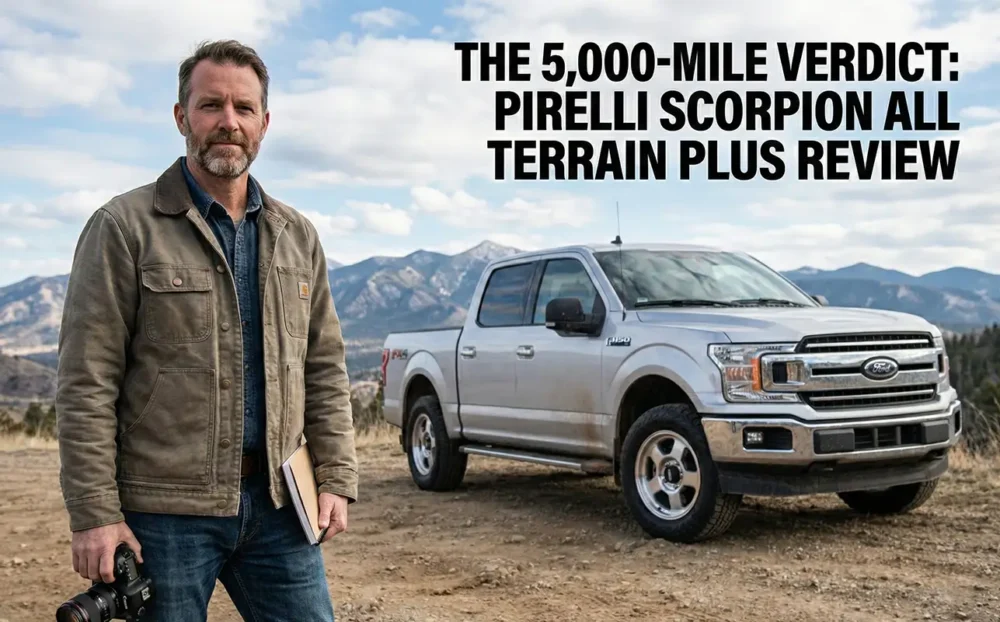
There is an old saying in the overlanding world: “Tires are the only thing touching the ground. Don’t cheap out on them.”
It’s good advice, but it leads to a frustrating dilemma. For years, truck and SUV owners have been forced into a binary choice. You could buy a “highway terrain” tire that offered a quiet, comfortable ride and decent fuel economy but looked like a donut and got stuck in wet grass.
Or, you could buy a “mud-terrain” tire that looked incredibly aggressive and could conquer the Rubicon Trail, but hummed like a B-52 bomber on the highway and sent your fuel economy plummeting.
The “All-Terrain” (AT) category was supposed to be the middle ground. But even there, compromises abounded. The industry benchmarks—like the BFGoodrich KO2—leaned heavily toward off-road durability at the expense of wet-weather safety and on-road comfort.
When Pirelli announced the Scorpion All Terrain Plus—a critical addition to the lineup we analyze in our full Pirelli tires review—they made a bold claim: they promised to fix the compromise.
They claimed to have engineered a tire that could claw through mud and snow, look rugged enough for a modified truck, yet remain whisper-quiet and safe on wet pavement.
I was skeptical. So, I decided to test them myself. I mounted a set of 275/65R20 tires on my daily driver—a 2021 Ford F-150 SuperCrew—and spent the last six months driving 5,000 miles across the Pacific Northwest.
From the rain-soaked streets of Seattle to the snowy passes of the Cascades and the muddy fire trails of the Olympic Peninsula, I held nothing back.
Here is the deep dive.
Pirelli Scorpion All Terrain Plus Review

- All-terrain tire for SUVs, trucks, and crossovers
- Balanced on-road comfort and off-road capability
- Good performance in dry, wet, and light snow conditions
- Quieter than typical all-terrain tires
- Aggressive sidewall design for better off-road traction
- Suitable for daily driving and moderate off-road use
- Three-peak mountain snowflake (3PMSF) certified for winter use
Price Check
Check the price of this tire at the following retailers:
TireRack SimpleTire PriorityTire DiscountedWheelWarehouse AmazonDon’t know the correct size tire to purchase? Start here!
- Pirelli Scorpion All Terrain Plus Review
- Key Takeaways: The 5,000-Mile Verdict
- The Engineering Behind the “Plus”
- Installation and First Impressions
- The Highway Experience (0–2,000 Miles)
- The Wet Weather Torture Test
- Off-Road Testing
- The Winter Test – Snow and Ice
- Durability and Tread Life (The 5,000-Mile Check-In)
- The Competition
- The Verdict
Key Takeaways: The 5,000-Mile Verdict
If you don’t have time to read the full deep dive, here is everything you need to know about the Pirelli Scorpion All Terrain Plus after 5,000 miles of real-world testing on a Ford F-150.
- It Solves the “Hum”: Unlike many aggressive all-terrain tires, the Scorpion AT Plus is shockingly quiet on the highway. It produces a faint white noise rather than the drone associated with mud tires.
- Rain is its Superpower: This tire offers best-in-class wet weather performance. The high-silica compound and deep grooves prevent hydroplaning and provide confidence-inspiring braking distances on slick, rainy roads.
- Genuine Winter Capability: With the 3PMSF (Three-Peak Mountain Snowflake) rating, it is a legitimate winter option. It handles deep snow like a paddle and uses high-density siping to grip packed ice.
- Tough Enough for Most: While it may lack the extreme 3-ply sidewall toughness of a dedicated rock-crawling tire (like the BFG KO2), its reinforced polyester casing and stone ejectors are more than durable enough for fire roads, gravel, and moderate trails.
- Zero MPG Penalty: Due to a lighter weight construction compared to some heavy-duty LT competitors, there was no noticeable drop in fuel economy compared to stock highway tires.
- The Bottom Line: This is the perfect “Daily Driver” adventure tire. It looks aggressive and performs off-road, but it doesn’t punish you with noise or vibration during your daily commute.
The Engineering Behind the “Plus”
Before we hit the road, it is important to understand what Pirelli changed from the previous Scorpion ATR. The “Plus” isn’t just a facelift; it is a ground-up redesign aimed squarely at the North American truck market.
The Tread Pattern: Science Meets Aggression
If you look at the tire, the first thing that strikes you is the visual aggression. Pirelli abandoned the continuous center rib of the old ATR in favor of irregular, large tread blocks.
- Why it matters: Independent tread blocks allow the tire to conform to uneven surfaces. When you are airing down on a rocky trail, you want those blocks to flex and wrap around obstacles.
- The Shoulder: The most significant visual upgrade is the shoulder. The blocks spill over the edge of the tire, creating a “sawtooth” sidewall design. This isn’t just for looks; in deep ruts or mud, when the primary tread is clogged, these sidewall lugs provide the necessary lateral traction to keep you moving forward.
The Compound: A High-Silica Recipe
This is the secret sauce. Pirelli used a “New Generation” tread compound that is extremely rich in silica.
The Chemistry: In the past, durable tires were made of hard rubber compounds that lasted forever but slid on wet pavement like hockey pucks. Silica allows the rubber to remain flexible at lower temperatures and microscopically grip the road surface, even when wet. This is why Pirelli claims such high marks for wet braking and winter performance.
The Casing: Comfort over Crushing?
Most LT (Light Truck) tires use extremely stiff sidewalls to prevent punctures. While great for rock crawling, it ruins ride quality. Pirelli opted for a polyester casing with high-strength steel belts.
The goal was to maintain a Load Range E rating (for towing) while allowing enough sidewall flex to absorb highway bumps.
Installation and First Impressions
Mounting and Balancing
A common issue with aggressive tires is that they can be difficult to balance. Large blocks of rubber can lead to heavy spots. I took these to my local tire shop, and the technician was surprised.
“These took almost no weight,” he noted. Three of the four tires required less than 1.5 ounces of weight to balance perfectly.
This speaks to the manufacturing quality control at Pirelli. A well-balanced tire reduces vibration and extends the life of your suspension components.
The “Stance” Factor
Let’s be honest: aesthetics matter. We put leveling kits and suspension lifts on our trucks because we want them to look capable. The Scorpion AT Plus delivers here.
The sidewall lettering is bold (and available in white lettering on some sizes), and the shoulder lugs give the truck a wider, more planted stance.
It transforms the look of a stock truck immediately, shedding the “grocery getter” vibe for something much more purposeful.
The Highway Experience (0–2,000 Miles)
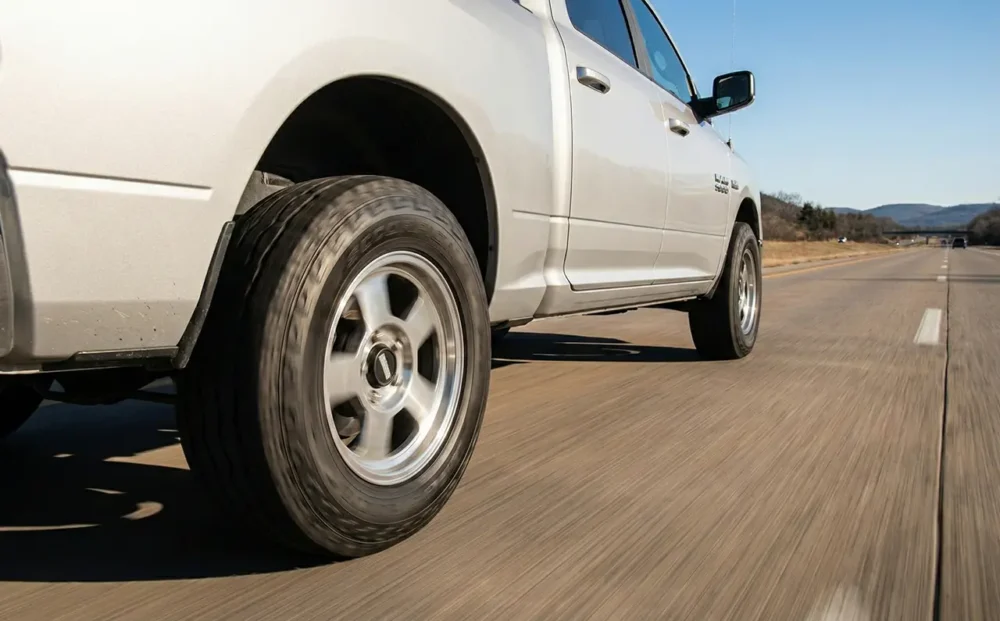
The reality of my life—and likely yours—is that 90% of my miles are spent on pavement. I use my truck to commute, get groceries, and haul lumber. If a tire is annoying on the highway, no amount of off-road prowess can save it.
Noise Levels: The Sound of Silence
I expected a hum. I was braced for it. I turned off the radio as I pulled onto the I-5 freeway, accelerated to 70 mph, and waited. Nothing. Okay, not nothing, but the noise was shockingly low.
There is a very faint, white-noise “shhh” sound, but the characteristic harmonic drone of an all-terrain tire was absent.
The Comparison: I previously ran Falken Wildpeak AT3Ws, which are considered quiet. The Pirellis are quieter. Compared to the BFG KO2s on my friend’s Jeep, the difference is night and day. You can hold a conversation at a whisper in the cab. Pirelli’s engineers clearly spent time optimizing the pitch sequence of the tread blocks to cancel out noise frequencies.
Ride Comfort and Steering Response
The ride quality is “sporty” for a truck tire. Because of the polyester casing, the tire absorbs sharp impacts—like bridge expansion joints or potholes—with a dull thud rather than a harsh crash.
However, steering response is where Pirelli’s sports car heritage shows. On winding coastal roads, the Scorpion AT Plus felt sharper and more direct than the squishy feel of many mud tires.
There was less “play” on center, making the large truck feel surprisingly planted in corners.
Towing Stability
I hooked up a 5,000-lb travel trailer to test towing stability. Some tires with softer sidewalls can feel “squirmy” under load, causing the trailer to sway slightly.
I aired the rear tires up to 60 PSI (max is 80 PSI for this Load Range E tire). The stability was rock solid. The stiff sidewall inserts prevented the tire from rolling over during lane changes, and the braking confidence with the extra weight was reassuring.
Fuel Economy
We don’t buy trucks for MPG, but we don’t want to make it worse. Aggressive tires usually sap 1-2 MPG due to rolling resistance and weight.
The Result: My fuel economy remained effectively unchanged compared to the stock highway tires. The Scorpion AT Plus is lighter than many competitors (specifically the 10-ply LT versions), which helps keep rotating mass down.
The Wet Weather Torture Test
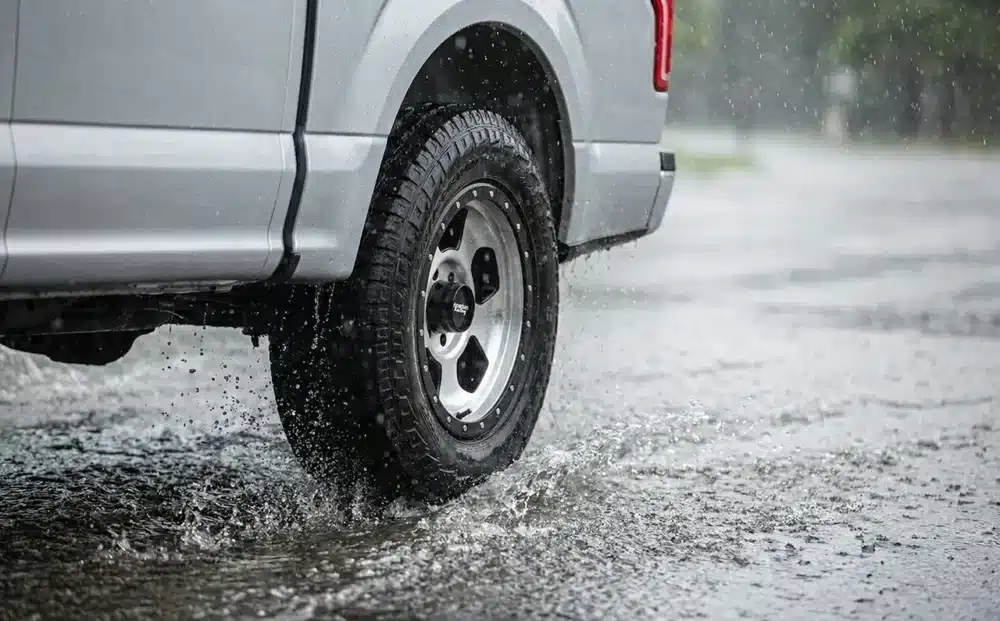
Living in the Pacific Northwest, rain is a daily reality. This is where most aggressive tires fail. Large voids usually mean less rubber on the road, and hard compounds lead to hydroplaning.
The “Oh S**t” Moment
I had a genuine test of this about 1,500 miles in. I was driving on a two-lane county road during a torrential downpour. The ruts in the road were filled with standing water.
Suddenly, a deer darted out from the treeline about 50 yards ahead. I slammed on the brakes. In a lesser tire, this would be the moment the ABS goes crazy, the truck slides, and you brace for impact.
The Pirellis just… grabbed. The front end dove, the seatbelts locked, and the truck came to a halt with room to spare. The ABS barely chattered.
Hydroplaning Resistance
The deep longitudinal grooves (the channels running around the tire) are wide and efficient. Even hitting standing water at 60 mph, I rarely felt that terrifying tug of the steering wheel that indicates hydroplaning.
The sipes and the silica compound seem to cut through the water film incredibly well. If safety is your priority, this tire is unmatched in the AT category.
Off-Road Testing
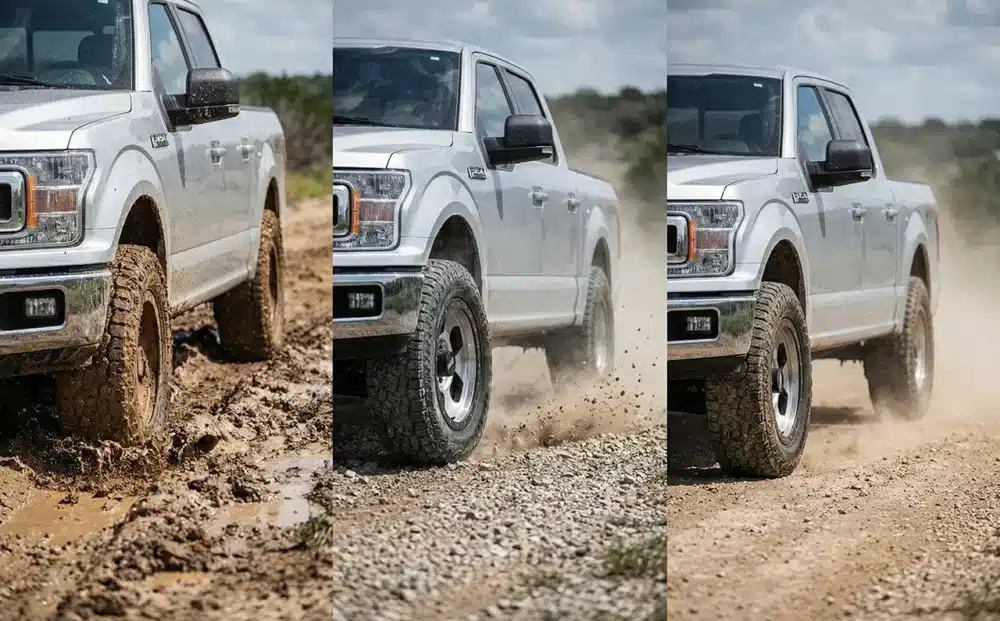
Mud Performance: The Real Surprise
If you look closely at the image above, you can see the mud slinging out of the tread. This is the “self-cleaning” ability that separates a good AT tire from a bad one.
In the thick, clay-like mud of the Olympic Peninsula, many “aggressive” tires pack up instantly, turning into slick racing slicks. The Pirelli Scorpion AT Plus surprised me.
The voids between the blocks are wide enough that centrifugal force clears the mud as the wheel spins. While I wouldn’t take these into a bottomless swamp (that’s Mud-Terrain territory), for the messy trails leading to a campsite or a job site, they provided consistent forward bite.
The shoulder lugs were particularly effective here, grabbing the sides of ruts to pull the truck through when the bottom was too slick.
Gravel and Dirt Roads: High-Speed Stability
This is where the tire shines brightest off the pavement. On loose gravel fire roads, the Scorpions feel like rally tires.
- Lateral Grip: You can push the truck into a corner on loose dirt, and the sharp edges of the tread blocks bite in predictable ways. The back end doesn’t snap out unexpectedly; it drifts progressively.
- Stone Ejectors: Pirelli placed small conical “bumpers” between the tread blocks to prevent stone drilling. After 50 miles of fast gravel driving, I inspected the tires. There were almost no rocks stuck in the tread. This is a huge win for durability, as trapped stones can work their way into the casing and cause flats over time.
Rock Crawling: The Limit
I took the truck up a moderately difficult rocky trail to test the sidewall strength. The “Plus” in the name refers partly to the reinforced sidewall. While not a dedicated rock crawler, the polyester casing conformed well to jagged rocks when aired down to 20 PSI. I didn’t experience any cuts or chunking.
The Caveat: If your primary hobby is bouncing over boulders in Moab, the BFG KO2 still holds the crown for ultimate sidewall toughness (3-ply vs. Pirelli’s 2-ply in some sizes). But for the occasional rocky pass, the Pirelli is more than capable and far more comfortable getting there.
Sand Performance
I also took the truck to the Oregon dunes. In soft sand, you want a tire that floats rather than digs. I aired down to 18 PSI. The footprint of the tire elongated beautifully.
The lack of overly aggressive “digging” lugs (like you’d find on a mud tire) actually helped here, allowing the tire to stay on top of the sand. The silica compound, being flexible, maximized the contact patch.
The Winter Test – Snow and Ice
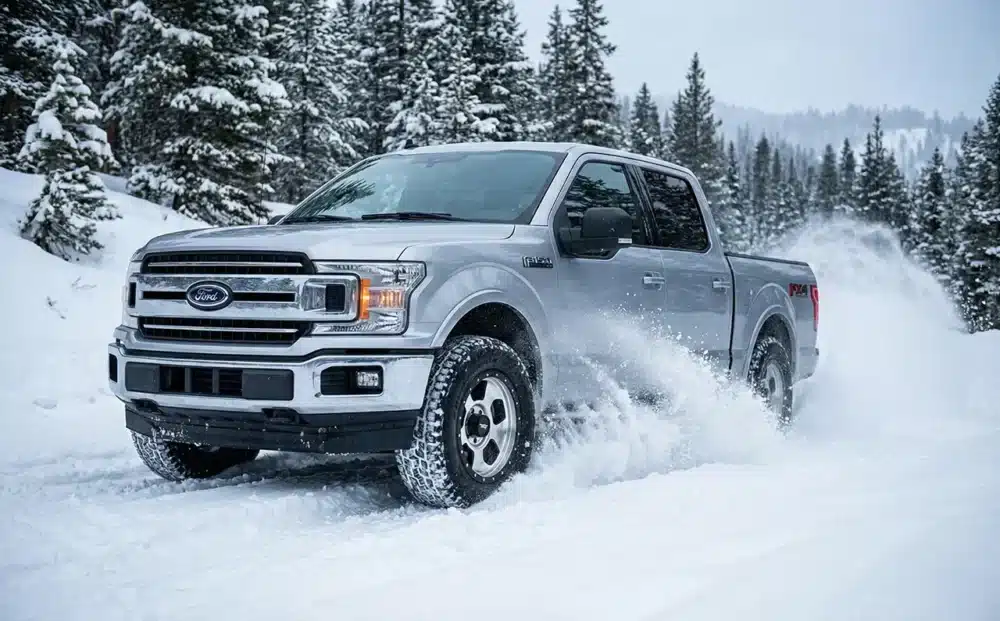
The 3PMSF Advantage
The Three-Peak Mountain Snowflake (3PMSF) symbol on the sidewall is a big deal. It means this tire has passed specific industry tests for acceleration on medium-packed snow. It is a step above the standard “M+S” (Mud and Snow) rating found on most all-season tires.
Deep Snow: The Paddle Effect
During a late-season storm in the Cascades, I found myself pushing through about 8 inches of fresh powder. This is where the aggressive block design pays off. The large voids between the tread blocks allow the tire to scoop snow and eject it, effectively acting like a paddle wheel.
Momentum: The key in deep snow is momentum, and the Scorpions allowed me to maintain it without excessive wheel spin. The traction control light flickered occasionally, but the truck kept moving forward with authority.
Packed Snow and Ice: The Siping Test
Deep snow is fun; ice is terrifying. This is where the high-density siping comes into play. If you look closely at the tread blocks, you will see hundreds of zig-zag cuts. As the tire rolls, these cuts open up to create thousands of tiny biting edges.
Braking on Ice: On a hard-packed, icy driveway, I tested emergency braking from 20 mph. While no non-studded tire stops on a dime on ice, the Pirelli Scorpion AT Plus stopped significantly shorter than the mud-terrain tires I’ve used in the past. The silica compound stayed flexible in the freezing temperatures, allowing the sipes to do their job.
Confidence: The most important metric in winter driving is feedback. Does the tire tell you when it’s about to let go? The Scorpions are communicative. You can feel the limit of adhesion approaching through the steering wheel, giving you time to correct before you end up in a ditch.
Durability and Tread Life (The 5,000-Mile Check-In)
A common complaint with soft, high-grip tires is that they wear out instantly. Pirelli offers a 50,000-mile treadwear warranty, which is competitive for this segment. But warranties are paper; the road is reality.
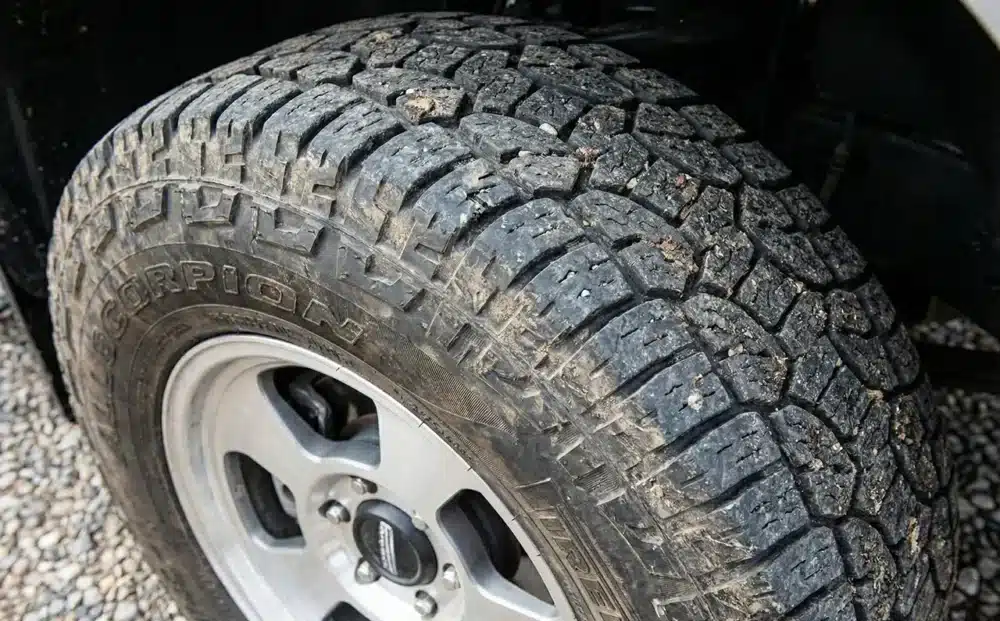
The Measurements
I measured the tread depth on all four tires at the 5,000-mile mark using a digital depth gauge.
- Starting Depth (New): 13/32″ (Note: LT sizes often start deeper, around 15/32″).
- Current Depth: ~12.5/32″.
Wear Analysis
- Even Wear: The wear is perfectly even across the face of the tire. I rotated them once at 3,000 miles. There is no sign of “cupping” or “feathering,” which can be common on blocky tires if the suspension isn’t perfectly aligned.
- Chip and Cut Resistance: Despite significantly abusive gravel driving, the tread blocks show zero signs of “chunking” (where pieces of rubber tear off). The compound seems tough enough to handle sharp rocks without falling apart.
- Projection: At this rate of wear, hitting the 50,000-mile mark seems very achievable, provided regular rotations are maintained.
The Competition
How does the Pirelli Scorpion All Terrain Plus stack up against the heavy hitters in the segment?
vs. BFGoodrich All-Terrain T/A KO2
The KO2 is the legend. It defines the category.
- Where BFG Wins: Extreme durability. If you are blasting through sharp shale in the desert at 60 mph, the KO2’s 3-ply sidewall is virtually indestructible. It also looks slightly more “classic” on vintage trucks.
- Where Pirelli Wins: Everything else. The Pirelli is quieter, lighter, stops faster in the rain, and handles snow better. Unless you are a hardcore rock crawler, the Pirelli is the better tire for a daily driver.
vs. Falken Wildpeak AT3W
The Falken has been the value king for years and is a favorite among overlanders.
- Where Falken Wins: Price (usually slightly cheaper) and deep mud performance. The Falken has deeper voids that clean out slightly better in sticky clay.
- Where Pirelli Wins: Weight and fuel economy. The Falkens are notoriously heavy tires. The Pirelli is lighter, which helps maintain your truck’s acceleration and MPG. The Pirelli also feels more responsive on the highway.
vs. Toyo Open Country A/T III
These two are very similar in philosophy (lightweight, aggressive, winter-rated).
- The Verdict: It’s a toss-up. The Toyo is excellent, but I found the Pirelli to be slightly quieter on concrete highways. The Pirelli also tends to have a slightly more “rounded” shoulder profile, which aids in smoother turn-in response.
The Verdict
After 5,000 miles, the Pirelli Scorpion All Terrain Plus has proven itself to be the “Goldilocks” tire of the all-terrain segment. It manages to balance the rugged aesthetics and off-road capability truck owners want with the refined road manners they actually need.
It is not a dedicated mud tire. It is not a dedicated rock-crawling tire. But if your truck serves as a family hauler, a commuter, a tow rig, and an adventure vehicle, this tire handles all those roles without complaint.
Pros:
- Silence: Remarkably quiet for an aggressive tread.
- Wet Safety: Best-in-class hydroplaning resistance and wet braking.
- Winter Rating: Genuine 3PMSF snow capability.
- Looks: The sidewall design is aggressive and modern.
- Ride Quality: The polyester casing absorbs bumps beautifully.
Cons:
- Deep Mud: It will struggle in the deepest bogs compared to an MT.
- Sidewall Ply: 2-ply sidewalls (in P-metric sizes) aren’t as bombproof as 3-ply competitors for extreme rock crawling.
Final Score: 4.8 / 5
If you are looking to upgrade your truck’s tires to something that looks tough and performs in the dirt, but you don’t want to sacrifice the ability to hear your radio on the highway or stop safely in the rain, the Pirelli Scorpion All Terrain Plus is, in my opinion, the smartest buy on the market right now.
Pirelli Scorpion All Terrain Plus Review
Discover the Pirelli Scorpion All Terrain Plus in our review. Learn about its performance, durability, and versatility for your SUV or light truck.
Product Brand: Pirelli
Product Price: $199.62
Product In-Stock: InStock
4.8