
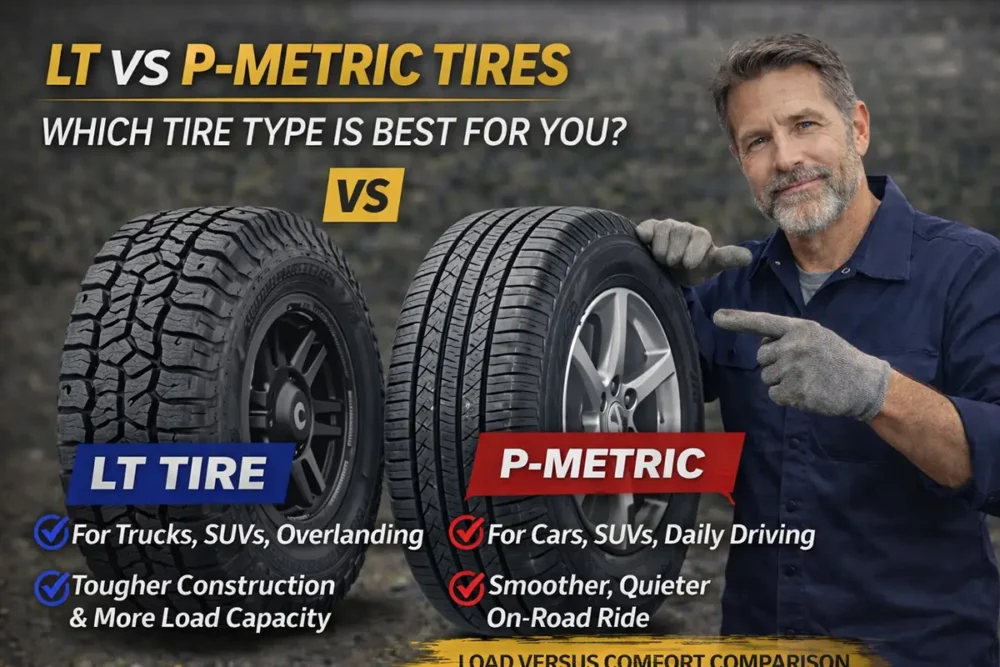
I’ve had this exact argument in a tire shop parking lot. A buddy of mine had just bought a brand-new Ram 1500, and the salesperson at the dealership told him he “absolutely needed” LT tires if he ever planned to tow.
Meanwhile, the tire shop tech was telling him his factory P-metric tires were fine for occasional use. He called me, completely confused, asking which one was right.
The honest answer? They both were — sort of. And that’s exactly the problem with the LT vs. P-metric debate. It’s not black and white, and most of the advice floating around online is either oversimplified, outdated, or written by someone who’s never actually loaded up a truck bed and driven 400 miles to a job site.
I have. Across more than 10,000 miles of real-world testing on everything from a Ford F-150 to a Toyota Tacoma to a Ram 1500, I’ve run both LT and P-metric tires through highway cruising, city stop-and-go, loaded hauling, trailer towing, muddy trails, and gravel backroads. I know exactly where each tire shines and where it quietly fails you.
Before we dive deep, if you’re also wrestling with tread pattern choices for off-road use, my guide on the best off-road tires covers that territory in full detail.
This guide is going to give you the real story — no fluff, no brand cheerleading, just the practical information you need to make the right call for your truck and your use case.
TL;DR — LT vs. P-Metric Tires at a Glance
Choose P-Metric tires if you:
- Primarily use your truck or SUV for daily commuting and light hauling
- Don’t tow heavy trailers regularly
- Want a quieter, more comfortable ride
- Want better fuel economy
- Drive a half-ton truck used mostly on pavement
Choose LT (Light Truck) tires if you:
- Regularly tow trailers, boats, or fifth wheels
- Haul heavy loads in your truck bed frequently
- Go off-road on rough terrain
- Drive a ¾-ton or 1-ton truck
- Need maximum durability and sidewall protection
Key differences in 30 seconds:
- LT tires have higher load ratings, stiffer sidewalls, and higher recommended inflation pressures
- P-metric tires prioritize ride comfort, fuel efficiency, and low road noise
- LT tires are built tougher but ride harder
- Switching between them requires checking load capacity math carefully
- TL;DR — LT vs. P-Metric Tires at a Glance
- What Are P-Metric Tires?
- What Are LT Tires?
- My Real-World Experience Testing Both
- Key Differences: LT vs. P-Metric Tires
- Detailed Comparison: Where It Really Matters
- When Should You Choose P-Metric Tires?
- When Should You Choose LT Tires?
- Can You Switch Between LT and P-Metric Tires?
- Common Mistakes Buyers Make
- Real-World Scenarios: What Would I Actually Choose?
- Final Verdict: LT vs. P-Metric Tires
What Are P-Metric Tires?
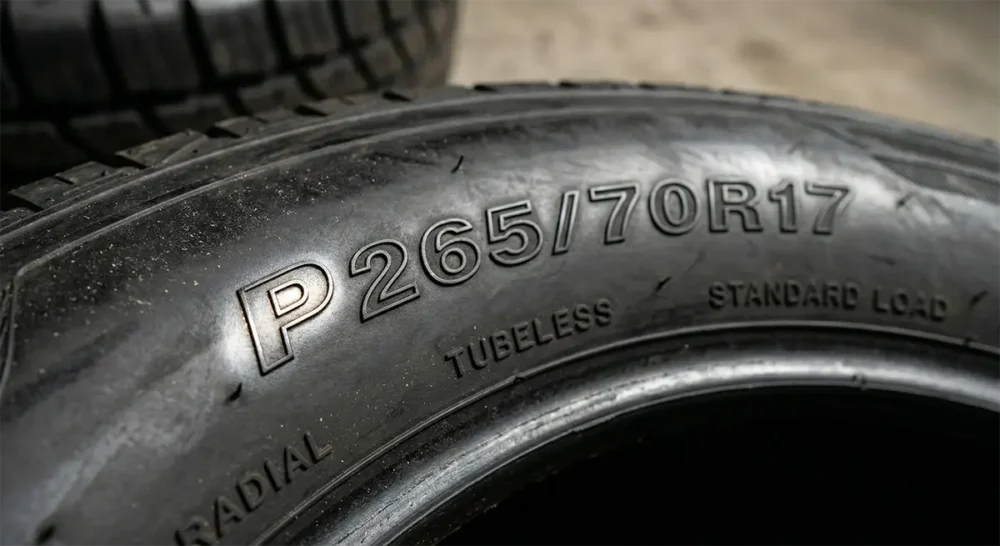
P-Metric tire sidewall close-up showing “P265/70R17”
The “P” in P-metric stands for Passenger. These tires were originally designed for passenger cars but have become standard equipment on many half-ton trucks and SUVs — including the Ford F-150, Ram 1500, and Toyota Tacoma straight from the factory.
When you see a tire size like P265/70R17, that “P” at the front tells you everything about the tire’s design philosophy: it’s built for ride comfort, low rolling resistance, and everyday driving.
The construction uses fewer plies, softer rubber compounds, and a more flexible sidewall than their LT counterparts.
What makes P-metric tires tick:
- Ply rating: Typically 4-ply construction
- Inflation pressure: Usually 32–36 PSI for most applications
- Load index: Lower load capacity per tire, calculated differently than LT tires
- Design priority: Comfort, noise reduction, fuel efficiency
Here’s something most buyers don’t know: P-metric tires actually calculate their maximum load capacity with a 10% deduction when used on light trucks.
This is called the “Light Truck Adjustment Factor,” and it means a P-metric tire rated for 2,000 lbs is only credited for 1,818 lbs when calculating your truck’s total load capacity. This matters more than most people realize.
I ran a set of P-metric tires (Michelin Defender LTX M/S in P265/70R17) on my F-150 for two years of daily driving and occasional weekend camping trips.
Honestly? They were fantastic for that use case. Quiet, smooth, returned solid fuel economy, and handled wet pavement better than I expected.
What Are LT Tires?
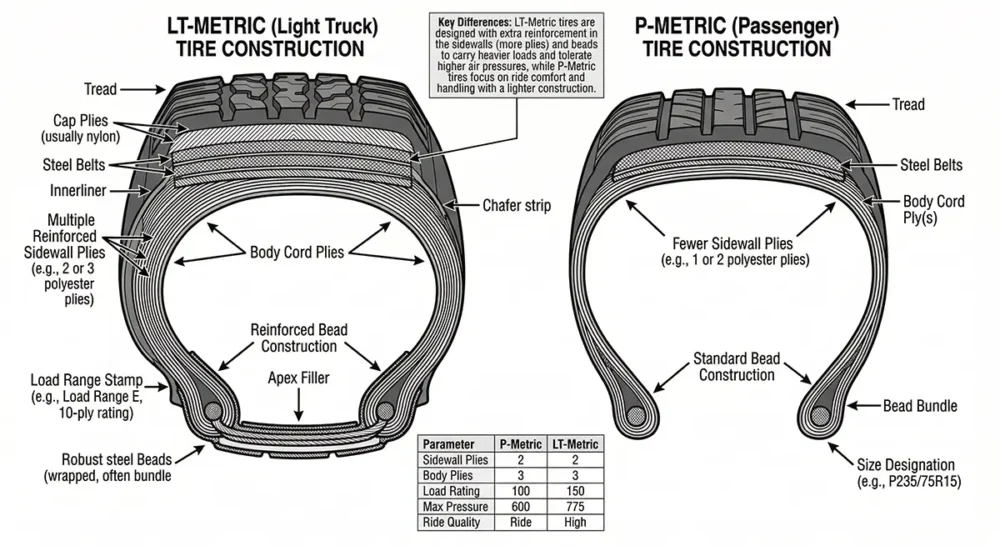
LT tire cross-section diagram showing reinforced sidewall plies and bead construction compared to P-metric
LT stands for Light Truck. These tires are purpose-built for the demands of working trucks — vehicles that regularly haul heavy loads, tow trailers, or tackle rough terrain where sidewall punctures are a real risk.
When you see a size like LT265/70R17, that “LT” prefix signals a fundamentally different internal structure. LT tires are built with more plies, stiffer sidewall construction, and are designed to operate at higher inflation pressures.
You’ll also see a Load Range rating — typically Load Range C, D, or E — which tells you how many plies the tire is rated for.
- Load Range C: 6-ply rated
- Load Range D: 8-ply rated
- Load Range E: 10-ply rated (the most common on 3/4-ton and 1-ton trucks)
What defines LT tire construction:
- Higher inflation pressure (65–80 PSI in many Load Range E tires)
- Reinforced sidewalls that resist cuts, punctures, and flex under load
- Higher maximum load ratings — no deduction factor applied
- Stiffer overall construction from bead to bead
- Often heavier per tire (can add 5–10 lbs per corner)
I tested a set of BFGoodrich KO2s in LT265/70R17 Load Range E on my Ram 1500 during an extended towing season — a 7,500 lb fifth wheel trailer, highway speeds, through mountain passes.
The confidence those tires inspired when the trailer was pushing hard on downhill grades was something no P-metric tire I’ve tested has ever replicated.
My Real-World Experience Testing Both
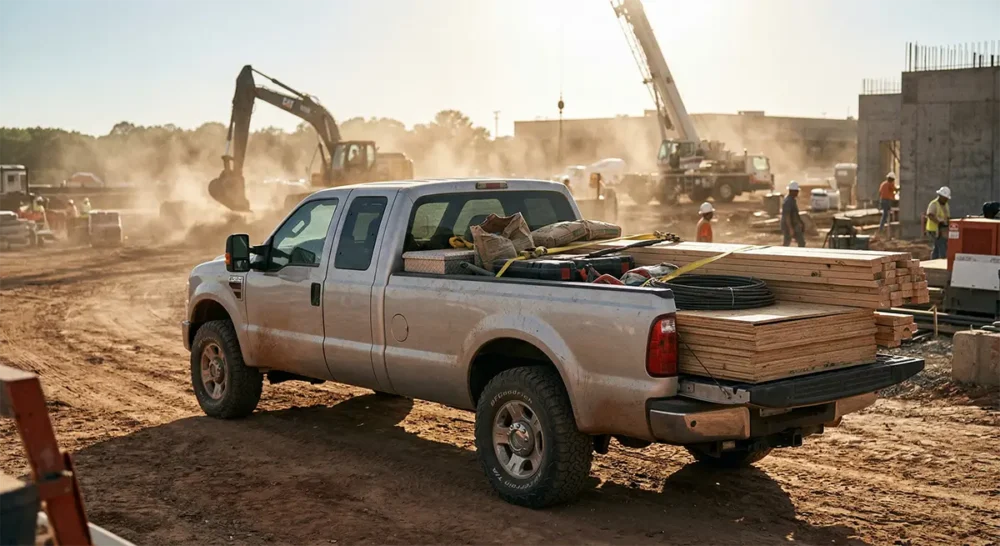
Let me walk you through the actual conditions where these tires diverged most dramatically in my testing.
The Daily Commute Test
I spent six months daily driving both tire types on a 38-mile highway-heavy commute. The P-metric tires were simply nicer. Less road noise. Smoother ride over expansion joints.
The truck felt more car-like. My fuel economy averaged 19.4 mpg versus 17.8 mpg on the same route with Load Range E LT tires. That’s not insignificant over a year of driving.
The Towing Test
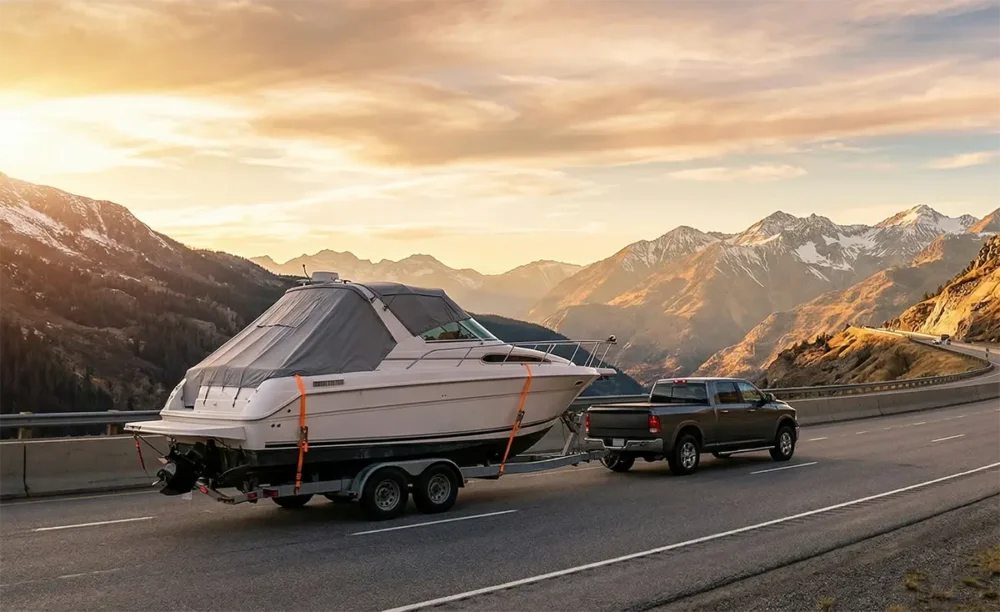
This is where everything flipped. I hitched up a 6,800 lb enclosed cargo trailer and drove a 600-mile round trip — half highway, half two-lane roads with elevation changes.
With P-metric tires, the truck felt noticeably squatty in the rear. Trailer sway was more pronounced on one gusty stretch of highway, and I could feel the tires working hard. Not unsafe, but nervous-making.
With the LT tires, the same trailer felt planted. The stiffer sidewalls resisted the lateral flex that causes that “float” sensation. I ran 72 PSI as recommended, and the rear of the truck sat level like the trailer wasn’t even there.
The Off-Road Test
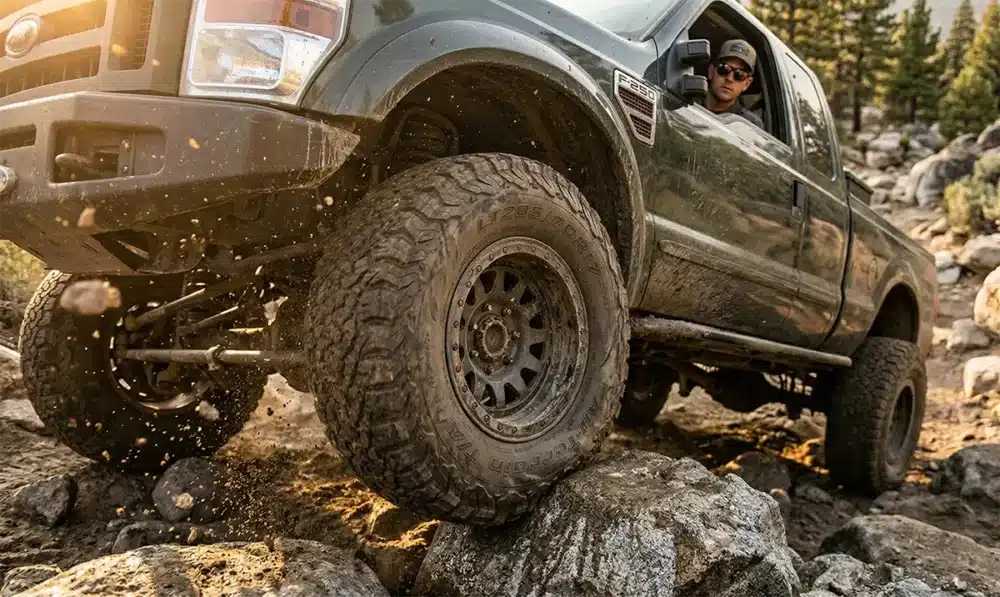
For off-road use, I specifically tested on rocky forest service roads and rutted dirt trails where sidewall protection matters. LT tires were the clear winner — unsurprisingly.
The reinforced sidewalls shrugged off sharp rock edges that would make me white-knuckle in a P-metric.
If you’re shopping for aggressive tread patterns for trail use, check out the best mud terrain tires as well, because tread pattern is equally important as tire construction for true off-road performance.
Key Differences: LT vs. P-Metric Tires
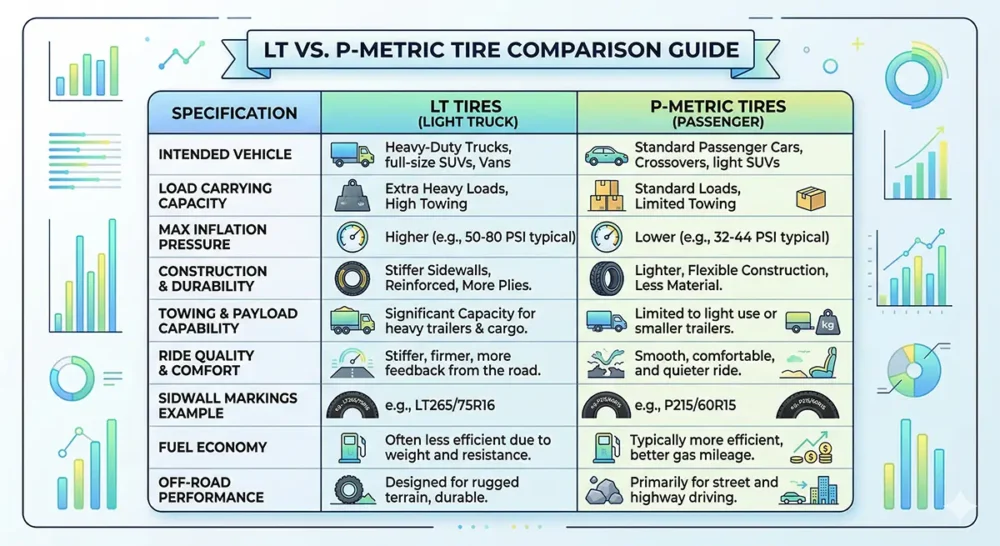
| Feature | P-Metric Tires | LT Tires |
|---|---|---|
| Construction | 4-ply, flexible sidewall | 6–10-ply, reinforced sidewall |
| Load Capacity | Lower (10% deduction on trucks) | Higher, no deduction |
| Inflation Pressure | 32–38 PSI | 50–80 PSI |
| Ride Comfort | Excellent | Firm to stiff |
| Fuel Economy | Better | Worse (higher rolling resistance) |
| Towing Suitability | Moderate (light loads) | Excellent (heavy loads) |
| Off-Road Durability | Moderate | High |
| Road Noise | Lower | Higher (varies by tread) |
| Tread Life | Good | Very Good |
| Price | Lower | Higher |
| Weight | Lighter | Heavier |
Detailed Comparison: Where It Really Matters
Ride Comfort
P-metric tires win this category without much debate. The softer sidewall construction absorbs road imperfections better — potholes, rough pavement seams, gravel roads.
When I had a set of Load Range E LT tires inflated to the required 75 PSI, the ride on rough pavement was genuinely jarring. My back noticed it on a long haul.
Some truck owners try to run LT tires at lower pressures to soften the ride. Don’t do this regularly — you compromise load capacity and create uneven wear patterns.
The stiffness of LT tires isn’t a design flaw; it’s an engineered feature for a specific purpose.
Winner: P-Metric
Load Carrying Capacity
LT tires dominate here. A typical Load Range E LT tire might be rated for 3,000+ lbs per tire, giving a four-tire setup a combined capacity well over 6 tons when factoring in axle ratings.
P-metric tires, after the 10% light truck adjustment, cap out at meaningfully lower numbers.
If you’re regularly filling a truck bed with mulch, gravel, or construction materials, LT tires are providing a real safety margin that P-metrics can’t match. This isn’t just about comfort — it’s about preventing tire failure under load.
Winner: LT Tires
Towing & Hauling Performance
This is the most critical comparison for most truck buyers. My testing showed a clear pattern: once you’re towing over 5,000 lbs consistently, P-metric tires start showing their limits in sidewall flex, trailer sway susceptibility, and heat buildup on long grades.
For occasional towing of a small boat or utility trailer under 4,000 lbs? A quality P-metric handles it fine. For a fifth wheel, heavy equipment trailer, or loaded camper? LT tires are the responsible choice.
Understanding your tread type also matters when towing on varied terrain — I’ve written a thorough breakdown of HT vs. AT vs. MT tires that pairs well with this decision.
Winner: LT Tires (for heavy towing)
Off-Road Capability
The tire construction type (LT vs. P-metric) matters less for off-road traction than tread pattern does — but it matters enormously for durability and puncture resistance.
On rocky terrain, sharp shale, or desert trails, an LT tire’s reinforced sidewall is legitimate protection against the most common trail failure mode: sidewall slices.
Most serious off-road tires — all-terrain and mud-terrain options alike — come in LT sizing specifically because the market demands that durability. You’ll rarely find a genuine off-road tire in P-metric sizing.
Winner: LT Tires
Durability & Sidewall Strength
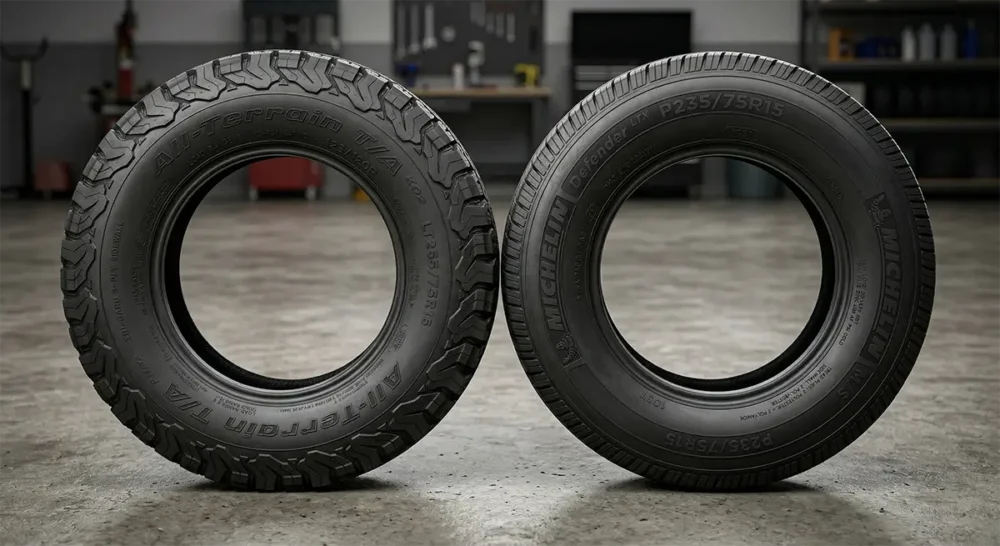
I’ve had a P-metric tire bubble out its sidewall after a moderately bad pothole hit at highway speed. I’ve watched LT tires survive impacts that would have destroyed lesser rubber.
The additional plies in LT construction aren’t marketing — they’re measurable, real-world protection.
For trucks used in demanding environments: construction sites, forest service roads, ranch property, job sites — LT tires’ durability pays for themselves in avoided replacements.
Winner: LT Tires
Fuel Efficiency
The heavier construction and higher rolling resistance of LT tires costs you at the pump. In my testing, the difference ranged from 1.5 to 2.5 MPG depending on driving style and load.
On 20,000 miles of annual driving at current gas prices, that’s real money — potentially $400–$700 per year depending on your vehicle and fuel costs.
For someone whose truck rarely carries a load over 1,000 lbs and never tows, that fuel economy hit is a perpetual tax for capability they never use.
Winner: P-Metric
Noise Levels
P-metric tires are generally quieter at highway speeds, though tread pattern plays a huge role here. A highway-terrain P-metric will be dramatically quieter than a mud-terrain LT tire — that comparison is almost unfair. But even comparing highway-terrain versions of each, P-metrics ride quieter due to softer compound and construction.
If you’re comparing AT (all-terrain) options specifically, my review of the Falken Wildpeak A/T3W vs. BFGoodrich KO2 gets into how tread pattern affects noise in real use — it’s a useful read alongside this guide.
Winner: P-Metric
Tread Life
Tread life is more nuanced than it looks. LT tires often have deeper initial tread depth — some measuring 18/32″ vs. 10–12/32″ on a typical P-metric — so the raw mileage potential is higher.
However, LT tires at high inflation pressures can wear unevenly if not properly maintained, especially on trucks used without consistent loads.
P-metrics, when properly inflated and rotated on schedule, often deliver excellent tread life for their intended use. My Michelin Defender LTX set lasted 68,000 miles of primarily daily driving — outstanding.
For both tire types, how you fill them matters. If you’re interested in the nitrogen vs. regular air debate, I covered it in detail here: Nitrogen vs. Air in Tires.
Winner: Roughly Even (advantage LT for heavy-use applications)
When Should You Choose P-Metric Tires?
P-metric tires are genuinely the right choice in more situations than the truck marketing world wants you to believe. Here’s when they make clear sense:
- You drive a half-ton truck primarily for commuting and light errands. Most F-150s and Ram 1500s live this life. A P-metric is appropriate.
- Your towing is occasional and light. Pulling a small boat to the lake five times a year doesn’t require LT tires.
- Ride comfort matters to you. If your truck doubles as a family vehicle, the comfort advantage of P-metrics is significant quality-of-life improvement.
- Fuel economy is a priority. Especially relevant as gas prices fluctuate.
- You drive mostly on paved roads. Off-road durability benefits are wasted value if you never go off-road.
- Your manufacturer spec’d P-metrics. Many truck manufacturers fit P-metrics specifically because they’ve done the load-capacity math and they work for standard use.
When Should You Choose LT Tires?
LT tires earn their price premium and ride penalty in specific, demanding applications:
- Regular heavy towing: Anything over 5,000 lbs on a routine basis — campers, trailers, equipment — demands the load capacity and sidewall stiffness of LT construction.
- Heavy hauling: Frequently loading your bed near its maximum payload calls for LT tires’ superior load margin.
- Off-road use: Rocky trails, desert terrain, forest roads. Sidewall protection alone justifies the switch.
- 3/4-ton and 1-ton trucks: These vehicles are designed around LT tire specifications. P-metrics won’t even meet the load requirements in most cases.
- Commercial or work applications: Contractors, farmers, ranchers — anyone who genuinely works their truck daily.
- Situations where tire failure has serious consequences: Towing a heavy trailer on a mountain highway is not where you want to discover the limits of your tires.
For a deeper look at terrain-specific tire choices, the comparison of AT vs RT tires and HT vs AT tires are worth reading before you finalize your selection.
Can You Switch Between LT and P-Metric Tires?
Yes — but you need to do the math carefully before you do.
Switching from P-metric to LT: This is usually straightforward from a safety standpoint. You’re increasing load capacity, which is conservative. But check:
- Wheel well clearance (LT tires in equivalent sizes are sometimes slightly taller)
- TPMS (Tire Pressure Monitoring System) sensor calibration — your sensors are set for P-metric pressures and will need recalibration for LT pressures
- Speedometer accuracy (minor but worth knowing)
Switching from LT to P-metric: This is where people get into trouble. You must verify the four P-metric tires’ combined load capacity (after the 10% deduction) meets or exceeds your truck’s Gross Vehicle Weight Rating (GVWR). If it doesn’t, you’re operating an unsafe vehicle — legally and practically.
My recommendation: Look up your truck’s GVWR in the driver’s door jamb sticker. Calculate the four-tire load capacity of your P-metric candidates (load index × 4 × 0.9). That number must exceed your GVWR. If it doesn’t, you need LT tires.
Common Mistakes Buyers Make
After years of testing and conversations with other truck owners, here are the most common errors I see:
1. Buying LT tires because “it’s a truck.” Half-ton trucks used for commuting don’t need Load Range E tires. You’re paying more, hurting your fuel economy, and riding rougher for capability you don’t use.
2. Not accounting for the 10% P-metric deduction. I’ve met truck owners who assumed their P-metric tires had plenty of load capacity without realizing the light truck deduction shrinks their effective rating.
3. Ignoring inflation pressure requirements. LT tires at low pressure don’t perform like P-metric tires. They perform like overloaded P-metric tires — with uneven wear and compromised handling. If you put LT tires on, inflate them properly.
4. Choosing tires based on looks alone. Aggressive-looking LT all-terrain tires are tempting. If your truck never leaves pavement and you’re not towing, you’re just buying noise, reduced mpg, and a stiffer ride.
5. Ignoring GVWR when downsizing to P-metric. Covered above, but worth repeating: check the math before downgrading.
6. Buying tires without considering how they’re inflated. Consistent tire pressure management matters for both tire types. Automatic pressure maintenance or quality gauges help either way.
Real-World Scenarios: What Would I Actually Choose?
Let me make this concrete with specific scenarios based on real truck setups I’ve driven.
Scenario 1: Daily Driver, Occasional Light Hauling
Truck: Ford F-150, 2.7 EcoBoost
Use: 80% commuting, 20% hauling occasional landscaping materials, towing a small utility trailer a few times a year (under 3,500 lbs)
My pick: P-Metric, specifically something like Michelin Defender LTX or Continental TerrainContact H/T
Reasoning: Load demands don’t justify LT’s trade-offs. Quiet, efficient, comfortable is the right answer here.
Scenario 2: Weekend Warrior / Light Off-Road
Truck: Toyota Tacoma TRD Off-Road
Use: Daily driving plus monthly off-road day trips, occasional light camping gear towing (under 4,000 lbs)
My pick: LT All-Terrain, Load Range C or D
Reasoning: Sidewall protection for rocky trails is worth the modest comfort and efficiency trade-off. Load Range C keeps ride quality reasonable without full Load Range E stiffness.
Scenario 3: Heavy Towing / Work Truck
Truck: Ram 2500, diesel
Use: Regular towing of 12,000 lb equipment trailer, heavy bed loads weekly
My pick: LT, Load Range E, no question
Reasoning: This is what LT tires exist for. No P-metric on the market is appropriate for this application.
Scenario 4: Family Truck / SUV Crossover Use
Truck: Chevy Suburban / Ford Expedition
Use: Family hauling, occasional camping, towing a boat (5,500 lbs) a few times a year
My pick: P-metric for primarily family use with light towing; LT if towing is more frequent
Reasoning: The comfort benefit for the majority of family driving miles outweighs the occasional towing compromise, provided load math works out.
Final Verdict: LT vs. P-Metric Tires
After all the miles, all the trailer hookups, all the muddy trails, and all the quiet highway commutes, here’s my honest final answer:
Most half-ton truck owners would be perfectly well-served by a quality P-metric tire. The truck industry has gotten very good at spec’ing appropriate factory tires, and if your truck came with P-metrics, there’s a reason. They’re appropriate for the majority of real-world use cases.
The case for LT tires is real, specific, and important — but it applies to a narrower group than the marketing suggests. If you’re consistently towing heavy trailers, loading your bed near max payload, or regularly going off-road on terrain where sidewall damage is a genuine risk, LT tires pay for themselves in safety margin, durability, and confidence.
My decision framework is simple:
- Calculate your actual maximum load (GVWR minus curb weight)
- Determine your towing weight if applicable
- Check whether a quality P-metric meets those requirements after the 10% deduction
- If yes, buy the P-metric and enjoy the comfort and efficiency
- If no — or if you tow heavy regularly — go LT and pick your load range based on your specific weight requirements
Don’t buy capability you don’t use. Don’t skip capability you genuinely need. Match the tire to the real life you actually drive, not the adventurous life you imagine.
That’s the honest answer. Now go buy the right tire.
Have a specific use case or truck setup you’re unsure about? Drop it in the comments below — I read and respond to every question.