The phrase “all-season tires” conjures an image of universal capability, a single tire solution designed to tackle everything from summer heatwaves to unexpected winter flurries.
This perception, widely promoted by tire manufacturers and often reinforced by anecdotal advice, creates a dangerous misconception: that these tires offer adequate safety and performance throughout the year, including during harsh winter conditions.
While “all-season” might suggest year-round readiness, the reality is that in true winter weather, these tires are a compromise, and their limitations can lead to significant safety risks.
Understanding when and why all-season tires fail in winter is crucial for any driver looking to prioritize safety and confidence on the road during the colder months.
- Introduction: The Dangerous Myth of “All-Season” in True Winter
- The Molecular Breakdown: Why All-Season Rubber Compounds Stiffen and Lose Grip
- Tread Pattern Limitations: Where All-Season Design Falls Short
- Real-World Failure Points: When All-Season Tires Become Dangerous
- The Severe Consequences: Beyond Just “Slipping”
- Identifying True Winter Capability: The 3PMSF Symbol
- Making the Smart Switch: Prioritizing Safety Over Convenience
- Conclusion: Don’t Compromise on Winter Safety
- FAQs
Introduction: The Dangerous Myth of “All-Season” in True Winter
The convenience of a single set of tires for every season is undeniable. For many drivers, especially those in regions with mild winters, the idea of switching to dedicated winter tires seems like an unnecessary hassle and expense. This is where the marketing of “all-season” tires has been remarkably effective.
However, the driving conditions encountered in true winter – ice, compacted snow, and sub-zero temperatures – present unique challenges that a tire designed for a broader spectrum of conditions simply cannot meet.
The critical difference lies not just in tread patterns but fundamentally in the rubber compounds and the engineering philosophies behind each tire type. Ignoring these differences can transform perceived convenience into genuine peril, transforming a vehicle’s capability into a liability when the mercury plummets.
The 7°C Rule: A Starting Point, Not a Safety Guarantee
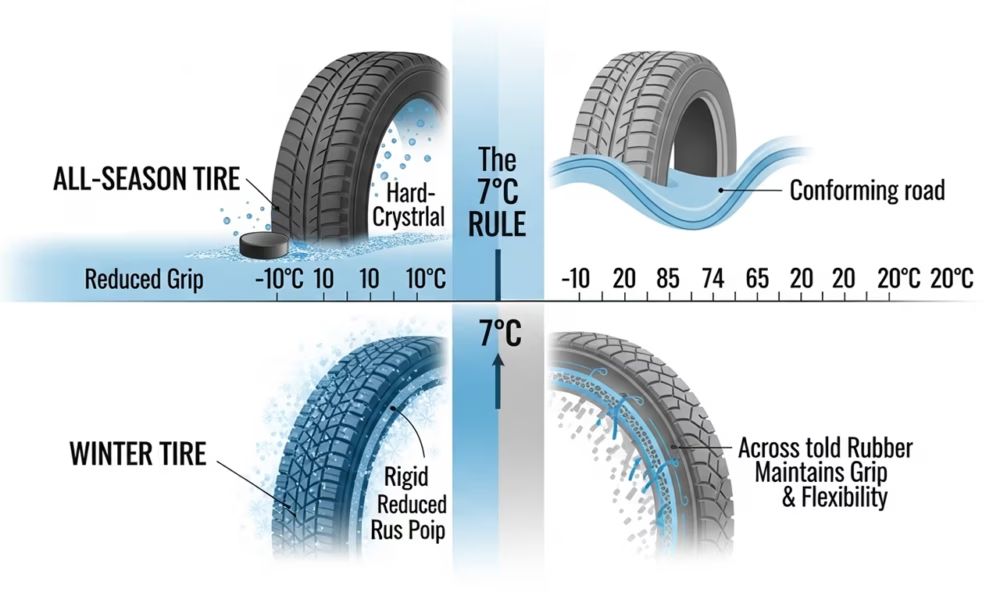
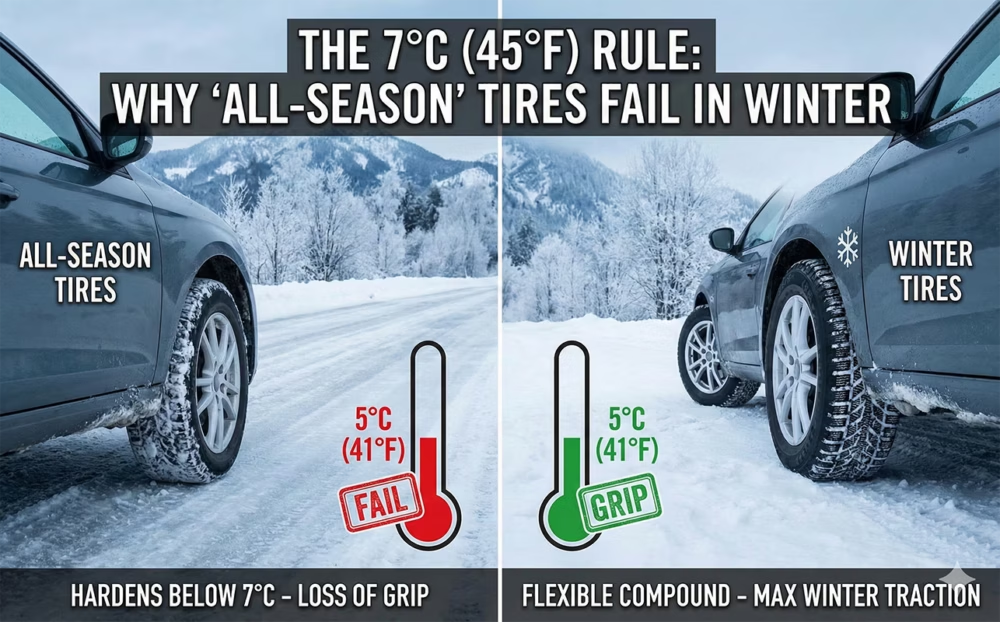
The rubber in all-season tires hardens in the cold, reducing grip, while winter tires are engineered to stay flexible at low temperatures.
A commonly cited guideline for switching to winter tires is the “7°C rule.” This suggestion posits that when average daily temperatures consistently drop below 7 degrees Celsius (around 45 degrees Fahrenheit), it’s time to consider changing over.
The basis of this rule is rooted in the fact that rubber compounds used in tires begin to harden at these cooler temperatures. This hardening affects their ability to grip the road.
While the 7°C rule provides a useful starting point, it’s far from a definitive guarantee of safety. It acts as a general indicator that the performance characteristics of all-season tires are beginning to degrade, but it doesn’t account for the severity of specific winter conditions or the nuanced requirements for safe driving in snow and ice.
Relying solely on this temperature threshold can lead drivers to remain on tires that are already underperforming, especially when faced with more extreme weather.
Why “All-Season” Isn’t “All-Winter”
The term “all-season” is inherently a compromise. These tires are engineered to provide acceptable performance across a wider range of temperatures and conditions than dedicated summer or winter tires. However, this broad design means they cannot excel in any single extreme.
Their rubber compound is formulated to remain relatively flexible across a significant temperature range, but this flexibility is insufficient for the extreme cold and demanding grip required on ice and snow.
Similarly, their tread patterns are a blend, aiming to provide adequate traction in dry, wet, and light snowy conditions, but lacking the specialized features that give true winter tires their superior grip.
Consequently, while they might get you through a light dusting of snow, they are not equipped to handle the significant challenges presented by severe winter weather, leading to compromised traction and a reduced margin for safety.
The Molecular Breakdown: Why All-Season Rubber Compounds Stiffen and Lose Grip
The fundamental performance difference between all-season and dedicated winter tires lies in their rubber compounds. Tire manufacturers design these compounds to achieve specific properties related to grip, wear, and fuel efficiency under various operating conditions.
When it comes to winter, the requirements for a tire’s rubber are starkly different from those in warmer weather, and this is where all-season tires reveal their critical limitations.
The Core Difference: Rubber Chemistry Under Pressure
At its heart, a tire’s ability to grip the road is dictated by the physical properties of its rubber compound. This compound is a complex mixture of natural rubber, synthetic polymers, carbon black, silica, and various oils and chemicals, each contributing to the tire’s overall performance.
For all-season tires, the rubber compound is designed to be a jack-of-all-trades. It needs to remain pliant enough to offer decent grip in warmer temperatures, resist wear from abrasive road surfaces, and not become excessively hard when the temperature drops. However, this compromise means the compound is not optimized for the extreme cold.
The Freezing Effect: Losing Micro-Level Adhesion
As temperatures fall below 7°C, the polymers within the rubber compound of an all-season tire begin to stiffen. This molecular stiffening reduces the tire’s ability to conform to the microscopic irregularities of the road surface. Road surfaces, even seemingly smooth asphalt, are incredibly rough at a microscopic level.
A flexible tire can press into these tiny pores and imperfections, creating a strong mechanical lock and enhancing grip. When the rubber hardens, it can no longer make this intimate contact. Instead, it bridges over these imperfections, significantly reducing the available traction. This effect is exacerbated as temperatures approach and fall below freezing.
The “Hard As a Hockey Puck” Analogy
A common and effective analogy for a cold all-season tire is that it becomes “hard as a hockey puck.” This illustrates the drastic loss of pliability. A hockey puck, made from vulcanized rubber, is designed to be rigid at playing temperatures.
When a tire’s rubber compound reaches a similar level of hardness, its ability to flex, bite, and absorb the road surface is drastically diminished.
This hardened state means that on icy or packed snow surfaces, the tire essentially slides rather than grips. The microscopic biting edges that a flexible winter tire compound can create are absent, leaving the vehicle vulnerable to skidding, reduced braking effectiveness, and poor handling.
Tread Pattern Limitations: Where All-Season Design Falls Short
Beyond the crucial rubber compound, the tread pattern and tread design of a tire play a vital role in its performance, especially in challenging winter conditions. While all-season tires feature patterns intended for diverse environments, they lack the specific engineering elements that make dedicated winter tires so effective when snow and ice are present.
The Compromised Tread Design: Jack of All Trades, Master of None
The tread pattern on an all-season tire is typically a blend of features. It usually includes circumferential grooves to channel water away, reducing hydroplaning risk in wet conditions, and some intermediate blocks and sipes designed to offer a degree of traction in light snow. However, this design is a compromise.
The blocks might not be aggressive enough to dig effectively into deep snow, and the grooves, while functional for water, may not be optimized for expelling packed snow and slush efficiently. This “master of none” approach means the tire is merely adequate in many situations, but performs poorly when pushed to its limits in severe winter weather.
The Critical Role of Sipes in Winter Traction
One of the most significant distinguishing features of winter tires is the abundance of small slits known as sipes. These are not just random cuts; they are meticulously designed to create thousands of biting edges. When a winter tire encounters snow or ice, these sipes open up, acting like tiny claws that dig into the surface, providing crucial traction.
They also play a vital role in evacuating water and slush from the contact patch, preventing hydroplaning on wet ice. All-season tires have far fewer and shallower sipes, if any at all. The limited sipes on all-season tires cannot provide the same level of biting edge effect needed for true winter performance, severely impacting snow traction and grip on ice.
Furthermore, the tread depth of winter tires is often designed to be deeper, providing more material for the sipes to function effectively and for expelling snow and slush.
Evacuating Snow and Slush: Beyond All-Season Capabilities
Effective performance in snow and slush isn’t just about biting into the surface; it’s also about clearing the contact patch. Winter tires feature wider, deeper grooves and often more open shoulder blocks designed to rapidly shed snow and slush. This prevents the tire from becoming clogged, which would render its tread pattern useless and lead to a complete loss of traction.
The tread design of all-season tires, being more focused on wet or dry conditions, typically has a tighter pattern. This can cause snow and slush to pack into the grooves, creating a slick surface and significantly reducing grip. When driving through deep or slushy snow, an all-season tire’s inability to clear its tread efficiently means it quickly loses its ability to propel the vehicle forward.
Real-World Failure Points: When All-Season Tires Become Dangerous
The theoretical limitations of all-season tires in cold rubber compounds and less aggressive tread patterns translate into very real dangers on the road when winter conditions become severe. These tires can fail to provide adequate grip and traction in a variety of scenarios, leading to a loss of control.
Glare Ice and Black Ice: The Ultimate Test (and Failure)
Glare ice and black ice represent the most challenging conditions for any tire. These surfaces offer virtually no friction. For all-season tires, the hardened rubber compound means there is minimal ability to conform to the ice, and the limited sipes cannot generate sufficient biting edges.
The result is a dramatic loss of traction. The vehicle will slide, and braking or steering inputs become largely ineffective. While even winter tires struggle on pure ice, their specialized compound and extensive siping offer a significant advantage, providing a small but critical amount of grip that can mean the difference between staying in control and losing it completely. For an all-season tire, this situation is a near-certainty of failure to maintain control.
Deep and Unplowed Snow: Stuck and Struggling
When roads are covered in several inches of fresh or unplowed snow, the limitations of an all-season tire’s tread pattern become acutely apparent. The less aggressive blocks and the inability to efficiently clear snow mean the tire quickly digs itself into a rut rather than finding purchase to push forward.
While all-wheel drive can help a vehicle power through snow, it relies entirely on the tires having enough traction to transfer that power effectively. If the all-season tires are packed with snow and unable to grip, even an AWD system will struggle, leading to the vehicle becoming stuck. Dedicated winter tires, with their deeper tread and aggressive patterns, are designed to scoop and propel snow, maintaining forward momentum.
Packed Snow and Hard-Packed Surfaces: The Slippery Slope
Conditions like packed snow on roads, often a result of traffic repeatedly driving over fresh snow, or hard-packed ice in parking lots, present another significant challenge. Here, the surface is firm but still icy and lacks the forgiving texture of fresh powder. The hardened rubber compound of an all-season tire offers very little friction against this hard surface.
The lack of aggressive sipes means there are insufficient biting edges to grip. This leads to a precarious situation where acceleration, deceleration, and steering all become unpredictable. The handling is severely compromised, making it difficult to navigate turns or even maintain a straight line, especially at moderate speeds.
Freezing Rain and Wet Ice: A Deadly Combination
Freezing rain is particularly treacherous, as it coats all surfaces with a slick layer of ice. When this ice is wet, as it often is during and immediately after freezing rain, it creates an exceptionally low-friction environment. All-season tires are particularly vulnerable here.
Their compounds are not designed for this extreme slickness, and their tread patterns are not optimized for evacuating the water film that sits between the tire and the ice. This combination can lead to hydroplaning on ice, a terrifying scenario where the vehicle loses all directional control. The traction offered by an all-season tire in these conditions is minimal, making it a highly dangerous situation for drivers who have not switched to winter tires.
The Severe Consequences: Beyond Just “Slipping”
The failure of all-season tires to provide adequate traction and grip in winter conditions doesn’t just result in a minor slip; it escalates into severe safety risks that can have devastating consequences. The compromised performance directly impacts a vehicle’s most critical safety systems: braking and handling.
Dramatically Increased Braking Distances
One of the most significant dangers of using all-season tires in winter is the substantial increase in braking distances. When a tire cannot grip the road effectively, it takes much longer to slow down or stop. According to research from the Traffic Injury Research Foundation, at temperatures just below freezing, stopping distances for vehicles with winter tires are up to 30% shorter than vehicles with all-season tires Traffic Injury Research Foundation, 2023.
Other sources indicate that winter tires can stop approximately 6-7 feet shorter than all-season tires on average, which can make a significant difference in preventing collisions The Safe Driver, 2023. Imagine needing an extra car length or more to stop on an icy road – this can be the difference between a near miss and a serious accident. This increased stopping distance is a direct result of the reduced traction and grip provided by the hardened rubber compound and inadequate tread design of all-season tires.
Compromised Handling and Control: Loss of Vehicle Performance
Beyond braking, all-season tires severely compromise a vehicle’s handling and overall control in winter. When turning, accelerating, or even making minor steering adjustments, the tires need to provide consistent grip to translate the driver’s inputs into vehicle movement. On snow or ice, an all-season tire’s inability to generate sufficient traction means the vehicle may understeer (plow straight ahead when you try to turn) or oversteer (the rear end slides out).
This loss of predictable control is particularly dangerous on winding roads or in traffic. Even vehicles equipped with advanced systems like all-wheel drive are fundamentally limited by the traction the tires provide; if the tires can’t grip, the AWD system cannot effectively transfer power.
Slushy or snowy pavement can cause a significant reduction in safe driving speeds on major roads, estimated between 30% to 40% Federal Highway Administration, 2026. Without the necessary grip from dedicated winter tires, drivers might find themselves unable to safely navigate these conditions, even with advanced drivetrain technology.
The True Cost of All-Season Failure
The consequences of all-season tire failure in winter extend far beyond immediate financial costs. Accidents caused by inadequate traction and grip can lead to vehicle damage requiring expensive repairs, increased insurance premiums, and potentially significant downtime for repairs, impacting work and daily life. More profoundly, there are the costs associated with injuries, both physical and emotional.
The trauma of a serious accident, coupled with potential medical bills and rehabilitation, can have long-lasting effects. In the context of road safety, the seemingly minor inconvenience of switching tires pales in comparison to the devastating impact of an accident that could have been prevented.
The market for winter tires is substantial, valued at USD 27 Billion in 2023 and projected to reach USD 42.39 Billion by 2031, growing at a CAGR of 5.80% Verified Market Research, 2023, indicating a widespread recognition of their importance for safety and performance. This growth, with regions like Europe projected to see the highest CAGR of 5.3% IndustryARC, 2023, underscores the increasing global adoption driven by safety and performance demands.
Identifying True Winter Capability: The 3PMSF Symbol
Navigating the tire market can be confusing, especially when terms like “all-season” and “all-weather” are used. To ensure a tire is genuinely designed for severe winter conditions, there’s a specific, universally recognized symbol to look for.
What the Three Peak Mountain Snowflake (3PMSF) Symbol Means
The most reliable indicator of a tire’s suitability for severe winter conditions is the Three Peak Mountain Snowflake (3PMSF) symbol. This symbol, depicting a snowflake inside a three-peaked mountain, signifies that the tire has passed specific performance tests in snow. Tires bearing this mark have demonstrated superior snow traction and grip compared to tires without it. Manufacturers include this symbol to assure consumers that the tire meets stringent standards for winter performance, including in challenging snow and ice scenarios. When you see the 3PMSF symbol on a tire, you can be confident it has been engineered with a specialized rubber compound and tread design optimized for the demands of winter weather. These are the winter tires that offer the best safety and handling when temperatures drop and snow or ice are present.
The Limitations of the M+S Marking
Many all-season tires are marked with “M+S,” signifying “Mud and Snow.” While this marking suggests some capability in these conditions, it’s important to understand its limitations. The “M+S” designation is often self-certified by manufacturers and does not require rigorous testing for performance in severe winter conditions like the 3PMSF symbol does. An M+S tire might offer slightly better performance than a pure summer tire in light snow, but it does not guarantee the same level of traction, grip, and safety as a tire with the 3PMSF symbol. Consequently, relying solely on an M+S marking for winter driving can be a dangerous oversight, as these tires often fall short when facing true winter challenges, leading to increased braking distances and compromised handling.
Making the Smart Switch: Prioritizing Safety Over Convenience
The evidence is clear: while all-season tires offer convenience, they fail to provide the necessary safety and traction in genuine winter conditions. Making the proactive decision to switch to dedicated winter tires is not just about complying with regulations in some regions; it’s about ensuring personal safety, protecting your vehicle, and maintaining control when the weather turns unpredictable.
Beyond the Calendar: Evaluating Actual Driving Conditions
While the 7°C rule is a useful starting point, drivers should always evaluate their actual driving conditions. If you live in an area that experiences freezing temperatures, ice, snow, or frequent slush, it’s prudent to switch to winter tires before the first snowfall. Consider the types of roads you typically drive on – are they rural, often unplowed, or susceptible to ice formation? Are you frequently commuting during peak winter hours when roads are most challenging? Taking these factors into account, rather than just the calendar date, will help you make a timely and informed decision. The wear on your tires also plays a role; older tires with less tread depth will perform even worse in winter.
The Value of Dedicated Winter Tires
The investment in a set of dedicated winter tires pays dividends in safety, performance, and peace of mind. Their specialized rubber compound remains flexible in extreme cold, ensuring optimal grip and traction. Their aggressive tread pattern and abundant sipes are engineered to bite into snow and ice, providing superior braking and handling capabilities. This means shorter stopping distances, better control around corners, and increased confidence when navigating challenging winter weather. While all-season tires are a compromise, winter tires are purpose-built for the job, offering a level of performance that cannot be matched. Even when paired with all-wheel drive, winter tires are essential for maximizing the vehicle’s stability and control.
Professional Installation and Maintenance
Once you’ve chosen your dedicated winter tires, professional installation is key. Tire technicians can ensure they are mounted correctly and balanced, contributing to optimal performance and longevity. Proper maintenance, including regular checks for tread depth and air pressure, is also crucial. Winter tires are designed to provide excellent performance throughout their lifespan, but like any tire, they require care. By making the smart switch and ensuring proper care, you equip your vehicle with the best possible defense against the dangers of winter driving.
Conclusion: Don’t Compromise on Winter Safety
The allure of convenience offered by all-season tires is understandable, but when it comes to winter conditions, this convenience comes at a steep price: compromised safety. The fundamental differences in rubber compound and tread design mean that all-season tires simply cannot provide the necessary traction and grip on ice, snow, and slush. Their performance degrades significantly as temperatures drop, leading to dramatically increased braking distances, unpredictable handling, and a heightened risk of accidents.
The Clear Message: All-Seasons Fail in Winter
The 7°C rule is a useful guideline, but it’s a threshold where performance begins to decline, not an indicator of absolute safety. As temperatures dip and winter weather intensifies, the hardened rubber compound of an all-season tire becomes akin to a slick plastic, offering minimal adhesion.
The lack of deep sipes and aggressive tread patterns means they cannot effectively bite into snow or evacuate slush, rendering them inadequate for the demanding conditions they are expected to face. Even the benefits of all-wheel drive are severely limited when the tires themselves cannot provide sufficient traction.
The statistical evidence—highlighting significantly longer braking distances and the risks associated with reduced handling—underscores the critical need for specialized equipment. The market growth for dedicated winter tires, projected to reach USD 42.39 Billion by 2031 Verified Market Research, 2023, reflects a global understanding that true winter performance demands dedicated solutions.
Prioritizing safety over perceived convenience by switching to winter tires marked with the 3PMSF symbol is not just a recommendation; it’s an essential step for any driver who values their well-being and the safety of others on the road during the perilous winter months. Don’t let the promise of “all-season” lull you into a false sense of security; embrace the proven performance of dedicated winter tires.
FAQs
What is the 7°C (45°F) rule related to tires?
The 7°C (45°F) rule is a critical temperature threshold used to determine when tire performance begins to change significantly. It marks the point where the rubber compounds in standard all-season tires start to stiffen and lose their effectiveness. Below this temperature, all-season tires can no longer maintain adequate flexibility, prompting the recommendation to switch to winter tires to ensure safety and grip.
Why do ‘all-season’ tires fail in winter conditions?
All-season tires fail in winter because they are designed as a “jack-of-all-trades” compromise. Their rubber compound is formulated to remain pliable in warm weather and resist wear, but it lacks the necessary chemistry to stay flexible in extreme cold. Additionally, their tread patterns are a blend designed for wet and dry roads, missing the specialized biting edges and deep grooves required to grip snow and ice effectively.
What temperatures are considered optimal for all-season tire performance?
All-season tires perform optimally at temperatures above 7°C (45°F). In these warmer conditions, their rubber compounds remain flexible enough to conform to road irregularities, providing a strong mechanical lock and sufficient traction. However, once the temperature drops below this level, their performance degrades rapidly as the rubber hardens.
How do tire rubber compounds respond to cold temperatures?
As temperatures drop below 7°C, the polymers within an all-season tire’s rubber compound begin to stiffen on a molecular level. The article uses the analogy of a “hockey puck” to describe this state: the rubber becomes hard and rigid. This loss of pliability prevents the tire from conforming to the microscopic imperfections of the road surface, causing it to “bridge” over them rather than grip them, which drastically reduces traction.
What are the differences between all-season and winter tires?
The fundamental differences lie in rubber chemistry and tread design. Winter tires use a specialized compound that remains soft and flexible even in freezing temperatures, allowing them to bite into the road. In contrast, all-season tires harden in the cold. Furthermore, winter tires feature aggressive tread patterns with deep grooves and sipes (tiny cuts) designed to trap snow and provide extra biting edges, whereas all-season treads are smoother to accommodate dry and wet warm-weather driving.
How do tread patterns on winter tires improve safety compared to all-season tires?
Winter tires feature specialized engineering elements that all-season tires lack. They are designed with aggressive tread blocks and high-density siping that create thousands of biting edges. These features allow the tire to claw into snow and ice, significantly improving braking capability and cornering stability. All-season tires, with their smoother “blended” patterns, cannot generate this mechanical grip in slippery conditions.
What are the risks of using all-season tires in winter weather?
Using all-season tires in winter leads to compromised handling, loss of vehicle control, and significantly increased stopping distances. The article highlights that stopping on icy roads can take an extra car length or more, which can be the difference between a near miss and a serious collision. Drivers face a higher risk of understeering (plowing straight when turning) or oversteering (spinning out) because the hardened rubber effectively slides over the road surface rather than gripping it.
When should drivers switch from all-season to winter tires?
Drivers should make the switch before the first snowfall or as soon as temperatures consistently drop towards the 7°C (45°F) mark. The article advises against relying solely on the calendar; instead, evaluate actual driving conditions. If you live in an area with freezing temperatures, ice, or frequent slush, it is prudent to switch early to ensure you aren’t caught on underperforming tires when the weather turns unpredictable.
What are the best practices for storing and changing to winter tires based on the 7°C rule?
While the article focuses primarily on the “changing” aspect, the best practice is to be proactive rather than reactive. Do not wait for snow to fall; switch to winter tires as soon as the ambient temperature consistently falls below 7°C to avoid the risks of hardened rubber. Drivers should look for tires marked with the “Three Peak Mountain Snowflake” (3PMSF) symbol, as these are certified for severe winter performance, unlike standard “M+S” (Mud and Snow) tires which may not meet the same rigorous testing standards.