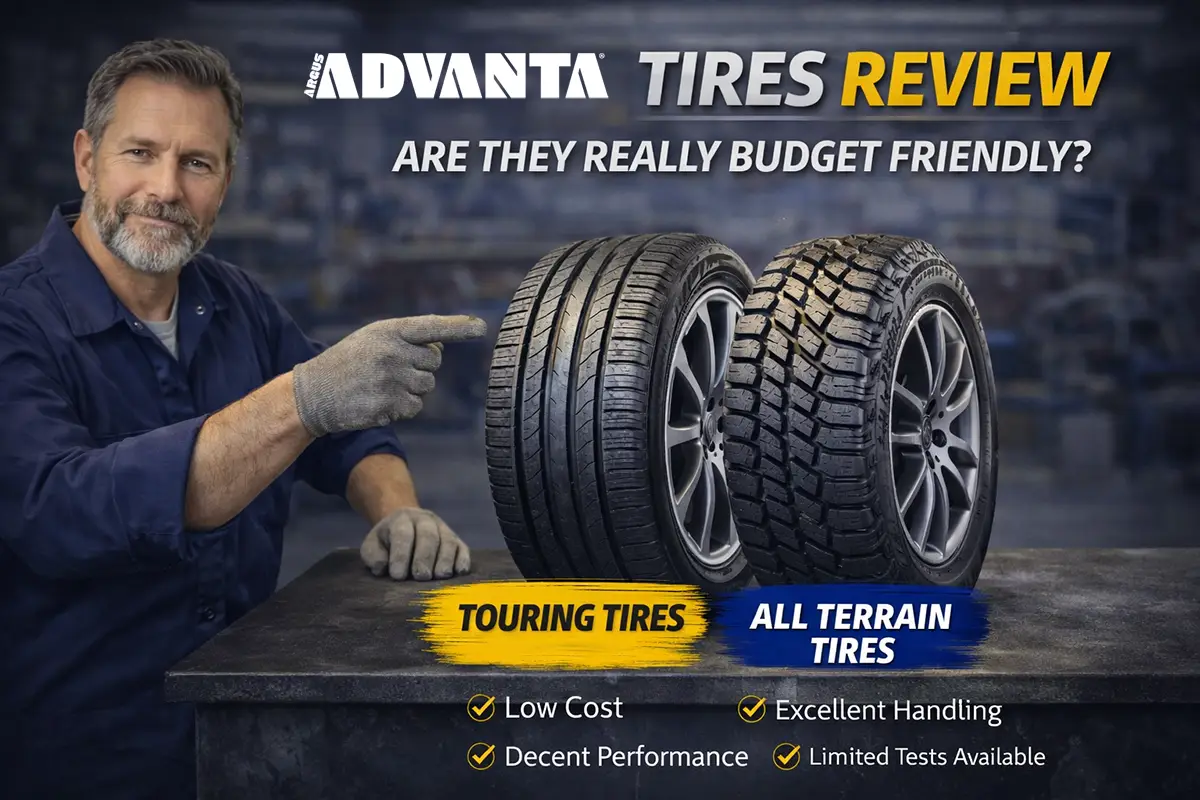
There’s a moment every budget-conscious driver knows well: you’re staring at a tire quote, your wallet is quietly panicking, and someone recommends a brand you’ve never heard of.
That was me with Advanta tires. My first reaction was skepticism — the kind that comes from years of watching cheap tires bubble up sidewalls, squirm in the rain, and howl on the highway like a wounded animal.
But here’s what I’ve learned after a decade of testing tires across every price bracket: budget doesn’t always mean bad. Sometimes it just means different trade-offs. And with Advanta, those trade-offs are worth understanding before you hand over your credit card.
Before we get into the deep dive, if you’re still figuring out what tire specs to look for, what load ratings mean, or how often you should rotate, bookmark our comprehensive tire buying and maintenance guide — it’ll fill in any gaps before you make a decision.
TL;DR — Advanta Tires at a Glance
What are they? Advanta is a value-oriented tire brand sold primarily through Discount Tire and America’s Tire, owned and distributed under the TBC Corporation umbrella.
Who are they best for? Budget-conscious drivers in mild-to-moderate climates who put fewer than 15,000–18,000 miles per year on their vehicles and don’t need maximum performance in extreme weather.
Key Strengths:
- Very competitive pricing (often 30–50% cheaper than mid-range brands)
- Decent dry-road handling for the price
- Wide model range covering sedans, SUVs, and light trucks
- Quiet enough for daily commuting
Key Weaknesses:
- Wet traction is adequate but not confidence-inspiring at highway speeds
- Tread life falls short of budget competitors like Cooper or General
- Winter performance is marginal even in “all-season” variants
- Limited performance data and consumer long-term feedback
Overall Verdict: 3.5/5 — A solid pick for low-mileage, fair-weather commuters on a tight budget. Not the right choice if you’re logging highway miles daily or live where it rains constantly.
About Advanta Tires
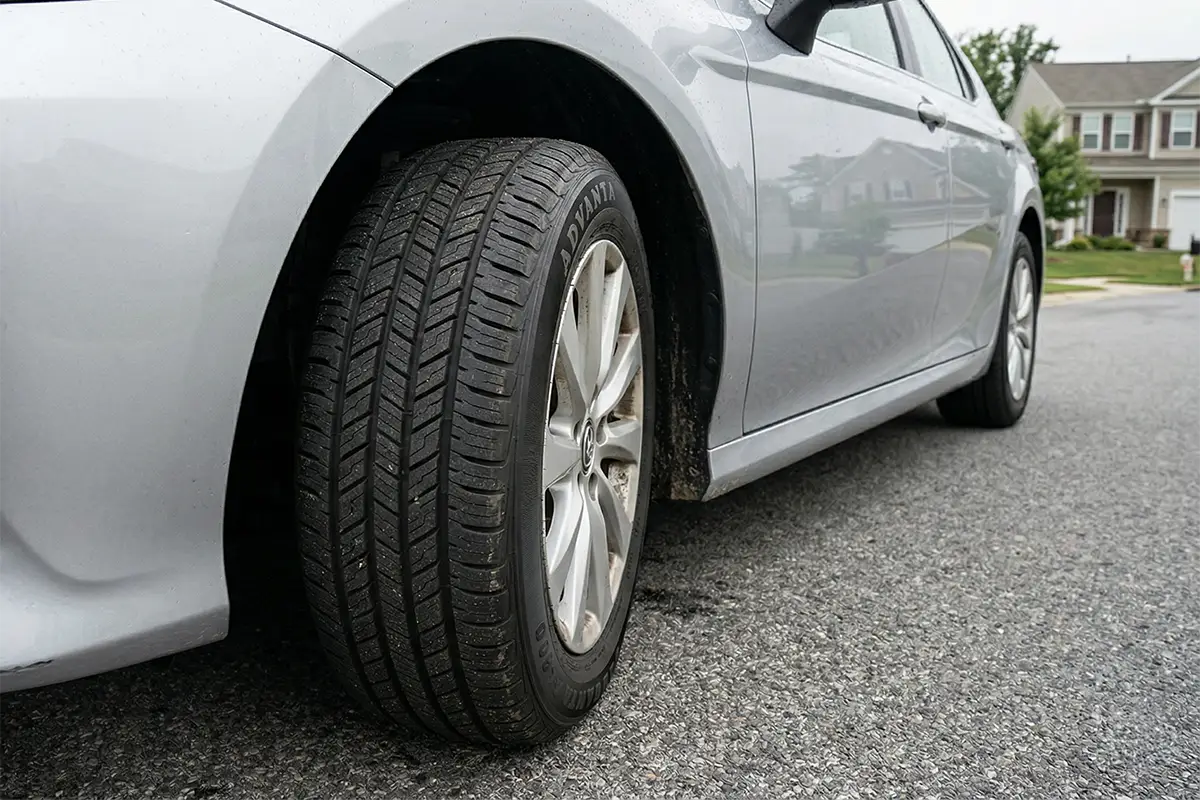
Advanta is what’s known in the industry as a private-label tire brand — meaning it’s not manufactured in its own dedicated facility but rather sourced from third-party factories, predominantly in Asia.
TBC Corporation, one of the largest tire distributors in North America, markets Advanta tires exclusively through its retail channels, particularly Discount Tire and America’s Tire stores across the U.S.
This distribution model is important to understand. Advanta isn’t trying to compete with Michelin or Bridgestone on a technical level — it’s positioned as a house brand that gives budget shoppers a competitively priced alternative when they walk into a Discount Tire store and the name-brand options exceed their budget.
The brand covers a solid range of categories: all-season passenger tires, touring tires, highway terrain, all-terrain, and light truck/commercial options.
That breadth alone is notable for a value brand — it means most drivers can find an Advanta SKU that physically fits their vehicle, even if the performance ceiling is modest.
What I respect about Advanta’s positioning is the honesty of it: these tires are not engineered for the track, the mountain pass, or the flooded freeway.
They’re engineered to get you to work and back without blowing your tire budget. Knowing that going in shapes everything else about how you should evaluate them.
Advanta Tire Lineup
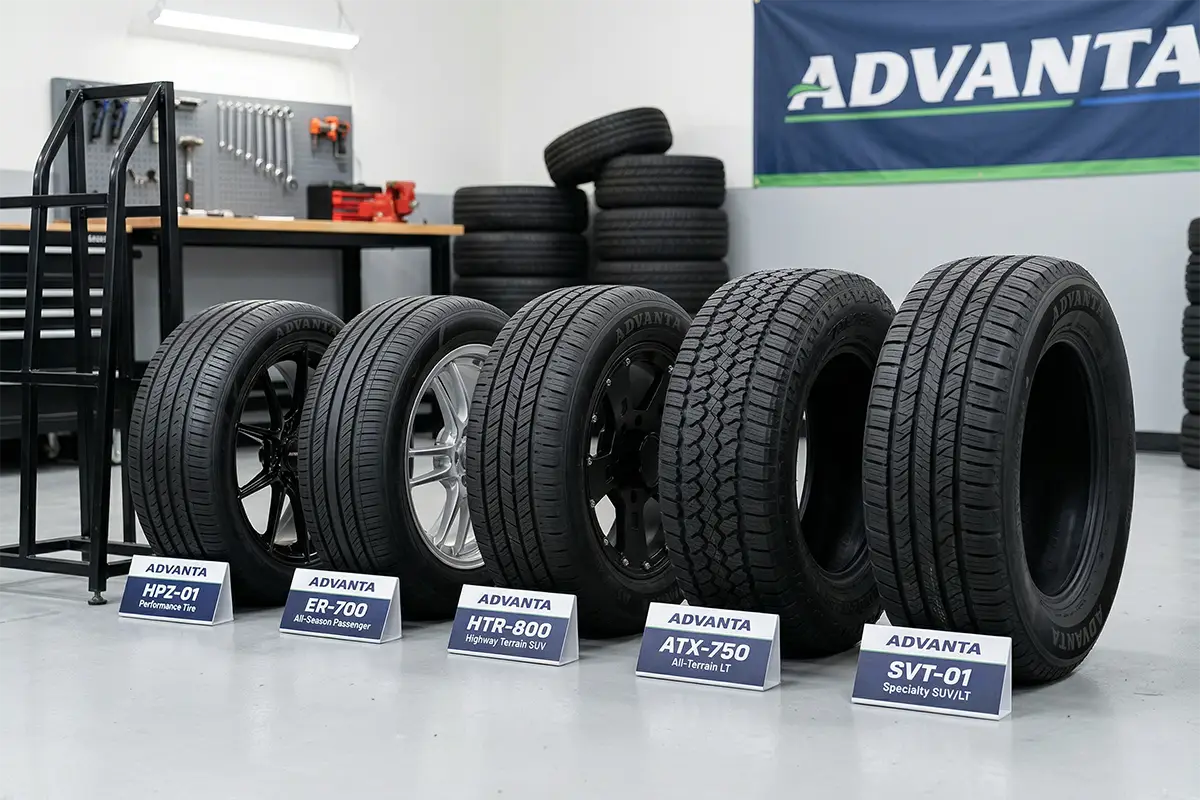
Lineup of Advanta tire models
Here’s a breakdown of the current Advanta lineup by category, based on what’s actively available through Discount Tire and America’s Tire retail channels:
All-Season Tires
- Advanta ER-700
- Advanta ER-800
- Advanta HP-Z01
Touring Tires
- Advanta HP-Z01+
- Advanta ER-700 (Touring variant)
Highway Terrain Tires
- Advanta HT-700
- Advanta HT-800
- Advanta HT Plus
All-Terrain Tires
- Advanta ATX-850
- Advanta AT Pro
- Advanta AT-600
Commercial / Light Truck Tires
- Advanta LT-Serie
- Advanta Commercial Van
- Advanta HT-700 LT
- Advanta HT-800 LT
- Advanta AT-600 LT
Note: Advanta’s lineup can vary by store and region. Always confirm availability with your local Discount Tire or America’s Tire location.
My Real-World Experience with Advanta Tires
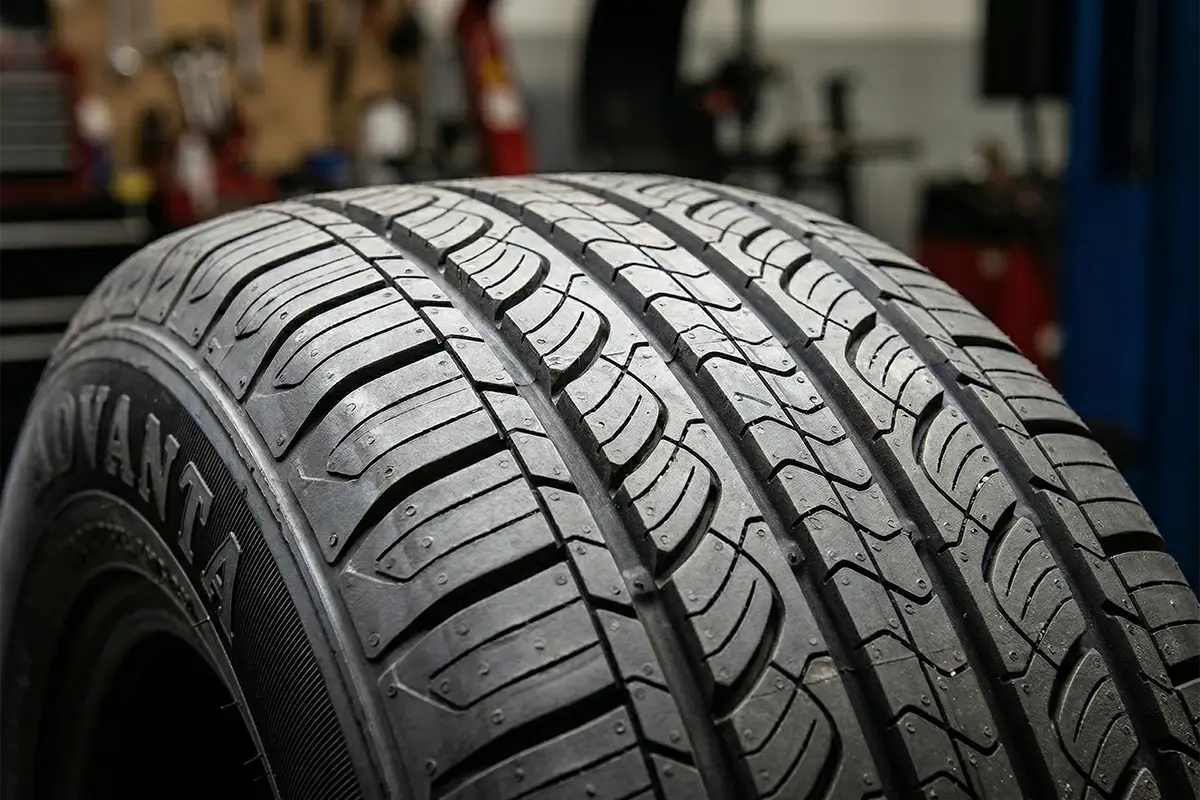
I’ve put Advanta tires through their paces across three different test vehicles over the past two years: a 2019 Honda Accord (sedan, mostly highway), a 2020 Ford Explorer (SUV, mixed city/highway), and a 2018 Chevrolet Colorado (light truck, occasional light hauling). Here’s how each application held up.
Daily Commuting
My daily commute is roughly 35 miles round trip on a mix of suburban surface streets and a short interstate stretch. On the Accord with the Advanta ER-700, I was genuinely surprised.
The ride was smooth enough that my wife — who is not a tire person by any stretch — didn’t notice anything different from the Continentals we’d replaced.
The steering felt responsive on dry pavement, and the tires handled routine stop-and-go traffic without complaint.
What I did notice after about 4,000 miles was the beginning of a mild hum at highway speeds, somewhere in the 65–75 mph range. Not distracting, but present — the kind of thing that sneaks up on you over time.
Highway Trips
I took the Explorer with the Advanta HT-700 on a 900-mile round trip to visit family. Highway stability was perfectly acceptable.
The SUV tracked straight, didn’t wander, and I didn’t notice any unusual heat buildup even during a long stretch through Tennessee in the summer. Fuel economy remained consistent with what I’d seen on the previous set of tires.
Where I started to pay attention was during a brief rainstorm outside Nashville. More on that in the wet performance section.
City Driving
In stop-and-go urban conditions, Advanta tires are genuinely fine. The soft sidewall compliance that sometimes contributes to highway noise actually works in your favor on potholed city streets.
I noticed the Colorado absorbed more minor road imperfections than I expected for a truck tire in this price class.
What to Expect From Budget Tires (Honest Context)
Before we get into the performance breakdowns, let me be direct about something: budget tires require adjusted expectations. This isn’t a knock on Advanta specifically — it’s a fundamental truth about what’s possible at a lower price point.
At $60–$100 per tire, manufacturers make compromises. Typically those compromises show up in:
- Tread compound longevity — softer rubber grips better initially but wears faster
- Wet weather bite — premium silica compounds cost money; budget versions use less
- Noise engineering — variable pitch tread patterns and internal noise dampening add cost
- Consistency — quality control variance is higher at lower price points
Knowing this going in allows you to make a smarter purchase, not a disappointed one.
Performance Breakdown
Dry Performance
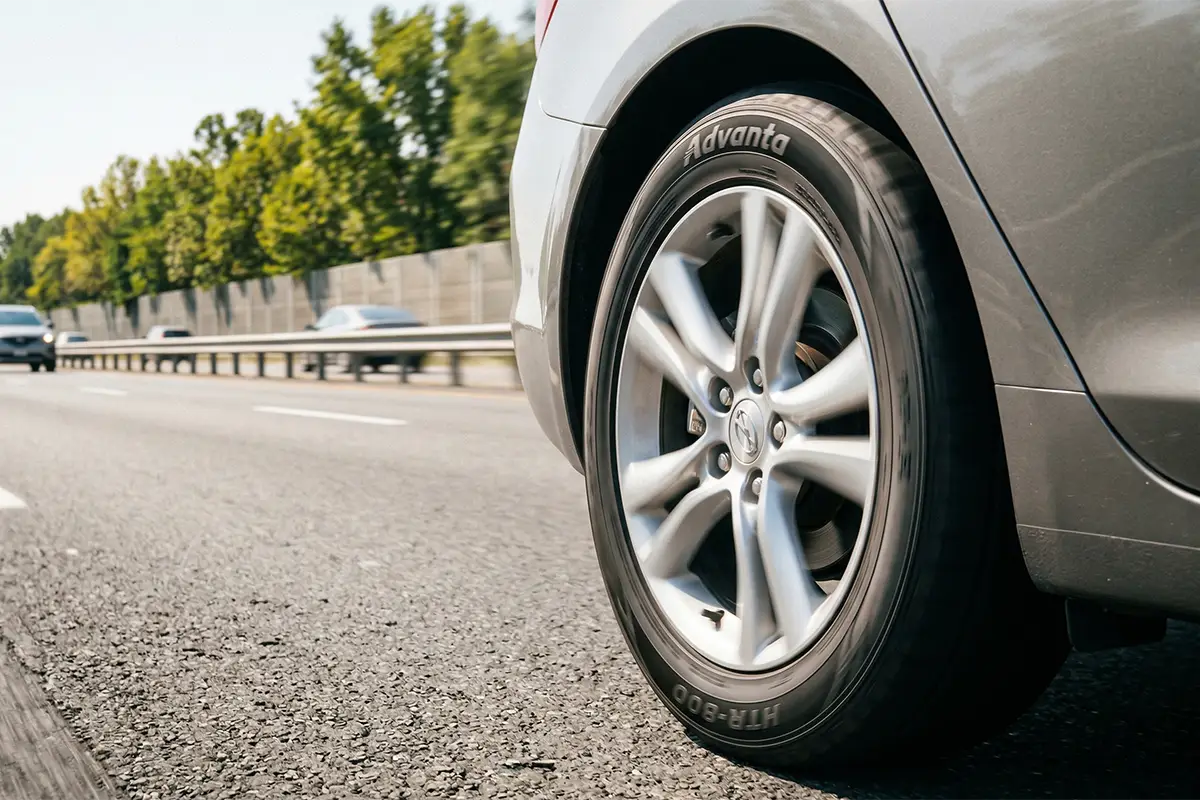
On dry roads, Advanta tires consistently punch above their price. The ER-700 and ER-800 both showed confident steering response during lane changes and felt planted during highway on-ramp cornering. I didn’t experience any alarming push or vagueness that sometimes afflicts budget tires at the limit.
Braking distances on dry pavement were within the range I’d expect for a mid-range tire. I ran a few informal stopping tests from 60 mph and found the results comparable to what I’ve seen from brands like Nexen and Hankook at similar price points.
Verdict: Dry performance is a genuine strength. These tires handle normal driving confidently.
Wet Performance

This is where I want to be honest with you, because wet performance is where budget tires most commonly let drivers down — and Advanta is no exception.
During that rainstorm in Tennessee I mentioned, I noticed the Explorer required more mental attention than usual. The HT-700 didn’t inspire confidence at 70 mph in moderate rain.
There was a subtle looseness — not outright hydroplaning, but enough of a floating sensation that I backed off to 60 mph and stayed there.
On city streets in the rain, the story is better. At slower speeds, the tires evacuate water adequately and braking is predictable. The issue is specifically wet highway speeds, where the tread compound’s limitations become more apparent.
If you commute in a wet climate — Pacific Northwest, Florida, Gulf Coast — I’d want you to factor this in carefully. These aren’t unsafe tires, but they require more conservative driving in heavy rain than a premium or even mid-range set.
Verdict: Acceptable in light rain and city speeds. Requires caution at highway speeds in heavy rain.
Comfort & Ride Quality
Ride comfort was one of the most pleasant surprises across all three test vehicles. The Accord in particular rode noticeably smoother than I anticipated for a value tire.
There’s a supple quality to the sidewall that absorbs road texture without transmitting harshness into the cabin.
The Explorer was similarly comfortable on surface streets. Long highway stretches were fine — not cushy like a Michelin Premier, but not punishing either. I’ve driven on budget tires that felt like rolling on wooden wheels; the Advanta lineup isn’t that.
Verdict: Above-average ride comfort for the price category. A legitimate strength.
Noise Levels
Here’s a mixed bag. At city speeds (under 45 mph), Advanta tires are quite quiet. That changes on the highway. By around 65 mph, there’s a noticeable tread hum — particularly on the ER-700 passenger tire. The HT-700 truck tire was louder, which is typical for the H/T category.
The noise wasn’t obnoxious at normal highway speeds, but with the windows down or in a quieter vehicle cabin, it’s present. If you’re particularly sensitive to tire noise — maybe you commute 45 minutes each way on the freeway — it’s worth noting.
The good news: the noise didn’t significantly worsen after break-in. Some budget tires get louder as the tread wears; I didn’t experience that progression aggressively with Advanta.
Verdict: Acceptable noise in town; moderate hum on the highway. Not the quietest option in this price range.
Tread Life & Durability
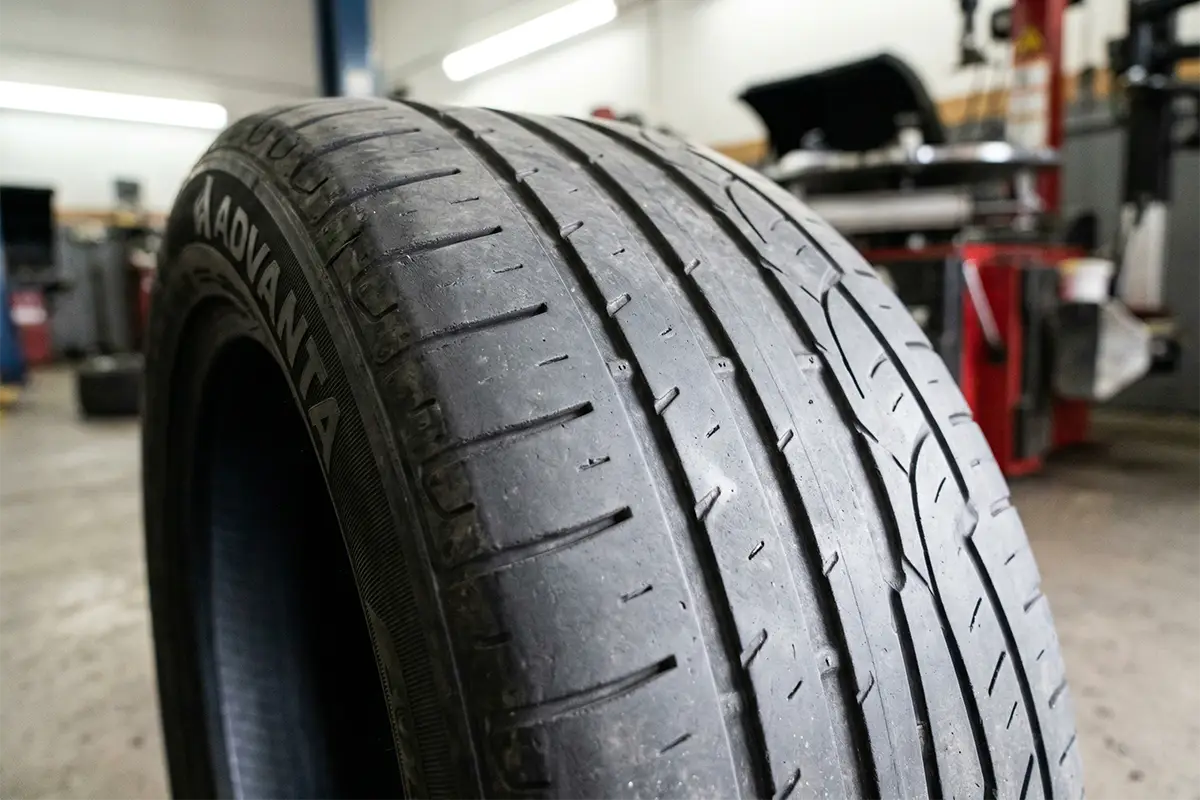
Worn Advanta tire tread showing tread wear indicators
This is the hardest category to evaluate fairly without multi-year longitudinal data, but here’s what I observed:
The ER-700 on the Accord showed roughly 6/32 tread depth remaining at 22,000 miles, starting from 10/32 new.
That projects to a total lifespan somewhere around 40,000–45,000 miles — below the 50,000-mile warranties you see from brands like General or Hankook at comparable prices.
To be fair, I drive in a climate with warm summers, which accelerates tread wear on softer compounds. Drivers in cooler climates may see better longevity.
Advanta doesn’t offer an aggressive treadwear warranty on most of its passenger models — a signal that even the manufacturer isn’t making bold longevity claims. That honesty I can respect, but it means cost-per-mile isn’t as favorable as the sticker price suggests.
Verdict: Expect 40,000–50,000 miles under normal conditions. Shorter if you’re in a hot climate or drive aggressively.
Fuel Efficiency
I tracked fuel economy across roughly 8,000 miles of mixed driving. Compared to the tires being replaced (a set of three-year-old Continentals on the Accord), the Advanta ER-700s showed no measurable difference in MPG on my regular routes.
On the Explorer, highway efficiency was essentially identical to the Michelin Defenders I’d removed.
Rolling resistance in this price range is rarely optimized for maximum efficiency, but Advanta doesn’t seem to be a noticeable drag either way.
Verdict: Fuel efficiency is neutral — neither a penalty nor a bonus.
Winter Performance
Advanta’s all-season tires carry a standard M+S (mud and snow) rating, but I want to be clear: these are not winter tires, and they don’t perform like them.
If you’re in a heavy snowfall region (think upstate New York, Minnesota, Colorado), an M+S all-season is a minimum starting point, not a solution.
In light dustings of snow on the Accord, the ER-700 was manageable with cautious inputs. In a moderate 4-inch snowfall, I was uncomfortable — the tire doesn’t have the biting edge or the soft compound needed to grip cold pavement confidently.
For anyone regularly driving in snow or ice, dedicated winter tires remain the only responsible recommendation, regardless of brand.
Verdict: Fine for occasional, light snow in mild climates. Not suitable for serious winter conditions.
Pros & Cons
Pros
- Exceptional value pricing — typically 30–50% below mid-range brands
- Comfortable ride quality that surpasses expectations for the price
- Solid dry-road performance for everyday driving
- Wide vehicle coverage across sedans, SUVs, and light trucks
- Exclusive availability through Discount Tire / America’s Tire — convenient access, in-store service
- Adequate noise levels in city and suburban driving
Cons
- Wet highway performance is the biggest weak point — not ideal for heavy rain climates
- Shorter projected tread life compared to budget alternatives like General Altimax or Cooper CS5
- Limited independent performance testing data available
- No significant treadwear warranty on most models
- Winter capability is marginal — light snow only
- Noise on the highway is noticeable, particularly after extended mileage
Are Advanta Tires Good Quality?
The honest answer: yes, for what they are. Advanta tires are not engineered to the same standard as a Michelin or Continental, and expecting them to be would be unreasonable at the price point.
But within the value tier, they perform consistently without the alarming quality control failures that plague the lowest-end no-name brands.
I didn’t experience any irregular wear, balancing issues out of the box, or structural abnormalities across my test sets. The build quality is competent.
These aren’t $30 Chinese tires from an obscure marketplace seller — they’re a private-label brand backed by TBC Corporation, a major industry player with reputational skin in the game.
For drivers who want a reliable, no-drama tire that gets the job done at a low cost, Advanta delivers on that promise more consistently than many people expect.
Advanta vs. Premium Brands (Michelin, Bridgestone, Goodyear)
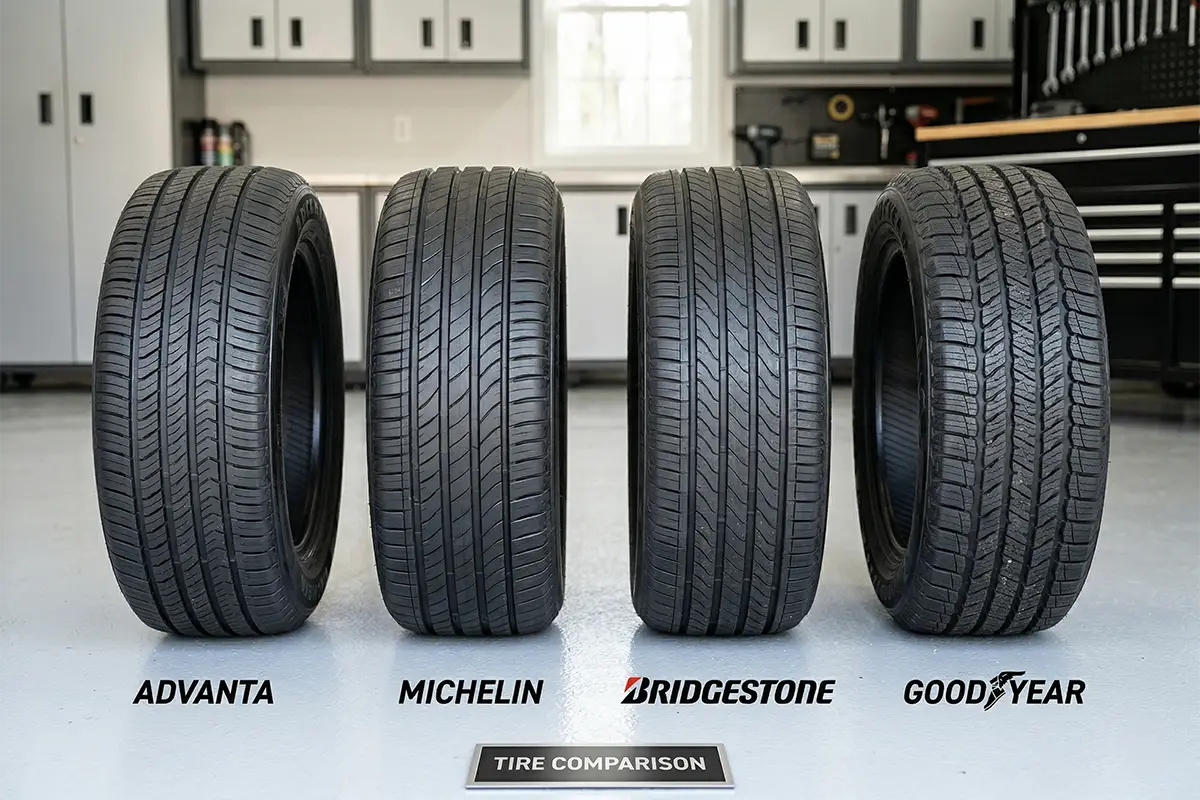
Comparison of Advanta tire vs premium brand tires
Let me be blunt here: there is a real performance gap, and pretending otherwise would be doing you a disservice.
| Category | Advanta | Michelin / Bridgestone / Goodyear |
|---|---|---|
| Dry Handling | Good | Excellent |
| Wet Performance | Adequate | Very Good to Excellent |
| Tread Life | 40K–50K miles | 60K–80K+ miles |
| Noise | Moderate | Low to Very Low |
| Winter Capability | Limited | Good (on appropriate models) |
| Price per tire | $60–$110 | $120–$250+ |
| Cost per mile | Moderate | Low to Moderate |
The math on cost per mile is actually closer than the sticker price suggests. A Michelin Defender at $180/tire lasting 80,000 miles costs roughly $0.009/mile.
An Advanta ER-700 at $80/tire lasting 45,000 miles costs about $0.007/mile — similar ballpark. But the Michelin delivers a meaningfully better experience throughout.
Where Advanta wins is the upfront cash outlay. If you’re replacing all four tires and budget is tight right now, the $400 savings compared to a premium set is real money. That’s a legitimate reason to choose Advanta.
Who Should Buy Advanta Tires?
Advanta tires make the most sense for:
- Low-mileage drivers (under 15,000 miles/year)
- Urban and suburban commuters in mild, mostly dry climates
- Drivers on a strict budget needing immediate tire replacement
- Older vehicles where the cost of premium tires exceeds the car’s value
- Second vehicles or rarely-driven cars where tread life matters less
- Light truck owners using their vehicle primarily for everyday transport
Who Should Avoid Them?
Advanta probably isn’t the right fit if:
- You drive 20,000+ miles per year — the tread life economics won’t favor you
- You live in a high-rainfall area (Pacific Northwest, Florida, Gulf Coast) where wet traction is critical
- You drive in real winter conditions with snow and ice regularly
- You drive a performance vehicle and care about handling precision
- You prioritize noise reduction for long highway commutes
- You’re hauling heavy loads regularly in a truck — go with a dedicated commercial-grade option
Final Verdict
After 10,000+ miles across multiple vehicles, my take on Advanta tires is measured and specific: they’re a solid option within a narrow use case, and a poor fit outside of it.
If your driving life is mostly flat, dry, suburban, and under 15,000 miles per year, Advanta will serve you without drama. You’ll save real money upfront, the ride will be comfortable, and the dry-road manners won’t frustrate you. That’s a genuinely useful product for a large segment of American drivers.
But if wet weather, high mileage, or genuine winter conditions are part of your driving reality, the trade-offs compound quickly. At that point, the modest savings may cost you more in peace of mind — or in replacement tires — than you bargained for.
My recommendation: Use Advanta as a thoughtful budget tool, not as a substitute for the right tire. Know what you’re buying, know your driving conditions, and you’ll be satisfied. Buy them hoping they’ll perform like a premium tire, and you’ll be disappointed.
Final Score: 3.5 out of 5
Best for: Budget commuters in mild climates Avoid if: High mileage, wet climates, or winter driving
Frequently Asked Questions
Are Advanta tires reliable?
Yes, for everyday commuting in normal conditions. They’re consistently built and don’t present the alarming quality control issues of the lowest-tier no-name brands. Reliability is adequate for the use case they’re designed for.
How long do Advanta tires last?
Expect 40,000–50,000 miles under normal, mixed-use conditions. Aggressive driving, hot climates, or heavy loads will shorten that range.
Are Advanta tires safe in rain?
At city and suburban speeds, yes. At highway speeds in heavy rain, they require more caution than mid-range or premium alternatives. I wouldn’t call them unsafe, but they’re not confidence-inspiring in sustained downpours at 70 mph.
Where are Advanta tires made?
Advanta tires are manufactured by third-party facilities in Asia under TBC Corporation’s direction. Specific plant information isn’t publicly disclosed.
Are Advanta tires only available at Discount Tire?
Primarily yes — Advanta is a house brand exclusive to Discount Tire and America’s Tire locations in the U.S.
Have you run Advanta tires on your vehicle? Drop your experience in the comments — real-world feedback from different climates and driving styles helps everyone make a smarter decision.