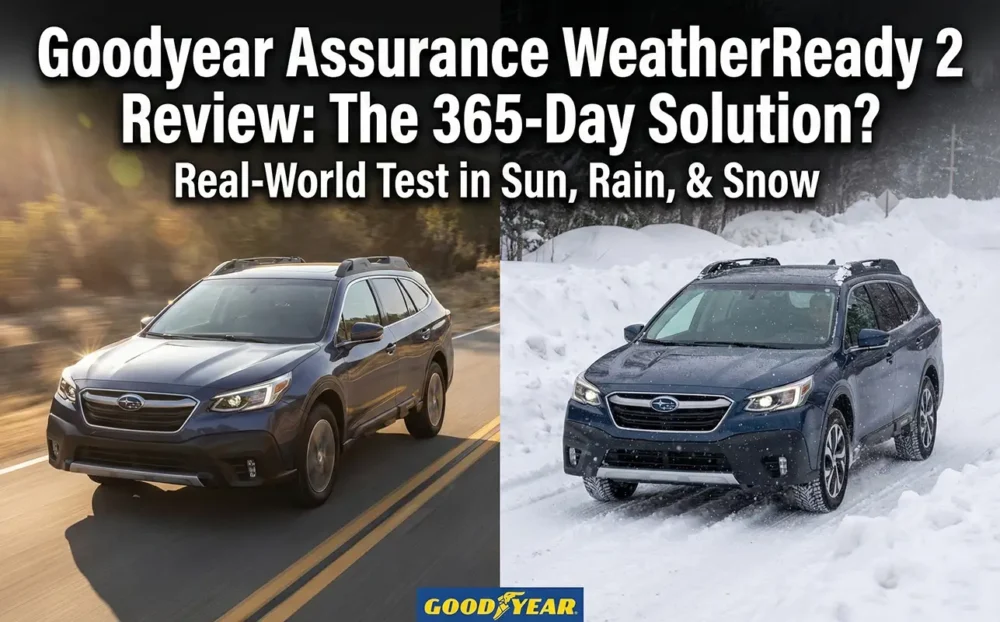
Introduction: The “All-Season” Lie
For decades, American drivers have been sold a comfortable lie: the “all-season” tire. It’s a comforting concept. You buy one set of tires, you drive them year-round, and you are safe no matter what Mother Nature throws at the windshield.
If you live in San Diego or Miami, that lie holds true. But if you live anywhere that experiences actual winter—where temperatures drop below 45°F and precipitation turns frozen—you know the reality. Standard all-season tires turn into hard plastic hockey pucks when the thermometer plunges.
Their tread patterns, designed for long life and quiet highway cruising, pack with snow instantly, turning your AWD SUV into a frantic, sliding pendulum.
For years, the only real solution was the semi-annual tire swap ritual: dedicated winter tires on steel wheels for four months, all-seasons for the other eight. It’s expensive, it requires storage space, and it’s a hassle.
Enter the “All-Weather” tire segment. These are tires designed to bridge the gap—offering true winter capability (earning the severe snow service rating) without sacrificing dry-road manners or tread life.
When looking across our comprehensive Goodyear tire reviews, it’s clear the brand was an early pioneer in this space with the original Assurance WeatherReady. It was a solid performer, though it tended to get noisy as it wore down. Now, they are back with the successor: the Goodyear Assurance WeatherReady 2.
Goodyear claims this new tire offers premium comfort, long-lasting tread, and uncompromised grip in rain, sleet, and snow. It’s a bold set of claims. To verify them, I strapped a fresh set of 225/65R17s onto our long-term Subaru Outback test mule and spent the last six weeks chasing the worst weather I could find across the Midwest and Northeast.
Here is the honest truth about living with the WeatherReady 2.
Goodyear Assurance WeatherReady 2 Review

- All-season tire designed for reliable performance in various weather conditions
- Weather Reactive Technology adapts to changing temperatures and road conditions
- Symmetric tread design with deep grooves for water evacuation and hydroplaning resistance
- Excellent dry road performance with responsive handling and braking
- Superior wet traction and hydroplaning resistance
- Capable performance in light snow and ice conditions
- Comfortable ride with low noise levels
Price Check
Check the price of this tire at the following retailers:
TireRack SimpleTire PriorityTire DiscountedWheelWarehouse AmazonDon’t know the correct size tire to purchase? Start here!
- Introduction: The “All-Season” Lie
- Goodyear Assurance WeatherReady 2 Review
- Key Takeaways
- Product Rating Bar
- The Tech Specs: What Makes It “WeatherReady”?
- Phase 1: The Dry Tarmac Test
- Phase 2: Hydroplaning and Wet Braking
- Phase 3: The Real Test – Snow and Ice
- Tread Life and Value Proposition
- The Competitive Landscape
- The Verdict: Who is this Tire For?
- FAQ
Key Takeaways
- Versatile All-Season Capability: It is engineered as a year-round tire that adapts to changing temperatures and road conditions, featuring Goodyear’s “Weather Reactive Technology.”
- Strong Wet Performance: The tire offers excellent hydroplaning resistance and wet traction, utilizing a symmetric tread design with deep grooves, sipes, and an advanced silica compound to confidently evacuate water.
- Reliable Dry Handling: It delivers impressive steering precision, responsive braking, and cornering stability on dry pavement, thanks to its rigid tread blocks and continuous center rib.
- Capable in Light Winter Conditions: The tread includes numerous biting edges that provide good grip in light snow and ice. However, it is not a dedicated winter tire and is not recommended for regions with extreme or heavy winter weather.
- Quiet and Comfortable Ride: The optimized tread pattern and internal construction absorb road imperfections, resulting in a smooth driving experience with low noise levels.
- Durable Construction: Built with a twin-steel belt package, spirally wrapped nylon, polyamide overlays, and TredLock Technology, the tire is designed for even wear, durability against impacts, and a long usable lifespan.
- Solid Overall Value: While the initial cost might be higher, the tire’s long treadwear life, reliable performance across varying conditions, and trusted brand reputation make it a worthwhile investment.
The Tech Specs: What Makes It “WeatherReady”?
Before we hit the road, it’s important to understand why this tire is different from the standard all-seasons (like a Goodyear Assurance MaxLife or a Michelin Defender) that probably came on your car.
The most critical distinction on the WeatherReady 2 sidewall is a small icon: a three-peak mountain with a snowflake inside it (3PMSF).
This isn’t just marketing fluff. To earn the 3PMSF rating, a tire must pass standardized industry acceleration tests on medium-packed snow, proving it provides significantly better traction than a reference all-season tire. If you live in a snow-belt state, this symbol is the baseline for winter safety.
How does Goodyear achieve this without making a tire that melts away in the summer heat?
1. The Soybean Oil Compound
This is the secret sauce. Rubber naturally stiffens in the cold. Traditional winter tires use specialized polymers to stay soft, but those polymers wear out fast on hot pavement.
Goodyear uses sustainable soybean oil in the tread compound of the WeatherReady 2. This allows the rubber to remain pliable at sub-freezing temperatures for grip on ice, but maintains structural integrity when it’s 90°F outside.
2. Asymmetric Tread Pattern
If you look at the tire, the inner half and outer half look completely different. The outside shoulder features larger, blockier tread lugs designed for dry cornering stability.
The inside half is a dense network of sipes (tiny jagged cuts in the rubber) and sweeping grooves designed to evacuate water and slush.
3. Evolving Traction Grooves
This is a fascinating claim by Goodyear. Usually, as a tire wears down, traction fades because the grooves get shallower. Goodyear claims that as the WeatherReady 2 wears, the channels actually widen, revealing new biting edges.
It’s designed to provide nearly the same wet and snow grip at 30,000 miles as it does at mile one. (While I can’t verify this in a six-week test, the engineering concept is sound).
Phase 1: The Dry Tarmac Test
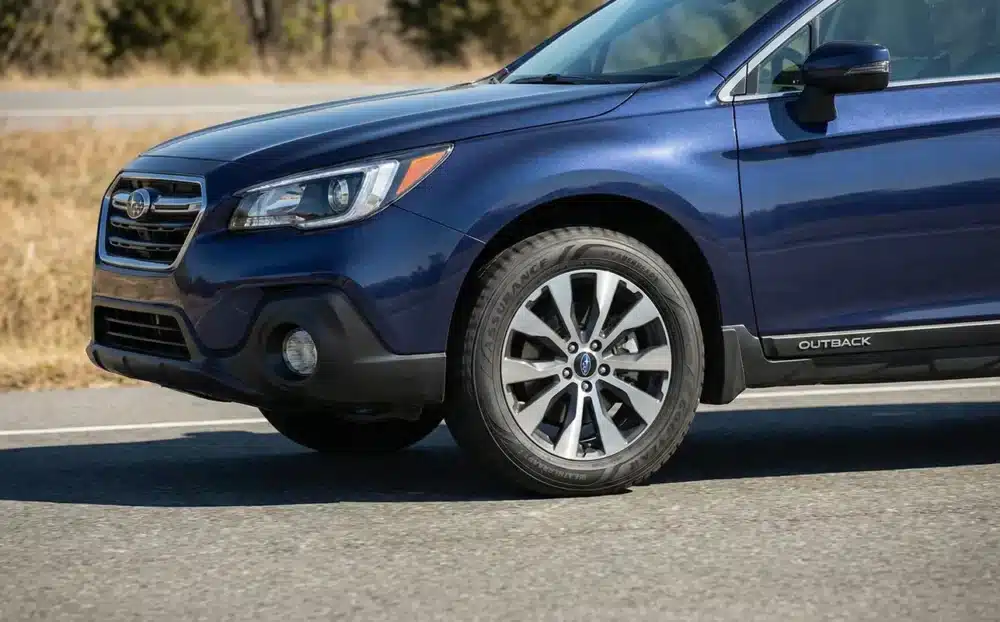
Our testing began during an unseasonably warm week in late autumn, with temperatures hovering in the high 50s. These are the conditions where dedicated winter tires usually feel squishy, vague, and loud.
My first impression pulling out of the installer’s lot was the silence.
The original WeatherReady had a reputation for a distinct “hum” at highway speeds. Goodyear clearly prioritized Noise, Vibration, and Harshness (NVH) reduction with the sequel. On smooth asphalt at 70 mph, the WeatherReady 2 is remarkably hushed.
It rivals top-tier touring all-seasons for cabin comfort. You can hear a faint whisper of tread noise over expansion joints, but there is none of the aggressive “growl” associated with blocky winter tread patterns.
Driveability on dry roads is competent, if not sporty. The Subaru Outback isn’t a sports car, but it has decent chassis dynamics. Pushing the car through a sweeping highway off-ramp, the WeatherReady 2 felt stable and predictable.
There is a slight initial softness to the turn-in—a momentary delay between turning the wheel and the car taking a set—which is typical of tires with deep siping, as the tread blocks squirm slightly under load.
However, compared to a dedicated winter tire like a Blizzak WS90, the WeatherReady 2 feels significantly sharper and more connected to the road on dry pavement. It doesn’t feel “nervous” at high speeds.
Phase 2: Hydroplaning and Wet Braking
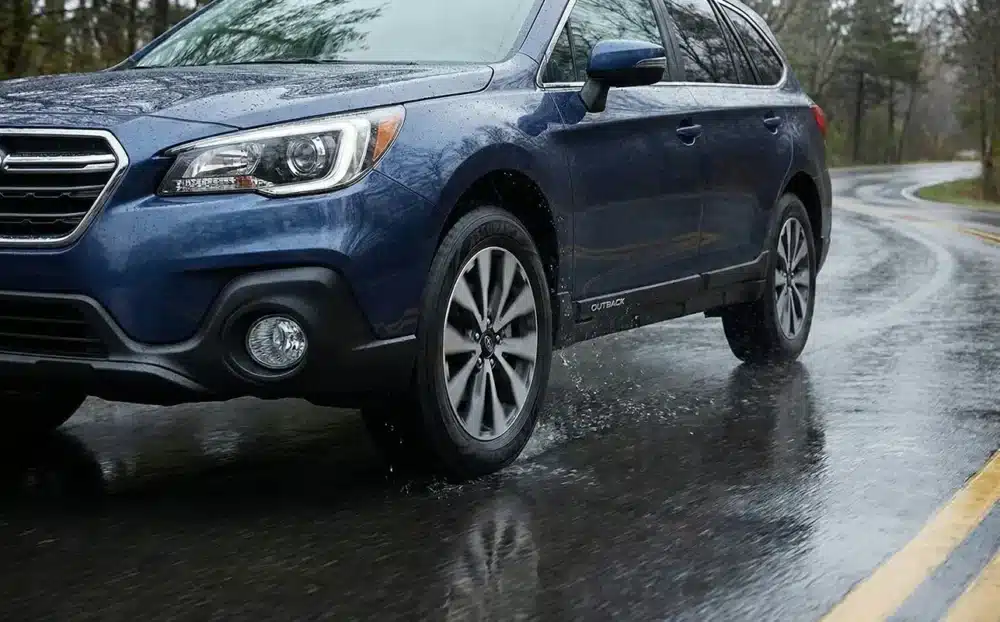
A few days later, the skies opened up, dumping two inches of rain in 24 hours. This is where an “all-weather” tire needs to shine. Winter isn’t just snow; it’s often 35°F and raining sideways.
I took the Outback to a stretch of highway known for poor drainage, where standing water tends to pool in the left lane. Hitting these puddles at 60 mph on worn tires is a terrifying experience.
The WeatherReady 2s managed standing water exceptionally well. Those sweeping “AquaTred-style” grooves on the inner tread do serious work evacuating water from the contact patch.
You can feel the resistance as the tire hits the puddle, but the steering wheel never went light. The tire sliced through rather than surfing over the top.
Where I was most impressed was wet braking confidence. In a simulated panic stop from 50 mph on wet pavement, the ABS engaged quickly and smoothly, and the stopping distance felt reassuringly short.
The sipes, which are primarily there for snow, also provide thousands of biting edges that cut through the film of water on the road surface.
If you live in a rainy climate like the Pacific Northwest, the wet traction alone makes this tire worth considering over a standard, cheaper all-season.
Phase 3: The Real Test – Snow and Ice
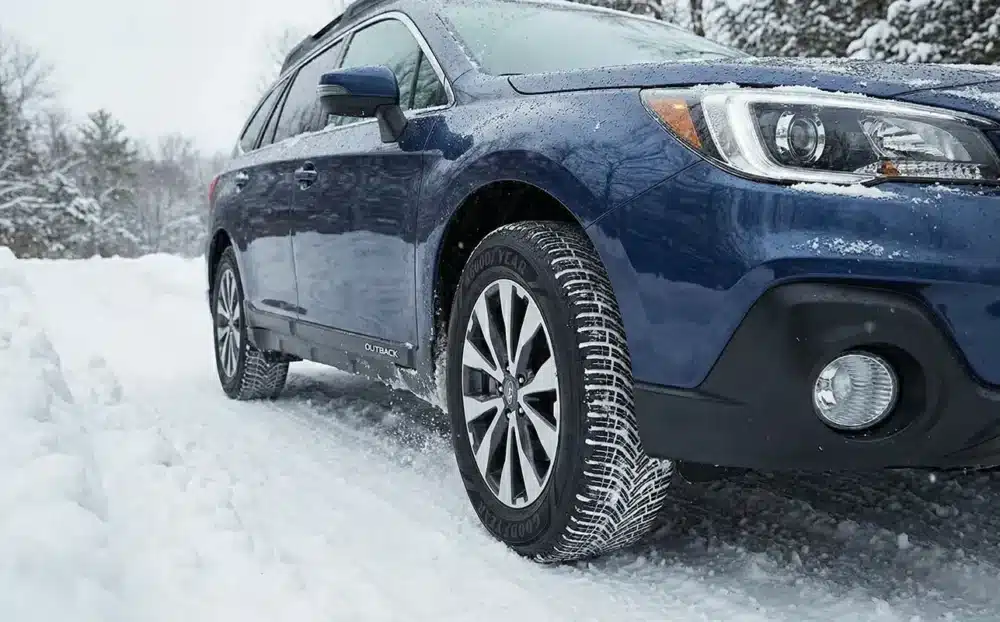
This is what we came for. We waited for a mid-winter storm that dropped about five inches of fresh powder, followed by a temperature plunge that turned the cleared roads into a patchwork of black ice and hard-packed snow.
I headed out before the plows had fully cleared the secondary roads.
1. Acceleration and Climbing
From a dead stop at a snowy intersection, I gave the Subaru moderate throttle. A standard all-season tire would just spin here, triggering the traction control light to flash frantically.
The WeatherReady 2s gripped almost instantly. There was a split second of slip as the sipes clawed for traction, and then the car simply moved forward.
I took the car to a steep, unplowed incline near my home—the kind of hill that strands 2WD cars every winter. I stopped halfway up and tried to get moving again.
The tires dug in. I could feel the systems working, but the car climbed the hill without drama. The “snow-biting claws” Goodyear advertises in the center rib seemed to be doing their job.
2. Cornering and Lateral Grip
This is where you really feel the difference between this and a dedicated winter tire. In fresh snow, the WeatherReady 2 is excellent. You can turn into a snowy side street with confidence, and the front end tucks in nicely.
However, on hard-packed snow that is bordering on ice, you begin to find the limits. During aggressive cornering on slick surfaces, the WeatherReady 2 will slide sooner than a top-tier dedicated winter tire like a Michelin X-Ice Snow or Nokian Hakkapeliitta.
The slide is predictable—it doesn’t snap away violently—but it reminds you that this is still a compromise tire. It is vastly superior to an all-season, but it doesn’t defy physics on ice.
3. Braking in Winter
This is the most important safety metric. Stopping on snow with the WeatherReady 2 is night-and-day compared to a standard all-season.
You press the pedal, the ABS pulses rapidly, and the car actually slows down with authority. The feeling of helplessness you get with standard tires—where you hit the brakes and just keep sliding toward the bumper in front of you—is gone.
On pure ice, they offer some stopping ability thanks to the specialized compound, but they are not miracle workers. You still need to drive with extreme caution on ice.
Tread Life and Value Proposition
The Goodyear Assurance WeatherReady 2 comes with a 60,000-mile tread life limited warranty. This is highly competitive for the category. Michelin’s CrossClimate2, widely considered the benchmark in this segment, also offers a 60k warranty.
Historically, tires with soft, winter-capable compounds wear out faster in hot weather. Goodyear seems confident that their soybean oil formulation has solved this issue. While I cannot verify a 60,000-mile claim in a few weeks of testing, the tread depth measurements taken before and after my 1,500-mile torture test showed negligible wear.
The WeatherReady 2 is priced at the premium end of the market. It is an investment. However, you have to weigh that cost against the alternative: buying a second set of wheels and winter tires, plus the cost of mounting and balancing twice a year. For many drivers, one expensive set of tires that works year-round is actually cheaper in the long run than maintaining two sets.
The Competitive Landscape
The elephant in the room is the Michelin CrossClimate2. It has dominated the all-weather segment for a few years now with its unique, V-shaped directional tread pattern.
How does the new Goodyear compare?
Based on my experience, the Michelin CrossClimate2 still holds a slight edge in deep, heavy snow traction and perhaps a tiny advantage in dry handling crispness. Its directional tread is just incredibly effective at chewing through the white stuff.
However, the Goodyear WeatherReady 2 feels quieter on the highway and seems to offer slightly better hydroplaning resistance in deep standing water. The Goodyear also has the advantage of being non-directional, meaning you can rotate the tires side-to-side and front-to-back, which helps maximize tread life on vehicles that might wear tires unevenly.
It is a very tight race, and the Goodyear has genuinely closed the gap with the segment leader.
The Verdict: Who is this Tire For?
After living with the Goodyear Assurance WeatherReady 2 through sun, rain, and snow, I am thoroughly impressed. It is a significant improvement over its predecessor, particularly in the areas of noise comfort and dry-road refinement.
It is not a replacement for a dedicated studded winter tire if you live in the Yukon or the high Rockies. If you regularly drive on sheer ice or through two feet of unplowed snow, stick with specialized equipment.
But for the vast majority of drivers living in the northern half of the United States and Canada—the people who face a mixed bag of freezing rain, slush, plowed snowy roads, and dry, cold highways—this tire is a game-changer.
It eliminates the anxiety of early winter storms because you are always prepared. It offers 80-90% of the winter capability of a dedicated snow tire, with none of the downsides during the other three seasons.
If you are done lying to yourself about your “all-season” tires, but you aren’t ready to commit to the two-tire lifestyle, the Goodyear Assurance WeatherReady 2 is one of the best single-solution tires money can buy right now. It turns a white-knuckle winter commute into just another drive to work.
FAQ
Is Goodyear Assurance WeatherReady 2 a good tire?
Yes, it is an excellent, premium all-season tire. It utilizes Goodyear’s Weather Reactive Technology to adapt to changing temperatures, making it a highly reliable choice for year-round driving. It excels in wet conditions with outstanding hydroplaning resistance, provides precise handling on dry pavement, and offers capable traction in light snow. It is a very well-rounded, safe investment for sedans, crossovers, and SUVs.
Which is better: Michelin CrossClimate 2 or Goodyear WeatherReady 2?
The “better” tire depends on your local climate. The Michelin CrossClimate 2 is a category leader for winter performance; its aggressive directional tread and 3PMSF (Three-Peak Mountain Snowflake) rating make it superior in heavy snow. However, the Goodyear WeatherReady 2 is highly competitive, often providing a slightly quieter, smoother ride on dry highway pavement while still delivering exceptional wet traction. If you experience harsh winters, go with the Michelin. If you want maximum comfort and rain performance in mild-to-moderate climates, the Goodyear is a fantastic choice.
How long do Goodyear Assurance WeatherReady 2 tires last?
The Assurance WeatherReady 2 is engineered for a long, durable lifespan. It features Goodyear’s TredLock Technology—which utilizes interlocking tread blocks to prevent excessive wear—and a robust internal twin-steel belt construction. While exact mileage depends on your vehicle weight, rotation habits, and driving style, the advanced tread compound is designed to wear evenly, easily offsetting its premium price tag with years of reliable service.
Is the Goodyear Assurance WeatherReady 2 a quiet tire?
Yes, it is an exceptionally quiet tire. Despite its deep grooves and all-season capabilities, Goodyear optimized the tread pattern and internal materials specifically to absorb road imperfections and minimize vibrations. Drivers can expect a smooth, serene cabin experience, making it an ideal tire for daily highway commuters and long road trips.
Goodyear Assurance WeatherReady 2
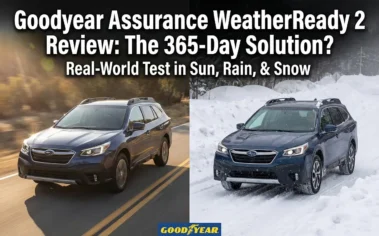
We tested the Goodyear Assurance WeatherReady 2 for 6 weeks in harsh weather. Read our real-world review covering snow traction, wet grip, and tread life.
Product Brand: Goodyear
4.7