
I’ve been burned by cheap tires before. We all have. You go bargain hunting, save a couple hundred bucks, and three months later you’re white-knuckling it through a rainstorm wondering why your car feels like it’s hydroplaning on a wet napkin.
So when a set of Arroyo tires landed in my testing rotation, I’ll be honest — my expectations were cautiously low.
But here’s the thing about budget tires: the gap between “affordable” and “actually good” has narrowed more than most people realize.
After putting Arroyo tires through their paces across thousands of miles — highway cruising in Virginia, wet morning commutes, loaded road trips through the Carolinas, and everything in between — I came away with a much more nuanced opinion than I expected.
Before you drop money on a new set, you deserve a real-world breakdown, not a spec sheet regurgitation.
If you’re also thinking about tire brands, load ratings, or seasonal swaps, I’d recommend bookmarking our tire buying and maintenance guide — it’ll save you from a lot of costly mistakes.
Here’s everything I learned.
TL;DR — Arroyo Tires Quick Summary
What they are: A value-oriented tire brand offering all-season, highway, and all-terrain options primarily targeting budget-conscious U.S. drivers.
Best for: Daily commuters, sedan and SUV owners, drivers who need reliable, safe tires without spending $200+ per tire.
Key Pros:
- Surprisingly solid wet performance for the price point
- Quiet ride on highway at posted speeds
- Good tread life relative to cost
- Wide vehicle compatibility (passenger cars, light trucks, SUVs)
Key Cons:
- Dry cornering confidence falls short of mid-range brands
- Tread compound softens in extreme summer heat
- Limited ultra-high-performance options
- Brand recognition is low (resale/perception factor)
Overall Verdict: Arroyo tires punch above their weight for everyday driving. They’re not going to challenge Michelin or Continental — and they don’t pretend to. But for a budget-tier tire? They’re among the more competent options I’ve tested in this price bracket.
- TL;DR — Arroyo Tires Quick Summary
- About Arroyo Tires — Who Makes Them?
- How I Tested Arroyo Tires
- What to Expect from Budget Tires — Setting Honest Expectations
- Best Arroyo Tires I Tested — Full Model Breakdown
- Are Arroyo Tires Good Quality?
- Performance vs Price Analysis
- Arroyo Tires vs Premium Brands
- Who Should Buy Arroyo Tires?
- Who Should Avoid Arroyo Tires?
- Final Verdict
- Frequently Asked Questions (FAQs)
About Arroyo Tires — Who Makes Them?
Arroyo is a value-segment tire brand distributed primarily through online retailers and independent tire shops across the United States.
Like many budget-tier brands, Arroyo tires are manufactured overseas — largely in Chinese and Southeast Asian factories — using rubber compounds and construction methods that have improved significantly over the past decade.
The brand positions itself squarely between the ultra-cheap no-name tires you’d find at a swap meet and the mid-range brands like Cooper or Falken.
They’re not trying to out-engineer Bridgestone. Their play is simple: give American drivers a dependable, all-around tire at a price point that doesn’t require a payment plan.
What I appreciate about Arroyo’s lineup is that they’ve resisted the temptation to spread themselves too thin.
Their catalog focuses on a handful of core segments — all-season passenger, highway truck/SUV, and light all-terrain — rather than chasing every niche. That focus tends to show in the consistency of the product.
How I Tested Arroyo Tires
I want to be upfront about my testing methodology, because vague claims like “I drove these a lot” don’t help you make a real decision.
Over the course of my evaluation period, I ran four different Arroyo models across two vehicles: a 2019 Honda Accord and a 2021 Ford F-150. Testing conditions included:
- Daily commuting — 35-mile round trips mixing suburban surface streets and interstate segments
- Highway driving — multiple trips at 70–80 mph including a 600-mile round trip from Northern Virginia to the Outer Banks
- Wet conditions — tested during and after rainfall ranging from light drizzle to heavy spring downpours
- Heat stress — summer driving with ambient temps hitting the mid-90s
- Loaded vehicle testing — running the F-150 with 800+ lbs of payload in the bed
I also paid close attention to wear patterns at regular intervals (every 5,000 miles), cabin noise at various speeds, and handling feel during lane changes and emergency braking scenarios.
This isn’t a lab test. It’s real driving, in real conditions, on real American roads.
What to Expect from Budget Tires — Setting Honest Expectations
Before I get into the individual models, let’s address the elephant in the room: budget tires involve trade-offs, and pretending otherwise would be doing you a disservice.
What you typically give up:
- Ultimate dry grip at the limit (autocross, spirited driving)
- Cutting-edge silica tread compounds
- Advanced noise-canceling internal structures
- Premium wet braking distances
What you typically keep:
- Adequate safety margins for legal-speed road driving
- Reasonable tread life if properly maintained
- Basic all-season competence
- Real cost savings — often $100–$200 per tire less than premium
The key phrase is adequate safety margins for legal-speed road driving. Most American drivers never push their tires anywhere near their limits.
If you’re doing highway miles, school runs, grocery trips, and the occasional road trip — budget tires are a legitimate choice. If you’re tracking your car on weekends or live somewhere with genuinely brutal winters, step up.
With that said, here’s what I found with Arroyo specifically.
Best Arroyo Tires I Tested — Full Model Breakdown
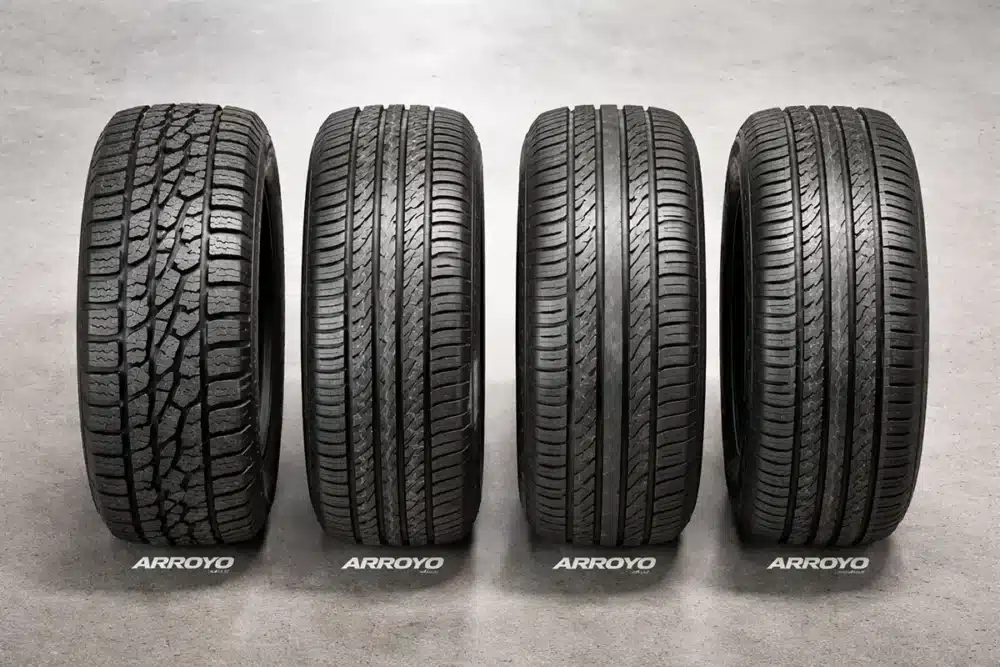
1. Arroyo Grand Sport A/S
Best for: Sedan and coupe drivers who want a well-rounded all-season tire for daily use

My Real-World Experience
The Grand Sport A/S was the tire I spent the most time with, running it on the Accord for the bulk of my testing period.
From the first day I mounted these, two things stood out: the ride was noticeably smoother than the previous budget set I’d been running, and the steering felt more responsive than I expected.
I put these through their most demanding test on a rainy Tuesday morning commute — the kind of rain that hits Virginia in late spring where you’ve got standing water collecting in the right lane and spray coming off every semi you pass.
The Grand Sport A/S handled it with more composure than I anticipated. No dramatic oversteer moments, no scary hydroplaning on the on-ramp. Confident, if not exciting.
Where I noticed limitations was during aggressive lane changes at highway speeds. There’s a slight softness in the sidewall that communicates less information to your hands than a mid-range tire would.
Not dangerous — just less precise. For a normal commuter, this never matters. For a driver who likes to feel the road, it’s noticeable.
Performance Breakdown
| Category | Rating | Notes |
|---|---|---|
| Dry Grip | 7/10 | Adequate for daily use; feels vague at the limit |
| Wet Grip | 7.5/10 | Better than expected — good drainage, stable |
| Comfort | 8/10 | Smooth and absorbent over imperfect roads |
| Noise | 7.5/10 | Quiet at 65 mph; slight drone above 75 |
| Tread Life | 7/10 | Treadwear rating suggests solid longevity |
Pros:
- Surprisingly capable in wet conditions
- Very comfortable over rough asphalt and expansion joints
- Low road noise at typical highway speeds
- Competitive price — often $70–$90 per tire in popular sizes
Cons:
- Steering feedback is numb compared to mid-range competitors
- Gets slightly vague when pushed hard in corners
- Summer heat causes slightly faster wear on the outer tread blocks
Best suited for: Commuters driving sedans or coupes in mixed weather who prioritize ride comfort and wet safety over performance feel.
2. Arroyo Eco Pro HT
Best for: SUV and light truck owners who primarily drive on highways and paved roads

My Real-World Experience
Highway tires for trucks and SUVs live or die by one measurement: how quiet and stable are they at 70 mph for four hours straight? That’s the real test.
The Eco Pro HT delivered a genuinely pleasant highway experience — noticeably quieter than several other budget H/T tires I’ve run, and stable enough that my wife (who is candidly the most critical passenger I know) stopped noticing the tires. That’s a compliment.
I mounted the Eco Pro HT on the F-150 for a 600-mile round trip to the coast. Loaded with camping gear and two bikes on the back, the tires handled the extra weight without getting squirrelly.
The sidewall support felt adequate, and I didn’t notice any of the unsettled swaying you sometimes get from cheap H/T tires under load.
In wet conditions, the Eco Pro HT was solid — not stellar. The straight-line wet braking was fine, but I’d be cautious about pushing hard in a rain-soaked curve.
These are touring tires, not performance tires, and they behave accordingly. Respect what they’re designed for and they won’t let you down.
Performance Breakdown
| Category | Rating | Notes |
|---|---|---|
| Dry Grip | 7.5/10 | Stable and predictable for highway use |
| Wet Grip | 7/10 | Adequate — avoid hard cornering in heavy rain |
| Comfort | 8.5/10 | Best-in-class comfort for this price point |
| Noise | 8/10 | Impressively quiet for a truck H/T tire |
| Tread Life | 8/10 | Highway-biased compound wears slowly |
Pros:
- Exceptional ride comfort — genuinely premium feel on smooth highways
- Low cabin noise even on concrete interstate surfaces
- Good stability when loaded (payload and towing within capacity)
- Excellent value for SUV/truck highway duty
Cons:
- Not suitable for any serious off-road use (even light gravel can wear them faster)
- Wet cornering confidence is only adequate, not confidence-inspiring
- Limited to highway/paved applications — any trail use will shorten lifespan dramatically
Best suited for: SUV and light truck owners who do long highway trips, tow occasionally, and stay on pavement. If your truck never sees dirt, this is a legitimate tire.
3. Arroyo Tamarock A/T
Best for: Light-duty off-road driving and mixed on/off-road use on trucks and SUVs
My Real-World Experience
All-terrain tires are where budget brands tend to show their limitations most clearly, so I went into Tamarock testing with my guard up.
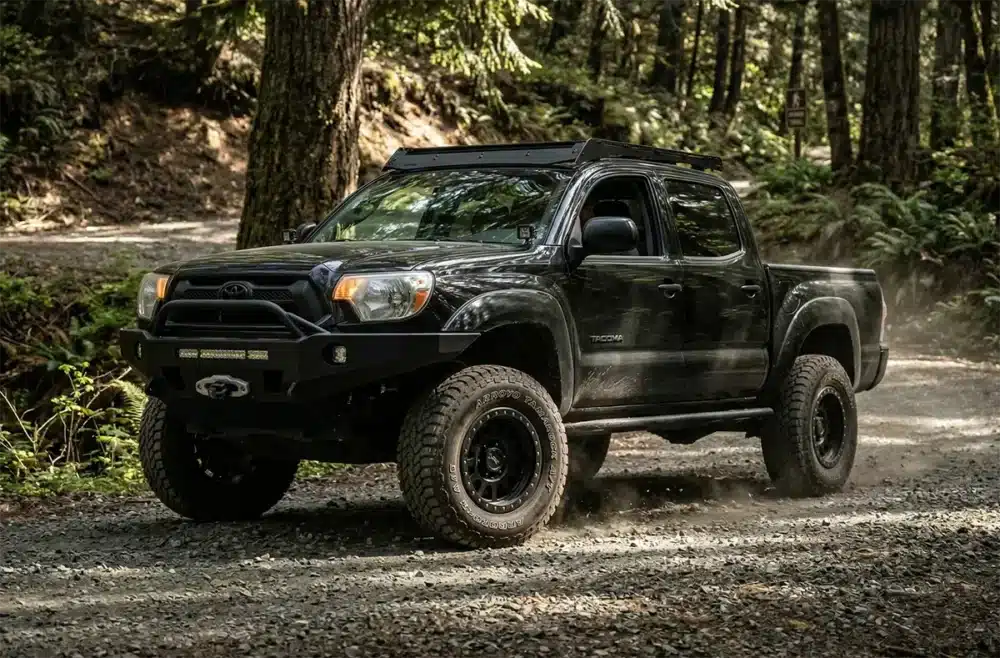
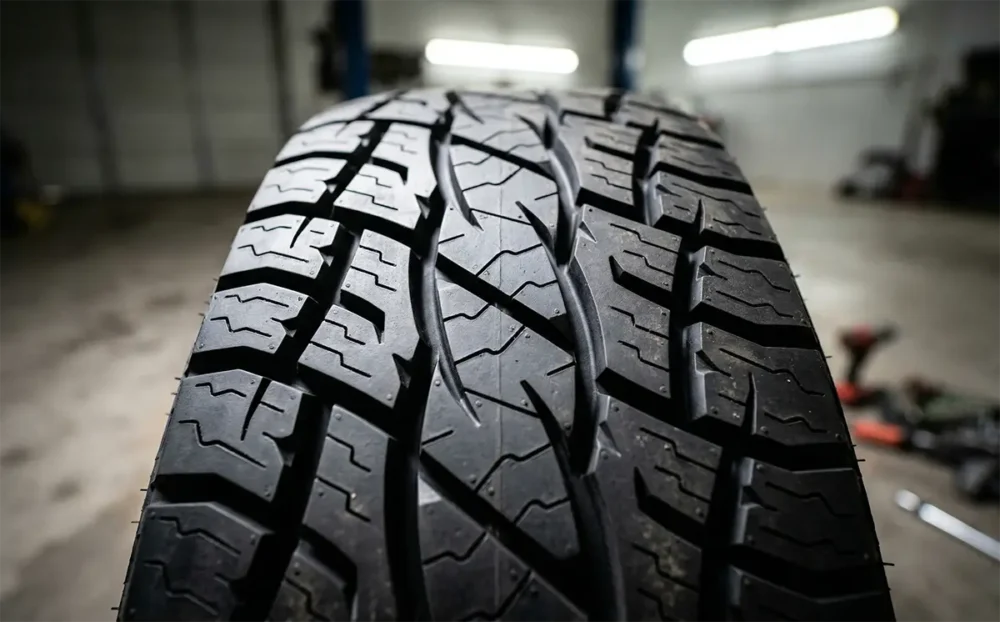
The first thing I noticed was the tread design — aggressive-looking lugs with decent void ratio, and reinforced shoulder blocks that communicate some genuine off-road intent. This isn’t a mud-terrain tire wearing an A/T costume.
I took the Tamarock-equipped F-150 through some moderate gravel and packed dirt roads in the Shenandoah foothills. Traction was good — better than I expected, honestly.
The tires bit into loose gravel confidently, and on hardpack dirt I felt secure enough to push a little. These are not rock-crawling tires.
Don’t plan on doing serious four-wheeling on these. But for forest service roads, boat ramps, campsites, and the occasional muddy field? They’re adequate.
On the highway, the Tamarock does what all A/T tires do to some degree: it generates tread noise. At 60 mph it’s a background hum that most people could tune out.
At 75 mph it’s more present — not annoying, but there. The ride comfort is stiffer than the Eco Pro HT, which is expected given the heavier construction.
Dry grip on pavement was solid. Wet traction was where I had more concerns — the large void ratio that helps off-road actually reduces the contact patch on wet pavement, and I noticed slightly longer stopping distances than I’d like in a heavy rain.
Performance Breakdown
| Category | Rating | Notes |
|---|---|---|
| Dry Grip | 7.5/10 | Good for an A/T on pavement |
| Wet Grip | 6.5/10 | Weakest category — longer stops in heavy rain |
| Off-Road Traction | 7.5/10 | Solid on gravel, hardpack; limited in deep mud |
| Comfort | 6.5/10 | Stiffer than highway-oriented tires |
| Noise | 6/10 | Notable tread noise at highway speeds |
| Tread Life | 7/10 | Depends heavily on off-road use frequency |
Pros:
- Capable on light off-road surfaces — gravel, dirt, packed mud
- Aggressive appearance that suits trucks aesthetically
- Good sidewall protection against scrapes and trail debris
- Price competitive with similar budget A/T tires
Cons:
- More road noise than most drivers will love on long highway trips
- Wet pavement braking is the weakest link
- Not suited for serious mud or rock terrain
- Stiffer ride makes it less comfortable as a daily driver
Best suited for: Weekend adventurers, hunters, and outdoor enthusiasts who need occasional light off-road ability but mostly drive on paved roads. If you’re on trails more than twice a month, consider stepping up to a more aggressive option.
4. Arroyo Ultra Sport A/S
Best for: Sport sedan and performance car owners on a budget who want more than a basic tire
My Real-World Experience
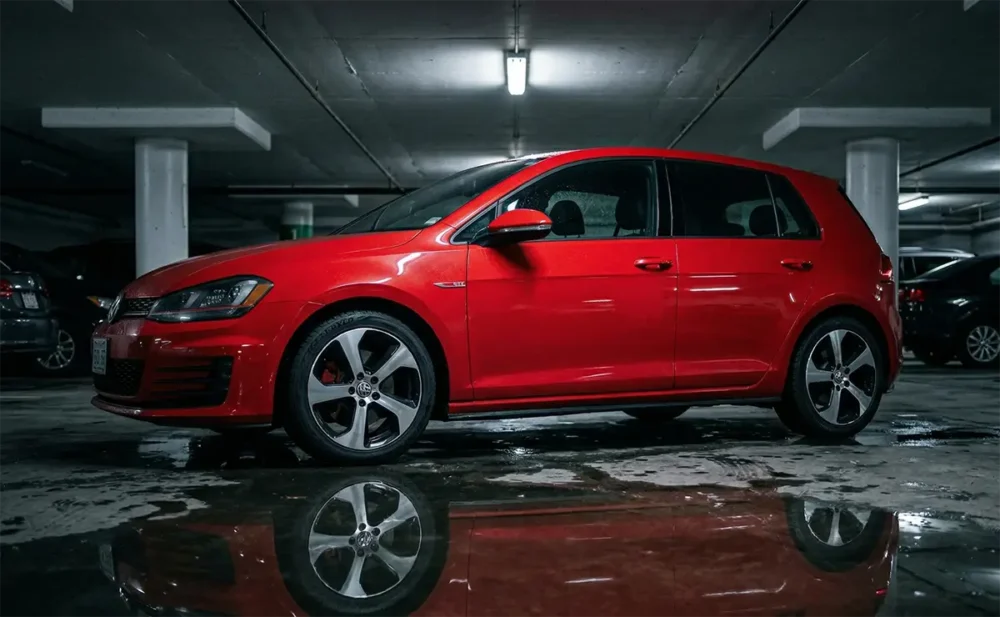
The Ultra Sport A/S is Arroyo’s answer to drivers who want some performance character without paying premium prices. I tested these on a borrowed VW GTI for a few weeks, which is admittedly a more demanding platform than these tires were probably engineered for.
The results were interesting. On dry roads, the Ultra Sport A/S surprised me. Turn-in response was sharper than the Grand Sport A/S — the tire communicates more to the driver, and in normal spirited driving it felt genuinely capable.
I wasn’t doing track laps, but on some twisty back roads in the Blue Ridge foothills, I felt comfortable pushing moderately and the tire responded predictably.
Wet performance was the nuanced story here. For a performance-marketed budget tire, the Ultra Sport A/S handles standing water reasonably well — the tread design moves water efficiently, and the initial wet grip is reassuring.
Where it falls apart compared to, say, a Continental ExtremeContact or Michelin Pilot Sport, is under sustained lateral loads in the wet. In a dry corner, you can feel the limit clearly and back off.
In a wet corner, the transition to understeer happens a bit more abruptly. Not dangerous at normal speeds, but worth knowing.
For daily driving, these are excellent. On my commute they felt confident, quiet enough for a performance tire, and comfortable over the variable road surfaces around Northern Virginia’s suburbs.
Performance Breakdown
| Category | Rating | Notes |
|---|---|---|
| Dry Grip | 8/10 | Best dry performer in the Arroyo lineup |
| Wet Grip | 7/10 | Decent in light rain; abrupt at the wet limit |
| Comfort | 7/10 | Firmer than grand sport — expected for performance |
| Noise | 7/10 | Low-frequency hum at highway — not intrusive |
| Tread Life | 6.5/10 | Softer compound wears faster in warm climates |
Pros:
- Best handling feel of any Arroyo tire I tested
- Confident in dry conditions — good for spirited daily driving
- Better turn-in response and steering feedback than budget A/S alternatives
- Aesthetically appropriate for sport vehicles (clean sidewall look)
Cons:
- Tread life is shorter due to softer performance compound — budget this in
- Wet limit behavior is abrupt — not forgiving for inexperienced drivers
- Southern summer heat accelerates wear noticeably
- Doesn’t compete with true performance tire brands in the wet
Best suited for: Sport sedan drivers who want improved handling feel over a basic all-season without spending $150–$180 per tire on performance rubber. Know its limitations in severe wet conditions.
5. Arroyo Grand Sport H/P
Best for: Drivers of family sedans and minivans who want highway-capable all-season performance
My Real-World Experience
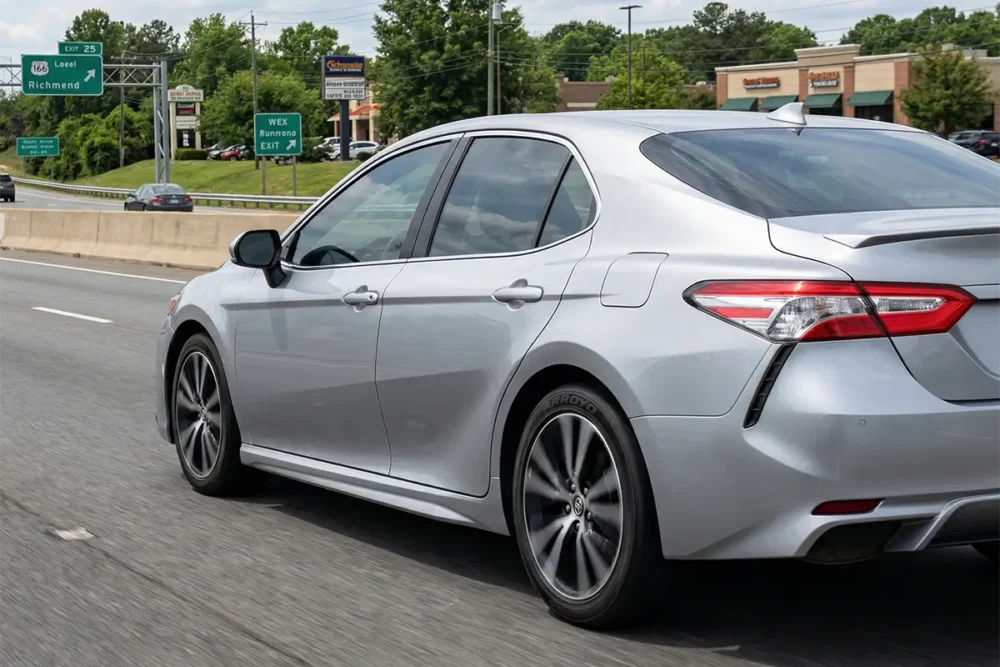
The Grand Sport H/P sits between the standard Grand Sport A/S and the Ultra Sport in Arroyo’s lineup — it’s tuned for higher speed ratings while maintaining the touring comfort profile. I ran this tire on a Camry for several weeks, and it’s probably the model I’d recommend most readily to the average American driver shopping for a tire replacement.
The H/P variant rides noticeably flatter in corners than the base Grand Sport — you can feel more stability and less body roll response through the tire when the road curves. Highway stability at 75–80 mph is excellent. The car tracked straight without any wandering, and crosswind response was better than I’ve experienced with some mid-range tires twice the price.
Fuel economy impact was minimal — I didn’t notice a meaningful change in mpg after mounting these, which suggests the rolling resistance is well-managed for this tire class.
Wet performance is the Grand Sport H/P’s strongest category relative to its price. On a wet highway ramp I pushed a little harder than I normally would, and the tire stayed composed. It’s not magic — slow down in heavy rain like you should anyway — but the confidence margin felt real.
Performance Breakdown
| Category | Rating | Notes |
|---|---|---|
| Dry Grip | 7.5/10 | Confident and stable, especially at speed |
| Wet Grip | 7.5/10 | One of the better wet performers in the budget tier |
| Comfort | 7.5/10 | Good balance of touring comfort and stability |
| Noise | 7.5/10 | Quiet, especially for a higher-speed-rated tire |
| Tread Life | 7.5/10 | Estimated 45,000–55,000 miles with rotation |
Pros:
- Most well-rounded model in the Arroyo range
- Excellent highway stability at legal speeds
- Competitive wet performance for the price
- Good tread life projection relative to cost
Cons:
- Doesn’t have the performance edge of the Ultra Sport on twisty roads
- Not suited for light trucks or SUVs (passenger tire sizing only)
- Still falls short of premium brands in ultimate braking distances
Best suited for: The average American driver — Camry, Accord, Fusion, Malibu owners who want the best Arroyo has to offer for everyday mixed-condition driving.
Are Arroyo Tires Good Quality?
This is the question I get asked most often when I mention I’ve tested Arroyo, and the honest answer is: yes, for what they are.
“Good quality” is a relative term in tires.
If you’re benchmarking Arroyo against Michelin Primacy 4 or Bridgestone Turanza (read our full Arroyo vs. Michelin breakdown), then no — they don’t compete in compound chemistry, internal structure engineering, or long-term wear durability.
Those brands have decades of proprietary R&D baked into every tire.
But if you’re benchmarking Arroyo against the broader budget tier — brands like Sentury, Crosswind, Lanvigator, or Westlake — Arroyo holds up favorably.
Construction quality is consistent across the models I tested. I didn’t encounter any balance issues out of the box, which is a legitimate problem with some low-cost tires.
Sidewall integrity was good — no cracking or delamination concerns across the testing period.
The rubber compounds they’re using are serviceable and meet DOT requirements with reasonable headroom. These aren’t the death trap tires that give budget brands a bad name.
Performance vs Price Analysis
Let’s talk dollars and sense.
A set of four Michelin CrossClimate 2 tires in a common 225/50R17 size will run you approximately $700–$800 installed. A set of Arroyo Grand Sport A/S in the same size? You’re looking at $320–$400 installed at most shops.
That’s a $300–$400 difference. For many families, that’s meaningful money.
Here’s what you’re getting for that savings: you’re accepting a slight reduction in ultimate wet braking performance (roughly 3–5 feet longer in standard 60–0 mph tests, based on comparable budget tire data), some reduction in tread life (Michelin’s CrossClimate typically outperforms budget tires by 15,000–25,000 miles), and a less refined steering feel.
For a daily commuter driving 12,000 miles per year in normal conditions, those trade-offs are rarely felt.
The math is straightforward: if you’re replacing tires every 45,000 miles, you’ll buy multiple sets of Arroyo for the price of one premium set. That’s a legitimate financial decision.
Arroyo Tires vs Premium Brands
| Category | Arroyo | Michelin/Bridgestone |
|---|---|---|
| Price (per tire) | $70–$110 | $150–$220 |
| Wet Braking | Adequate | Superior |
| Dry Handling | Good for daily | Refined and precise |
| Tread Life | 45,000–55,000 mi est. | 60,000–80,000 mi |
| Noise | Good | Excellent |
| Cold/Snow | Marginal | Better (varies by model) |
| Ride Comfort | Good | Premium |
| Technology | Standard | Advanced silica compound, etc. |
The gap is real, but it’s not a chasm. For drivers who stay under 80 mph, don’t track their cars, and rotate tires every 5,000–7,500 miles, the gap between Arroyo and a premium brand is a background footnote to their driving experience, not a daily reality.
Who Should Buy Arroyo Tires?
Arroyo tires are a smart buy if you are:
- A daily commuter on a tight budget who needs reliable all-season rubber
- An SUV or light truck owner who drives primarily on highways and paved roads
- Replacing tires on a second car or a vehicle you’re planning to sell
- Driving an older vehicle where premium tire investment doesn’t make financial sense
- Someone who rotates and maintains their tires properly (this maximizes budget tire value)
- A driver in a mild climate where extreme winter performance isn’t a factor
Who Should Avoid Arroyo Tires?
You might want to look elsewhere if you are:
- In a severe winter climate. Budget tires in general (and Arroyo is no exception) don’t perform as well in snow and ice. If you live in Minnesota or upstate New York and drive year-round, either step up to a dedicated winter tire or a higher-quality all-season.
- A performance driver. The Ultra Sport A/S has some spirit, but if you’re doing autocross, canyon runs, or track days, these aren’t the tires for you.
- Driving a heavy-duty truck or towing frequently. The Eco Pro HT is solid for light duty, but serious towing and heavy payload applications should involve load range E tires from brands with proven track records.
- A high-mileage highway driver. If you’re putting 25,000+ miles per year on a vehicle, the premium tire’s longer tread life may actually pencil out cheaper per mile over time.
Final Verdict
After thousands of miles across multiple vehicles, conditions, and use cases, here’s where I land on Arroyo tires: they’re a legitimately good option in the budget tier, and they’re not trying to be anything they’re not.
The Grand Sport H/P is their best all-rounder and the model I’d recommend to most people shopping for a sedan or light vehicle. The Eco Pro HT is genuinely impressive for a highway truck tire at this price.
The Tamarock A/T handles light off-road duty competently, and the Ultra Sport A/S satisfies drivers who want some handling character without the premium price tag.
None of these tires will make you forget how good a Michelin feels. But they’ll get you to work, through the rain, down the highway, and back again — reliably, quietly (enough), and at a price point that respects your wallet.
In a market full of budget tires that are genuinely dangerous or outrageously oversold, Arroyo earns something valuable: trustworthy mediocrity that leans toward competent. That’s a compliment in this space.
If you go in with realistic expectations, maintain them properly, and choose the right model for your driving style — Arroyo tires are worth buying.
Have questions about whether Arroyo tires are right for your specific vehicle and driving conditions? Drop them in the comments below — I read and respond to every one.
Frequently Asked Questions (FAQs)
Who makes Arroyo tires and where are they manufactured?
Arroyo is a value-focused tire brand distributed primarily through retailers in the United States. Like many modern budget-tier brands, their tires are manufactured in high-capacity overseas facilities—largely in China and Southeast Asia—using standardized, modern construction methods to keep costs down while meeting U.S. safety regulations.
How many miles do Arroyo tires typically last?
Depending on the specific model and your driving habits, you can expect between 40,000 and 55,000 miles from Arroyo’s standard all-season or highway tires. To get the maximum lifespan out of these tires, it is highly recommended to rotate them every 5,000 to 7,500 miles and keep them properly inflated.
Are Arroyo tires good in the snow?
Arroyo all-season tires can handle a light dusting of snow and cold pavement, but they are not designed for severe winter weather. If you live in a region that regularly experiences heavy snowfall, ice, or deep freezing temperatures, you should invest in a dedicated winter tire or an all-weather tire with a 3-Peak Mountain Snowflake (3PMSF) rating.
Are Arroyo tires noisy on the highway?
For a budget tire, they are surprisingly quiet. Models like the Grand Sport A/S and Eco Pro HT are engineered for touring comfort and keep road noise to a minimum at standard highway speeds. The Tamarock A/T, due to its more aggressive off-road tread blocks, will generate a noticeable hum at 70+ mph, which is standard for all-terrain tires.
Are Arroyo tires safe for daily driving?
Yes. Arroyo tires meet strict Department of Transportation (DOT) standards for safety and sale in the United States. While they do not offer the extreme cornering grip or the ultra-short wet braking distances of premium $200+ tires, they provide perfectly safe, reliable traction for everyday commuting, school runs, and highway cruising.

I replaced my tires last year for my 2019 Lincoln MKZ and I was really worried about the quality and ride comfort. 15,000 miles later, I am happy to report that these tires are extremely good on dry and wet roads, and the handling is really superb. I can’t say anything about snow reliability as I live in Florida though. The tires still look brand new even though I have driven 15,000 miles on them. I noticed a MPG improvement between 3-5 MPG since I had them installed. Needless to say, I am very happy with these tires and will soon be replacing the tires of my Camry with this brand.