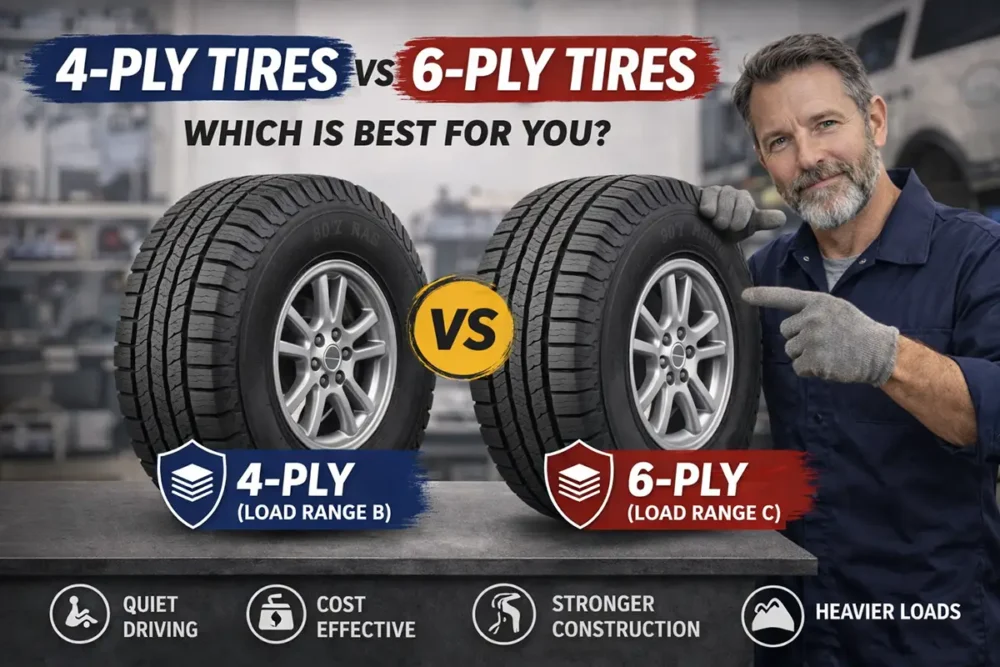
If you’ve ever stood in a tire shop squinting at a sidewall sticker wondering what “4 ply” or “6 ply” actually means for your real-world driving — you’re not alone. I’ve been there.
When I first started researching replacement tires for my crossover, I was buried in load range charts, ply ratings, and conflicting forum advice. It took me thousands of miles of actual testing to figure out what matters and what doesn’t.
Here’s the honest truth: ply rating isn’t just a marketing number. It affects how your tire handles weight, absorbs bumps, performs off-road, and even how much gas your car drinks.
But choosing the wrong ply for your vehicle type can either leave you under equipped for hauling or riding around on tires stiffer than a school bus when you just need to commute to work.
I’ve personally driven on 4 ply and 6 ply tires across city streets, highway runs, light gravel paths, and loaded cargo trips — and I’m going to break down every meaningful real-world difference for you.
Before we dive in, if you want a full breakdown of what ply ratings mean across all tire types, I recommend checking out this comprehensive guide on tire ply rating — it’s a great reference to have open while reading this.
Let’s get into it.
TL;DR: 4 Ply vs 6 Ply Tires at a Glance
| 4 Ply Tires – Quick Summary | 6 Ply Tires – Quick Summary |
|---|---|
| Softer ride qualityStandard load capacity (Load Range B/C)Better fuel efficiencyQuieter cabin experienceBest for: daily commuters, sedans, compact crossovers | Stiffer, more reinforced constructionHigher load capacity (Load Range C)Slight reduction in ride smoothnessBetter sidewall durability under loadsBest for: light trucks, vans, hauling scenarios |
Bottom line: If you drive a sedan, minivan, or light crossover and don’t regularly haul heavy loads, 4 ply tires are your sweet spot for comfort and efficiency. If you drive a light truck, van, or frequently haul cargo or trailers, 6 ply tires give you the reinforced sidewall and load capacity you need.
What Does Ply Rating Actually Mean?
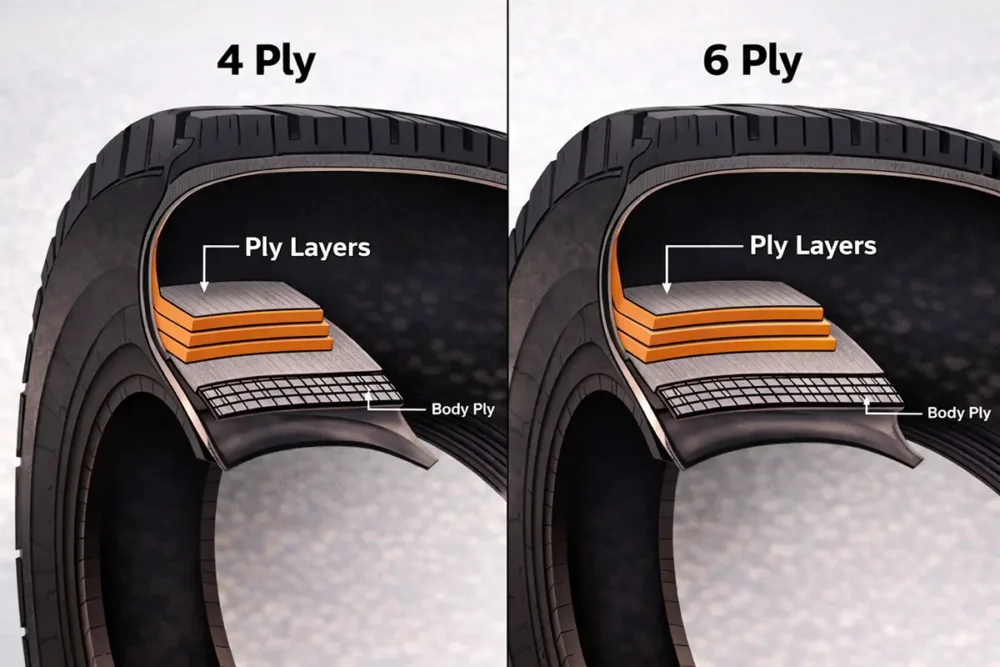
Here’s something that trips up a lot of buyers: modern tires don’t literally have 4 or 6 layers of cotton fabric stitched together. That was the old-school construction method.
Today, ply rating is a standardized way to express a tire’s load-carrying ability and structural strength, regardless of how many physical layers are inside.
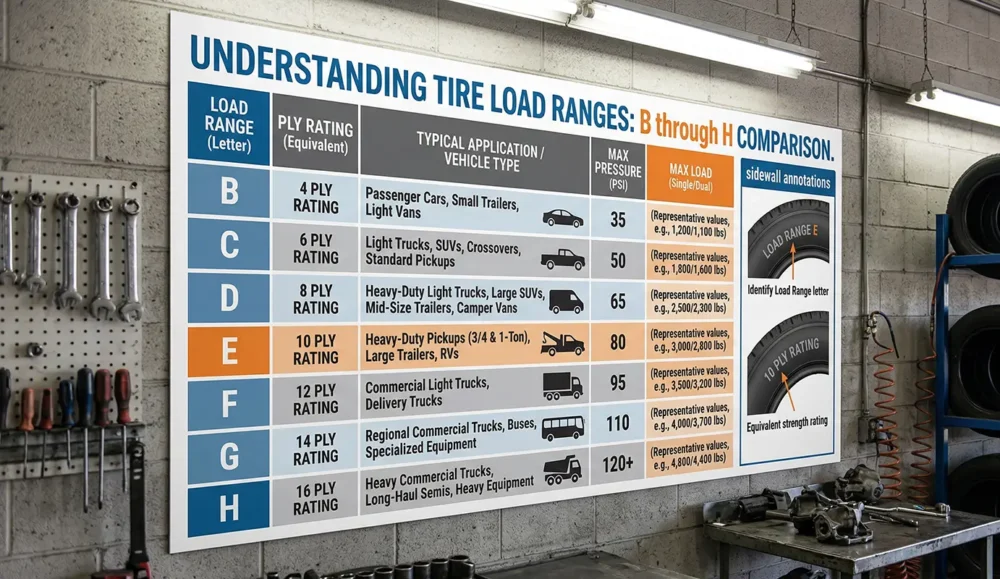
The tire industry now uses Load Range designations alongside ply ratings:
- 4 ply → typically Load Range B or C equivalent on passenger tires
- 6 ply → typically Load Range C on light truck and specialty tires
- 8 ply → Load Range D
- 10 ply → Load Range E (common on heavy-duty trucks)
When you see a 4 ply tire rated for, say, 1,800 lbs per tire, that rating was calculated at a specific inflation pressure (often 35-51 PSI).
A 6 ply tire can carry more — sometimes 200 to 500 lbs more per tire — at the same or higher inflation. That difference becomes very real when you’re loading up a truck bed or towing a small camper.
If you’re comparing P-Metric and LT-type tires, the ply rating conversation gets more nuanced. I’d recommend reading our LT vs. P-Metric Tires guide to understand how tire construction interplays with ply ratings across vehicle types.
4 Ply Tires: My Experience and What You Need to Know
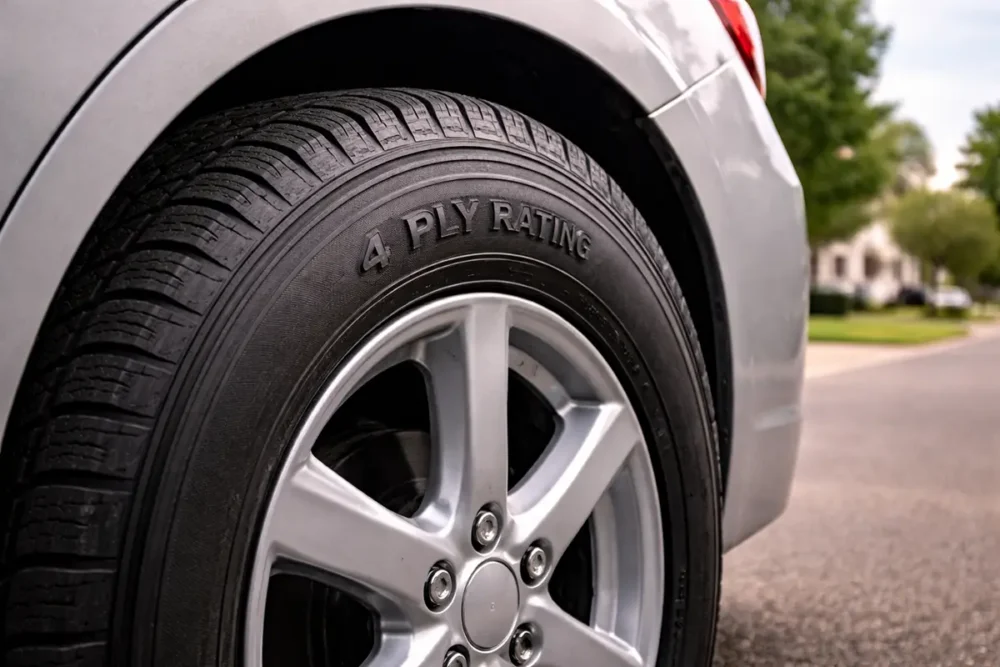
My Real-World Experience with 4 Ply Tires
I ran a set of 4 ply all-season tires on my Honda CR-V for just over 14,000 miles — a mix of daily 30-mile highway commutes, weekend trips, and some light gravel road use near a lake house.
The ride was genuinely smooth. On the highway, I barely noticed the tires. The handling was responsive, fuel economy stayed consistent, and cabin noise was minimal.
Where I noticed limitations: I made the mistake of loading up the CR-V with camping gear, two kayaks on the roof, and four adults for a weekend trip — close to the vehicle’s max payload.
The tires felt slightly squirmy under that load, and I was hyper-aware of the sidewall flex on highway on-ramps. Nothing dangerous, but it was a reminder that 4 ply tires are optimized for a specific use range.
4 Ply Tires: Pros and Cons
- ✅ Softer, more comfortable ride — great for daily commuting and highway miles
- ✅ Lower rolling resistance — translates to slightly better fuel economy
- ✅ Quieter cabin noise — particularly noticeable on smooth interstates
- ✅ More affordable upfront cost than higher-ply alternatives
- ✅ Wide variety available for sedans, crossovers, and minivans
- ❌ Limited load-carrying ability — not ideal for heavy hauling
- ❌ Softer sidewalls are more prone to bulging under overload
- ❌ Less puncture-resistant sidewall compared to 6 ply
- ❌ Not recommended for regular off-road or gravel road use
Best Use Cases for 4 Ply Tires
- Daily urban and highway commuting
- Sedans and compact cars
- Crossovers and SUVs not used for regular towing or hauling
- Minivans carrying standard family loads
- Drivers who prioritize ride comfort and fuel efficiency
6 Ply Tires: My Experience and What You Need to Know
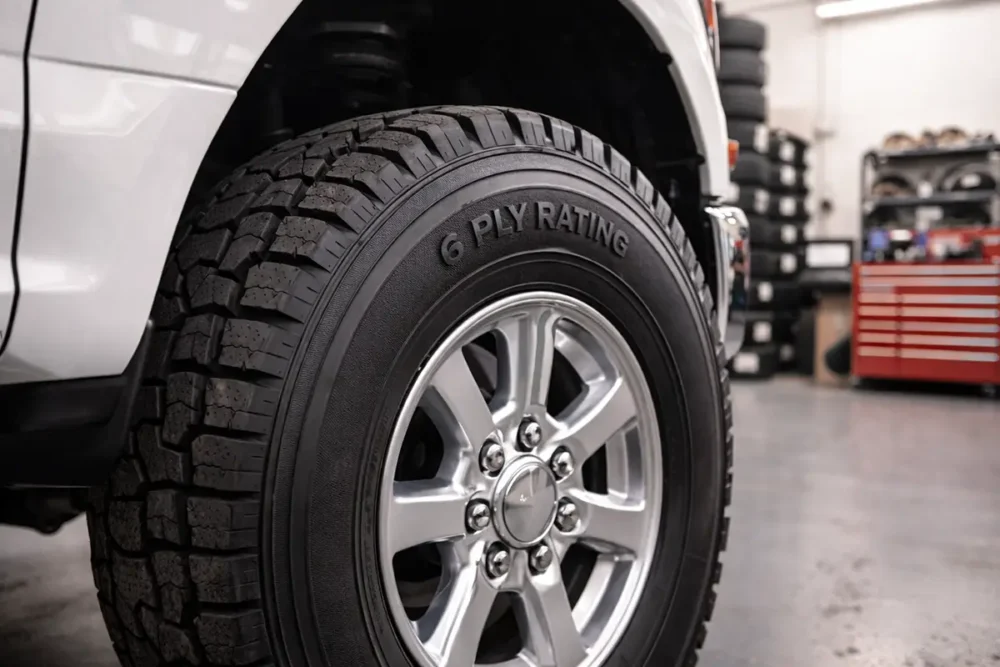
My Real-World Experience with 6 Ply Tires
I switched to 6 ply tires on a Ford Ranger I was using part-time for hauling landscaping materials and occasional towing of a small utility trailer. The difference from my previous 4 ply setup was immediate — and honestly, a bit of a trade-off.
Positives: Loaded up with 600 lbs of mulch and garden stone, the truck sat level and confident. The sidewalls didn’t budge. Handling under load was noticeably better than the 4 ply tires I’d run before.
On a gravel backroad to a property site, the stiffer sidewalls meant I wasn’t constantly watching for sidewall damage from sharp rock edges.
Trade-offs: The daily commute on that truck felt considerably stiffer. Every expansion joint on the interstate was noticeable. Unloaded, the truck hopped around more than I expected.
And fuel economy dropped by about 1.5–2 MPG compared to the previous 4 ply setup — not huge, but real.
It’s also worth noting that 6 ply tires often overlap with the SL vs C1 Tires conversation — understanding standard load vs. C-rated tires helps clarify exactly what you’re getting in the 6 ply range.
6 Ply Tires: Pros and Cons
- ✅ Higher load-carrying capacity — handles cargo, equipment, and towing
- ✅ Reinforced sidewall resists punctures and road debris better
- ✅ More stable under heavy loads — less sidewall flex
- ✅ Better suited for light off-road use and gravel roads
- ✅ Longer tread life under heavy-use conditions
- ❌ Stiffer ride — more road vibration transmitted to the cabin
- ❌ Slightly higher rolling resistance — modest fuel economy penalty
- ❌ More road noise on smooth pavement
- ❌ Higher upfront cost than 4 ply equivalent
Best Use Cases for 6 Ply Tires
- Light trucks (half-ton and smaller)
- Cargo vans and work vehicles
- Drivers who regularly haul heavy loads or tow trailers
- Occasional off-road or gravel use
- Contractors and tradespeople needing reliability under load
4 Ply vs 6 Ply Tires: Key Differences
| Factor | 4 Ply Tires | 6 Ply Tires |
|---|---|---|
| Ride Comfort | Softer, smoother – great on highways | Stiffer – noticeable on rough roads |
| Load Capacity | Moderate – suits sedans & compact SUVs | Higher – suits light trucks & cargo haulers |
| Sidewall Strength | Standard – adequate for everyday driving | Reinforced – resists bulges and punctures better |
| Fuel Efficiency | Slightly better MPG due to less rolling resistance | Marginally lower MPG due to stiffer construction |
| Road Noise | Quieter – better for long highway trips | Slightly noisier – more pronounced on smooth roads |
| Tread Life | Moderate – depends on brand & compound | Slightly longer in heavy-use scenarios |
| Light Off-Road Use | Not ideal – sidewalls can flex excessively | Better – added sidewall supports gravel/dirt roads |
| Price | Generally lower cost | Slightly higher cost |
| Best For | Daily commuters, sedans, light crossovers | Light trucks, cargo vans, light-duty hauling |
Detailed Comparisons: Where It Really Matters
1. Ride Comfort
This is the biggest practical difference most everyday drivers will feel. 4 ply tires have a more compliant sidewall that absorbs road imperfections better. On a regular highway commute, 4 ply tires deliver a noticeably smoother, quieter ride.
6 ply tires, by design, have a stiffer sidewall to support greater loads. Unloaded, that stiffness shows up as more harshness over bumps, expansion joints, and rough pavement.
If you’re running 6 ply tires on a passenger car expecting the same comfort as standard passenger tires, you’ll be disappointed.
2. Load Carrying Capacity
This is where 6 ply tires earn their keep. A typical 4 ply tire (Load Range B/C equivalent) might be rated for 1,700–2,000 lbs per tire. A 6 ply tire in a similar size can push that to 2,200–2,500 lbs per tire depending on inflation and model.
That difference across four tires adds up to 800–2,000 lbs of additional load rating for your vehicle — which is the difference between hauling a full load of lumber confidently versus risking sidewall failure.
3. Durability and Sidewall Strength
If you spend any time on gravel roads, construction sites, or unimproved paths, sidewall strength matters.
I’ve had a 4 ply tire develop a sidewall bulge after hitting a moderate pothole at highway speed — the kind of impact a 6 ply tire likely would have shrugged off.
6 ply tires are reinforced to resist cuts, punctures, and deformation under load. For work vehicles or anyone driving on questionable road surfaces regularly, that extra protection is worth the ride comfort trade-off.
4. Fuel Efficiency
The stiffer compound and construction of 6 ply tires creates slightly more rolling resistance. In real-world testing on my Ranger, switching from 4 ply to 6 ply cost me roughly 1.5–2 MPG.
That’s not catastrophic — but at 15,000 miles per year, that adds up to real money at the pump.
For a daily driver where comfort and efficiency matter more than hauling capacity, 4 ply tires are simply more economical to operate.
5. Noise Levels
Both tire types can vary in noise depending on tread pattern — aggressive all-terrain treads are noisy regardless of ply.
But at the same tread pattern, 6 ply tires tend to transmit slightly more road noise due to their stiffer construction. For highway driving 30,000+ miles per year, that’s worth considering.
6. Tread Life
It depends on usage. Under heavy loads, 6 ply tires often outlast 4 ply tires because they maintain their shape better and resist uneven wear under stress.
Under standard commuter use, a quality 4 ply tire can last just as long — sometimes longer — because the compound is optimized for everyday driving rather than heavy-duty performance.
7. Light Off-Road Capability
I took both tire types on the same gravel road path on multiple occasions. The 4 ply setup was fine on dry, packed gravel but felt slightly nervous on loose stone — I could feel the sidewalls flexing more than I liked.
The 6 ply setup was noticeably more planted and confident on the same surface.
For true off-road driving on rocks and trails, you’d want even higher ply ratings. But for gravel roads and occasional off-pavement use, 6 ply offers a meaningful step up from 4 ply.
When Should You Choose 4 Ply Tires?
Choose 4 ply tires if:
- You drive a sedan, compact car, or light crossover
- Your primary use is daily commuting and highway driving
- You rarely haul heavy cargo or tow trailers
- Ride comfort and fuel economy are top priorities
- Your vehicle’s manufacturer specifies standard passenger tire construction
- You drive primarily on well-maintained paved roads
4 ply tires represent the ideal balance of comfort, efficiency, and adequate durability for the vast majority of American daily drivers.
There’s no reason to upgrade to 6 ply just because it sounds stronger — if your vehicle and usage don’t require it, you’re just paying more for a worse ride.
When Should You Choose 6 Ply Tires?
Choose 6 ply tires if:
- You drive a light truck, cargo van, or work vehicle
- You regularly haul cargo close to or at your vehicle’s payload capacity
- You tow trailers, boats, or equipment
- You drive on gravel roads, dirt paths, or unimproved surfaces regularly
- Your job requires vehicle reliability over comfort (contractors, landscapers, tradespeople)
- You’ve experienced sidewall failures or bulges on standard ply tires
6 ply tires earn their premium when they’re doing the job they’re designed for. Under heavy loads and in work-use scenarios, that extra sidewall strength is not just nice to have — it’s a safety margin.
Can You Switch Between 4 Ply and 6 Ply Tires?
Technically, yes — but there are important caveats.
Switching from 4 ply to 6 ply is generally safe on light trucks and work vehicles as long as the tire size remains compatible with your rims and the load rating meets or exceeds the vehicle’s requirements. This is often done by truck owners who upgrade for hauling purposes.
Switching from 6 ply to 4 ply on a vehicle rated for heavier loads is where you can get into trouble. If your vehicle’s door jamb placard specifies LT (Light Truck) tires or higher load ratings, downgrading to standard passenger ply construction could put you below the safety thresholds your vehicle was engineered for.
Always check your door jamb sticker or owner’s manual for the manufacturer’s recommended load range. If you’re unsure, consult a tire professional before swapping ply ratings.
Common Mistakes Buyers Make When Choosing Ply Ratings
- Buying 6 ply ‘just to be safe’ on a sedan — you’ll sacrifice comfort for no practical benefit.
- Ignoring load ratings and choosing by brand alone — a premium 4 ply tire can’t overcome physics if your load exceeds its rating.
- Confusing ply rating with tire quality — higher ply doesn’t mean better tire; it means different application.
- Not checking the door jamb placard — this is where your vehicle’s required tire specs live. Always start here.
- Mixing ply ratings across axles — front and rear tires should be matched. Running mismatched ply on different axles can create handling imbalances.
- Overlooking inflation requirements — 6 ply tires often require higher PSI to achieve their rated load capacity. Under-inflation kills load ratings fast.
Real-World Scenarios: Which Ply Is Right for You?
Scenario 1: The Daily Commuter
You drive a Toyota Camry or Honda Accord 25–35 miles each way on a mix of city streets and interstate. Load? Just yourself, occasionally a passenger, and a bag of groceries.
You need: 4 ply tires, full stop. A quality all-season 4 ply tire will give you years of comfortable, efficient, quiet service.
Scenario 2: The Weekend Hauler
You have a Ford F-150 or Chevy Colorado that mostly sits empty M–F but on weekends you’re hauling lumber, mulch, or landscaping stone — regularly pushing 500–800 lbs in the bed.
You tow a small utility trailer a few times per year. You need: 6 ply tires. Your load profile and occasional towing clearly push you past the 4 ply comfort zone.
Scenario 3: The Light Adventure Driver
You have a Subaru Outback or Toyota 4Runner. You take gravel roads to hiking trailheads a few times per month and occasionally camp off paved roads. Light hauling — camping gear, bikes on a hitch carrier.
The call here is genuinely close. A tough 4 ply all-terrain tire can handle this profile, but a 6 ply rated all-terrain gives you more sidewall confidence on rocky gravel. Personal choice — I’d lean toward 6 ply if you’re doing this monthly.
Scenario 4: The Contractor
Your Ram 1500 or Ranger is a work vehicle. Materials in the bed five days a week. Tool boxes, equipment, and sometimes a trailer. If you’re not already running 6 ply, you should be.
The load profile demands it, and the sidewall reinforcement protects against the job site debris that would eat through a 4 ply sidewall.
Final Verdict: 4 Ply vs 6 Ply Tires
After putting both through real-world paces across different vehicles and use cases, here’s my honest verdict:
4 ply tires are right for the majority of American drivers. If you drive a car, crossover, or minivan primarily on paved roads with occasional light loads, 4 ply gives you better ride comfort, slightly better fuel economy, and lower tire cost — without sacrificing safety or durability for normal use.
6 ply tires earn their place on light trucks, work vehicles, and vehicles used for regular heavy hauling or towing. The reinforced sidewall and higher load rating are real, meaningful advantages in those contexts — and the comfort trade-off is entirely worth it when the alternative is overloaded, at-risk tires.
Don’t buy on ply number alone. Buy based on your vehicle type, your actual usage, and what your door jamb placard specifies. That combination will never steer you wrong.
Related Tire Ply Comparisons
Exploring ply ratings doesn’t stop at 4 vs 6. If you want to understand the full spectrum of tire load capacity and construction, these related guides will help:
- 2 Ply vs 4 Ply Tires — You’re reading the definitive guide. Share it with anyone who’s confused about which rating to choose for their passenger car or compact SUV.
- 4 Ply vs 6 Ply Tires — If 4 ply isn’t quite enough for your needs, this comparison helps you decide whether 6 ply is the right next step.
- 4 Ply vs 10 Ply Tires — A major jump in construction strength. Essential reading if you’re considering a heavy-duty upgrade for your truck.
- 6 Ply vs 8 Ply Tires — The next step up from this guide. Great for drivers who need more than 6 ply but want to understand the trade-offs before going full heavy-duty.
- 6 Ply vs 10 Ply Tires — Comparing C-range tires against Load Range E. This covers the big gap between work-truck tires and heavy-duty haulers.
- 8 Ply vs 10 Ply Tires — For drivers running heavy trucks who want to understand the difference between Load Range D and E tires.
- 10 Ply vs 12 Ply Tires — The upper end of the ply spectrum, covering commercial and heavy-duty truck applications.
- 12 Ply vs 14 Ply Tires — Takes you into commercial and industrial territory — heavy trucks and equipment haulers.
- 14 Ply vs 16 Ply Tires — Reserved for heavy commercial vehicles and specialized applications. Great background reading.
- Radial vs. Bias Ply Tire — Understanding the fundamental tire construction types will deepen your knowledge of how ply ratings apply to different tire architectures.
- LT vs P-Metric Tires – Why the tire designation (LT vs P) matters as much as the load range when choosing truck tires.