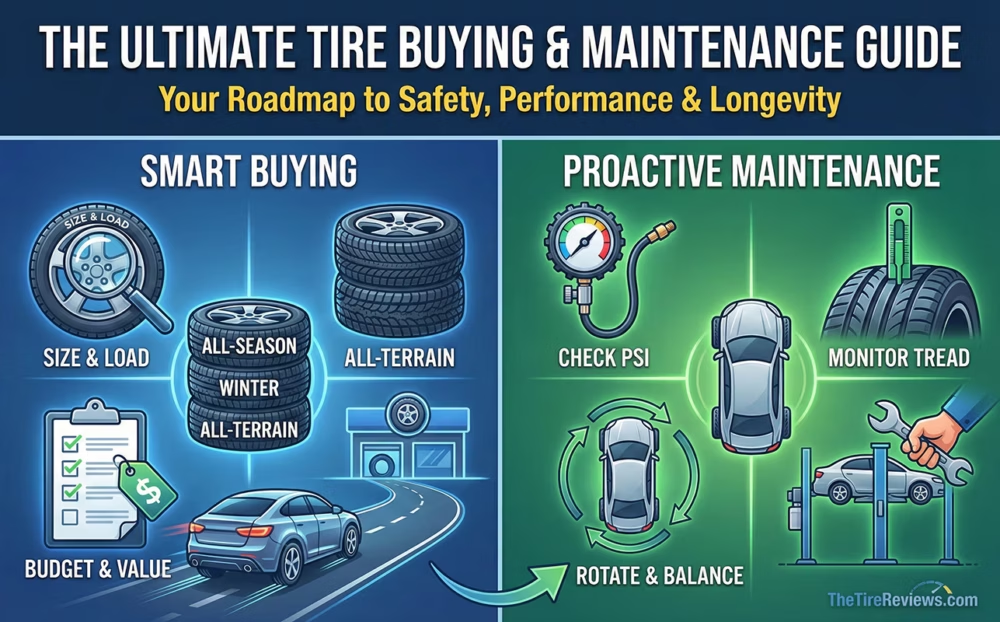
Your vehicle’s tires are more than just black rubber circles; they are the critical interface between your car and the road, dictating your driving experience, safety, and the longevity of your entire vehicle.
Understanding tires goes beyond a simple purchase; it involves a comprehensive approach to selection, meticulous maintenance, and an awareness of how they interact with your car’s systems.
In today’s automotive landscape, where the global tire industry is valued at an impressive $142.7 billion in 2024 [ConsumerAffairs, 2024], making informed decisions about your tires is not only economically prudent but essential for safety and performance.
This comprehensive guide is designed to equip you with expert knowledge, moving beyond basic advice to provide actionable strategies for maximizing tire lifespan and optimizing your driving experience.
- Why Your Tires Deserve Expert Attention
- What This Guide Will Cover: Beyond Basic Maintenance
- Part 1: Mastering Tire Selection for Lasting Performance and Safety
- Part 2: The Art of Tire Maintenance: Extending Life & Optimizing Performance
- Part 3: Tires & Your Vehicle’s Ecosystem: A Holistic View for Optimal Performance
- Part 4: Troubleshooting Common Tire Issues & Lifespan Management
- Part 5: The Road Ahead: Innovations in Tire Technology and Sustainability
- Conclusion: Drive Safer, Drive Longer, Drive Smarter
- FAQs About Tire Buying & Maintenance
Why Your Tires Deserve Expert Attention
The significance of tires is often underestimated. They are responsible for acceleration, braking, steering, and absorbing road imperfections. When tires are neglected, the consequences can be severe.
A staggering 1 in 5 vehicle breakdowns on motorways and A roads result from tire defects [TyreSafe, 2024], highlighting the direct link between tire condition and roadside emergencies. Furthermore, in 2023 alone, a total of 646 people died in tire-related crashes [NHTSA TireWise, 2023], underscoring the critical role tires play in road safety.
Beyond safety, properly maintained tires significantly impact your vehicle’s performance, fuel efficiency, and overall driving comfort. Conversely, worn or improperly maintained tires can lead to premature wear on other vehicle components, increased fuel consumption, and reduced handling capabilities.
What This Guide Will Cover: Beyond Basic Maintenance
This guide will serve as your definitive resource for all things tires. We will delve deep into:
- Mastering Tire Selection: Decoding sidewall markings, understanding different tire types like all-season tires, winter tires, and summer tires, and making smart purchasing decisions that balance cost, performance, and mileage.
- The Art of Tire Maintenance: Exploring essential practices such as proper inflation, monitoring tread health beyond rudimentary checks, strategic rotation and balancing, and the vital role of wheel alignment.
- Tires and Your Vehicle’s Ecosystem: Examining how your tires interact with your vehicle’s suspension, braking, and drivetrain systems to influence wear and performance.
- Troubleshooting and Longevity: Diagnosing common tire issues, understanding when to repair versus replace, and managing tire age for optimal safety.
- The Road Ahead: Glimpsing into the future of tire technology and sustainability.
By the end of this guide, you will possess the knowledge to make confident tire decisions, implement effective maintenance routines, and ultimately, drive safer, longer, and smarter.
Part 1: Mastering Tire Selection for Lasting Performance and Safety
Choosing the right tires is the first and perhaps most critical step in ensuring your vehicle performs optimally and safely. This involves understanding the language of tire markings and knowing which type of tire best suits your driving conditions and vehicle.
Understanding Your Tire’s DNA: Decoding the Sidewall Code
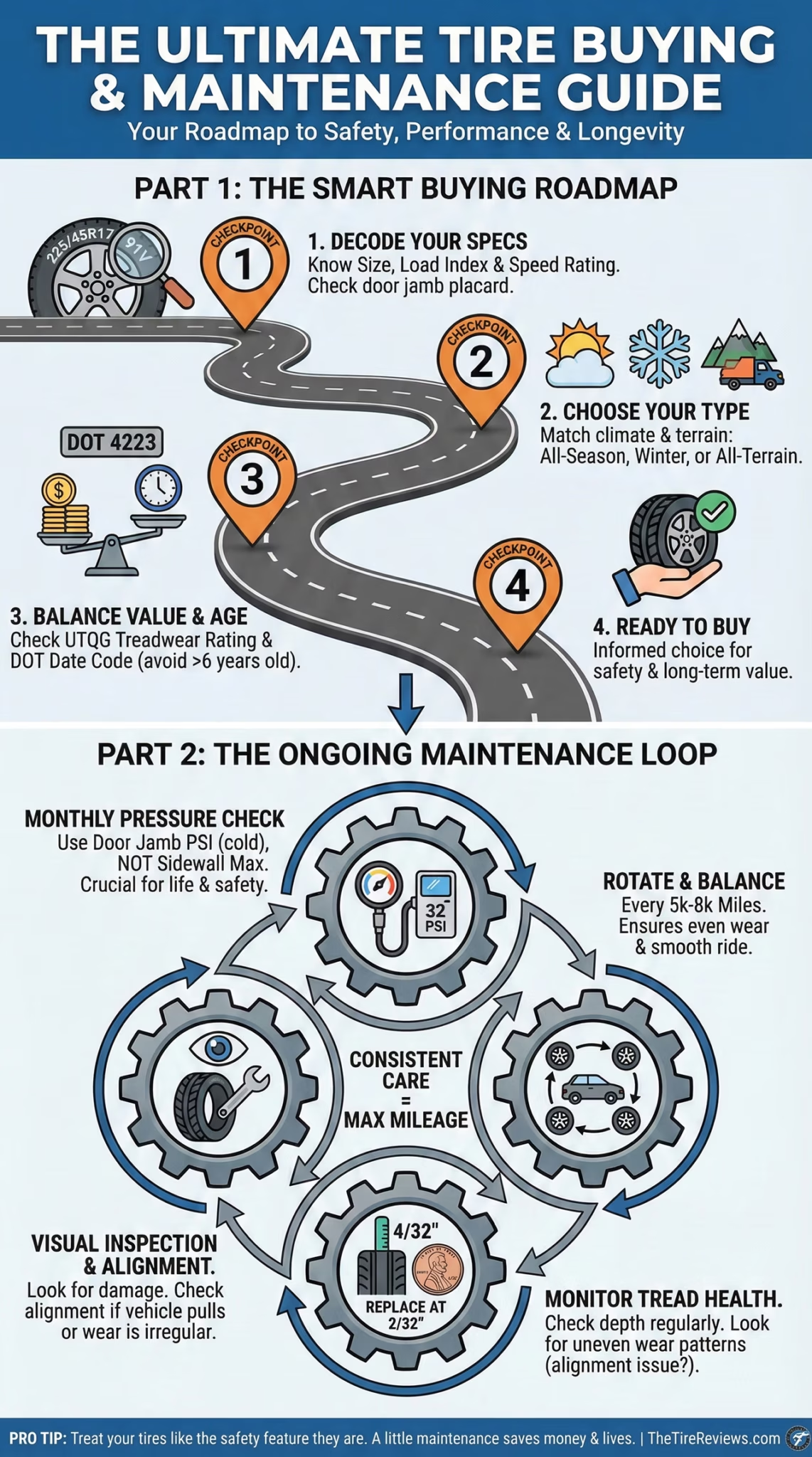
The string of numbers and letters on your tire’s sidewall acts as its birth certificate. It details the dimensions, capabilities, and limitations of the tire. To make an informed choice, you must understand your specific tire size explanation (width, aspect ratio, and rim diameter) as well as the tire speed rating, which dictates the maximum safe speed the tire can sustain. Additionally, for truck and SUV owners, checking the tire ply rating is vital to ensure the tire can handle your required payload.
- Tire Size: This is arguably the most crucial piece of information. A common example is “P215/65R15 98H.”
- P: Indicates the tire is designed for passenger vehicles. Other prefixes like LT (Light Truck) signify different applications.
- 215: This is the tire’s width in millimeters from sidewall to sidewall.
- 65: This is the aspect ratio, representing the tire’s height as a percentage of its width. In this case, the sidewall height is 65% of 215 mm. A lower aspect ratio indicates a shorter sidewall, generally leading to sportier handling.
- R: Denotes the tire’s construction type. “R” stands for Radial, the most common type today.
- 15: This is the diameter of the wheel rim in inches.
- The global radial tires market size was valued at USD 40.45 billion in 2025 and is projected to grow to USD 79.15 billion by 2034, exhibiting a substantial CAGR of 7.8% during the forecast period [Fortune Business Insights, 2026-2034], reflecting the dominance of this construction.
- Load Index: The number following the tire size (e.g., 98) is the load index. It indicates the maximum weight that a single tire can support when properly inflated. This number corresponds to a chart; a load index of 98, for instance, typically supports 1,653 pounds. Your vehicle manufacturer specifies the required load index for your car. Exceeding this can lead to tire failure.
- Speed Rating: The letter at the end of the sidewall code (e.g., H) is the speed rating. It indicates the maximum speed at which a tire can safely carry a load corresponding to its load index. Common ratings range from S (up to 112 mph) to Z (over 149 mph). Tires with higher speed ratings are often designed for better handling and performance at higher speeds.
- Tire Manufacturing Date (DOT Code): Look for a four-digit code preceded by “DOT.” The first two digits represent the week of manufacture, and the last two digits represent the year. For example, “3223” means the tire was manufactured in the 32nd week of 2023. This is critical for assessing tire age.
- Other Markings: You might also find markings related to traction, temperature resistance (e.g., AA, A, B, C), treadwear ratings (UTQG system), and specific certifications.
Choosing the Right Tire Type for Your Needs
Selecting the correct tire type is paramount for matching your vehicle’s capabilities to your driving environment. The automotive tire service market is expected to increase from USD 158.91 billion in 2025 to USD 170.15 billion in 2026 [Global Forecast, 2026-2032], indicating a dynamic market where informed choices matter.
- All-Season Tires: These are the most common type and offer a compromise, designed to provide adequate performance in a variety of conditions – from dry summer roads to light snow and rain. They feature a tread compound that remains flexible in cold temperatures and a tread pattern that balances dry grip with some ability to evacuate water and light snow. However, they do not excel in extreme conditions. For drivers seeking this balance, our guide to the best all season tires highlights options that are quiet, last a long time, and perform well in wet and winter conditions without a significant price premium [Autosphere, 2026].
- Winter Tires: Essential for drivers in regions with significant snowfall, ice, and consistently cold temperatures. Investing in the best winter tires ensures you get specialized rubber compounds that stay soft and pliable in freezing conditions, providing superior grip, braking, and handling compared to all-season tires. Their aggressive tread patterns are designed to bite into snow and expel slush effectively, offering crucial safety advantages during winter months.
- Summer Tires: Optimized for warmer climates, the best summer tires deliver superior dry and wet grip. They feature a more rigid rubber compound that hardens in cold temperatures, making them unsuitable for winter use. Their tread patterns are designed for maximum contact with the road, delivering enhanced handling, cornering performance, and braking, often preferred by enthusiasts.
- High-Performance Tires: This category often overlaps with summer tires but refers to tires engineered for maximum performance – superior grip, responsiveness, and high-speed stability. They are typically found on sports cars and performance sedans. While offering exhilarating driving dynamics, they often come with shorter tread life and can be more susceptible to damage from potholes.
- Considerations: When choosing, factor in your climate, typical driving conditions (city, highway, off-road), your vehicle‘s type (sedan, SUV, truck), and your budget. Don’t overlook the expected mileage and warranty offered by manufacturers.
Smart Buying Strategies: Maximizing Value and Longevity
Purchasing tires involves more than just picking a brand and model. Employing smart strategies ensures you get the best value, longevity, and performance. Total U.S. tire shipments are expected to reach 340.2 million units in 2025, surpassing previous records [Rubber World, 2025], indicating robust consumer demand and a market where strategic buying is beneficial.
- Research and Comparisons: Before visiting a dealer or clicking “buy,” research reputable brands and specific models. Read reviews, compare specifications, and look for independent testing results. Consider the specific needs of your vehicle and driving habits.
- Look Beyond the Price Tag: While budget is a factor, the cheapest tires may not offer the best long-term value. Higher-quality tires often provide better performance, last longer, and contribute to fuel efficiency, offsetting their initial cost over their lifespan.
- Understand Warranties: Many tires come with treadwear warranties, guaranteeing a certain mileage. Understand the terms and conditions of these warranties, as they can offer significant value if you drive many miles.
- Timing Your Purchase: Tire prices can fluctuate. Look for seasonal sales, rebates, or special offers, especially around major holidays or at the change of seasons.
- Consider Tire Packages: Sometimes, purchasing a set of four tires can be more cost-effective than buying them individually.
- Check for Manufacturing Dates: Always verify the manufacturing date (DOT code) on tires before purchasing. Avoid tires that are more than a year or two old, even if unused, as rubber degrades over time. This helps ensure you’re not buying old stock that will have a reduced lifespan.
Part 2: The Art of Tire Maintenance: Extending Life & Optimizing Performance
Once you’ve selected the right tires, maintaining them properly is key to unlocking their full potential for longevity and performance. Neglecting maintenance can drastically shorten tire life, compromise safety, and negatively impact your vehicle’s efficiency.
The Foundation of Tire Longevity: Proper Tire Pressure
Tire pressure is the single most critical factor influencing tire wear, fuel economy, handling, and safety. The impact of proper inflation cannot be overstated.
- Why It Matters: Underinflated tires flex excessively, generating heat that can lead to blowouts. They also increase rolling resistance, forcing your engine to work harder, thus reducing fuel efficiency and accelerating wear. Overinflated tires have a smaller contact patch with the road, reducing grip, degrading ride quality, and causing uneven wear in the center of the tread.
- Finding the Correct Pressure: The recommended tire pressure for your vehicle is not found on the tire sidewall itself but on a sticker usually located on the driver’s side doorjamb, in the glove compartment, or on the fuel filler door. The pressure listed on the tire sidewall is the maximum pressure the tire can safely hold, not the recommended operating pressure for your vehicle.
- Checking Pressure: Use a reliable tire pressure gauge. Check pressure at least once a month and before long trips, ideally when the tires are cold (before driving or after sitting for at least three hours).
- Impact: Maintaining optimal tire pressure can improve fuel economy by up to 3% [Source not provided, general knowledge] and significantly extend tire life by promoting even wear.
Monitoring Tread Health: Beyond the Penny Test
The tread on your tires is what provides grip and channels water away from the contact patch. Monitoring its condition is crucial. While we will cover the basics here, knowing the critical signs you need new tires—such as visible cords, bulges, or deep cracks—can save you from a roadside emergency.
- Tread Depth Indicators (TDI): Most tires have built-in tread wear indicators – small raised bars in the grooves. When the tread wears down to the level of these bars, the tire is legally worn out and needs replacement. The legal minimum tread depth in many regions is 2/32 of an inch.
- The Penny Test (and its limitations): This involves inserting a penny into the deepest part of the tread with Lincoln’s head facing down. If Lincoln’s head is fully visible, the tread is likely below 2/32 inch. While useful for a quick gauge, it doesn’t reveal patterns of uneven wear that can indicate underlying issues.
- Uneven Wear Patterns: Regularly inspect the entire tread surface for signs of uneven wear.
- Center Wear: Usually indicates overinflation.
- Edge Wear (shoulders): Typically suggests underinflation.
- One-Sided Wear: Often points to a wheel alignment issue.
- Feathering (sawtooth pattern): Can also indicate incorrect alignment or improper tire rotation.
- Signs of Damage: Look for cuts, cracks, punctures, bulges, or any foreign objects embedded in the tread or sidewall.
Strategic Tire Rotation and Balancing
Regular tire rotation and balancing are essential maintenance practices that promote even wear, enhance performance, and extend tire mileage.
- Tire Rotation: This involves moving tires from one position on the vehicle to another. For front-wheel-drive vehicles, typically rear tires are moved to the front and vice versa. For rear-wheel-drive or all-wheel-drive vehicles, different patterns (like a criss-cross or rearward cross) are used.
- Frequency: Consult your vehicle owner’s manual, but generally, rotation is recommended every 5,000 to 7,500 miles.
- Benefits: Promotes even tread wear, leading to longer tire life and maximizing the mileage you get from your set. It also helps maintain consistent handling and ride comfort.
- Tire Balancing: While rotation manages wear patterns, balancing ensures weight is distributed evenly around the wheel assembly. If you notice your steering wheel shaking at highway speeds, it is often what causes car to vibrate when driving. Regular balancing prevents this uneven oscillation and protects your suspension.
- When to Balance: Tires should be balanced when they are first mounted onto the wheels, after a repair, and whenever you notice vibrations or uneven wear.
- Process: A technician mounts the wheel on a balancing machine, spins it, and identifies the heavy spot. Small weights are then attached to the rim to counteract the imbalance.
The Crucial Role of Wheel Alignment
Wheel alignment refers to the angles of your vehicle’s wheels relative to the ground and each other. Improper alignment is a major culprit behind rapid and uneven tire wear, poor handling, and compromised safety.
- What Alignment Affects: Key angles include camber (the inward or outward tilt of the top of the tire), caster (the angle of the steering axis), and toe (the inward or outward angle of the tires when viewed from above).
- Signs of Misalignment:
- Tires wearing unevenly on one edge or feathering.
- The vehicle pulling to one side.
- The steering wheel not being centered when driving straight.
- Squealing sounds from tires.
- Causes of Misalignment: Hitting potholes, curbs, or experiencing a collision can knock your alignment out of specification. Normal wear and tear on suspension components can also contribute.
- Benefits of Proper Alignment: Ensures tires make full contact with the road, promotes even tread wear, improves fuel efficiency, enhances steering stability, and contributes to overall driving safety. It’s recommended to have your alignment checked annually or whenever you install new tires, or if you notice any of the symptoms.
Advanced Visual Inspections & Damage Assessment
Beyond checking tread depth, regular visual inspections can catch potential problems before they escalate.
- Sidewall Integrity: Look for any cracks, cuts, blisters, or bulges on the sidewalls. These can indicate structural weakness and a risk of blowouts. Any significant damage to the sidewall typically renders a tire irreparable.
- Punctures and Foreign Objects: Inspect the tread for nails, screws, glass, or other debris. Small punctures in the tread area might be repairable, but larger ones or those in the sidewall usually require replacement.
- Underlying Issues: Unusual wear patterns, like cupping or scalloping, can be indicators of worn suspension components (shocks, struts, ball joints) or improper balancing. These issues should be addressed along with tire maintenance.
- Consistency is Key: Make these visual checks part of your routine, perhaps when you check tire pressure or before washing your vehicle.
Seasonal Care and Storage Tips
Proper care of your tires extends to how you manage them throughout the year, especially if you switch to seasonal tires.
- Seasonal Tire Swaps: If you use dedicated winter tires or summer tires, ensure you switch them at appropriate times. Generally, switch to winter tires when temperatures consistently drop below 7°C (45°F) and back to summer tires or all-season tires when temperatures rise consistently above this threshold. This maximizes performance and safety for the conditions.
- Storage: When storing off-season tires:
- Clean Them: Wash off dirt, grime, and brake dust.
- Mark Position: Note which position they came from (e.g., LF for Left Front) to help with correct placement upon remounting.
- Store Properly: Keep them in a cool, dry, dark place away from direct sunlight, heat sources, and ozone-producing equipment (like electric motors). Store them away from solvents, oils, and chemicals that can degrade rubber.
- Positioning: Store them lying flat in a stack (no more than four high), or upright if space allows, rotating them periodically to prevent flat spots. If mounted on rims, they can be hung or stacked.
Part 3: Tires & Your Vehicle’s Ecosystem: A Holistic View for Optimal Performance
Your tires are not isolated components; they are intricately linked to various systems within your vehicle. Understanding these interdependencies is crucial for maximizing tire longevity, ensuring consistent performance, and maintaining overall safety.
Suspension and Steering: Silent Partners in Tire Longevity
The suspension and steering systems directly influence how your tires interact with the road and how they wear.
- Suspension: Components like shocks, struts, ball joints, and bushings are designed to absorb road shock and keep your tires in constant contact with the pavement. When these components wear out, they can lead to:
- Bouncing and Poor Handling: Reduced control, especially on uneven surfaces.
- Uneven Tire Wear: “Cupping” or “scalloping” patterns can emerge on the tread due to excessive bouncing.
- Compromised Braking: Tires may lose contact with the road during braking, extending stopping distances.
- Steering: The steering system, including tie rods and the steering rack, guides your vehicle. Issues here can lead to:
- Loose or Vaguer Steering: Making precise control difficult.
- Uneven Wear: Toe-out or toe-in conditions, often stemming from steering component wear, cause rapid edge wear or feathering.
Regular inspection of these systems, typically during tire rotations or brake checks, is vital. Addressing worn suspension or steering parts proactively will protect your investment in new tires and ensure optimal performance.
Braking Systems: Influence on Tire Wear and Safety
Your braking system is a primary safety feature that works in conjunction with your tires to bring your vehicle to a controlled stop.
- Brake Force Distribution: The Anti-lock Braking System (ABS) and Electronic Stability Control (ESC) systems work to manage brake force applied to each wheel. If these systems are not functioning correctly, or if brake components are unevenly worn, it can lead to uneven wear on the tires that are subjected to more braking force.
- Brake Fade and Tire Grip: Overheated or worn brakes can lead to “brake fade,” reducing stopping power. This forces drivers to brake harder and for longer durations, putting additional stress on the tires and potentially leading to premature wear, especially if the tires themselves are not performing optimally.
- Tire Contribution to Braking: Ultimately, the effectiveness of your brakes relies on the friction between your tires’ tread and the road surface. Worn tires, regardless of the condition of the braking system, will significantly increase stopping distances, posing a major safety risk.
Powertrain and Drivetrain: Power Delivery’s Influence
The way power is delivered from the engine to the wheels also plays a role in tire wear and performance.
- Torque and Traction: Engines producing high torque, especially when combined with aggressive acceleration, can lead to excessive tire spin and rapid tread wear. This is particularly true for performance vehicles or if tires lack sufficient grip for the power they are receiving.
- Drivetrain Type:
- Front-wheel drive: Tends to cause faster wear on front tires due to steering and drive forces.
- Rear-wheel drive: Can lead to faster wear on rear tires from acceleration, especially if driven aggressively.
- All-wheel drive (AWD) / Four-wheel drive (4WD): Distributes power to all wheels, generally promoting more even wear if tires are properly rotated and maintained. However, mismatching tire types or significant differences in tread wear between axles can cause damage to the AWD/4WD system itself, indirectly affecting tires.
- Engine Performance: A poorly tuned engine or a malfunctioning transmission can lead to jerky acceleration or deceleration, which translates into uneven tire stress and accelerated wear.
Integrating Tires into Your Overall Car Maintenance Schedule
To truly maximize longevity and performance, tires should be an integrated part of your regular vehicle maintenance.
- Routine Checks: Incorporate tire pressure checks, visual inspections for damage and wear, and checking tread depth into your monthly checks.
- Scheduled Maintenance: Tire rotations are typically recommended every 5,000-7,500 miles. This is a good opportunity to have your alignment and brakes inspected as well.
- Warning Lights: Pay attention to dashboard warning lights, such as the Tire Pressure Monitoring System (TPMS) or check engine lights, as they can indicate underlying issues affecting your tires.
- Service Intervals: Follow your vehicle manufacturer’s recommended service intervals for suspension, steering, and brake systems. This preventative approach safeguards your tires from accelerated wear caused by component failure.
Part 4: Troubleshooting Common Tire Issues & Lifespan Management
Even with diligent maintenance, you may encounter common tire issues. Knowing how to diagnose and address them is key to maintaining safety, performance, and maximizing your tire’s lifespan.
Diagnosing Common Tire Issues and Their Solutions
- Uneven Wear: As discussed, this is a symptom rather than a cause.
- Solution: Identify the pattern (center wear, edge wear, feathering) and address the root cause. This typically involves adjusting tire pressure, performing a wheel alignment, or balancing the tires. If suspension components are faulty, they must be repaired or replaced.
- Vibrations or Shaking: This often indicates an imbalance in the wheel and tire assembly, or potentially a tire defect.
- Solution: Have the tires balanced. If vibrations persist, the tire may be damaged (e.g., internal belt separation, a bulge) or the wheel could be bent. A thorough inspection by a qualified technician is necessary.
- Tire Noise: Whining, humming, or slapping sounds can originate from tires.
- Solution: Differentiate between normal tire noise and abnormal sounds. Irregular wear patterns often cause noise. Cupping can produce a humming sound, while feathering can lead to a slapping noise. Addressing the cause of the wear is the primary solution.
- Bulges or Blisters: These are serious indicators of internal damage to the tire’s structure.
- Solution: Any bulge or blister on the sidewall is a critical safety concern and requires immediate replacement of the tire. This is not a repairable condition.
- Slow Leaks: A tire that consistently loses air pressure between checks is likely suffering from a slow leak.
- Solution: The leak could be from a faulty valve stem, a nail or screw in the tread, or a damaged bead where the tire seals to the rim. A tire shop can usually locate and repair punctures in the tread area.
Repair vs. Replace: Making Informed Decisions
Deciding whether to repair or replace a damaged tire involves assessing the type of damage, its location, and the overall condition of the tire.
- Repairable Damage: Generally, punctures in the tread area that are not too large (typically less than 1/4 inch in diameter) can be safely repaired with a patch or plug-patch combination from the inside of the tire.
- Non-Repairable Damage:
- Sidewall Damage: Any cuts, cracks, punctures, or bulges on the sidewall. The sidewall lacks the reinforcement to sustain a repair safely.
- Large Punctures: Punctures in the shoulder or sidewall areas.
- Run-Flat Damage: Tires driven for extended periods with very low or no air pressure (even if they are designated as run-flats) often sustain internal damage that cannot be visually detected and is not safe to repair.
- Tread Separation: If the layers of the tread are separating.
- Exceeding Tire Age: If a tire is old, even if repairable, replacement may be the safer option.
- When in Doubt, Replace: Prioritize safety. If you are unsure about the integrity of a tire or the repair, it is always better to replace it. The cost of a new tire is minor compared to the potential consequences of a tire failure.
Tire Age and Its Implications
Tires degrade over time, regardless of tread depth. The rubber compounds can become brittle, and internal structural components can weaken.
- The DOT Code: As mentioned, the DOT code provides the manufacturing date. While tire manufacturers and safety organizations recommend replacement after 6 to 10 years from the date of manufacture, even if the tread appears to be in good condition, it is crucial to adhere to these guidelines.
- Consequences of Old Tires: Aged tires are more susceptible to sudden failure, including tread separation and blowouts, even at moderate speeds or under normal driving conditions. This poses a significant safety risk.
- Factors Accelerating Aging: Exposure to extreme heat, UV rays, and infrequent use (which can lead to flat spots and cracking) can accelerate tire aging.
Part 5: The Road Ahead: Innovations in Tire Technology and Sustainability
The tire industry is continuously evolving, driven by demands for improved performance, enhanced safety, greater fuel efficiency, and increased sustainability.
Future Trends in Tire Construction and Materials
Innovation in tire manufacturing is focusing on new materials and construction techniques to meet the changing needs of the automotive sector, including the rise of electric vehicles (EVs).
- EV-Specific Tires: The expansion of electric vehicles is a major driver. EVs are heavier due to battery packs and demand tires that can handle increased torque, support greater weight, and offer low rolling resistance for maximum range. More EV-specific tire SKUs and larger wheel sizes will drive new service and storage demands in 2026 [TSI, 2025]. These tires often feature reinforced construction, specialized compounds, and noise-reduction technologies.
- Sustainable Materials: There is a growing emphasis on using recycled and bio-based materials in tire production. This includes developing synthetic rubbers from plant-based oils, using recycled carbon black, and exploring other renewable resources to reduce the environmental footprint of tire manufacturing.
- Smart Tires: The integration of sensors into tires is becoming more prevalent. These “smart tires” can monitor pressure, temperature, tread wear, and even road conditions in real-time, transmitting this data to the vehicle’s computer. This allows for proactive adjustments and alerts, further enhancing safety and performance.
Advanced Tire Compounds and Tread Patterns
Beyond construction, the materials used and the design of the tread pattern are constantly being refined.
- All-Weather vs. All-Season: New categories like “all-weather” tires are emerging, which are designed to meet severe snow service requirements (marked with the three-peak mountain snowflake symbol) but can also provide good year-round performance, offering a compelling alternative to switching between summer/winter tires for many drivers.
- Graphene and Nanotechnology: The incorporation of materials like graphene is being explored to create stronger, lighter, and more durable tires with improved grip and rolling resistance. Nanotechnology allows for precise control over the rubber compound’s properties at a molecular level.
- Adaptive Tread Designs: Future tread patterns may be designed to adapt to changing conditions, optimizing grip and reducing noise dynamically.
The tires market is projected to continue its growth trajectory, with an estimated CAGR of 6.44% during 2025 to 2033 [Cognitive Market Research, 2026], signaling ongoing innovation and increasing consumer demand for advanced tire solutions.
Conclusion: Drive Safer, Drive Longer, Drive Smarter
Your tires are fundamental to your vehicle’s safety, performance, and efficiency. By understanding the complexities of tire selection, embracing diligent maintenance practices, and recognizing their integration within your car’s overall system, you can significantly enhance your driving experience and prolong the life of your tires.
Recap of Key Takeaways for Tire Longevity and Performance
- Informed Selection is Paramount: Always decode your tire’s sidewall (size, load index, speed rating) and choose tire types that match your climate and driving needs, whether all-season tires, winter tires, or summer tires.
- Maintenance is Non-Negotiable: Proper tire pressure, regular tread depth monitoring, strategic rotation and balancing, and correct wheel alignment are the pillars of tire longevity and optimal performance.
- Holistic Vehicle View: Recognize that tires are part of a larger system. The condition of your suspension, steering, and braking components directly impacts tire wear and safety.
- Proactive Troubleshooting: Learn to identify common tire issues and understand when repair is appropriate and when replacement is the only safe option. Never compromise on tire integrity.
- Consider Tire Age: Do not overlook the manufacturing date; aged tires are a significant safety hazard.
Empowering You to Make Expert Tire Decisions
This guide has equipped you with the knowledge to move beyond guesswork and make confident, informed decisions about your tires. By prioritizing safety, understanding the nuances of performance, and investing in proper maintenance, you not only protect yourself and your passengers but also maximize the value and lifespan of your tire investment.
As technology advances, staying aware of innovations will further empower you to choose the best tires for your vehicle and driving future. Drive smarter, maintain diligently, and enjoy the road ahead with confidence.
FAQs About Tire Buying & Maintenance
How often should I actually check my tire pressure?
You should check your tire pressure at least once a month and before any long road trips. Tires naturally lose about 1 PSI per month due to permeation. Additionally, for every 10°F drop in outside temperature, tire pressure drops by about 1 PSI. Relying solely on your dashboard’s TPMS light is risky, as it often doesn’t trigger until the tire is dangerously low (25% underinflated).
Is it worth paying extra for nitrogen in my tires?
For the average driver, generally no. While nitrogen molecules are larger and leak out slower than regular air, the difference is negligible for daily driving. Regular air is already 78% nitrogen. Unless you are driving a race car or an aircraft where precise pressure stability is critical, save your money and just check your pressure monthly with standard air.
Can I replace just one tire if the others are still good?
It is not recommended. Replacing a single tire can create a difference in diameter between the new tire (full tread) and the old tire (worn tread). This can cause your vehicle to pull to one side and may damage your alignment or suspension.
Best Practice: Replace all four tires at once.
Acceptable: Replace two tires on the same axle (both front or both rear).
AWD Vehicles: You must often replace all four at once to prevent damage to the All-Wheel Drive differential.
What is the difference between “All-Season” and “All-Weather” tires?
This is a common confusion.
All-Season Tires: Designed for wet and dry roads with very light snow capability. They usually lack the severe snow rating.
All-Weather Tires: A newer category that acts as a hybrid. They can be used year-round like All-Seasons, but they carry the 3-Peak Mountain Snowflake (3PMSF) symbol, meaning they are legally certified for severe snow service. If you live in a snowy area but don’t want to swap tires twice a year, look for All-Weather tires.
How do I know how old my tires are?
You can find the age by looking for the DOT code on the sidewall. Look for the last four digits of the code. The first two digits represent the week of manufacture, and the last two represent the year.
Example: A code ending in 3523 means the tire was made in the 35th week of 2023.
Safety Rule: Most experts recommend replacing tires once they reach 6 to 10 years of age, regardless of how much tread is left, due to rubber degradation.
Do I really need an alignment every time I get new tires?
While not strictly mandatory, it is highly recommended. An alignment ensures your new tires are perpendicular to the ground and parallel to each other. If your vehicle is even slightly out of alignment, your expensive new tires can develop rapid, uneven wear patterns (like scrubbing the edges off) within just a few thousand miles, effectively ruining them. Think of an alignment as insurance for your new tire investment.